

CHARLOTTE — To some, the word “annulment” evokes images of complicated paperwork or hefty fees. The Diocese of Charlotte Tribunal is working to remove these misconceptions to reflect a more hopeful reality.
And it couldn’t come at a better time for the Tribunal, a type of Church court that assists people in seeking an annulment – the Church’s declaration that a couple was never validly married.
Pope Francis has urged Church leaders to make the annulment process more accessible so that more people can be welcomed back to the Catholic faith – an important aspect of the Church’s 2025 Jubilee Year of Hope. With all the increased attention, the diocese’s Tribunal is working harder than ever to help people, and its caseload is up.
Lisa Sarvis, who has been working in the Tribunal for almost 20 years, recalls a time when couples abandoned their faith or even died during what was a convoluted annulment process. In recent years, the process has dramatically improved, so she now seeks to dispel those old ideas.
“We feel like this is a ministry, and it is not very kind to leave people out there flapping in the breeze,” Sarvis says. “It is a process that must be observed, but we don’t need to stretch it out longer than necessary. Formal cases usually take around seven months; informal, even less.”
Sarvis says the Tribunal has not charged for a case in years.
To bring more Catholics back to the practice of their faith, Pope Francis in 2015 urged tribunals to make annulments more accessible and affordable, and he has reformed some of the Church’s processes to make that happen.
Lately, the Tribunal has seen its caseload double: 150 cases in 2023 have turned into 300 cases currently on hand. The diocese’s booming Catholic population and more general awareness about the annulment process are the reasons why, Tribunal staff note.
The staff of six is not worried about managing the heavier caseload, though.
In line with the pope’s reforms, they have developed an efficient internal process for adjudicating cases, and they have an advocates program that is a model for other dioceses.
Encouraging hope
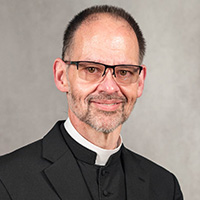 Father PutnamFather John Putnam, the diocese’s judicial vicar and judge who presides over annulment cases for the diocese, welcomes the work.
It especially fits right in with the 2025 Jubilee Year of Hope, he says, because the annulment process encourages people to regain hope in the Church, giving them closure and a fresh start on their faith journey.
“The whole point of the tribunal process is to find the truth of the matter,” he explains. “Was this marriage as the Church understands a marriage to be? In that process, the people involved learn more about themselves, learn more about the Church, and grow in their relationship with God. The goal is the salvation of souls.”
An annulment is a judicial process not intended to find fault, but to discern whether a marriage was valid at its inception according to Church teaching. If the Tribunal determines that the marriage is not valid – based on consent, mindset and other factors – it issues a “declaration of nullity,” which is where the word “annulment” comes from. The petitioners are then free to marry someone else, join a religious order, or simply feel closure and renewed confidence about their place in the Church.
Whatever the reason, the Tribunal is eager to assist people in need, especially anyone who might be reluctant based on myths, fear or misinformation.
An annulment is “not as cumbersome as you think it is,” says George Cobb, special assistant to the Judicial Vicar who also serves as an advocate – a person who helps petitioners file for an annulment and accompanies them throughout the process. “There are people on the local level and the diocese level all trying to help.”
Heart of the Tribunal
 The Tribunal staff praises the diocese’s team of advocates, calling them their “feet on the ground” and the heart of the ministry. Although the team shies away from comparisons with other tribunals, their advocacy program has been widely recognized for its efficiency and copied by others, such as the Archdiocese of Atlanta.
“Without the advocates, we wouldn’t have the workforce to do much of this,” Sarvis points out.
The Tribunal’s Joy Barnes received her own declaration of nullity in 1989, later becoming a Secular Franciscan. Barnes attended Father Putnam’s first advocate class in 2005, and now as advocacy program director she oversees 76 advocates across the diocese.
Every parish in the diocese has a designated volunteer advocate who helps petitioners through the process: 17 are deacons, 18 speak Spanish, two are fluent in Vietnamese. Still, Barnes continually recruits, searching for as many diverse advocates as she can find. A current need is someone who speaks Korean.
In 2007, Barnes revolutionized the advocates program by moving from a physical classroom to a virtual one, with 15 self-paced lessons. In addition, she wrote a 55-page advocates handbook that she sends to every recruit.
Gary Lichtenstein is an advocate for Our Lady of Mercy, St. Benedict the Moor, Good Shepherd, and Holy Angels parishes in the Triad region. Lichtenstein feels he was blessed with the empathy needed to walk people through the annulment process and has no doubt his 56 years of marriage contributes to his success in this ministry.
“Not only do we meet with and instruct a petitioner on what is required to present a petition for nullity, we learn about the difficulty of that person’s life and marital problems,” Lichtenstein says.
Tribunal advocates are the voice of the petitioner. They collect documents, listen to the petitioner’s history, gather evidence and witness statements, find grounds for invalidity, investigate claims, write briefs – pretty much everything an attorney would do in a secular court, except this is a court “on paper” governed by Church law and decided by Church professionals.
Deacon William Shaw, an advocate who serves in far western North Carolina, was drawn to the program in 1974 in a different diocese after seeing faithful Catholics getting terrible advice from family members and others. Annulment myths he heard about excommunication or children becoming illegitimate are completely contrary to Church teaching, so he wanted to guide the people to the truth, he explains.
“It’s a gift to witness the inner healing and transformation of each person that comes forward in faith and hope to be reconnected and reconciled to the sacraments,” Deacon Shaw says. “It is not about receiving a ‘decree of nullity,’ it is about cathartic healing and the reconnection to Jesus and the Church. This for me is the greatest enjoyment.”
Healing and hope brings a tear to Cobb’s eye as he reminisces about the joy of seeing one elderly couple who were able to have a Catholic wedding. “The pastor confirmed that because of the annulment process they were able to marry in the Church. That’s what we are about. To be reconciled together and to be reconciled in the Body of Christ.”
— Lisa Geraci
For more information
Want more information about the annulment process for yourself or others?
Talk to your parish priest or go online to www.charlottediocese.org/offices/tribunal to learn more and find an advocate near you.
Feel called to serve as an advocate? Contact Joy Barnes at This email address is being protected from spambots. You need JavaScript enabled to view it. or 704-370-3373.
Annulment Process
Step 1: Reach out to your parish priest or parish annulment advocate. This person assists the petitioner in completing the application for nullity.
Step 2: The Tribunal contacts the other party (respondent), notifying them that the petitioner has submitted a case and sending a questionnaire. The respondent’s participation is not essential, and a case can proceed without it.
Step 3: Both the petitioner and respondent review each other’s written testimony as well as any witness statements not protected by the seal of confidentiality.
Step 4: The Tribunal notifies both parties of its final decision.

 Deacon NewsomeA lot of people are angry today, about a lot of different things. Some of that anger is justified. Some of it is not. Thus has it ever been.
My purpose here is not to talk about this or that thing that may make us angry, but to reflect on how we should deal with anger from a spiritual perspective.
It’s tricky business. Wrath, we are taught, is one of the seven deadly sins. But anger is an emotion. Emotions are not sins, but things we experience. We are not morally responsible for the feelings we have because we don’t choose them; but we are responsible for how we respond to them.
Anger is a powerful emotion, so we must be especially careful when it comes to how we choose to act when we are angry. Unless the situation demands an immediate response, in most cases the prudent course will be to delay action until our anger subsides so that we can approach things with a cool head.
Does anger serve a purpose?
What purpose does anger serve? One may wonder why God would give us such a powerful and troubling emotion. The feeling of anger is a natural response to injustice, whether real or perceived. In that sense, anger can be good, functioning like pain in the body, alerting us to the fact that something is wrong.
Justice is the virtue of doing the right thing, what the Catechism calls “the constant and firm will to give their due to God and neighbor” (CCC 1807). Injustice occurs when someone acts in a way contrary to the good of others, or that disregards their natural rights and human dignity. Addressing a matter of injustice often requires courage and may involve some real risk on our part.
A powerful emotion like anger can provide the motivation we need to stand up for what is right even if it costs us. This is how healthy anger is meant to function.
While there is such a thing as righteous anger, the problem is, as St. Francis de Sales observes in his Introduction to the Devout Life, everyone believes their anger to be righteous! “No angry man,” he writes, “ever thinks his anger is unjust.” As our emotions are not infallible, we must be on guard against making such presumptions. What if the injustice we perceive is false? What if what angers us is not an offense against justice, but an offense against our pride?
Anger is a powerful motivator, but a reckless driver. If our heart is troubled by anger, it is important not to permit our emotions to sit in the driver’s seat. Our actions should be directed by reason rather than feeling. Our emotions inform us but should not control us. Evaluating our emotions objectively is difficult but it is something we can learn to do.
Questions to ask
When we experience anger, there are helpful questions we should ask. First, why am I angry? Sometimes the cause is obvious, but other times it may be less apparent. The experience of trauma or loss may cause us to feel a general anger that is directed at no person in particular. This is a natural part of the grieving process and can be helped by counseling, therapy and time.
As we deal with anger that stems from woundedness, we should make every effort not to allow our anger to become an excuse to treat others uncharitably.
Anger can also be the result of wounded pride. It is important for us to ask: Are those I am angry with truly acting unjustly, or merely not doing things the way I would have them done? The remedy for prideful anger is to practice the virtue of humility. There is a powerful Litany of Humility prayer, composed by Rafael Cardinal Merry del Val, that includes petitions such as, “From the desire of being consulted, deliver me Jesus. From the desire of being approved, deliver me Jesus.”
What if our anger is a valid response to injustice? Even then, we must ask ourselves a further question: Am I in a position to do anything about it? If it involves a situation in our personal lives, we may be able to do something to resolve the matter. In that case, our actions should still be directed by justice and charity, never anger itself. If we cannot reasonably resolve the matter, then our anger serves no further purpose. We should therefore let it go and entrust the situation to God. This holds true any time we are angry over situations beyond our personal control.
anger as a tool of manipulation
A particular malady of our time is the immediate access we have to news reports, commentary and opinion, much of which is negative. Politicians and media moguls alike figured out long ago how to capitalize on anger. Those with a vested interest in motivating us to buy their papers, click on their links or vote a certain way often use anger as a tool of manipulation.
It is spiritually damaging for us to be confronted with a non-stop barrage of evil news we are in no position to do anything about. This can leave us feeling not only angry, but helpless, leading to despair. Unless we are in a position to positively impact a situation, it is best to entrust these broader concerns to God’s loving providence and let go of our anger before it becomes a cancer in our hearts, festering into bitterness and hatred.
The scriptures tell us “be angry, but do not sin” (Eph 4:26). The emotion of anger becomes the sin of wrath when we latch onto it, nurture it, and allow it to take root in our heart. Anger can be like a powerful drug; we can become addicted to it.
St. Francis de Sales, by his own admission, struggled with a hot temper. Being aware of this aspect of his temperament, he made an intentional effort to always act with gentleness toward others, so much so that gentleness became his defining trait. His life stands as testimony that even something as strong as anger can be overcome through a combination of discipline and grace.
Jesus experienced righteous anger, as when He drove the money changers from the temple, but He always acted with justice and mercy. Let Christ therefore be our model. Our Lord warns us that whoever is angry with his brother is liable to judgment (Mt 5:22), and also invites us to “learn from me, for I am meek and humble of heart” (Mt 11:29).
When anger rears its ugly head, may we seek refuge in the heart of Jesus and pray, “Lord, make my heart like unto Thine.”
Deacon Matthew Newsome, Catholic campus minister at Western Carolina University and regional faith formation coordinator for the Smoky Mountain Vicariate, is the author of “The Devout Life: A Modern Guide to Practical Holiness with St. Francis de Sales,” available from Sophia Institute Press.