

We radiate the life of Jesus to the world to the extent that we live with the conviction that we are divinely loved. Advent calls us beyond being merely virtuous into the daring surrender to God’s love.
But our feelings and the circumstances of our lives and the world around us make it difficult for us to be grounded in the love of God. As we contemplate weekly Advent themes, we welcome the thoughts of four radiant women, all Doctors of the Church, who put all their hope in God’s love.
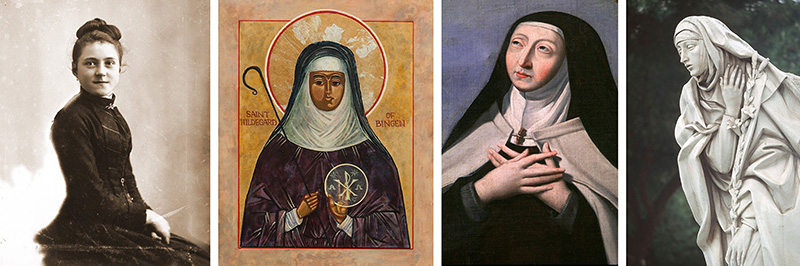
Thérèse of Lisieux
It is natural for us to live by the changing weather patterns of our emotions. One day, we are anxious about finances or deadlines or the results of health tests, so we withdraw into a cocoon or snap at those around us. The next day, we are feeling in control of life and rather successful at being human, so we beam joviality and peace upon the world.
A particular genius of St. Thérèse of Lisieux was to live in constant trusting vigilance to God’s love for her and thus to be an unwavering beacon of divine goodness. The sweetness of
Thérèse’s writing makes it easy to miss her refusal to conform to her changing emotions.
In a letter describing to her prioress her experience of a relentless “night of nothingness,” Thérèse goes on to articulate her steadfast trust. She writes: “When I sing of the happiness of heaven and of the eternal possession of God, I feel no joy in this, for I sing simply what I want to believe.”
For at least one day, try to live in the spirit of St. Thérèse of Lisieux, acting not according to your changing feelings, but rather according to what you want to believe.
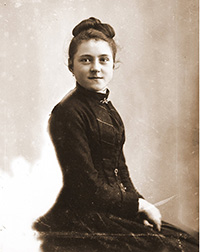
St. Hildegard of Bingen
How can we possibly live as Advent stirs us to live? The messiness of our lives frequently exerts an all-consuming claim over us. How can we live in the security of being divinely loved and so be for others the presence of the living God? Is it simply a matter of dogged spiritual willpower?
The writings of St. Hildegard of Bingen crackle with a living awareness of the transforming power of the Holy Spirit. For Hildegard, the Holy Spirit is the source of “viriditas,” or greenness – that vitality and dynamism that makes all life, both physical and spiritual, alive.
The strength to live confidently as loved sons and daughters of God is not something we muster from our own resources. It is what, with our cooperation, the Holy Spirit causes to spring up within us.
Take some time to notice the creation around you. Ask the Holy Spirit to stir vitality in the dormant areas of your interior life, bringing about new vigor and commitment.
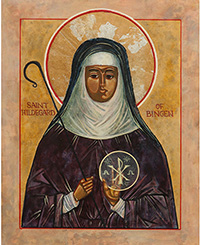
St. Teresa of Avila
It is perhaps easy for committed Catholics to gloss over the description of Jesus in the first chapter of John as one we “do not recognize.” We know Him! We go to Mass every Sunday; we grasp the gist of the Gospels. But Advent challenges us to confront the comfortable presumption that we know the Lord and beckons us to deepen our personal relationship with Him.
Our spiritual tradition teaches that praying with the Gospels is a singularly effective way of coming to know Jesus more intimately. For St. Teresa of Avila the Gospels are a fruitful context for focusing our attention on Jesus and speaking with Him in faith.
She gives us a demonstration when she contemplates keeping Jesus company in the Garden of Gethsemane in a letter to her sisters. Teresa is alive to the truth that the Gospel episodes are not over and done with, irretrievably in the past. The Jesus who lived then lives now, and all his earthly life is alive in him; the way he was for the people he encountered in the past is the way he is now for us. So, we can be the person touching his cloak, or asking him for mercy, or pleading for living water, or consoling him. The episodes of the Gospels are pathways to deepening our knowledge of the living Jesus.
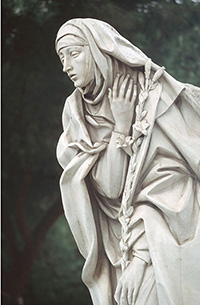
St. Catherine of Siena
Was Mary’s personal identity eradicated at the Annunciation (Lk 1:26-38)? Did her generous, “I am the handmaid of the Lord” signal the end of her life story as she began her life as the God-bearer? On the contrary, with her “yes” to the unfolding of God’s plan, Mary leaned more fully into her unique selfhood. Her witness prompts us to step back and discern the same flourishing at work in our own lives.
St. Catherine of Siena had a vivid insight into the reality that our true self flourishes as we grow in union with God. Her prayer “My Nature is Fire” takes our self-understanding to new depths and profoundly enriches our sense of what our life in Christ offers others.
Advent reminds us of our transcendent calling and nurtures its fulfillment in us. Throughout this sacred season, we are created into beacons of divine tenderness as the Holy Spirit shapes our lives into Jesus’ “yes” to the Father’s love.
This Advent, guided by the wisdom of the women named Doctors of the Church, let us throw our hearts open to God’s transforming work of love as never before.
— Michelle Jones, OSV News
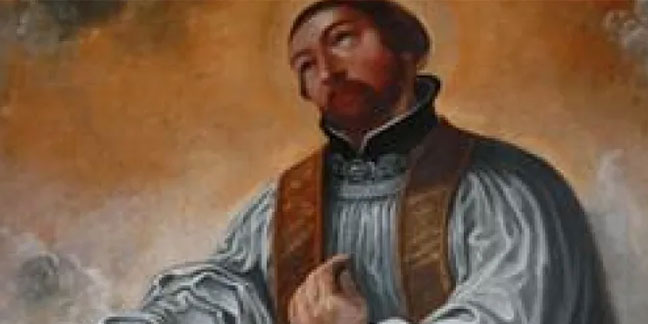 On Dec. 3 the Church honors St. Francis Xavier, one of the first Jesuits who went on to evangelize vast portions of Asia.
Francis Xavier was born during 1506 in the Kingdom of Navarre, a region now divided between Spain and France. His mother was an esteemed heiress, and his father an adviser to King John III. While his brothers entered the military, Francis followed an intellectual path to a college in Paris. There he studied philosophy, and later he taught it after earning his masters degree.
In Paris, the young man would discover his destiny with the help of his long-time friend Peter Faber, and an older student named Ignatius Loyola – who came to Paris in 1528 to finish a degree and brought together a group of men looking to glorify God with their lives.
At first, personal ambition kept Xavier from heeding God's call. Ignatius' humble and austere lifestyle did not appeal to him. But the older student, who had undergone a dramatic conversion, often posed Christ's question to Xavier: "What will it profit a man to gain the whole world, and lose his own soul?"
Gradually, Ignatius convinced the young man to give up his own plans and open his mind to God's will. In 1534, Francis Xavier, Peter Faber and four other men joined Ignatius in making a vow of poverty, chastity and dedication to the spread of the Gospel through personal obedience to the pope.
Xavier became a priest in 1537. Three years later, Pope Paul III confirmed Ignatius and his companions as a religious order, the Jesuits. During that year, the king of Portugal asked the pope to send missionaries to his newly-acquired territories in India.
Together with another Jesuit, Simon Rodriguez, Xavier first spent time in Portugal caring for the sick and giving instruction in the faith. On his 35th birthday, he set sail for Goa on India's west coast. There, however, he found the Portuguese colonists causing disgrace to the Church through their bad behavior.
This situation spurred the Jesuit to action. He spent his days visiting prisoners and the sick, gathering groups of children together to teach them about God, and preaching to both Portuguese and Indians. Adopting the lifestyle of the common people, he lived on rice and water in a hut with a dirt floor.
Xavier's missionary efforts among them often succeeded, though he had more difficulty converting the upper classes, and he encountered opposition from both Hindus and Muslims. In 1545 he extended his efforts to Malaysia before moving on to Japan in 1549. Becoming fluent in Japanese, Xavier instructed the first generation of Japanese Catholic converts. Many said that they were willing to suffer martyrdom rather than renounce the faith brought by the far-flung Jesuit.
He became ill and died on Dec. 3, 1552, while seeking a way to enter the closely-guarded kingdom of China. In 1622, both he and St. Ignatius Loyola were canonized on the same day. With St. Thérèse of Lisieux, he was named Patron of all Missions by Pope Pius X in 1904.
— Benjamin Mann, Catholic News Agency