

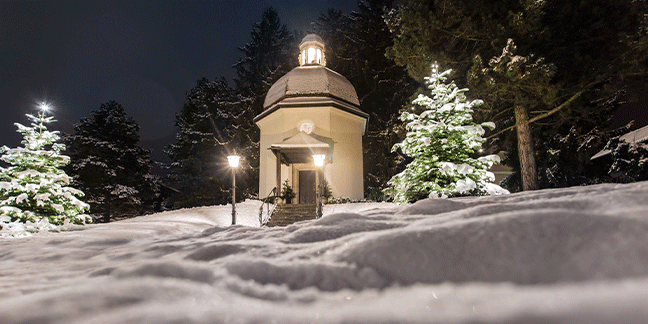
 The Silent Night Chapel, which is in the town of Oberndorf in the Austrian state of Salzburg, is a monument to the Christmas carol "Silent Night." The chapel stands on the site of the former St. Nikola Church, where on Christmas Eve in 1818 the carol was performed for the first time. (CNS photo/courtesy www.stillenacht.com)OBERNDORF, Austria — The Christmas song "Stille Nacht" ("Silent Night") may have put the town of Oberndorf, Austria, on the map, but it's the chapel memorializing the beloved carol that is the town's main attraction.
Best seen blanketed in snow, the small octagonal-shaped chapel, just 13 miles from Salzburg, is a tourist destination any time of year.
With a storied past, the song plays a key role in a small Alpine town, a brief ceasefire during World War I and a beloved local debut.
An often-shared legend says Father Joseph Mohr wrote the lyrics because his parish organ was broken. He asked Francis Xavier Gruber, the parish organist and school master, to come up with the music to accompany it just hours before Christmas Eve midnight Mass at St. Nikola Church in 1818.
Actually, Father Mohr wrote it as a poem two years earlier while living in Mariapfarr, Austria.
But the song, "Stille Nacht," did make its debut Dec. 24 in 1818 at St. Nikola with Father Mohr on guitar playing Gruber's melody and both men singing as the broken organ sat idle.
The Silent Night Chapel stands on the spot where St. Nikola Church stood before successive floods in the 1890s. That parish church was rebuilt a half-mile upstream and the abandoned chapel sat for years. It was razed in 1913.
A decade later, construction began on a new chapel on the same spot; it was completed Aug. 15, 1937, the feast of the Assumption.
Now translated into 300 languages, the song ranks among the most popular hymns. This year, Pushpay, an electronic giving platform, released results from last year's survey of users, putting "Silent Night" as third favorite after "O Holy Night" and "O Come all Ye Faithful."
UNESCO added the carol to its World Heritage List in 2011 in recognition of the song's universal cultural and social value.
On Christmas Eve in 1914, during World War I, the song prompted a cease-fire as French and British troops faced off against German troops in Flanders, Belgium. Both sides sang Christmas carols, but "Silent Night" was the only one they all knew. The soldiers met briefly to sing, play games and trade goods.
The Silent Night Chapel stands near the Silent Night Museum in the Silent Night District. A lovely gift shop features unique Christmas ornaments, books and picturesque postcards.
The town is very walkable. Must-sees are the Salzachdamm, constructed in 1920, and the Salzach River, which brought prosperity to the area from the shipping industry, especially moving salt to large transport ships. Don't miss the bridge over the Salzach that connects Oberndorf with Laufen on the edge of Bavaria in Germany.
A stop by the Silent Night Post Office will net a Christmas stamp and a seal for your outgoing mail. If you time it right, you can visit the Christmas Market there starting in mid-November.
Every Christmas Eve since 1953, the chapel commemorates the song with a performance at 5 p.m. that draws people to hear and join in singing the familiar lyrics:
Silent night, holy night!
All is calm, all is bright.
Round yon Virgin, Mother and Child.
Holy infant so tender and mild,
Sleep in heavenly peace,
Sleep in heavenly peace.
This first stanza of the three translated from the original German six stanzas is familiar to most. The simple words and melodic tune promote that sense of peace the people of Austria were looking for after the Napoleonic Wars.
The song ranks among the top tier of most popular Christmas carols. It has been recorded by vocalists from Bing Crosby in 1935, to Mariah Carey, the a capella group Pentatonix and countless more.
The soothing song still delights more than 200 years since its debut in an Austrian village.
— Ann Augherton, Catholic News Service
More Online:
To hear an audio article with "Silent Night" being sung from the chapel, go to bit.ly/3WpnvTV.
The canonization of St. Elizabeth Ann Seton in 1975 not only marked the establishment of the first American-born saint but also opened the door for other Americans to be honored for embodying the universal call to holiness.
“What made her canonization remarkable was that, after 200 years of history in the country, it was the first time that a native-born American was declared a saint of the universal Church,” said Rob Judge, executive director, National Shrine of Saint Elizabeth Ann Seton in Emmitsburg, Maryland. “It was this validation, that you can come from these lands and obtain holiness.”
Today there are 87 American Catholics on their way to sainthood. To recognize these men and women, the shrine recent;y put together the “Saints on Their Way Village.”
It was displayed on Sept. 14 – the 50-year anniversary of Seton’s canonization – and was made up of nearly two dozen guilds, each dedicated to advancing the cause of an American on the path to sainthood.
Here are a few of their stories.
Dorothy Day
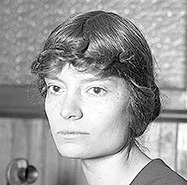 In 2000, Dorothy Day became a Servant of God after her cause for sainthood was opened by the Church.
Day worked as an activist and journalist, focused on social justice and aiding the poor. She influenced 20th-century American Catholicism by demonstrating the “preferential option for the poor,” which integrated faith and action.
“What I find hopeful is that she stayed the course her whole lifetime,” Dorothy Day Guild member Carolyn Zablotny said. “There were times where I’m sure she had her doubts, and she wrote so openly about her struggles. She’s not a cookie-cutter kind of person, she failed at times, but she persevered.”
Day is a “sign of hope,” Zablotny said. “She’s a radical alternative to militarism, racism and the selfishness that we’re all suffering from. I think she’s a real model for a different kind of holiness.”
Blessed Solanus Casey
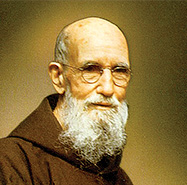 Members of the Father Solanus Guild shared the message of Blessed Solanus Casey. Fellow Capuchin friar and guild member Brother Daniel said Casey’s “main goal” was to “thank God ahead of time” as a way to recognize what he is already doing in our lives.
Casey grew up on a farm in Wisconsin and was known as a “simple man” who dedicated his ministry to the sick and troubled. While the Church has attributed only one miracle to Casey, many people have shared stories of healing after asking for his intercession.
“When people come to [Solanus], he may not get rid of all the problems,” Brother Daniel said. “But when they go from him, they feel peace. They feel that someone is there to comfort them.”
Mother Mary Lange
 Mother Mary Lange founded the Oblate Sisters of Providence, the first African American religious congregation in the United States. In 1829, she founded the order despite the trials she knew she would endure. She believed that “if you put your faith in God, it’ll be OK,” said Phyllis Johnson, a member of her Guild.
The guild is advocating for her canonization because “she loved all people,” Johnson said. “Even the people who treated her shabbily, she still cared for them. She’s a saint for everyone. She took care of everyone. She didn’t discriminate … So if anybody should be a saint, it’s the person who says ‘all people are God’s people.’”
Blessed Francis Xavier Seelos
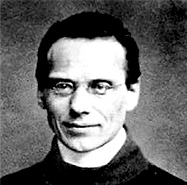 Francis Xavier Seelos was born in Germany in 1819 but lived much of his life in New Orleans. Now that city houses his national shrine, where people come daily “to ask for the blessing of Blessed Francis,” Father Steve, a priest advocating for his canonization, said.
Seelos was known “as a wonderful man,” he said. “He was totally self-giving – the type of person that makes a saint. When people were sick, he didn’t think about himself at all. He went to bless them and ended up getting sick himself, which is how he died.”
Blessed Michael J. McGivney
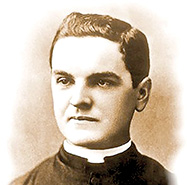
Several employees of the Knights of Columbus shared the cause for canonization of the organization’s founder, Father Michael J. McGivney.
“He’s a powerful intercessor,” said Alicia Mucha, manager of events. “He loves to answer prayers for unemployment, family conflict and any substance abuse.”
In 1882, McGivney founded the Knights of Columbus “to give men a better community, something that was rooted in their faith that would keep them away from drinking,” Mucha said. The organization started in Connecticut “to provide benefits for women and children, in case anything happened to the men. He would ensure that women and orphans were taken care of.” In 2020, McGivney was beatified after the Vatican recognized a miracle attributed to his intercession.
Judge said McGivney and the other potential American saints show “us that we, too, can draw closer to God and achieve great things.”
— Tessa Gervasini, Catholic News Agency