diofav 23

Catholic News Herald

Serving Christ and Connecting Catholics in Western North Carolina

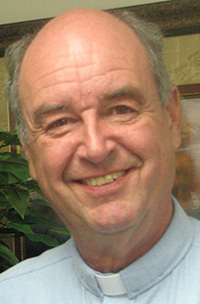
050126 martinSeminarian Patrick Martin, shown here at the Bishop’s Youth Pilgrimage, enjoys teaching young people about the faith because it increases his own understanding.HUNTERSVILLE — Teaching young Catholics about one of the works of a famous author has opened up new perspectives on the road to the priesthood for seminarian Patrick Martin.

Martin has recently been teaching Catholic teens at a Cincinnati parish about “The Screwtape Letters,” a Christian apologetic novel by legendary author C.S. Lewis, best known for his “Chronicles of Narnia” series.

In the novel, written as a series of letters, a senior demon named Screwtape teaches a junior “tempter” about ways to undermine humanity’s faith, illustrating the many ways that a lack of faith can harm a person’s relationship with God.

The class not only helps Martin, whose home parish is St. Mark in Huntersville, develop his skills in teaching the faith to others, but it also helps him tie together and apply things he has learned during his years in the seminary.

“It’s a different style of book than they’re used to studying, and it honestly wasn’t a book I had been meaning to read,” Martin said. “I’d read other things by Lewis and had attempted to read this book years ago but got too busy, so I’m learning the book at the same time I’m teaching it. It’s an exciting way of applying both my philosophy and theology studies in seminary to the material, helping to explain it and break it down.”

It’s the second class for young people that Martin has taught at the Ohio parish, close to where he is studying theology at Mount St. Mary’s Seminary in Cincinnati. He previously taught a course on Theology of the Body.

He completed philosophy studies at St. Joseph College Seminary in Mount Holly before studying in Ohio, and will be ordained as a transitional deacon – a step on the journey to becoming a priest – on May 23.

In an interview with the Catholic News Herald, Martin shares more about his life:

CNH: What was your journey to discernment like?

Martin: It started when I was young – I was blessed to be home-schooled, and my mother made the effort to bring me to daily Mass along with my siblings. That daily experience really helped me to build a relationship with the Mass and also to see how the priests approached the sacrifice of the Mass as well as their approach and interaction with people.

I felt a call to the priesthood but then during middle school stepped away from discerning priesthood and thought God was calling me to be a married man. I thought about getting a business degree and working to provide for a family. …

Then during high school I felt like I needed to reassess and re-approach discernment, and Father John Putnam at St. Mark invited me to be the sacristan there. As sacristan, I really experienced the brotherhood of the priests and their love for the Lord and for people. I thought about it and discerned strongly and, through the advice of the priests I knew, I entered seminary after high school.

CNH: What are your hobbies?

050126 mug martinMartin: I’m really big into athletics. I grew up playing soccer and swimming and still like to play soccer in seminary – I spend time playing with my brother seminarians, and we have a makeshift team. I’ve also gotten into weight lifting and in recent years got into marathon running – I started that my first year here in Ohio. I train with fellow seminarian Connor White, who is an avid runner. The training is a great way to let our brains reset. It helps me to regulate and re-engage. Every spring I’ve been running a marathon called the Flying Pig here in Cincinnati, which takes its name from the city’s history as a leader in the pork industry.

CNH: Who is your favorite saint?
Martin:
The saint I hold most dear is St. John the Evangelist – I have a statue on my desk of him looking at me right now. I chose him as my confirmation saint, and he’s been my go-to saint on multiple levels since then. I’m the middle child of my family and the youngest boy, and seeing John the Evangelist, John the Beloved, as the youngest of the apostles was impactful to me, because as the youngest boy I felt some competition growing up. I saw that John was the youngest but was also impactful. He has a special relationship with Christ, a closeness to our Lord, and was particularly there with Him during the Passion. He was the one who helped Our Lady through the Passion.

— Christina Lee Knauss

‘Heart of the diocese’

061725 seminary seminariansNewly ordained priests and deacons for the Diocese of Charlotte who started their studies at St. Joseph College Seminary in Mount Holly with Father Brian Becker. (Photo by Troy C. Hull)CHARLOTTE —This month’s ordinations mark two milestones for the Diocese of Charlotte. For the first time, all of those ordained priests and deacons are a product of St. Joseph College Seminary, the diocese’s own homegrown incubator for priestly vocations. And two priests instrumental with the seminary’s founding mark their own jubilee anniversaries of ordination.

The ordinations of seven deacons on June 7 and six priests on June 14 reflect the growing impact of the college seminary. Since its founding in 2016, St. Joseph College Seminary in Mount Holly has become a catalyst for the diocese’s thriving vocation efforts – forming young men close to home, grounded in the parishes they will one day serve.

In its nine years, the seminary has welcomed 75 men, and so far 14 have completed formation and been ordained priests.

The new priests and deacons – who began their formation at St. Joseph between 2017 and 2021 – say the college seminary made “a big difference” as it is close to home and involves clergy they know.

“It made a lot easier to say OK to it because I’m staying locally,” said newly ordained Father Christopher Angermeyer, whose home parish is St. Thomas Aquinas in Charlotte.

“I knew all the priests that were involved, so it made a bit of the decision easier. I knew these priests and I trusted them.”

Father Matthew Kauth, who has served as rector since its founding, notes, “The seminary provides real continuity because the men grow up in our parishes, are fostered by our families, and their formation and growth in virtue is rooted in the diocese. It helps to root them in this diocese where they will eventually serve.

“The seminary, in essence, becomes the heart of the diocese.”

Close to home

Founded by Bishop Peter Jugis in response to rising interest in the priesthood among local teens and college-age men, St. Joseph College Seminary stands out nationally. It’s the only minor seminary between Washington, D.C., and Miami, and the only one dedicated to serving a specific diocese in the Southeast.

Bishop Jugis, a Charlotte native, envisioned the seminary as a place where much-needed vocations for the growing diocese could begin early – without sending young men far from home.

In a 2024 interview, Bishop Jugis recounted there were few options in the diocese when he was considering the priesthood. In his own discernment as a teenager growing up in Charlotte, he recalled being told to go take some philosophy classes in college and come back after graduation.

“After I became bishop, we began to discover, in responding to the needs of the times, that there were more and more young people in their late teens who were approaching the diocese and their pastors about feeling called to the priesthood or consecrated life,” he said. “I didn’t feel it right to say, ‘Well, come back in two or three years,’ because they were hungry for formation, much like I was.”

A place to belong

The seminary began modestly – eight men living in a former convent behind St. Ann Church in Charlotte. A permanent building opened in 2020 on an 86-acre site, with Gothic-style architecture reminiscent of nearby Belmont Abbey College, where the seminarians earn their bachelor’s degrees and go on to major seminaries elsewhere to complete their formation.

The proximity of the seminary to home is not just practical, it’s vital, seminarians and clergy agree.

“Honestly, I’m not sure I would have entered seminary without having it,” said newly ordained Deacon Michael Lugo. “Being able to visit regularly, see the community and be a part of it in some way was a huge benefit to my discernment.”

The college seminarians follow a rigorous daily routine similar to what they would in major seminary or in a religious order: daily Mass and prayer time, spiritual direction, classes, chores, fellowship and more.

“There’s a better understanding of what being in (major) seminary is like,” explains Father Angermeyer. “I think it makes young men feel more comfortable actually trying to enter.”

The sense of familiarity and connection is by design. Seminarians remain active throughout the diocese, attending diocesan liturgies, serving in parishes during their summer breaks, and helping with vocations camps like Quo Vadis Days. These encounters enable young men considering the priesthood to meet peers who have taken the first steps – and see their own path more clearly.

Newly ordained Father Nicholas Kramer said when he was younger, he would drive down to the seminary in Mount Holly and hang out for a day. That was hugely impactful, he says.

“When the time came when I did enter seminary, it wasn’t like I was isolated from my friends and family. I knew a lot of people there already just because of the things in the local diocese. I was connected to the diocese, which I think as a diocesan priest is a really important thing for us early on in formation, to get connected to our diocese.

Because for us, our diocese is the place in which, unless the bishop decides to send me somewhere else, I will be ministering for the rest of my life.”

This presence of seminarians in and around the diocese, and the opportunity to forge strong bonds of brotherhood, were also key for John Cuppett, who was ordained a transitional deacon earlier this month.

“Watching them gave me courage to follow our Lord as well,” Deacon Cuppett says.

He originally went to Belmont Abbey College on a baseball scholarship before discerning a vocation. He describes the community aspect of the seminary as “the perfect seedbed” with all the elements necessary to help develop his relationship with Christ.

“Fostering a life of prayer provided the structure to order my life around the source and summit of my faith in the Eucharist and the sacraments, which is the essence of the priesthood,” he says.

‘Whatever I have, they have’

This year’s celebration is also a special moment for two key figures in the college seminary’s founding. Father Kauth and Father Christopher Gober, the diocese’s longtime vocations director, are both celebrating 25 years of priesthood. The two grew up together and were both ordained on June 3, 2000, for the Charlotte diocese.

Father Gober, who is stepping down in July after 21 years as vocations director to focus on the needs of his growing Winston-Salem parish, helped support the establishment of the college seminary and guided the ordination of 57 men to the priesthood during his tenure.

“It’s been a tremendous blessing to serve the people of God in the various parishes I’ve been assigned to, and to do my small part to try to cultivate vocations to the priesthood for the diocese over these many years,” he says.

For Father Kauth, the experience of mentoring seminarians is deeply personal.

“Whatever I’ve gained as a priest I pour into them,” he says. “Whatever I have, they have. Through this work you expand your influence, and it multiplies as these men go on to the priesthood. It’s a form of fatherhood, and I could not be more delighted than to be able to have this experience of spiritual fatherhood.”

A future formed in faith

As the six newly ordained priests begin their ministries, they carry with them the impact of formation rooted in diocesan soil – formed by priests they knew, shaped in the parishes where they first heard the call.

“Although it’s hard to measure success when determining the work of the Holy Spirit, I would credit most, if not all the success, to the formation at the seminary,” says Deacon Cuppett. “It was there that the faith and the Scriptures were opened to me and the Church of Jesus Christ was presented in the most extraordinary way.”

Newly ordained Father Bryan Ilagor adds, “While many dioceses in the United States may struggle with ordaining a few and sometimes no vocations for ordinations, the Diocese of Charlotte has many good men willing to sacrifice to serve the local Church. I feel more prepared during these past seven years to honor my commitment to the Diocese of Charlotte with newly ordained Bishop Michael Martin to say yes, Lord, to the best of my abilities, ‘I come to do your will.’”

 — Christina Lee Knauss. Kimberly Bender contributed. Archive photos.

PHOTO - Seminary 1 (Copy)
052424-SJCS_graduates (Copy)
semianry_copy (Copy)
PHOTO - Seminary 3 (Copy)
PHOTO - Seminary 2 (Copy)
PHOTO - Seminary 4 (Copy)
PHOTO - Seminary 5 (Copy)
PHOTO - Seminary 6 (Copy)
PHOTO - Seminary 7 (Copy)
img_0223_copy_copy