


 In the midst of a culture that obscures the true nature of things, many Catholic parents are striving to help their children encounter something increasingly rare: reality itself, as a participation in the truth and goodness of God’s creation.
The modern technological world offers many blessings, but it also presents significant challenges. Children can spend hours each day in virtual environments while becoming increasingly disconnected from nature, community and even their own families. The result is often a life filled with activity yet lacking rootedness in what it means to live as a Catholic family.
St. Thomas Aquinas teaches that the good life is not found in fleeting pleasures, wealth or distraction, but in the pursuit of virtue and ultimately in union with God. Human happiness, he explains, comes through living according to our nature and ordering our lives toward what is truly good.
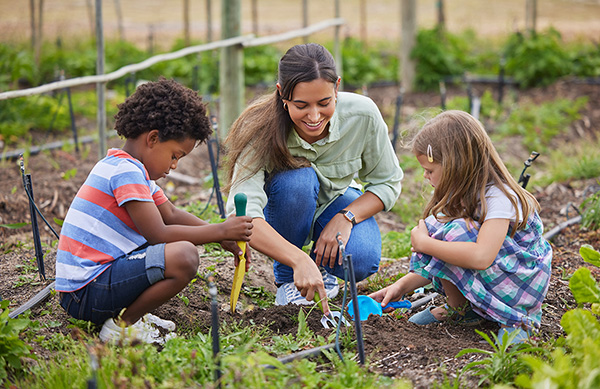
Seen in this light, rural and agricultural life offers a remarkable setting for such formation. The rhythms of planting, tending, repairing and harvesting cultivate prudence, patience, fortitude and temperance. The farmer does not command nature but cooperates with it, learning humility before God’s creation and providence.
Farming binds human life to creation
 For Aquinas, farming is deeply rooted in the structure of human life. It is morally sound because it is directed toward real needs rather than profit alone. It is socially essential, providing the material foundation for the common good. And it is spiritually meaningful, expressing stewardship and cooperation with God’s creative work.
Agriculture therefore stands as one of the most virtuous forms of human labor. It binds human life to the order of creation and to the provision not of fleeting entertainment, but of life’s necessities. This vision contrasts sharply with a technological culture that often promises instant gratification and total control.
Through lessons learned on a farm, children come to understand that growth takes time, that work has dignity, and that dependence on God is not weakness but wisdom.
The family farm has long served as a place where faith is woven into daily life and where children learn responsibility through meaningful participation in the household. This vision has been supported by movements – such as Catholic Rural Life, founded in 1923, and the Catholic Land Movement – that emphasize agriculture as a vocation capable of nurturing family life, strong communities and a deep awareness of God’s presence.
These same themes are expressed in Bishop George Speltz’s “The Importance of the Rural Life.” He argued that rural living offers unique spiritual advantages because it keeps people close to the realities upon which all human life depends. The farmer experiences firsthand humanity’s partnership with God in creation. Working the soil, caring for animals and providing food become acts of service to the common good.
Speltz also warned against a culture increasingly detached from the sources of life and sustenance – a warning that seems even more relevant today. Many children can navigate a screen before they understand how food is grown or how creation reflects the wisdom of God.
Rural life a living classroom
As families return to school and those familiar routines, it is worth seeking opportunities to reconnect with the land and with a rural, agrarian life. There, the Catholic family can find a living classroom where theology, care for God’s creation, family life and virtue converge in what Aquinas would recognize as genuine human flourishing: a life ordered toward truth, goodness, beauty and ultimately God.
The Church does not reject technology, nor should we. But technology must remain a tool rather than a master. Through contact with agrarian life, families can recover an essential vision of the good life – one rooted in faith, virtuous work, community and wonder before God’s creation.
In the silence of a pasture, the rhythm of a garden, the labor of a harvest or the raising of farm animals, children discover a lesson no screen can teach: Creation is His gift, and through that gift, the Creator still speaks. “For from the greatness and beauty of created things comes a corresponding perception of their Creator” (Wisdom 13:4).
Father W. Christian Cook, MDiv, JD, is pastor of St. Pius X Parish and School in Greensboro and co-founder of Farms of the Good Shepherd (FarmsGoodShepherd.org).