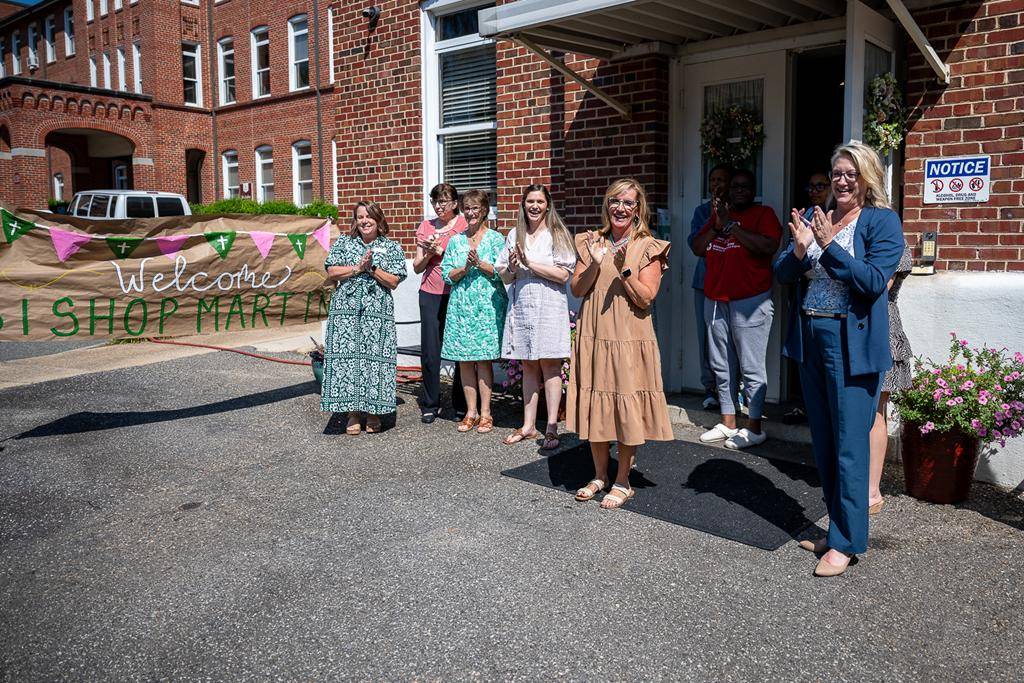
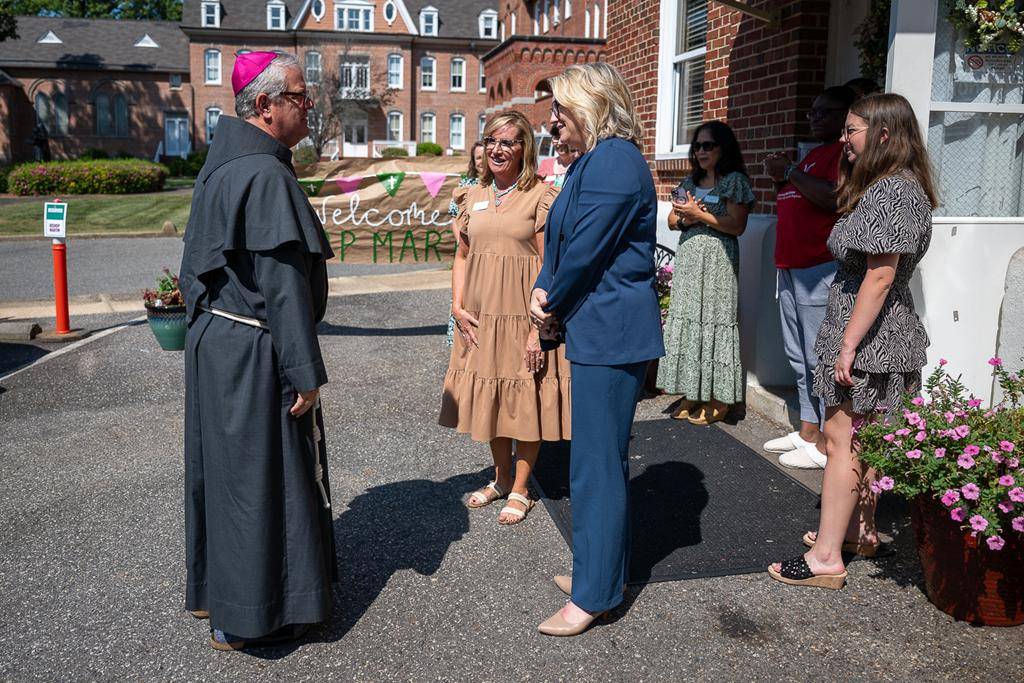
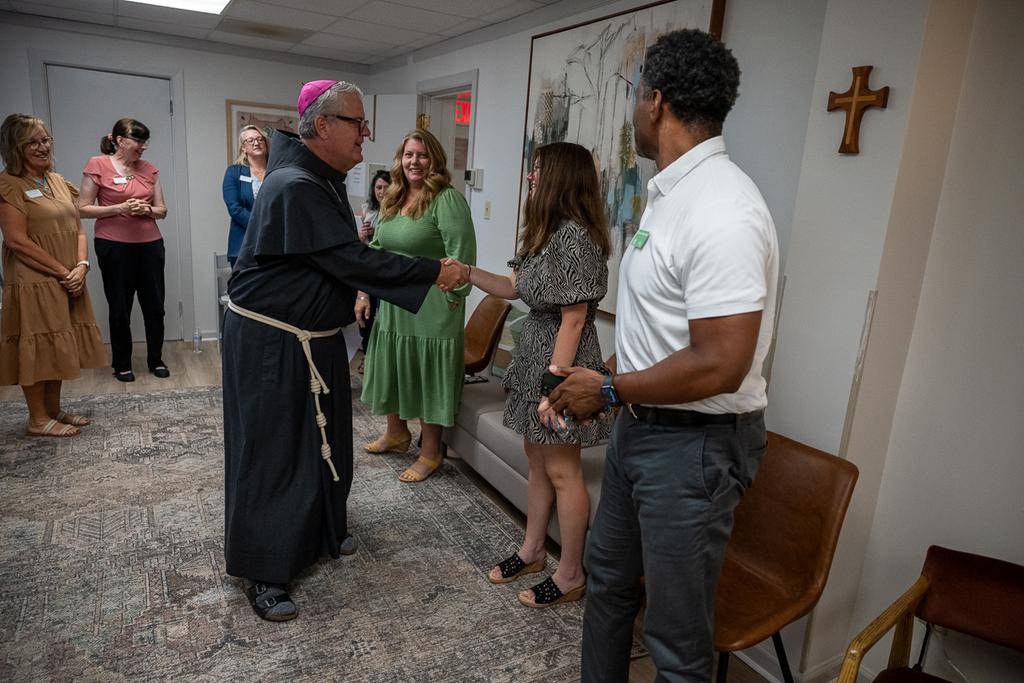
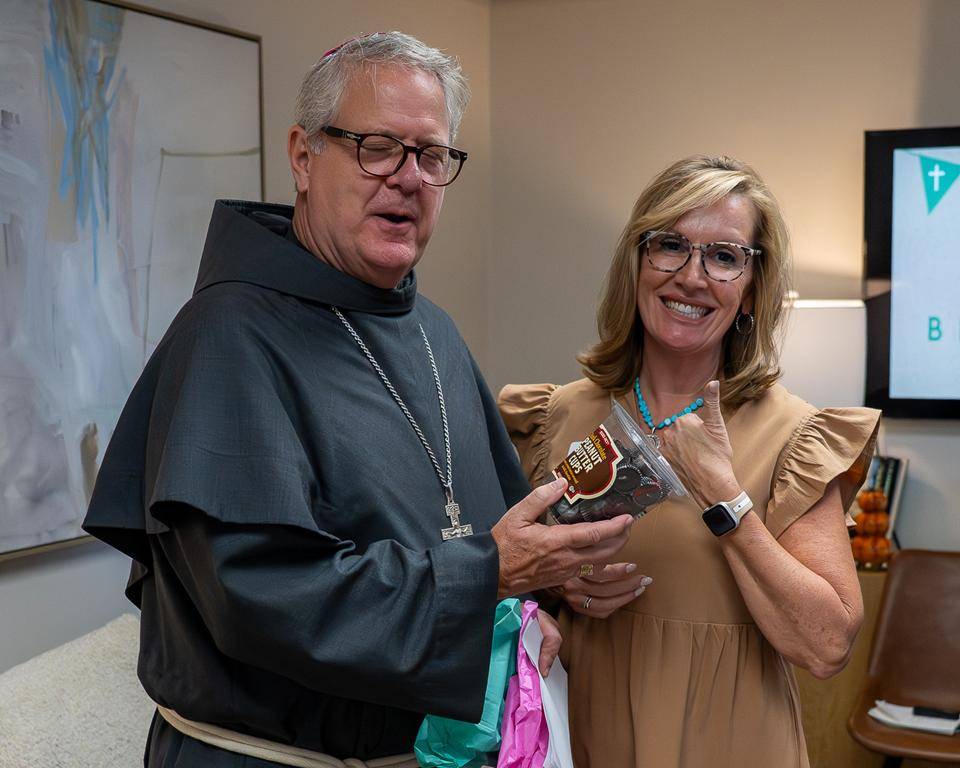
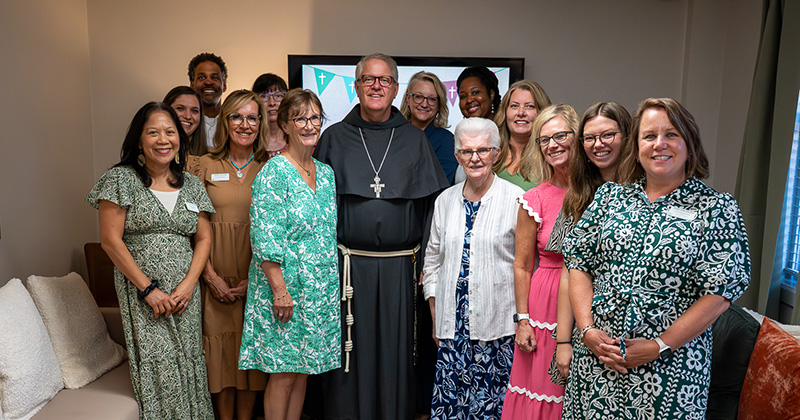
 BELMONT — Bishop Michael Martin toured Catherine’s House on Sept. 23 to learn more about the organization, meet the residents and share his vision of how the Diocese of Charlotte can further their mission.
Catherine’s House, established in 1992 by the Sisters of Mercy, is a transitional home that serves up to 15 women and 11 children who are facing homelessness.
The location is a remodeled dormitory, offering residents a private room and bathroom, located two buildings down from the Sisters of Mercy convent.
The program lifts women through challenging times and guides them back to self-sufficiency, providing four to six months of paired with financial guidance, employment services, counseling and extensive love.
“We used to be the best-kept secret of Belmont, but now we want people to be aware that we exist and understand the need,” said Clinical Director Anne Jurchak. “We are also encouraging volunteers.”
The bishop met with CEO Kathy Gauger, Jurchak and retired House Manager and now volunteer Sister Carmelita Hagan, to discuss challenges facing residents and how local Catholics can help.
When Bishop Martin asked, “What is the largest hurdle?” both Gauger and Jurchak said the lack of affordable housing.
As Gauger explained, “Homelessness has changed. It could be that you are a victim of domestic violence or a survivor, or it could be that the fair market rent in the Gaston, Lincoln, Cleveland and Charlotte areas for a two-bedroom apartment is $1800 a month.”
 During their stay, Catherine’s House residents enroll in a savings program and are partnered with landlords and organizations, including Catholic Charities, who help them transition into permanent housing.
“It is luck, it is Jesus, it’s that we don’t take no for an answer,” said Gauger. “It is very cliché to say, ‘It takes a village,’ but we are that village, and we will do whatever we can to see our folks get housed.”
Catherine’s House’s after-care program allows former residents to reach out for help when a setback arises, which is why 97 percent of clients remain housed for the long haul.
The bishop shared his vision for ministries across the diocese with them: transformational outreach that matches a mission with every dollar. He wants donors “to see the inherent dignity in all people who find themselves in need and then step forward in relationship rather than simply saying, ‘I wrote a check and did my part.’ I mean, bless you, but there is more here.”
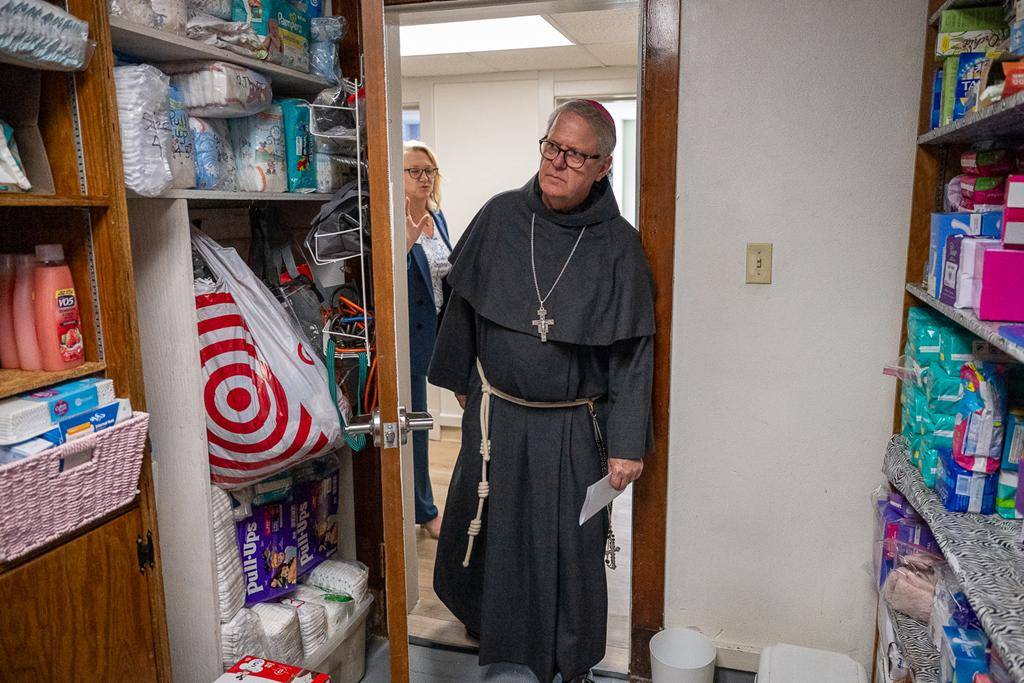
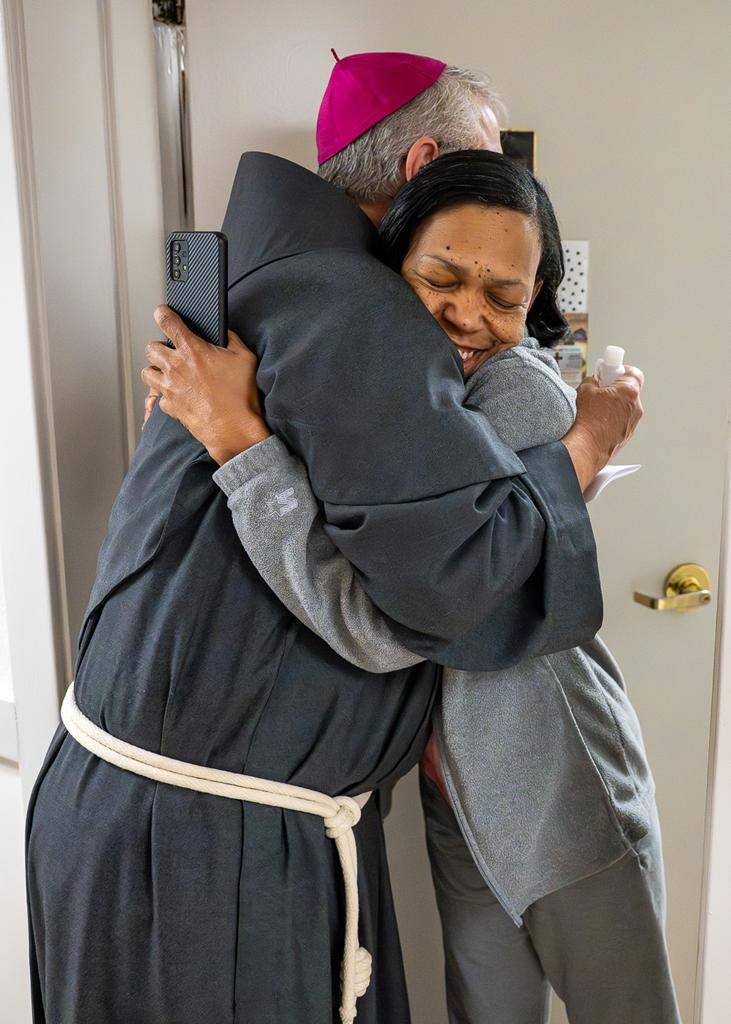
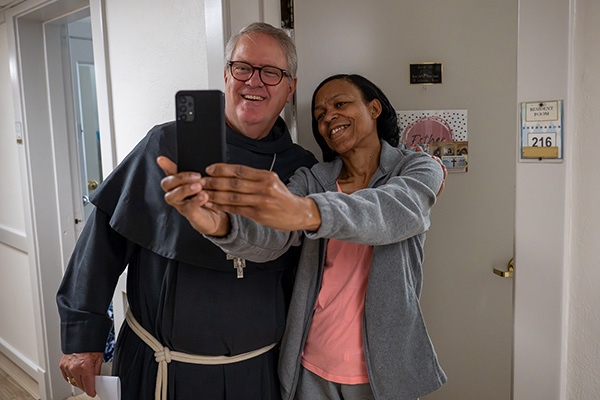
Bishop Martin then peeked his head into the food pantry, the counseling area, and the laundry room. Upstairs residents showed off their living spaces. He blessed their rooms, then took time to learn one resident's famous crabcake recipe and about another's new job. One of the last residents collapsed into his arms for a hug and told him of her recent visits to Queen of the Apostles, her heightened devotion to the Lord, and her enhanced prayer life. During the blessing, she surprised him with her own holy water. Before leaving, she said, “Not so fast, can I get a selfie?”
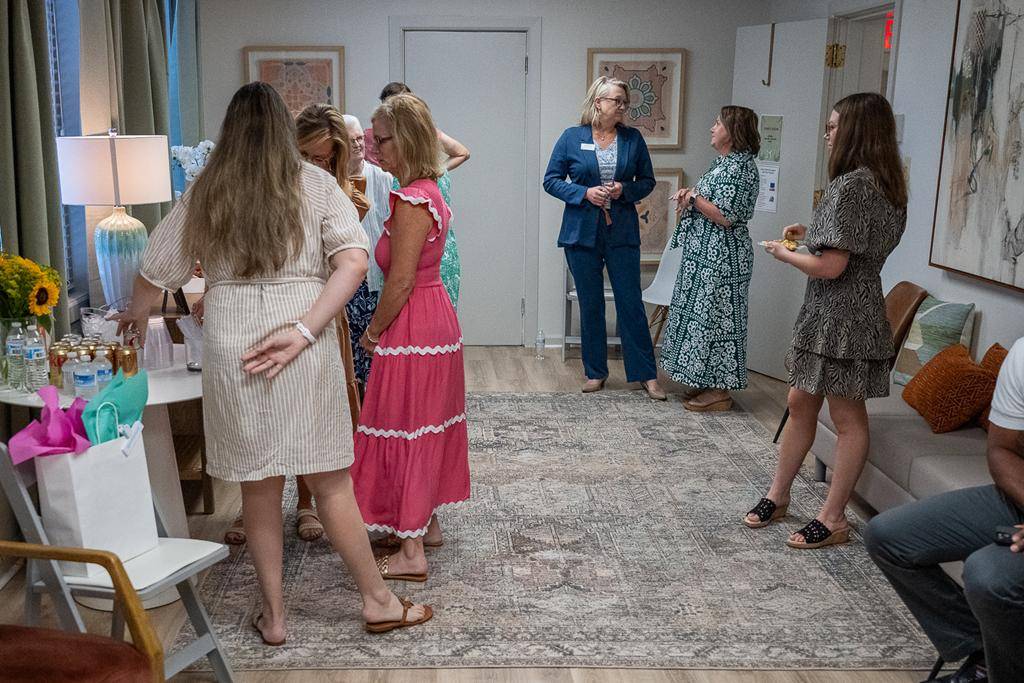
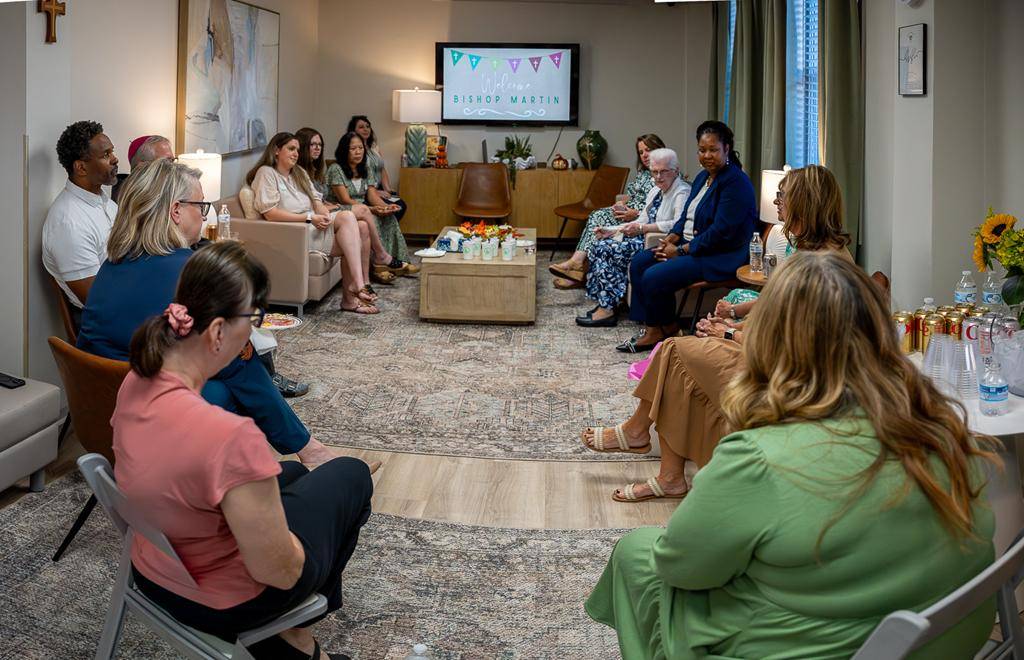
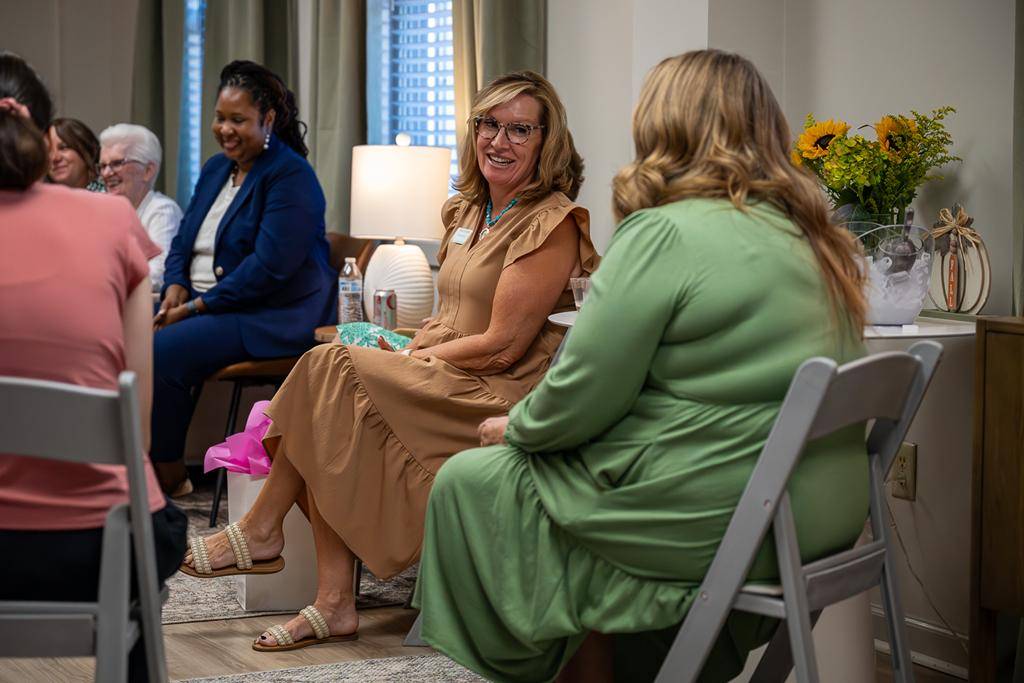
Afterward, the bishop met with the board, mostly consisting of local Catholic women who have volunteered for years. Over hors d'oeuvres and soft drinks, he listened to their stories of how and why they got involved with this ministry.
“Your presence is the presence of God saying someone cares about you. Maybe you applied for a job, but this is more than a job; this is a vocation,” said the bishop. “This is the way you serve the greater good of humanity, and that's what God calls us all to do.
“They may not be taking selfies with you,” he joked. “But let’s face it, two weeks from now I will be a distant memory; two years from now you will not. They will always look back at this difficult part of their lives, and your names will be forever etched in their hearts and stories.”
— Lisa M. Geraci