


‘You are called to serve’
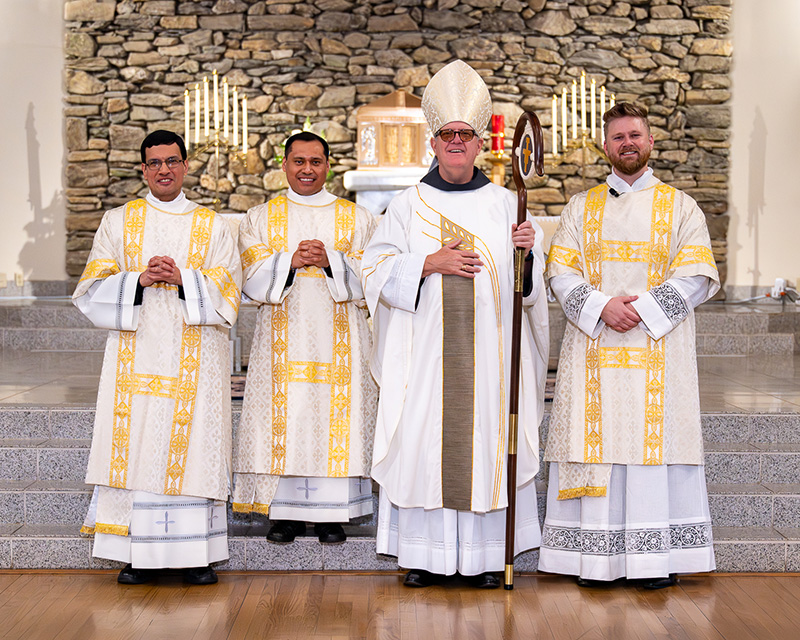
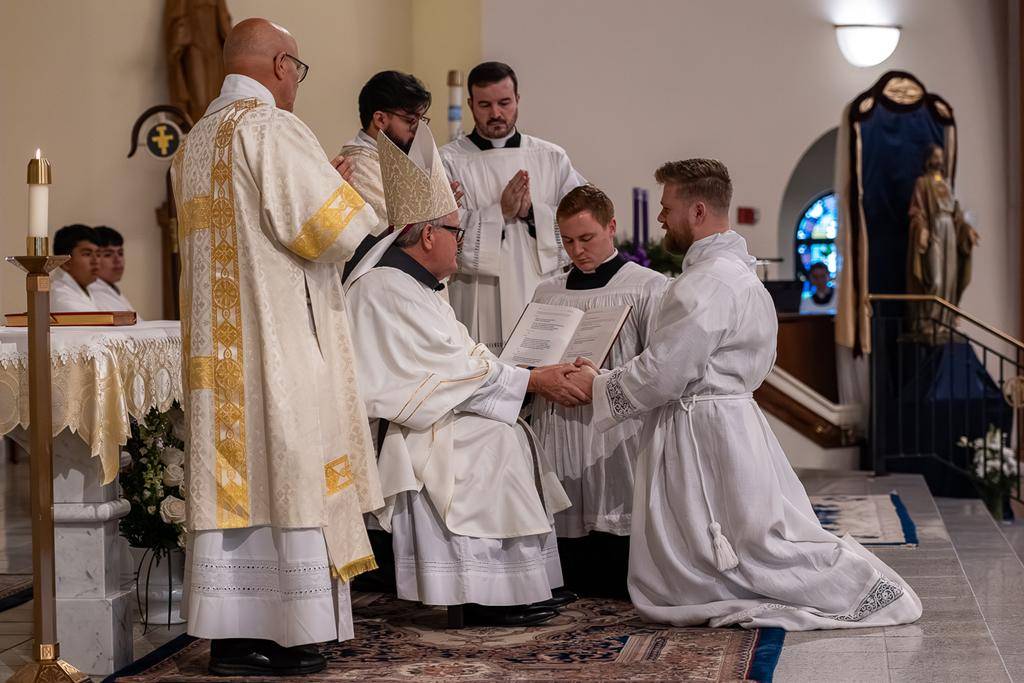
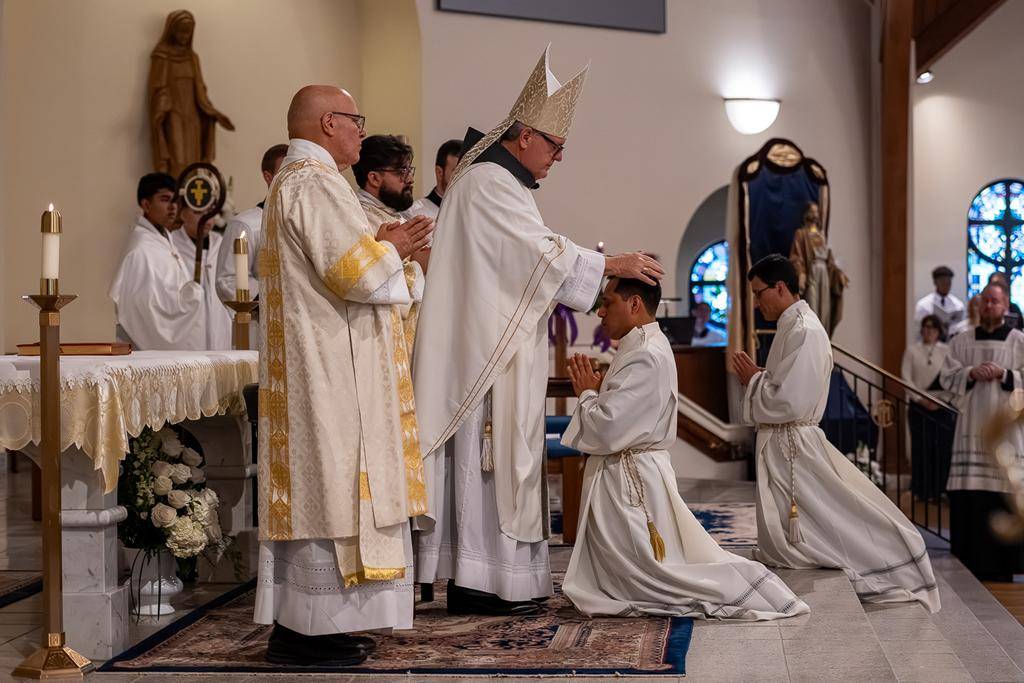
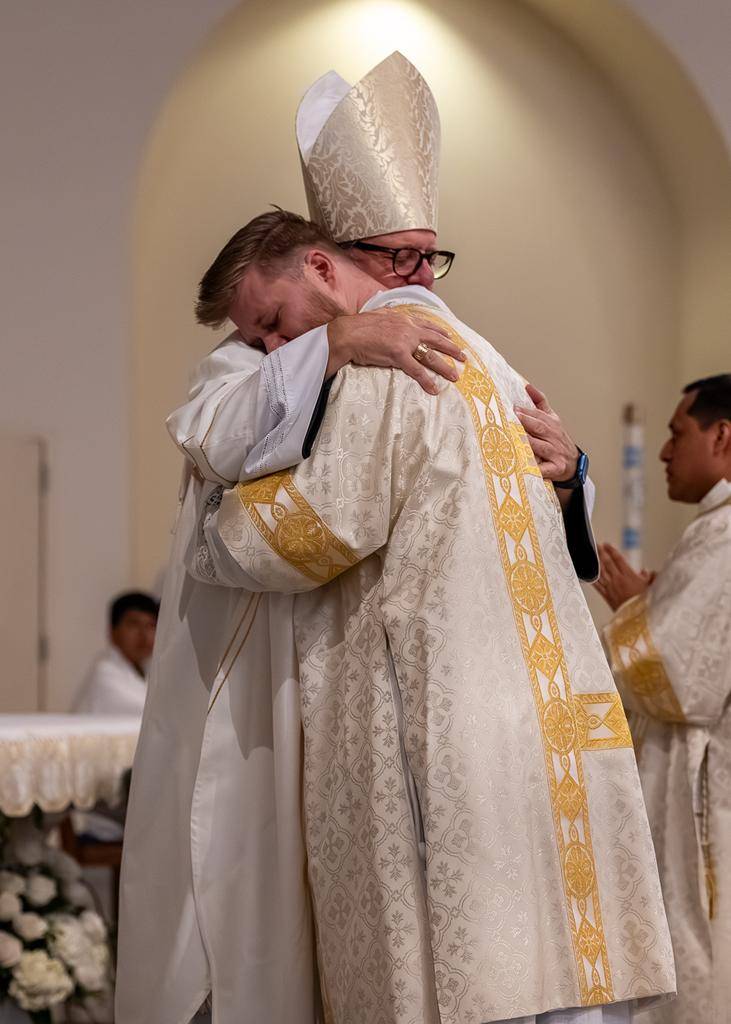
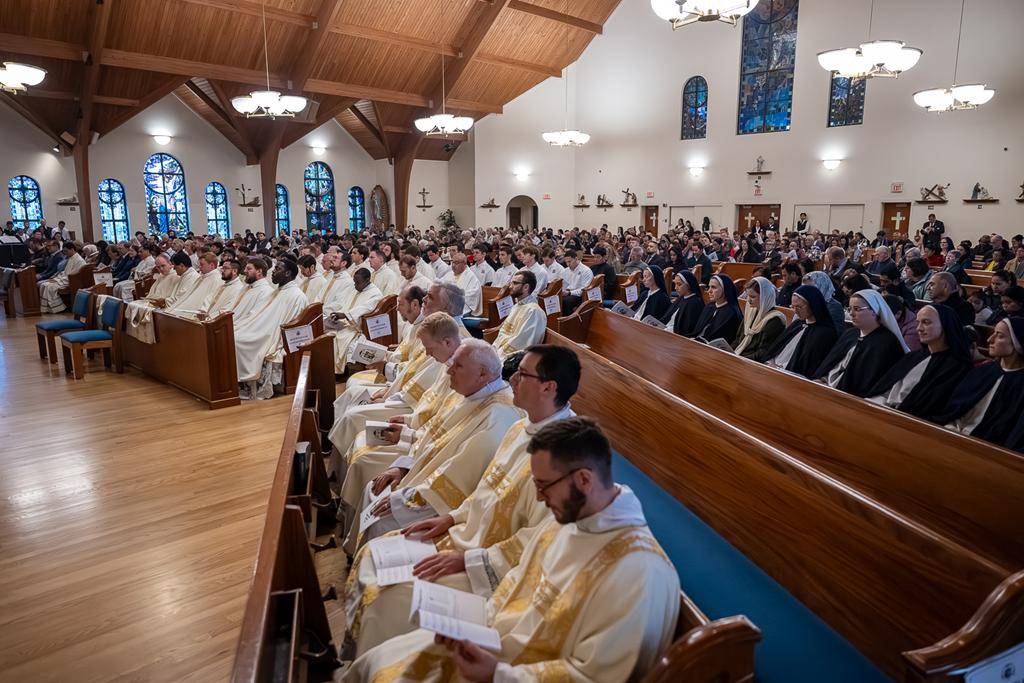
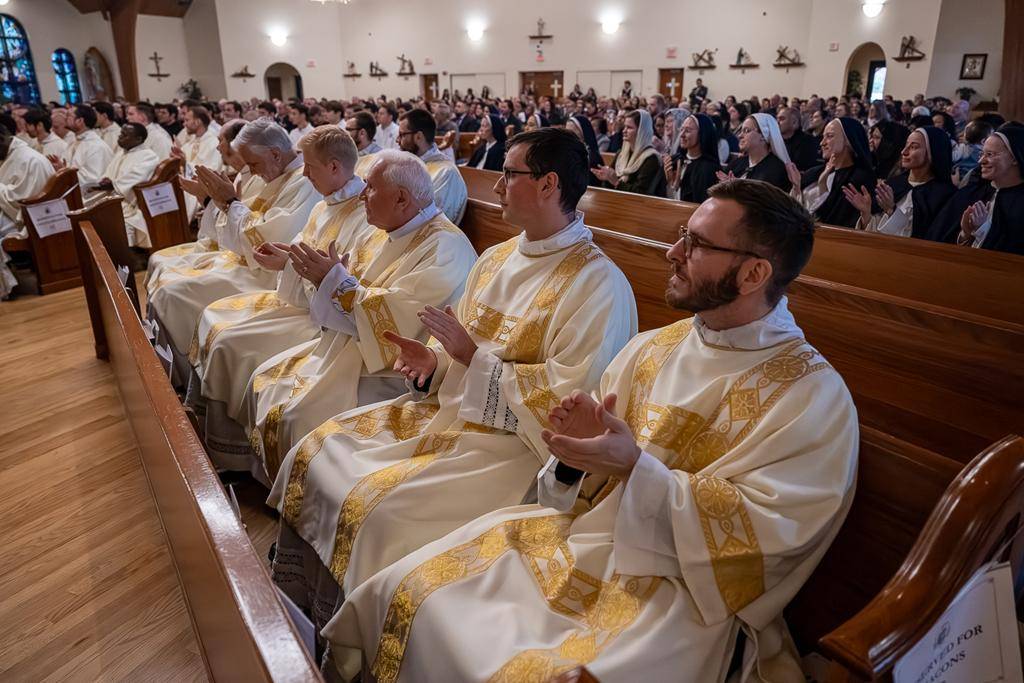
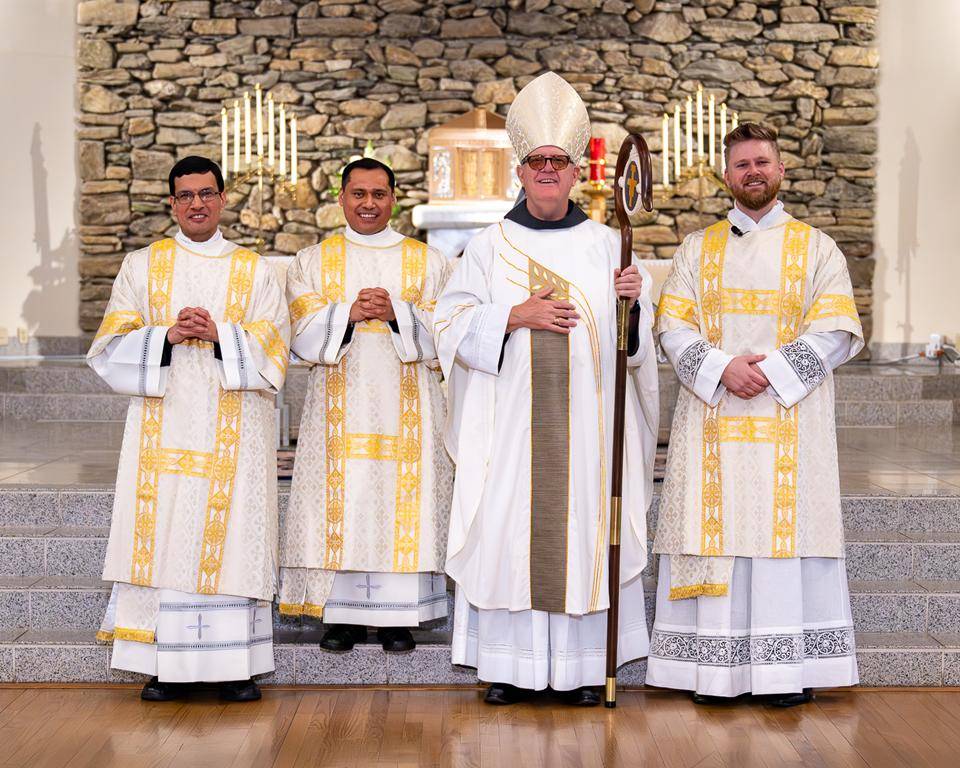
HENDERSONVILLE — Three men embarked on a new phase of their journey to the priesthood on Saturday as they were ordained as transitional deacons at Immaculate Conception Church in Hendersonville by Bishop Michael Martin, OFM Conv., who thanked them for answering God’s call to serve.
The church in the mountains was selected because all three have connections there. Daniel Chaves Peña and Juan González Hernández have served in varied capacities there for the past two years. James Connor Tweed is a Hendersonville native, and his home parish is St. John the Baptist in nearby Tryon.
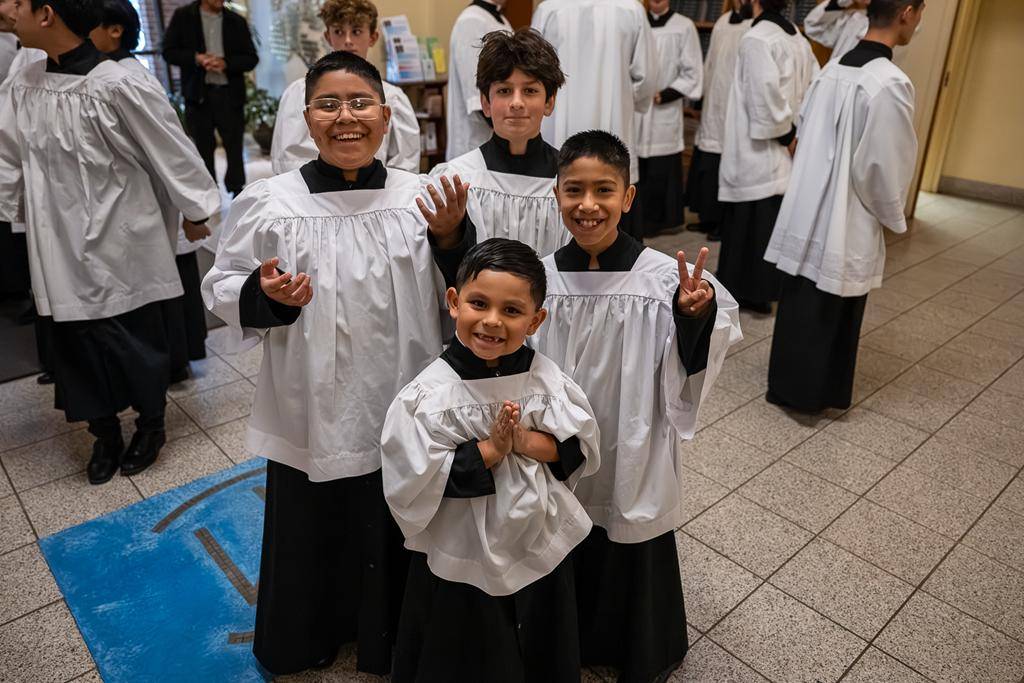
The bilingual Mass featured beautiful, soaring hymns in Spanish and English performed by the combined choirs at Immaculate Conception.
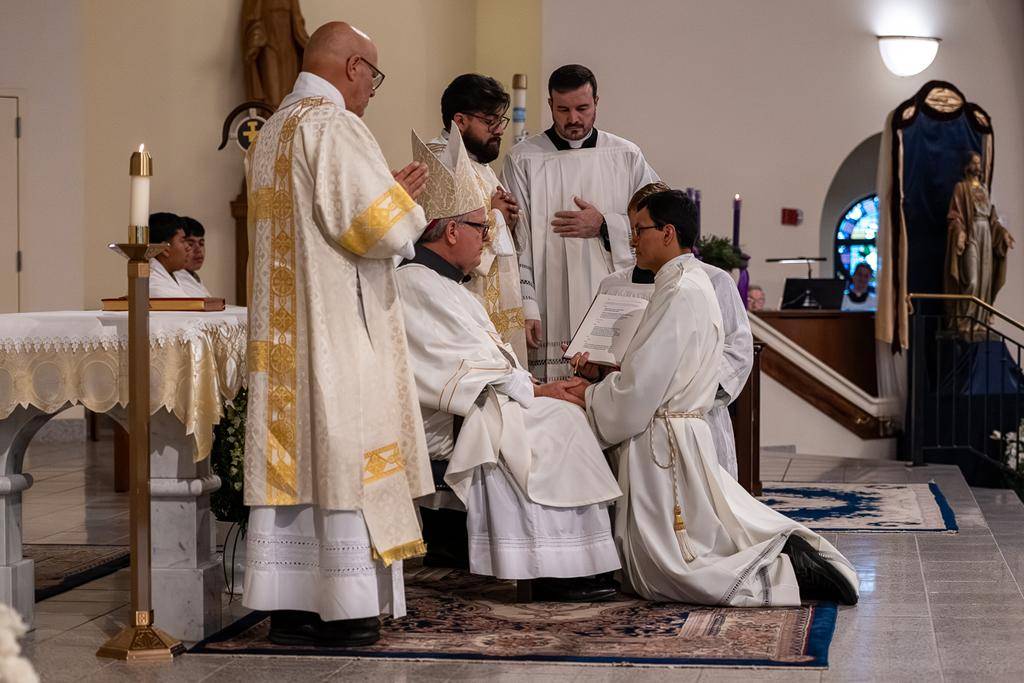
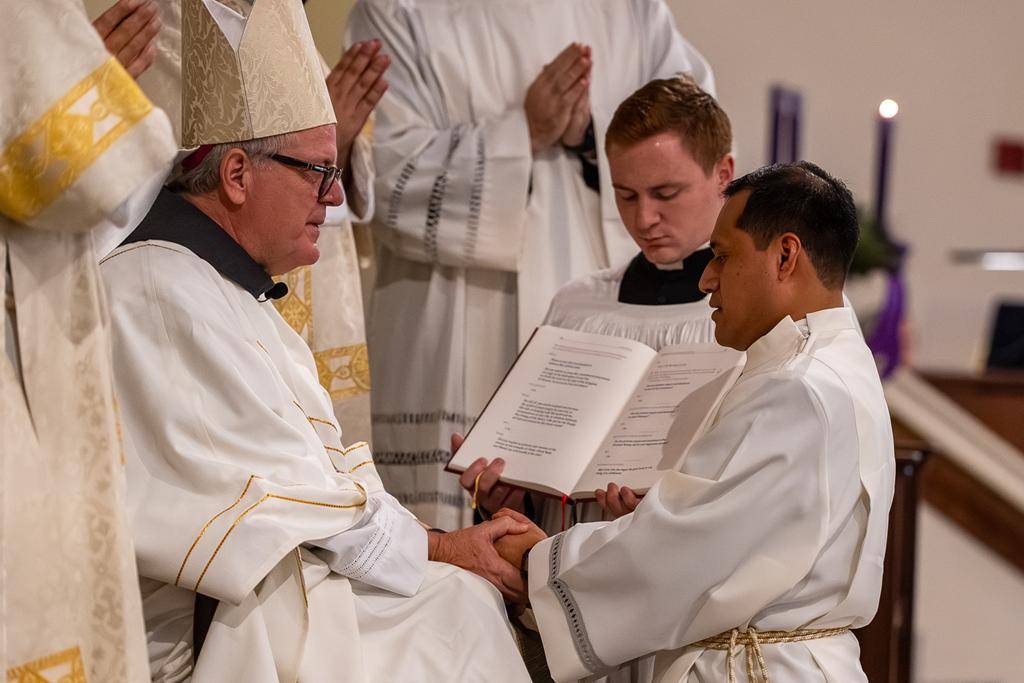
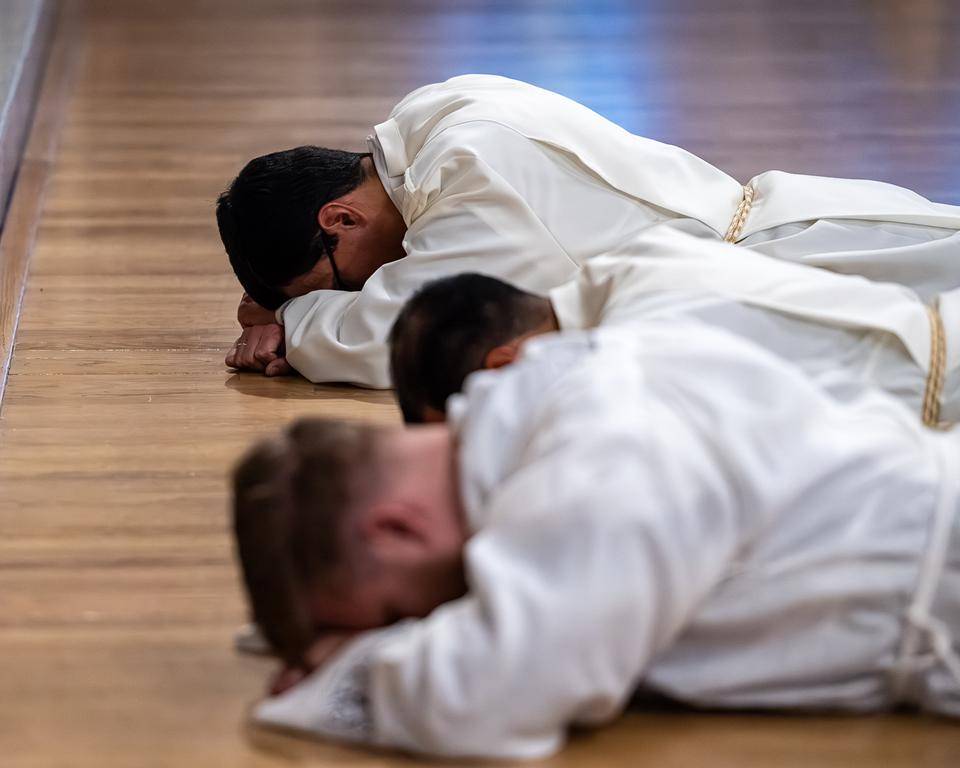
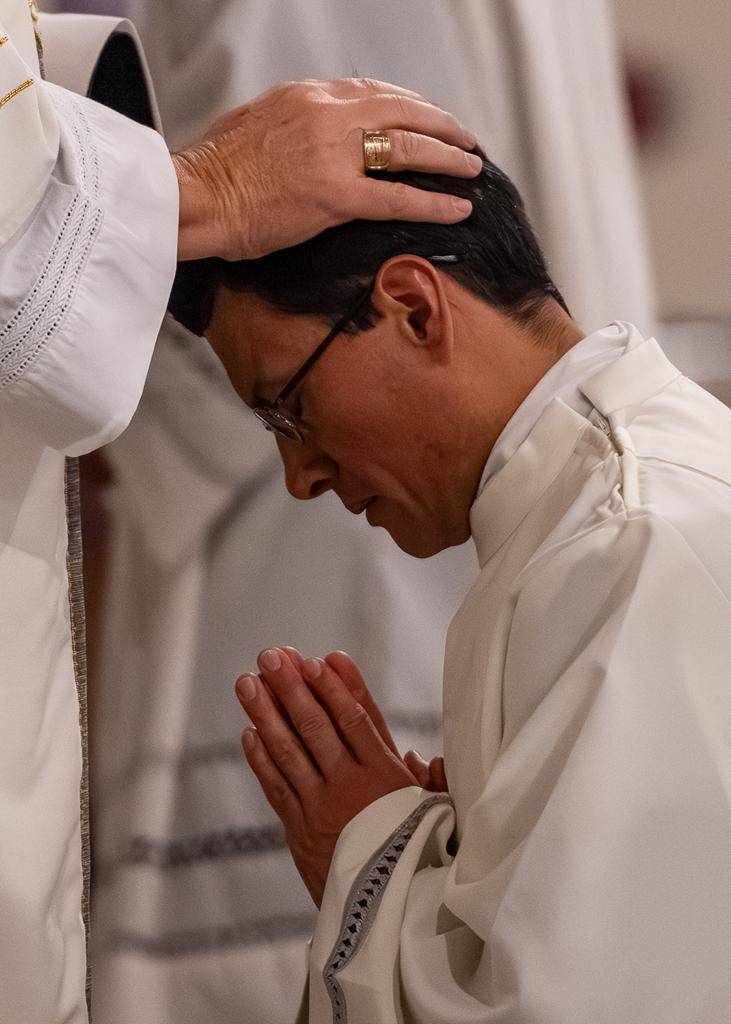
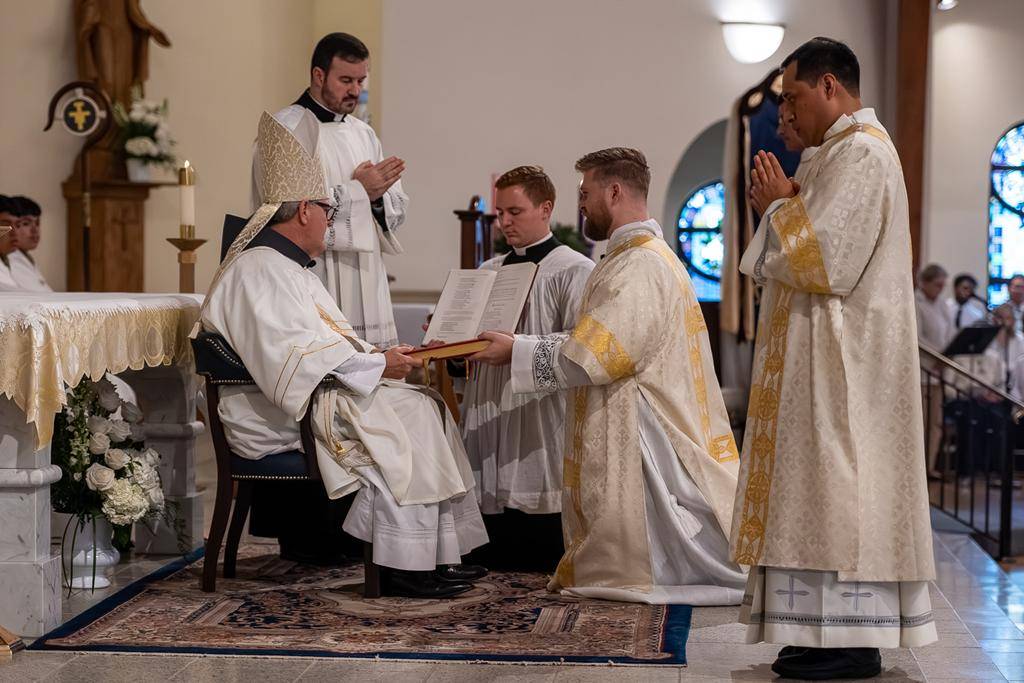
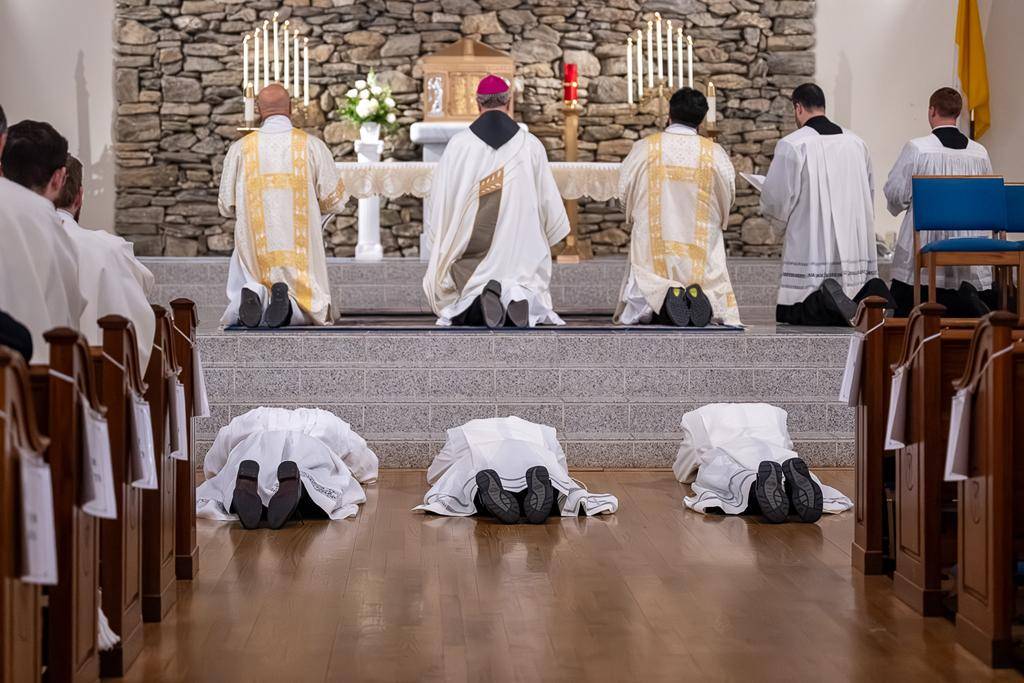
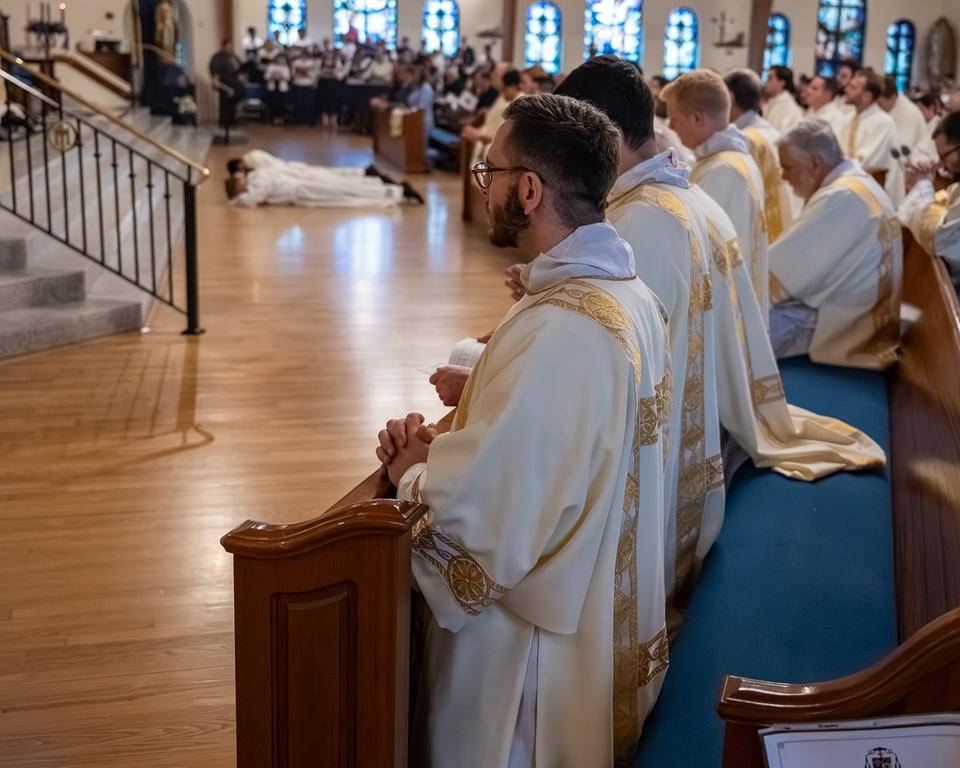
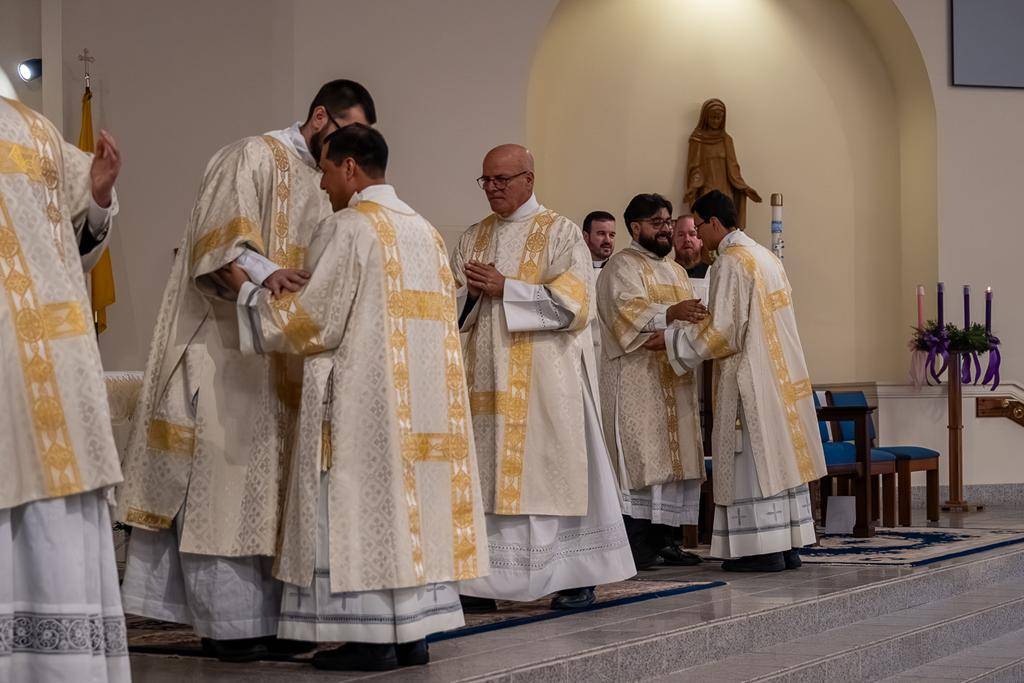
Before a crowd of family, friends and well-wishers, the men received their first foundational sacramental ordination within holy orders. They made promises to serve the diocese and Bishop Martin with humility and charity, then prostrated themselves before the altar during the Litany of Supplication. Bishop Martin laid his hands on their heads and prayed over them in the ancient rite of ordination.
The three were then vested with the stole, a sign of the deacon’s office of service, and the dalmatic, an outer garment used at Mass. The three chose to be vested by deacons who have been an inspiration to them in their vocations. Deacon González was vested by Deacon Bryan Ilagor, while Deacon Sigfredo Della Valle vested Deacon Chaves. Deacon Tweed was vested by Deacon Rich McCarron.
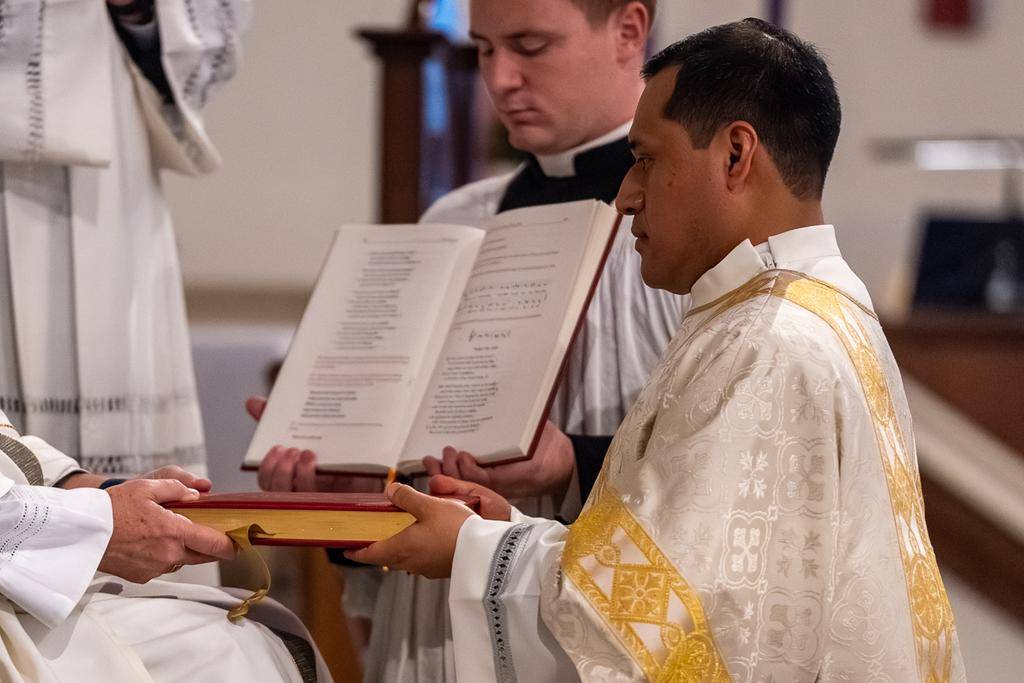
The newly vested deacons again approached the sanctuary one by one, receiving the Book of the Gospels. As they received the book, Bishop Martin spoke three sentences which sum up their role as proclaimers of the Gospel and as deacons: “Believe what you read, teach what you believe and practice what you teach.”
Bishop Martin’s homily centered around the theme of responding to the call of Christ.
“Daniel, Juan and James, the Lord has called you here, and you have responded,” he told the men. “You are ready and willing to listen to wherever God may want to call you, to whatever God may want of you, to wherever God may send you. Thank you for listening, but the listening is not over.”
As the bishop reflected on the Scripture readings, he noted the first reading from Sirach spoke of gaining wisdom both from studying the Word of God and from encountering God’s people in the world.
“The three of you are encouraged to go out into the world to see the good and the bad, to better discern the one from the other, to listen to the people of God of every nation, of every area, to learn how God is at work in the world,” he said.
He told the men they will see God’s wisdom “sometimes through the voice of an eight-year-old, other times in the face of a 90-year-old, and at times through the gentle encouragement or maybe even strong push of your family and friends.”
The second reading from Paul’s letter to the Corinthians, the bishop said, urges the men to find God’s wisdom through sacred Scripture and then proclaim it to the world while realizing with humility that we are all broken earthen vessels.
“St. Paul tells us, so that we don't think that none of us – the three of you, me, all of your brother priests and deacons – don’t think that we're here preaching us, proclaiming us, but rather, proclaiming Christ.”
Finally, he said, the Gospel reading from Matthew emphasized the role of service that comes with the transitional diaconate.
“You are called to serve,” Bishop Martin told them men. “You are laying down your lives, literally, saying, ‘how may I give of myself for the good of the Church?’”
“And we will need your service,” he said. “We will need you to extinguish yourselves for the good of the Gospel.”
The three deacons will now be able to proclaim the Gospel at Mass, preach at the invitation of the priest, prepare the altar for the sacrifice of the Eucharist, distribute Communion to the faithful, administer baptisms, officiate at marriages, bring the Eucharist to the dying, conduct funerals, instruct believers and nonbelievers in Church doctrine, preside over public prayer and perform works of charity.
The newly ordained men are called “transitional” deacons instead of “permanent” deacons, a distinction that reflects their intent to serve a year in pastoral, liturgical and educational preparation before being ordained into the priesthood. Diaconate is the first of three ranks of holy orders; the other two are priest and bishop.
At the end of Mass, Bishop Martin announced the new deacons’ assignments. Deacon Tweed will return to seminary in Ohio to continue his studies while working in part-time pastoral ministry.
Deacon Chaves is assigned to Holy Cross Parish in Kernersville, while Deacon González will serve at Our Lady of the Lourdes Parish in Monroe.
Each of the new deacons reflected on their feelings after the moving and powerful liturgy.
“I saw God’s grace at work here,” said Deacon Chaves. “I especially reflected on the bishop’s words of how we are unworthy earthen vessels but filled with God’s love.”
“I give thanks to God for this day,” Deacon González said. “I give thanks to Him for this vocation, and I hope to give everything to Him.”
With a wide smile, Deacon Tweed said the day was hard to describe.
“The Lord has blessed me beyond words – the immediacy of his love is so overwhelming right now.”
— Christina Lee Knauss. Photos by Troy C. Hull
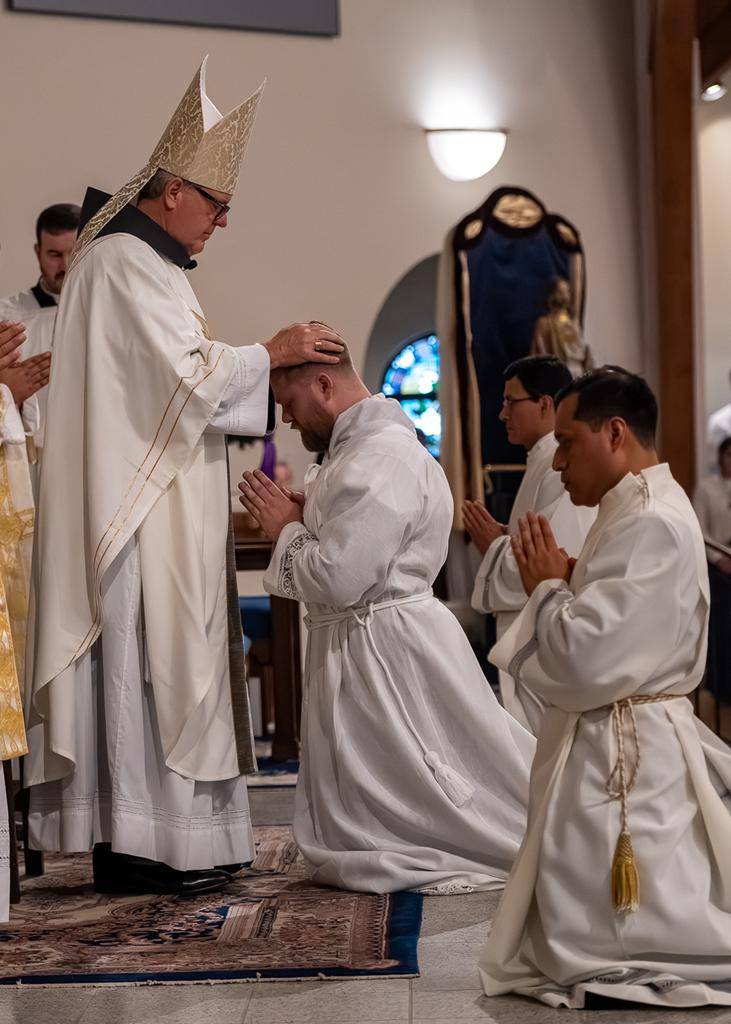
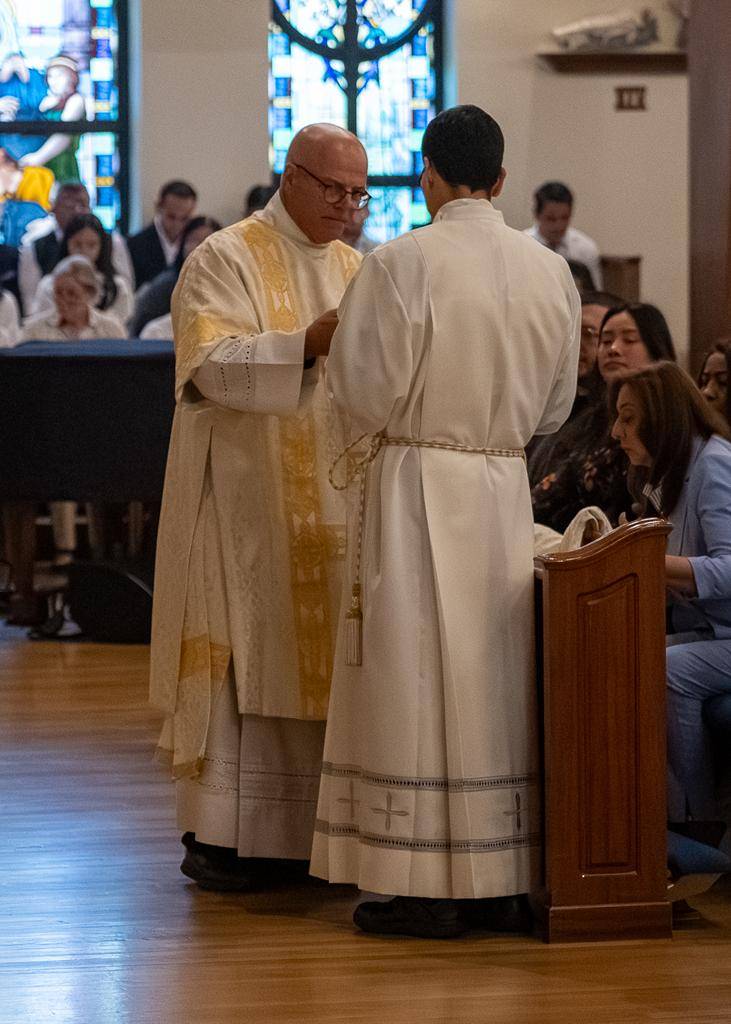
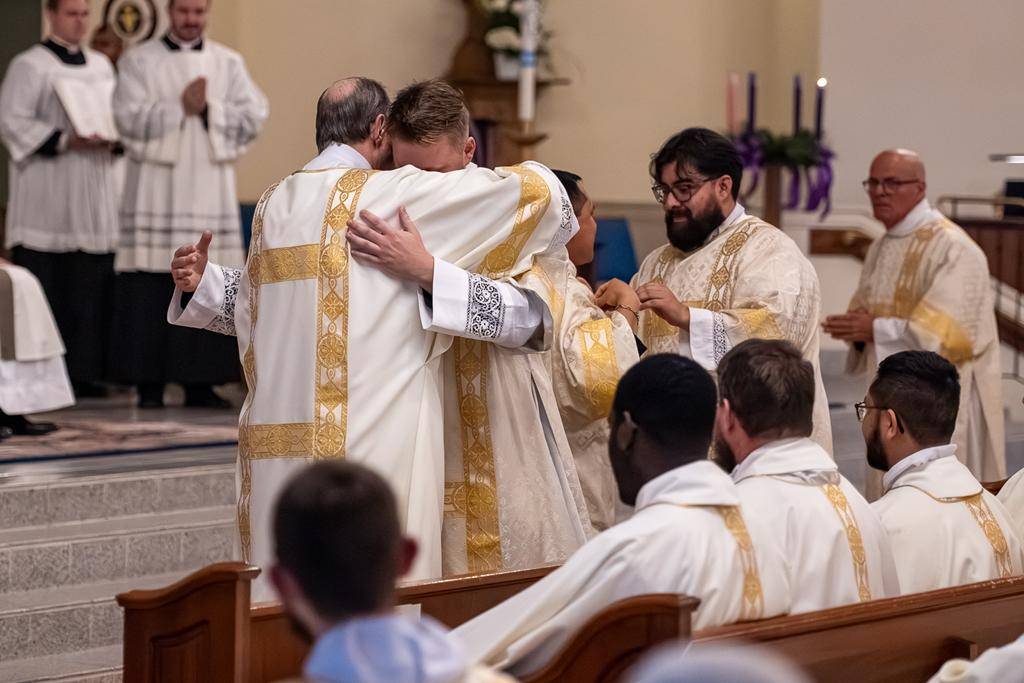
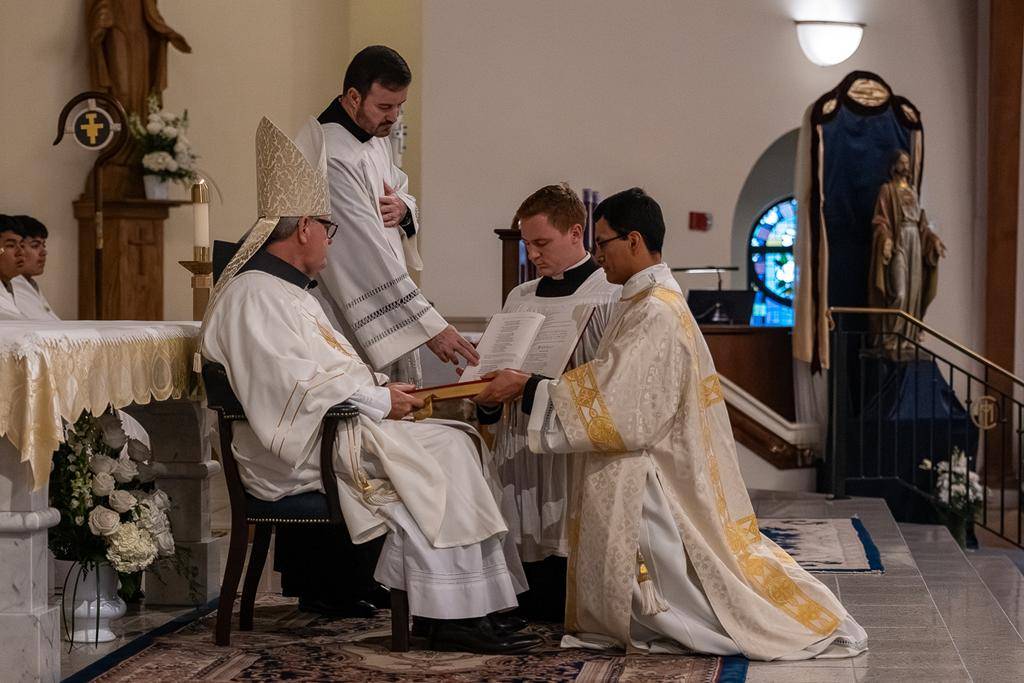


Watch the full Mass:
The sciences that led to the seminary
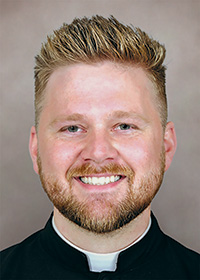
Hometown/birthplace: Born in Hendersonville, grew up in Brevard.
Home parish: Sacred Heart, Brevard
Age: 30
Family: Father Michael, mother Mary and five siblings
Educational background: Bachelor’s in Molecular Biology and Biotechnology from Palm Beach Atlantic University. Studied/worked at Max Planck Florida Institute for Neuroscience. Two years of philosophy at St. Joseph College Seminary, Mount Holly. Pursuing master’s degrees in divinity and theology at the Athenaeum in Ohio.
Hobbies: Working out, writing poetry and prose, walking in the woods, oil painting and hosting friends.
Favorite saint: The Blessed Virgin Mary. “When I’m with her I feel very close to Jesus.”
Favorite Bible verse: “For she is a breath of the power of God, and a pure emanation of the glory of the Almighty; therefore nothing defiled gains entrance into her. For she is a reflection of eternal light, a spotless mirror of the working of God, and an image of his goodness” (Wisdom 7:25–26).
Favorite prayer: Psalm 45, a hymn of mystical love—a song of the soul’s longing for divine union.
What are your hobbies? Working out, writing poetry and prose, walking in the woods, oil painting and hosting friends.
What is your favorite saint? The Blessed Virgin Mary. When I’m with her, I feel very close to Jesus.
As a young man, seminarian James Tweed dreamed of discovering the wonders of history and studying the life of the world’s oceans. He wanted to be an archaeologist and marine biologist while he was in high school.
As the years passed, his talents led him to studies in molecular biology, chemistry and math. He worked at the Max Planck Neuroscience Institute and considered studying medicine at the University of Miami.
Yet he also felt called to something more. He felt a call to the priesthood in high school but pursued other interests.
Then, while attending a Steubenville retreat in Atlanta, there was a call for men considering the priesthood to stand up. Suddenly, everything became clear.
Those other paths fell away and he embarked on the path of the Gospel.
Tweed is in his final year of theology studies at The Athenaeum in Ohio.
His background has come in handy during his time at seminary. This summer, he served as an interfaith chaplain at Atrium Health’s Trauma Center at Carolinas Medical Center.
CNH: What was your journey of discernment like?
Tweed: God planted the seed of my vocation from my earliest years. It grew quietly, nurtured by grace, the sacraments, and the loving care of my family.
There were moments when I sensed I was set apart for something special, though I couldn’t yet see what that would be. As a teenager, while dating, I noticed that the closer I became to someone, the more my heart seemed to drift from the Lord. This was not out of pain or confusion, but a clear inner awareness that my heart had been made entirely for Him. God was showing me that He desired my undivided love, and that only in Him could my heart find its true home. Then came the moment during the Steubenville retreat in Atlanta. I was completely unprepared - the thought had never even entered my mind. I did not want this path, and I could not have imagined choosing it myself. Yet, in that moment, I felt an irresistible movement within my heart. It was as if the Lord spoke my name in a way that embraced my whole being, drawing me with a love both commanding and tender. Almost before I knew it, I stood. In that moment, I understood with clarity and joy that my life belonged to Him.
CNH: What has your experience been like so far in the seminary?
Tweed: Wonderfully freeing. What might appear as restrictions have become the very framework of my growth, allowing me to advance in the intellectual, moral, and spiritual life more fully than I could elsewhere. The greatest joy has been the lifelong bonds formed with my brothers, discerning the Lord’s call alongside me. These friendships, rooted in prayer, shared struggles and mutual encouragement are a constant source of joy and strength.
CNH: Any advice for men considering the priesthood?
Tweed: The joy, peace, and purpose that come from embracing God’s plan for your life far surpass any earthly attachment. Do not be afraid to trust Him, even when the path is unclear. God’s call is a gift.
CNH: Any Advice for families/friends of those considering vocations?
Tweed: Pray and listen. Encourage your loved one to spend time in prayer and reflection. Create a supportive space where they can share their thoughts and struggles without pressure.
— Christina Lee Knauss
God’s call put runner on different track
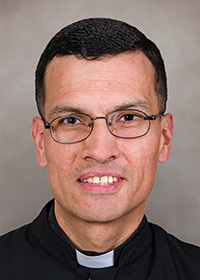
Daniel Chaves Peña thought he had his life all worked out. A track star living in New Jersey, he was close to achieving his dreams as an athlete, but suddenly his life changed. God had different plans for him. Plans to which, he eventually would say yes.
Originally from Bogotá, Colombia, Chaves moved to New Jersey in 1993 at a young age. As he matured, so did the quiet call God was placing in his heart.
He entered seminary and completed his philosophical studies in Spain in 2010. His journey of formation led him to serve in missions in Peru from 2016 to 2018, and eventually to Rome, where he earned his Baccalaureate in Sacred Theology in 2021.
In 2023, Chaves joined the Diocese of Charlotte’s seminary program and is serving the community of Immaculate Conception Parish in Hendersonville as he awaits the grace of receiving Holy Orders.
CNH: When did you first feel a calling to the priesthood?
Chavez Peña: When I got to what was going to be my last year of high school, I ran cross-country and I was doing pretty well. I had many scholarship offers from universities here in the United States, and in the final race of the state championship in New Jersey, I collapsed just before reaching the finish line...
They rushed me to the ER, and they told me it was my sugar levels – they were extremely low. That began a crisis not only health-wise, but spiritually. And
I wasn’t getting better, I had relapses, so the decision was made for me to return to Colombia with my mom.
It was during that crisis when I had to face reality. Because everyone thought my future was so bright, and suddenly I realized life ends and things aren’t just fun or passing time. You face reality and the question arises. And as I said, it wasn’t just “change your life,” but “give yourself to Me.” But that was a vague first call that I didn’t fully understand until much later.
CNH: What was life like in Colombia? How did it lead to you choosing this life?
Chavez Peña: When I went to Colombia, I reconnected with the Church through my paternal grandparents, especially through the Charismatic Renewal at the Minuto de Dios, a very strong movement in Colombia. Even though I’ve never felt particularly drawn to the Charismatic Renewal, it was like the door that opened for me to search for what I was looking for. And eventually that same grandmother took me to a silent weekend retreat—an Ignatian retreat in Bogotá—where I clearly found the call to the priesthood.
At that retreat I remember thinking, yes, maybe this is it, but we’re always reluctant to face what God asks of us because we know God asks for a lot. So there was that fear: if I say yes, everything else is over. …But the thought kept returning, resonating, until I said, I can’t live with myself if I say no. It was so clear – God was calling me.
CNH: Reflecting on that health crisis you had in high school, how did God use it to transform you?
Chavez Peña: I’d say it was the beginning of a transformation—one I dare say continues even today, and probably will until my death. But yes, it was the push. A moment where I said, “I could die here.” And everything changes—it's a new reality. And even though I wasn’t practicing, that’s the beauty of planting faith in children: even if they stray, the seed remains. And I realized—if I die now, I must give an account to God. There is something after life. And it may be heaven, or it may not be. It’s serious, facing that. That was the shake that began the process of thinking differently.
CNH: What are some of your interests?
Chavez Peña: I like reading a lot—especially lives of saints and writings of saints. History as well, but spending time with writings of saints is what I dedicate the most time to, especially during prayer. And classical music.
CNH: How has your family relationship been with your decision to pursue the priesthood?
Chavez Peña: My dad always supported me and told me, “If that’s what you believe God is asking, go ahead.” My mom had a harder time because moms are moms, and I’m her only child, her only son. That bond is special, and it isn’t easy—I understand that. She didn’t oppose it directly, but you could tell she didn’t share that ideal at first. But beautifully, as time has gone by, she’s now a model Catholic. I couldn’t ask for more.
CNH: You mentioned reading saints. Is there any who particularly inspires you?
Chavez Peña: First, St. Thérèse of the Child Jesus, Thérèse of Lisieux. Not only her life and teachings, but the spiritual closeness I’ve felt with her in critical moments of my vocation. Her “spiritual childhood” – giving everything to God but with a sense of personal weakness. Recognizing that God provides what He asks of us. That intimate trust in God. That even when things are dark, you move forward knowing He’s there. She has been a great support.
The second influence, giving everything a Marian flavor, is St. Maximilian Kolbe. His spirituality deepened my understanding of Mary…She has been decisive in my journey.
— Brian Segovia
Following a family tradition of service
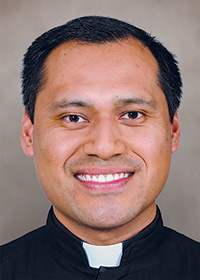
For some, serving the kingdom of God as a priest is an intimidating calling, but Juan González Hernández knew from the age of six that God had plans for him.
Hernández’ devout Catholic upbringing in Mexico City led him to encounter his vocation in one of the most moving ways possible: witnessing his brother’s ordination to the priesthood and receiving his first communion from him during his first Mass.
Born on October 1, 1990, in Tapalapa, Chiapas, Hernández grew up in a faith-filled family where service to the Church was a natural part of life, with siblings who went on to become priests, religious sisters and educators. His early calling led him to formation in Spain in 2007, followed by ministry in Peru and advanced theological studies in Rome, where he completed master’s degrees in philosophy and moral theology in 2021.
Drawn to serve the Hispanic Catholic community, Hernández is assigned to Immaculate Conception in Hendersonville and lives at St. Joseph College Seminary. Choosing Deacon Bryan Ilagor to vest him at his diaconate ordination, Hernández continues to prepare for priesthood while enjoying music, literature, and hiking as he deepens his commitment to a life of service in Christ.
CNH: When did you first feel a calling to the priesthood?
Hernández: It was the day that my brother was ordained a priest in 1997 when I was just about to turn 7 years old. On that day, the lightbulb in me lit up and I asked myself, “what if I myself become a priest one day, like my brother?”
CNH: What experience led you to attend seminary?
Hernández: At 12 years of age, I had a vocational experience that was sort of like a pre-seminary experience. There I was for about two years with other boys who had the same feeling of a call that I did, then before college I did another vocational retreat in Mexico City. Then I received a formal invitation to the seminary, and after talking with my father he had no opposition, and I decided I had to join.
CNH: What was it like to continue your studies by leaving for Spain?
Hernández: My brother, a priest, and two of my sisters, who were cloistered nuns, lived there. My brother studied in Spain while in seminary and my sisters were also a part of the institute “Obra de Amor” which brought them to Spain.
Having them there was helpful, because even though it was a new experience for me, I could be close to my family and learn from them.
CNH: What does it mean to you to be able to serve the Hispanic community in this diocese?
Hernández: I have lived in many different places with a variety of cultures. I feel as though I mold well to both communities, the Anglo and Hispanic communities. So the idea that my mentor at Immaculate Conception in Hendersonville, Father Andrés Gutierrez, has mentioned is [to] create a singular and strong community out of both of those cultures. That way, people do not show divisions but rather the church becomes a place where everyone feels like one community.
CNH: What will it mean for you to become a deacon?
Hernández: It is a radical change in my life, because after this moment I will be a representative of not only the Church, but of Jesus Christ. Of course, the responsibility is much bigger, but I am also conscious that God’s grace, the prayers of the faithful and a spiritual life, help to take charge of that weight.
CNH: What stands out when you think about the day you will become a priest?
Hernández: I think about when my father told me before I left my family to the seminary, ‘If the Lord is calling you, you must follow his instruction. The Lord can choose whoever He wants whenever He wants, we must be ready to follow.’ For me it is accepting a gift. I feel secure in this decision because this is my vocation and God has control.
CNH: What does it mean to become a leader and represent the Church?
Hernández: To represent the Church is to represent Christ. If He was not real or He didn’t rise from the dead, my life would not have any meaning.
I want to represent Him by showing the unconditional love that Christ had for everyone with the goal of bringing them into the Church and conversion. For those that don’t, that they might at least have a more meaningful relationship with the Lord.
— Brian Segovia