


St. Matthew parishioners respond with aid to devastated coastal town
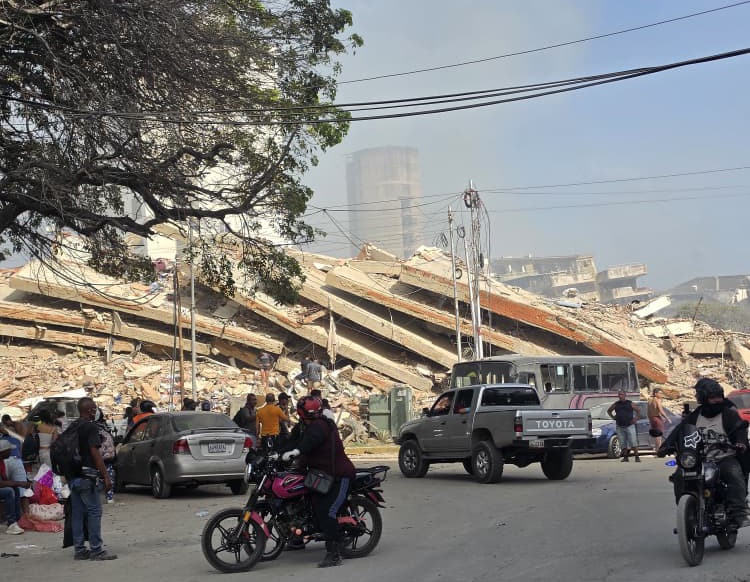
Devastated buidlings line the streets of Naiguatá, one of the hardest-hot communities in Venezuela, prompting the Diocese of Charlotte to hold a special collection for humanitarian relief.
CHARLOTTE — It was just after 6 p.m. when Veronica Rodriguez settled in to watch the World Cup on TV and the phone rang.
There’s been an earthquake.
Your mother’s home in Venezuela was hit.
It’s bad.
“Oh my God,” Veronica said to herself, “I’ve got to call my mother.”
No answer.
Veronica flipped to follow the news on social media: Two earthquakes, 7.2 and 7.5. Buildings collapsed. People were killed.
“It was terrifying,” says Veronica, a St. Matthew parishioner who moved to the U.S. 15 years ago. “The buildings looked like Legos falling down – and my mom was right in the most affected area.”
Veronica’s mother, Beatriz Borregales, lives in the capital city Caracas but often spends weekends and holidays at a family home in Naiguatá, a small fishing and tourist town on the Caribbean, 25 miles east of Caracas. June 24 was a national holiday in Venezuela, so Veronica wondered if her mother might be there.
A similar scramble for information was unfolding among other St. Matthew parishioners. For the past eight years, the Diocese of Charlotte’s largest parish has supported a soup kitchen at the Catholic parish in Naiguatá.
Texts flew among parishioners: Is anyone hurt? Is the soup kitchen OK? Has anyone heard from Padre Martin?
Padre Martin Vegas is pastor of San Francisco de Asís Parish, where he oversees two churches and a Catholic school that hosts the soup kitchen. He wasn’t answering calls or texts either.
The twin earthquakes had wiped out communications and devastated structures at a time when most people were at home in Venezuela, celebrating the holiday. So, as night fell on June 24, the people of St. Matthew could only watch and wait.
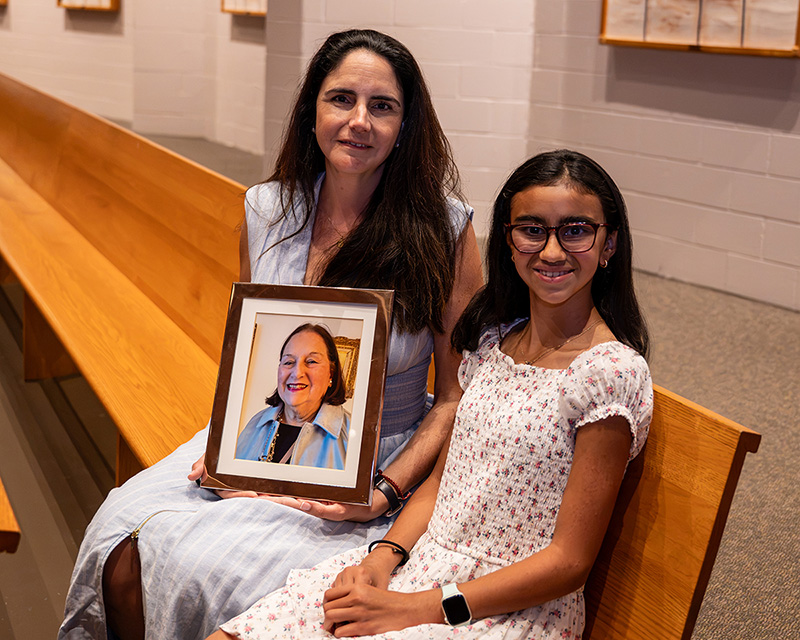 Veronica and her daughter pose with a photo of their mom, who they could not contact after the June 24 earthquakes.
Is my mother alive?
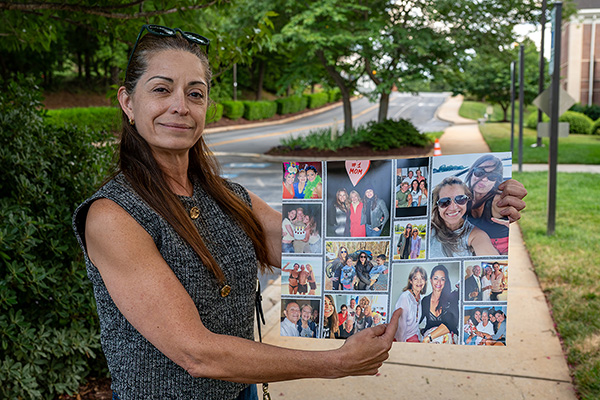 Dulce Peña holds a photo sheet of her family members.
Finding it impossible to sleep, Veronica turned to her Catholic chat group on WhatsApp and found similar panic among her Venezuelan friends now living in Charlotte. Everyone wanted information.
One friend, Dulce Peña, a parishioner at St. Mark in Huntersville, wrote that she too was looking for her mother. Her aunt, her brother and his wife were also unreachable. The four family members lived on the 13th and 14th floors of a high-rise condo building named “Riomar” on the edge of Naiguatá (pronounced Nye-gwah-TAH).
“We were on the phone with one another the whole night, praying,” Veronica says of her friend Dulce. “We promised whoever found their mother first would then help the other.”
Across Charlotte, Bruce Anderson’s heart sank as it became clear that Naiguatá had been among the areas hardest hit. He helps organize St. Matthew’s support for the soup kitchen, and he stayed up late searching online for any word of Padre Martin and the Venezuelan parish.
Before midnight, Veronica made a clever connection: She managed to reach an errand runner in Caracas and hired him to go look for her mother the next morning.
“I needed to know if she was alive,” Veronica says.
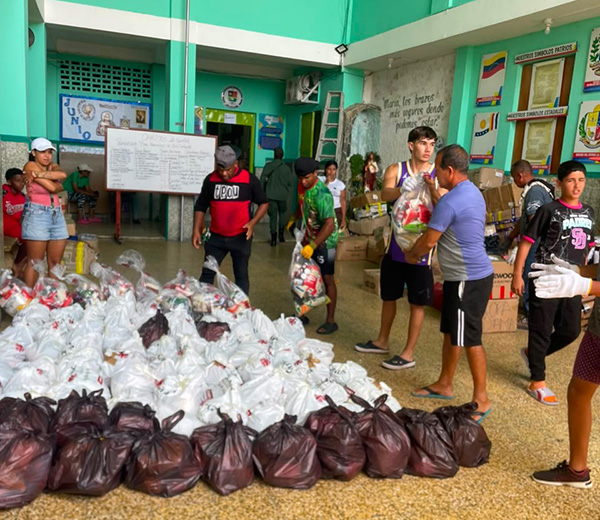 Volunteers help distribute bags containing food, hygiene products, water bottles and clothing.
A growing Catholic bond
It was Veronica and her mother who originally connected St. Matthew with Venezuela’s San Francisco de Asis Parish back in 2018. The two had learned about St. Matthew’s efforts to combat hunger, so they asked parish leaders to include Venezuela in its annual food-and-funds drive.
“People are eating out of trash cans,” Veronica had explained to leaders of St. Matthew’s Monsignor McSweeney World Hunger Drive, which last year raised $430,000 to aid people in eight countries.
The Venezuelan economy had collapsed under the authoritarian rule of Nicolas Maduro, she said, and people needed help. Her mother sent photos of hungry children lined up at the parish soup kitchen, which operated on a shoestring.
“We knew we could have an impact,” says Hunger Drive leader Steve Favory, who vividly remembers Veronica’s presentation. “The fact that this mother and daughter were reaching out, they were so sincere and grateful, and sending photos of the priest feeding the children – it touched our hearts.”
St. Matthew sent $1,000 that first year and has steadily increased its support – with parishioners donating $74,000 so far.
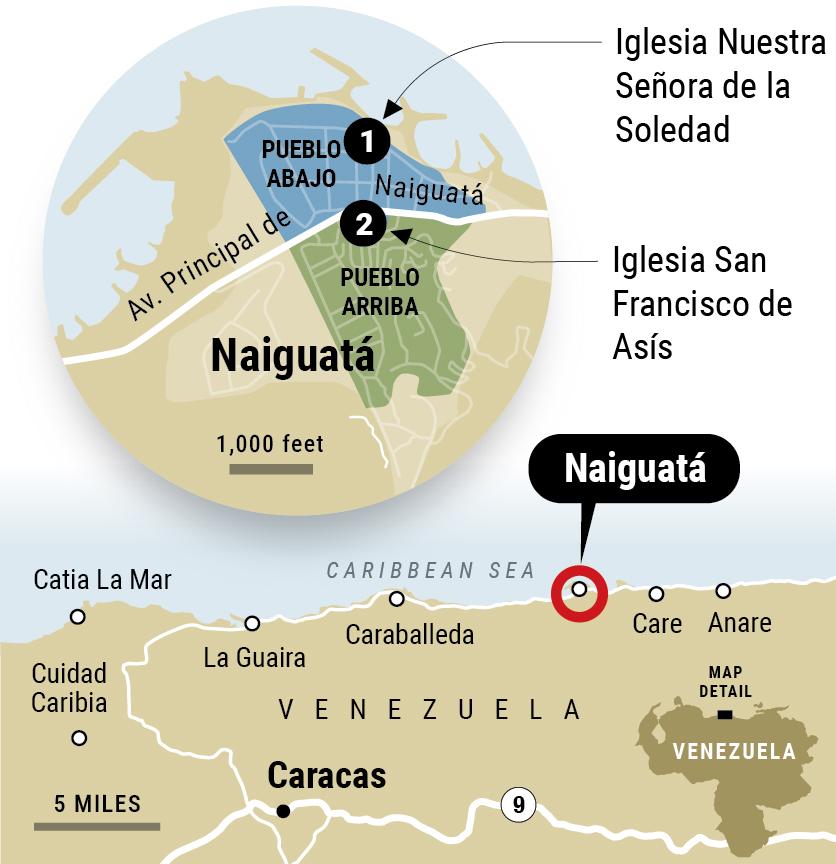 The soup kitchen has fed about 150 people a day from two locations. Naiguatá is a modest, working-class town that benefits from tourists who come for its mountain-to-sea views, but significant poverty has crept in.
The day after the quakes, Bruce Anderson emailed Padre Martin and Bishop Alberto Castillo for information about Naiguatá.
“Your friends at St. Matthew Catholic Church in Charlotte, North Carolina, USA, are concerned about your community following yesterday's earthquake,” he wrote. “When you are able to communicate with us regarding the situation, we would like to know what your needs are. You are in our prayers.”
Bishop Castillo responded later that day, June 25: “The state remains without electricity or communications, with significant loss of life and material damage to buildings, homes, churches, and infrastructure…I have not yet been able to contact Father Martín Vegas to learn about the damage sustained by the San Francisco de Asís parish, the church facilities, and the soup kitchen. However, I have heard from others that the priest is alive and well.”
“We are counting on your prayers,” the bishop wrote, “and any assistance you might be able to provide.”
With that, St. Matthew sprang into action, immediately preparing to wire $27,000 for whatever food and supplies were available. Within days, they would also be working to increase funding earmarked for the parish during this year’s World Hunger Drive, which kicked off July 11.
“St. Matthew has a big heart for people in need,” says Father Patrick Cahill, “and this time, one of own parishioners – Veronica Rodriguez – was dramatically impacted.”
Search for the missing
The errand runner set out early the morning after the earthquakes to search for Veronica’s mother. On a motorbike, he navigated streets clogged with debris and desperation, from Caracas to Naiguatá, weaving around collapsed homes, damaged roadways and people digging through the rubble by hand for loved ones.
He had the address and a photo of Veronica’s mother on his phone. He also had a picture of the colorful mural that adorned the wall in front of Beatriz Borregales’ home, depicting Our Lady of Coromoto, Venezuela’s patron saint. It was a landmark.
Hoodlums stopped painting graffiti on the wall when the mural went up. “People are very Catholic there,” Veronica says.
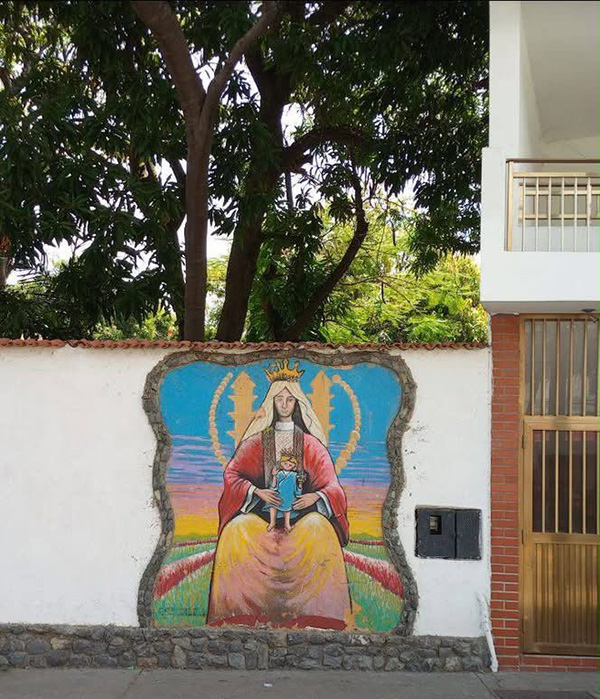 The runner sent to find Veronica’s mother the morning after quakes was told to look for the image of Our Lady of Coromoto, Venezuela’s patron saint, to identify the location of her home.
Finally, the errand runner was standing outside Beatriz Borregales’ modest home on a picturesque parcel passed down from her father, Germán Borregales, an anti-communist political leader who had run unsuccessfully for president of Venezuela several times in the 1960s.
Beatriz Borregales had maintained the property since his death in 1984 and frequently vacationed there with Veronica and her siblings, and now hosted gatherings for her San Francisco de Asís Parish community.
Borregales guardedly answered the door. She warmed up when the errand runner flashed a photo of Veronica, smiling. He asked if he could take Borregales’ picture and record her voice, so he would have evidence to send Veronica when a signal became available. “Proof of life,” Veronica had called it.
Borregales felt blessed to be alive. On the night of the quakes, she’d been watching TV and suddenly felt dizzy as the floor began to move. She looked outside and saw a four-foot wave of water splashing from her swimming pool.
“People began coming down from the higher part of town shouting, ‘Earthquake! Earthquake!’” she told the Catholic News Herald. “I remained calm, praying, and asking God to protect us. All night, everyone stayed out in the streets – children, mothers, entire families.”
It was around 2 p.m. on June 25 – 20 hours after the quakes – when Veronica’s phone buzzed with good news. She wept.
“My mother was overwhelmed, but she was safe,” Veronica says. “Everything around her collapsed. The house was the only thing left intact, but she was alive.”
He would also send photos of a collapsed high-rise with nothing but its sign remaining: Riomar, where Dulce Peña’s mother lived.
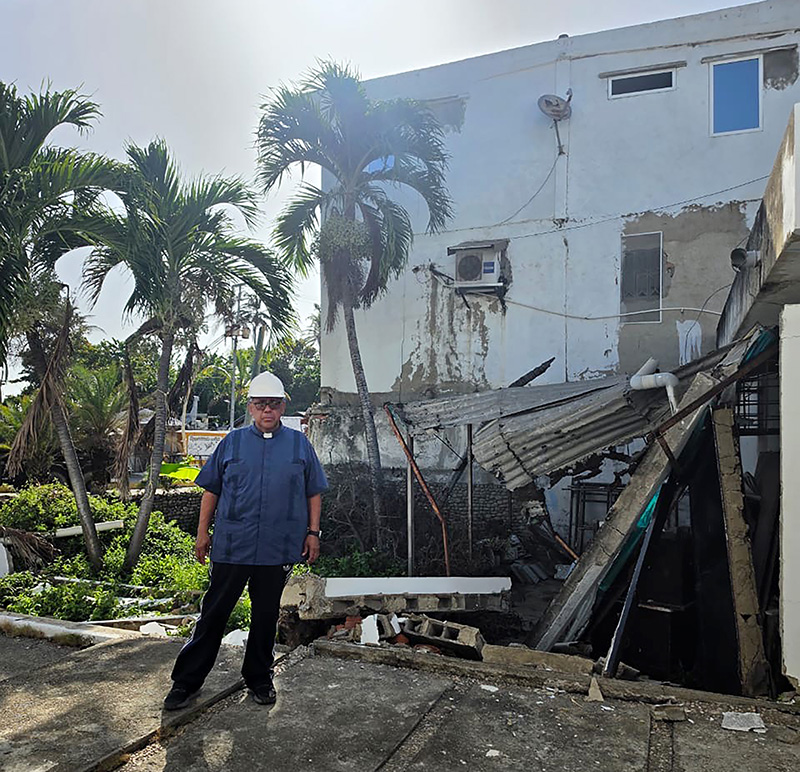
Padre Martin Vegas stands at the site of his chuch, Nuestra Señora de la Soledad Church, which was left in ruins by the earthquakes.
Feeding the hungry
A day later, on June 26, Padre Martin Vegas finally replied to Bruce Anderson:
“Thank God, we are alive. The church and the parish house have been rendered unusable and have suffered severe structural damage,” he wrote of Nuestra Señora de la Soledad Church.
“We need basic supplies: water, lighting, medicines, and non-perishable food. … Aid is not reaching us due to the distance and the difficulty of access.
“We need your prayers.”
On the same street as the church, Padre Martin later said, 12 people had died. But the parish school and the soup kitchen were still standing, so he had relocated there along with 120 of his parishioners who had lost their homes.
Padre Martin restructured the soup kitchen. Instead of serving hot meals, he instructed parishioners to start packaging food and hygiene products. They went door to door delivering goods and taking a head count to see who was missing.
In the first week, Padre Martin said, “We have been able to assist people with 2,953 bags of food, hygiene kits, drinking water, and clothing. Despite everything we have experienced, people have shown great solidarity. … We have also seen many signs of hope. The church may have suffered damage, but the faith of the people remains standing.”
To Anderson, the devastation felt like Hurricane Helene all over again, just further away. Still, St. Matthew would be there in support.
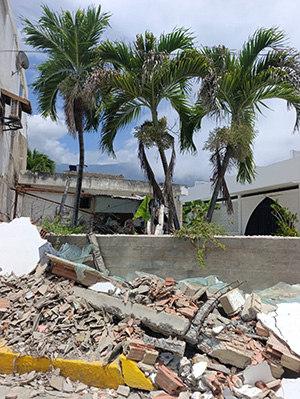 Rubble from the nearby Our Lady of la Soledad Church meshes into the landscape of devastation in Naiguatá after the quakes.
A mother’s new purpose
With no services or supplies, Veronica’s mother decided to drive back to her apartment in Caracas on June 26.
“If one nail hit any of her tires,” Veronica laments, “she would have been stranded in the middle of nowhere.”
Indeed, the trip was traumatic, Borregales said. High-rises lay in rubble. Friends were missing. Sadly, she realized people were trapped beneath debris and no search parties were coming.
“I saw the reality with my own eyes. Completely collapsed buildings, like an accordion. People in the streets. Destroyed roads. Fallen bridges,” she said. “I was praying the entire time, asking my guardian angel to accompany me.”
When she reached Caracas hours later, she called Veronica with new purpose: She wanted to use the family property in Naiguatá for an orphanage or maybe a seminary, since the quakes had destroyed the Diocese of La Guaira’s seminary.
“She was heartbroken,” Veronica recalls. “She especially wanted to take care of the kids. These kids no longer had homes, no beds, no food. … All she has there is some property and a will to help. Helping others is a priority for her as a Catholic.”
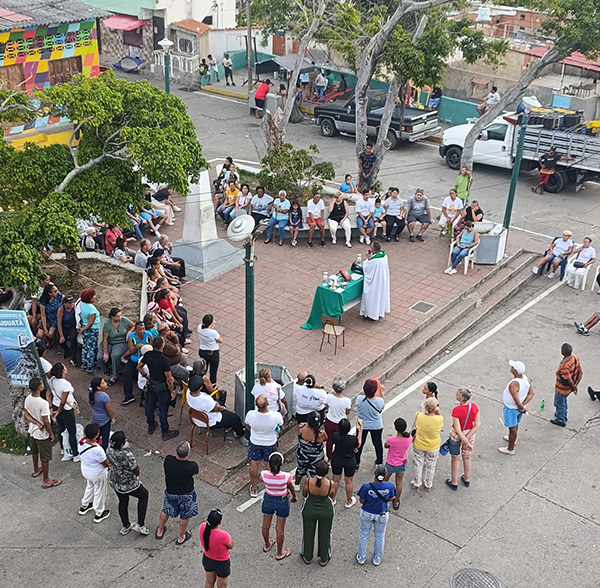 Padre Martin offers Mass outside at the Plaza of Bolívar de Pueblo Arriba near San Francisco de Asís Church in the town of Naiguatá.A call to unity
It would be another six days after the quakes, June 30, before Dulce Peña got news of her mother. A search team digging through rubble had found a woman’s body. In a photo, Peña and her sister recognized the striped pajamas and the rosary-style necklace the woman wore.
Yes, this was Dulce Avila Peña, age 88.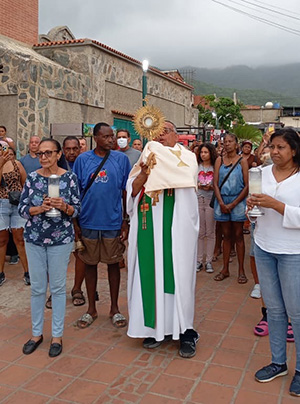 Padre Martin leads a Eucharistic Procession after the quakes in Naiguatá.
While there was still no word on her aunt, Peña was relieved to learn that her brother Julio and his wife had survived.
“It’s a miracle,” she says, “they fell down 14 floors. When they woke up, they were buried under bricks and dust and columns, and it was dark. My brother and his wife started screaming. They could hear each other but they couldn’t see each other.”
Peña would later learn her aunt Gladys had perished alongside her mother. Last weekend, July 18-19, St. Mark Church added their names to the Prayers of the Faithful at all six Masses.
As promised in their group chat, Veronica is reaching out to Dulce, recently hosting her for dinner.
Now, both women are asking for everyone to help provide relief to Venezuela – echoing the words of Padre Martin, whose soup kitchen has survived.
“Regarding the tragedy that has struck us with this double earthquake, which has caused so many deaths and destruction throughout the diocese, we too have been severely affected,” Padre Martin advised St. Matthew by email. “We have a team of very valuable servants who are ready to serve our brothers and sisters.
“In this moment of emergency and contingency, we would like to use the (St. Matthew) resources to serve the entire community,” including “neighbors sleeping in the square” because of damaged homes.
“So far, we have spent three days providing them with breakfast, lunch, and dinner, until our resources run out.”
“Any help you can send us at this time,” he wrote, “would be designated to address this emergency in the food sector.
“We are immensely grateful for your prayers and your charity, turned into solidarity. United in prayer.”
— Lisa Geraci and Brian Segovia. Liz Chandler contributed. Photos provided and by Troy C. Hull.
HOW TO HELP
Donate now to support the Church’s emergency response through Catholic Relief Services, securely online: www.crs.org/donate/venezuela-earthquake.
A special collection will be taken up at all Masses in the diocese this weekend (July 18-19). Donations will be sent directly to fund Catholic Relief Services’ humanitarian response on the ground. Learn more.
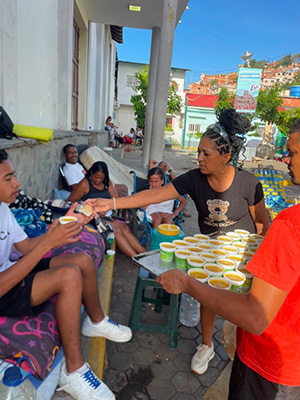 Volunteers from the soup kitchen are going around the town to give food and drinks to those in need. More than 120 people in the small coastal town have been left homeless.
Scale of the damage
- 7.2 and 7.5: Magnitude of the two earthquakes that hit on June 24, devastating the capital city of Caracas and the coastal state of La Guaira
- 5,208: Death toll as of July 21
- 16,740: Number of injured
- 17,907: Estimated number of homeless
- 23,820: Living in temporary shelters
- 58,000: Buildings damaged or destroyed
- $37 billion: Initial estimate of the damage to housing and infrastructure
- 650,000: People, including 234,000 children, in need of humanitarian assistance, according to the U.N. Children’s Fund
- 25 of 100: Churches in the Archdiocese of Caracas that sustained damage