Faith and perseverance
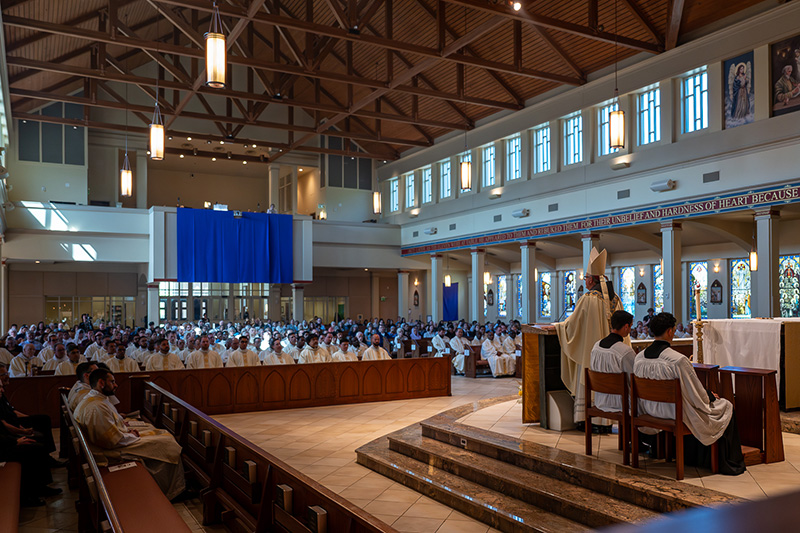
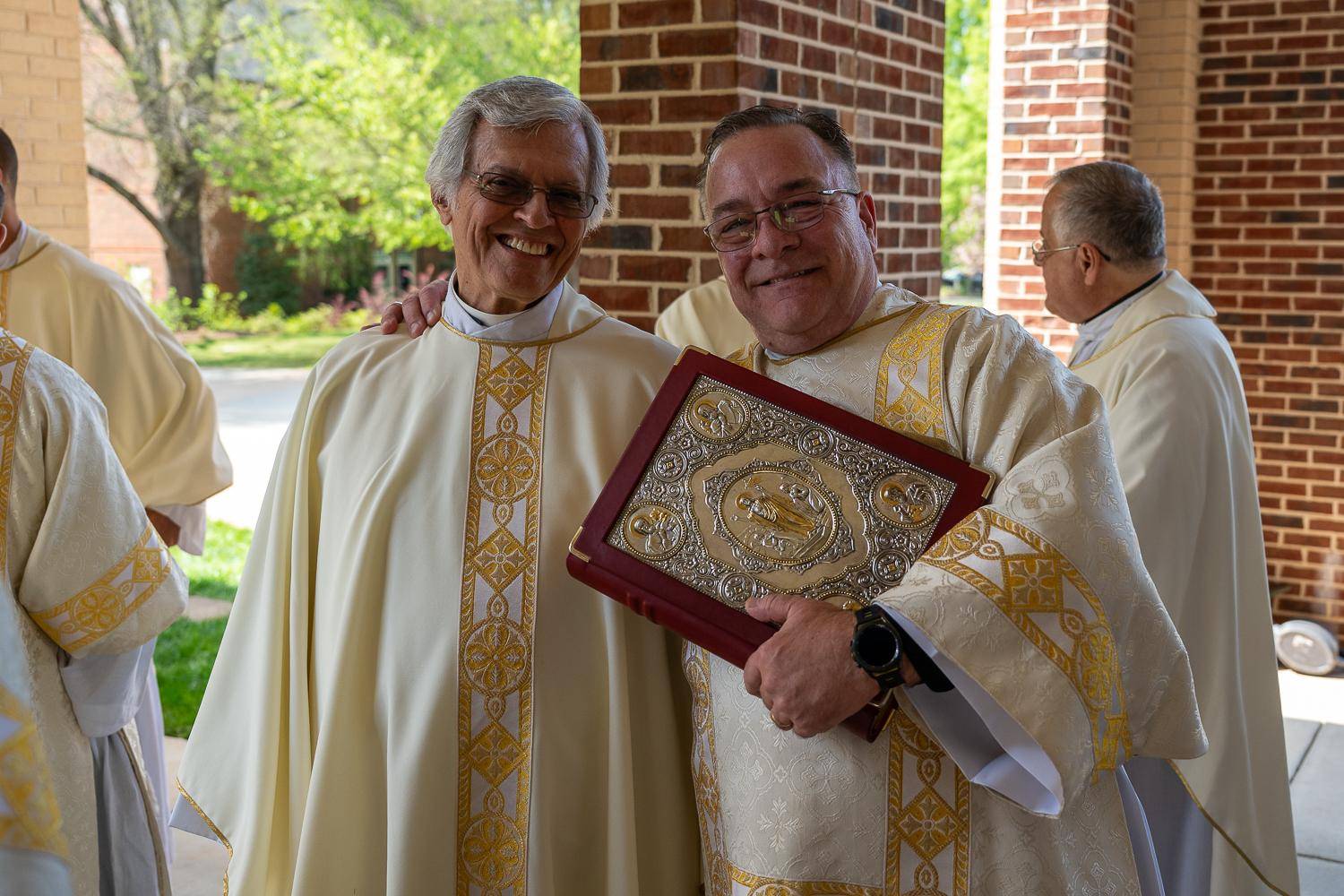
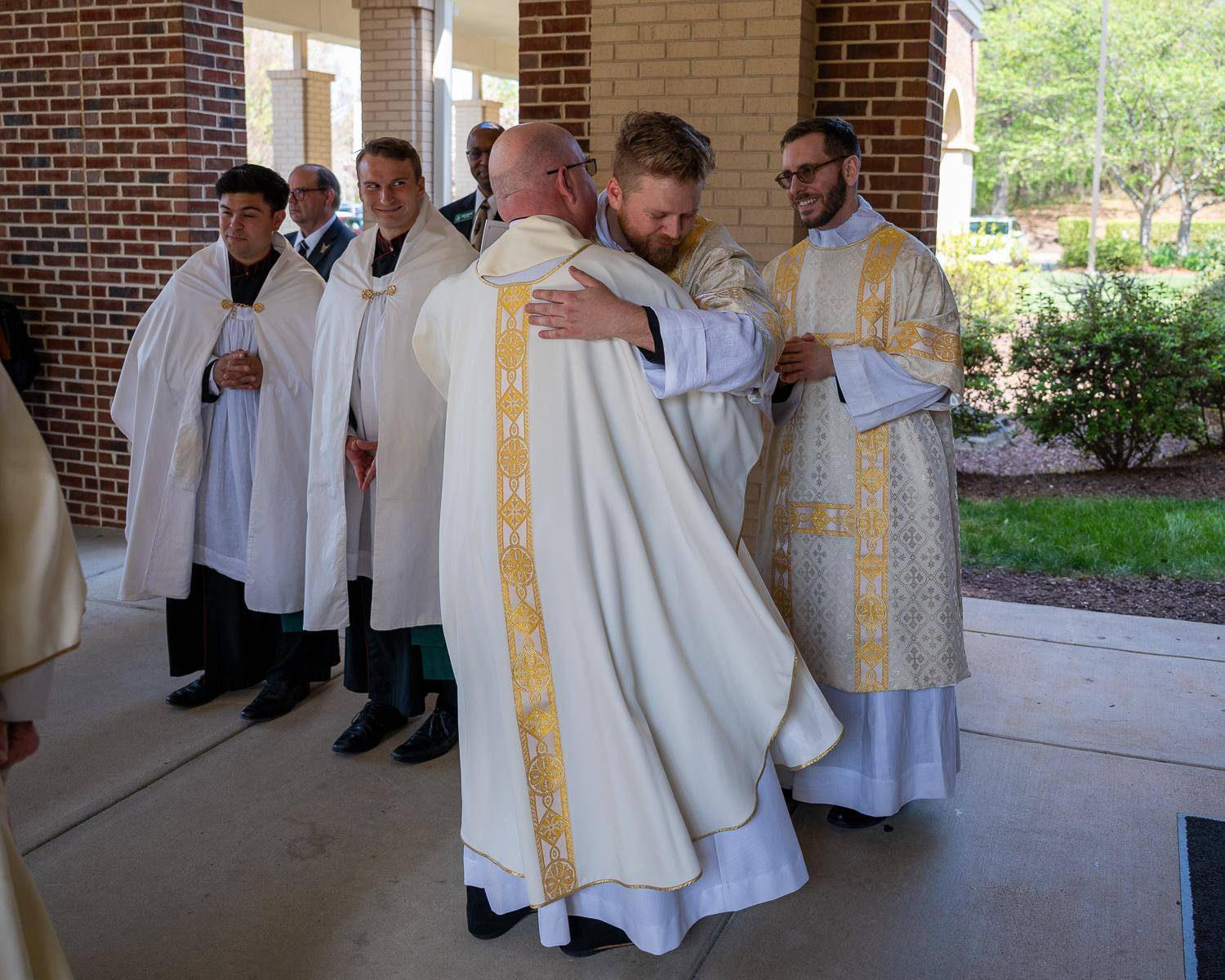
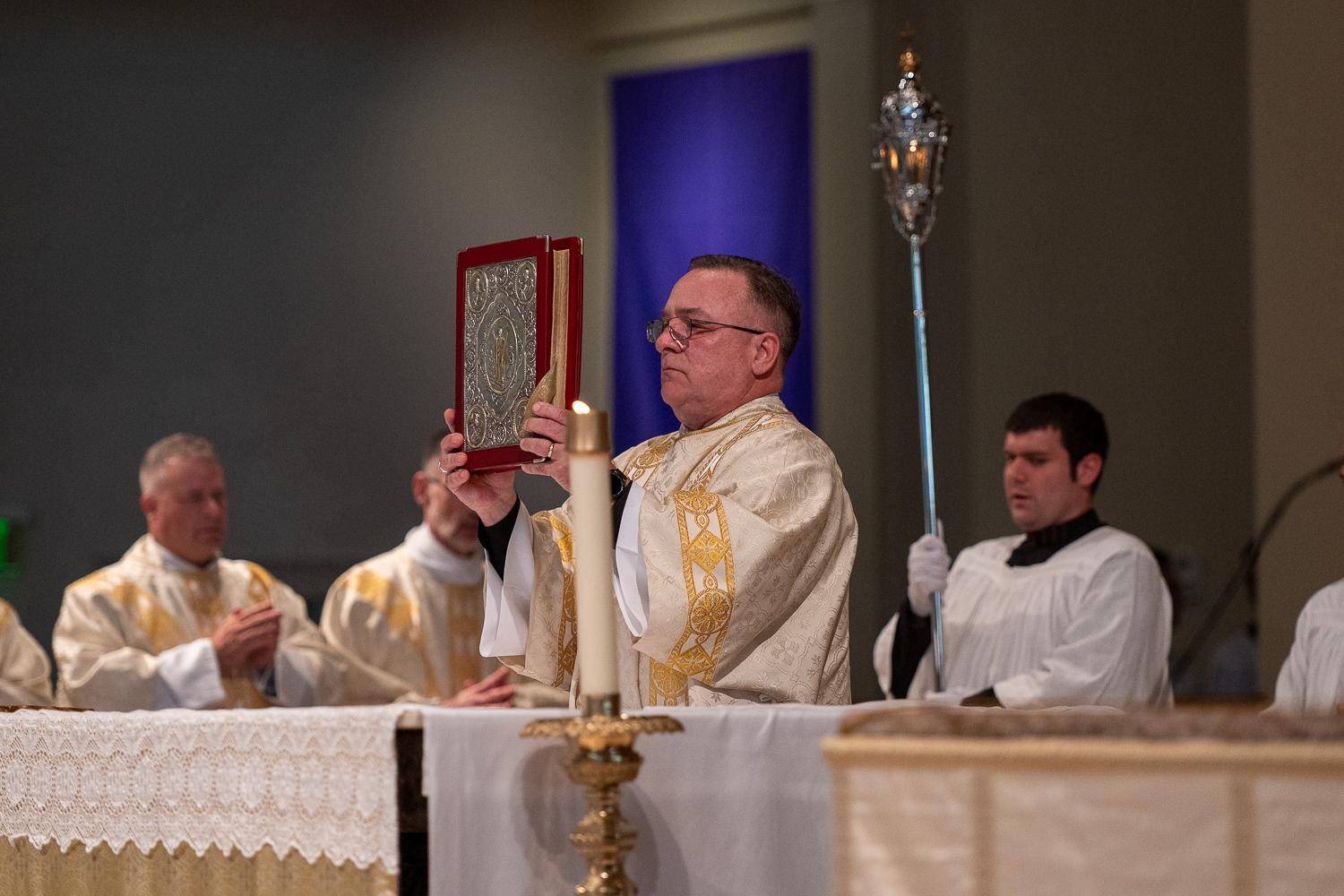
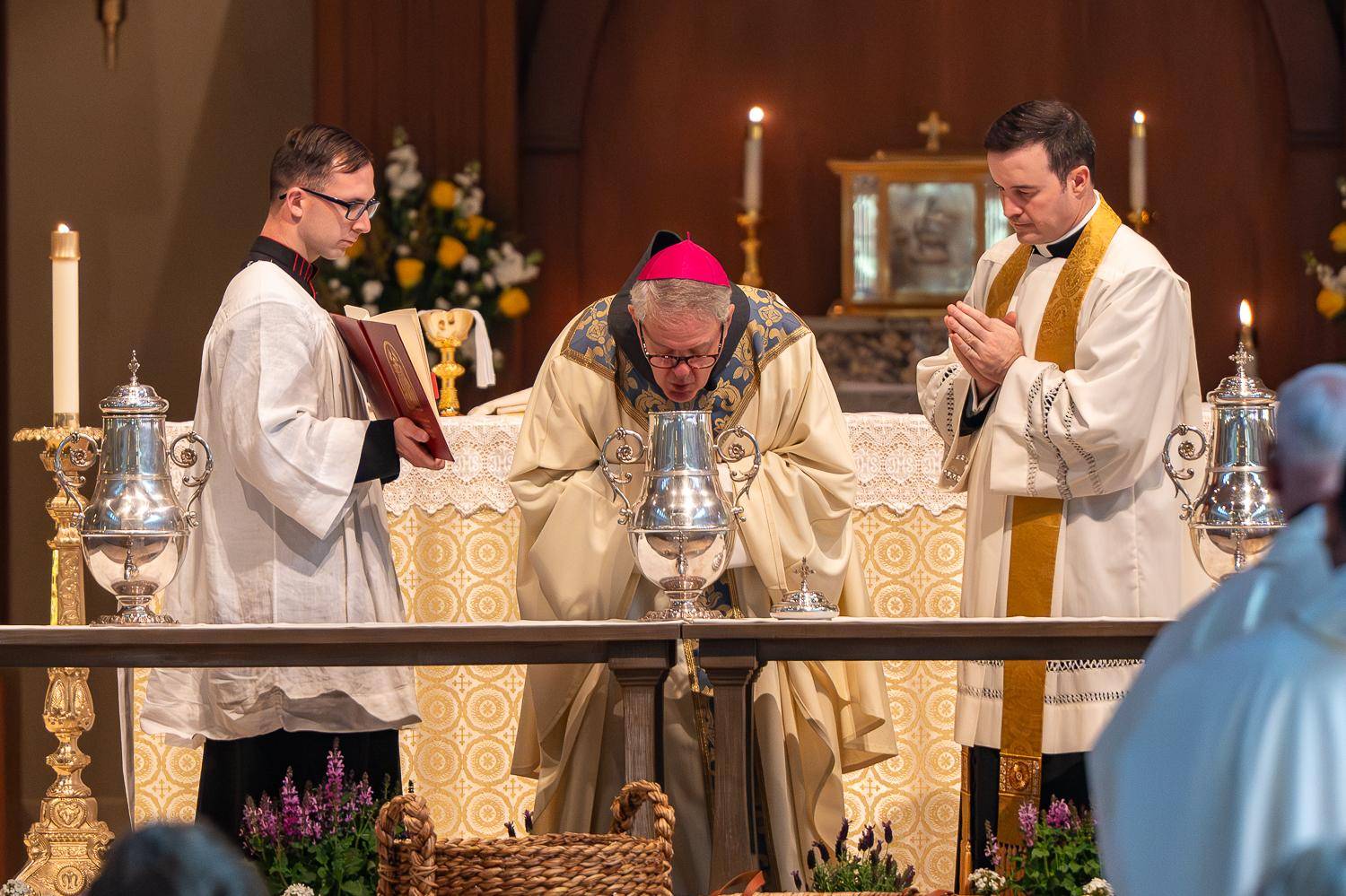
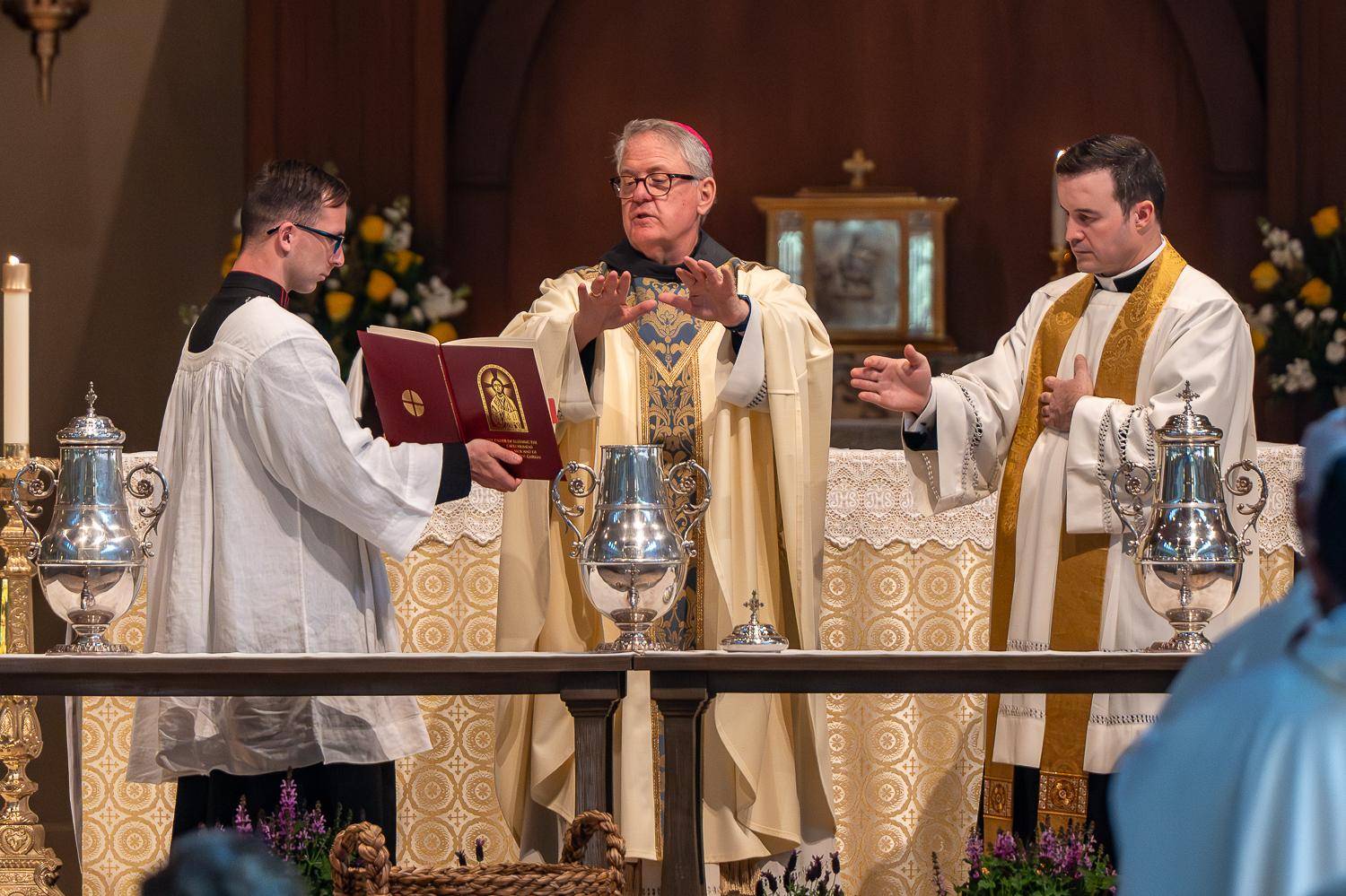
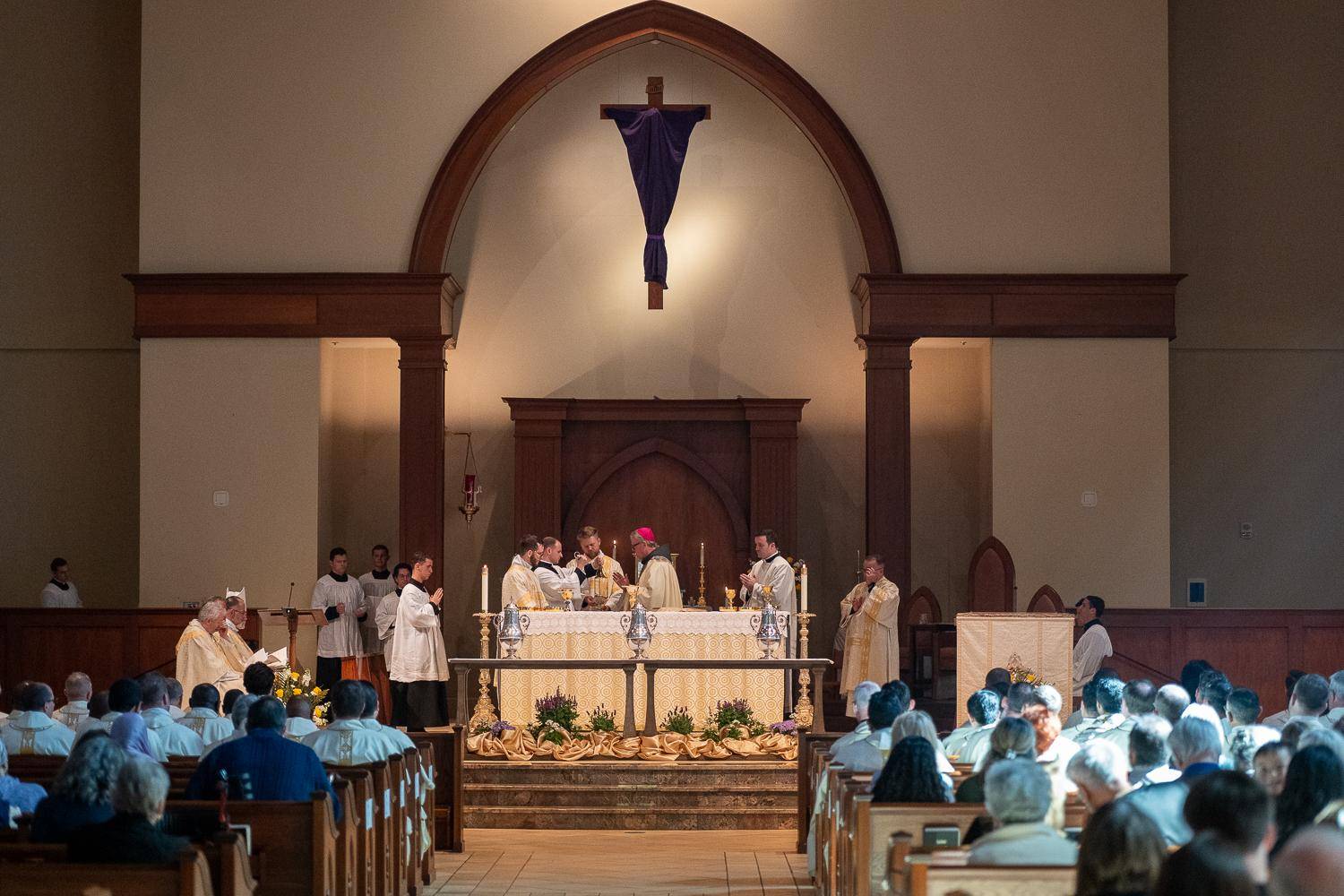
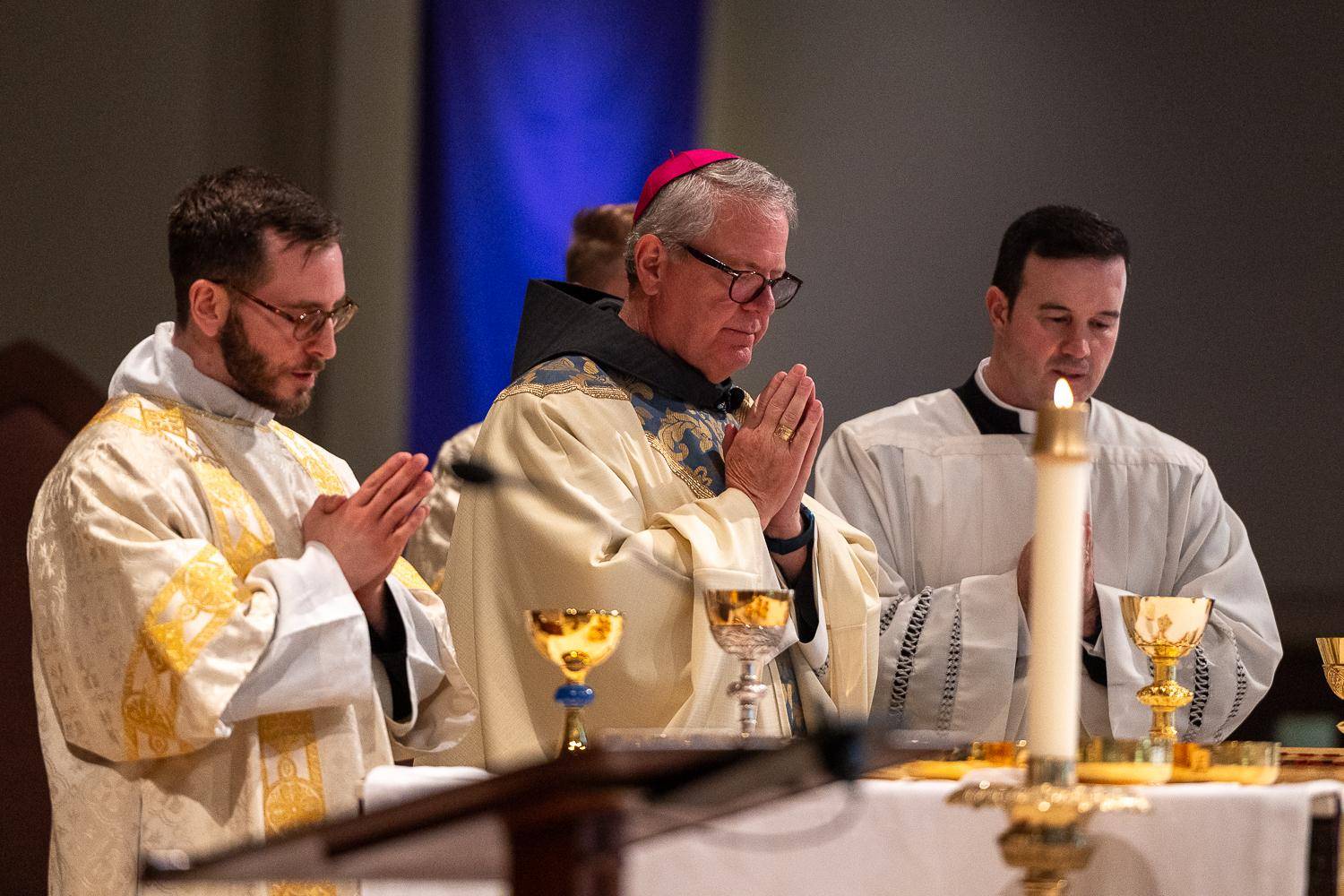
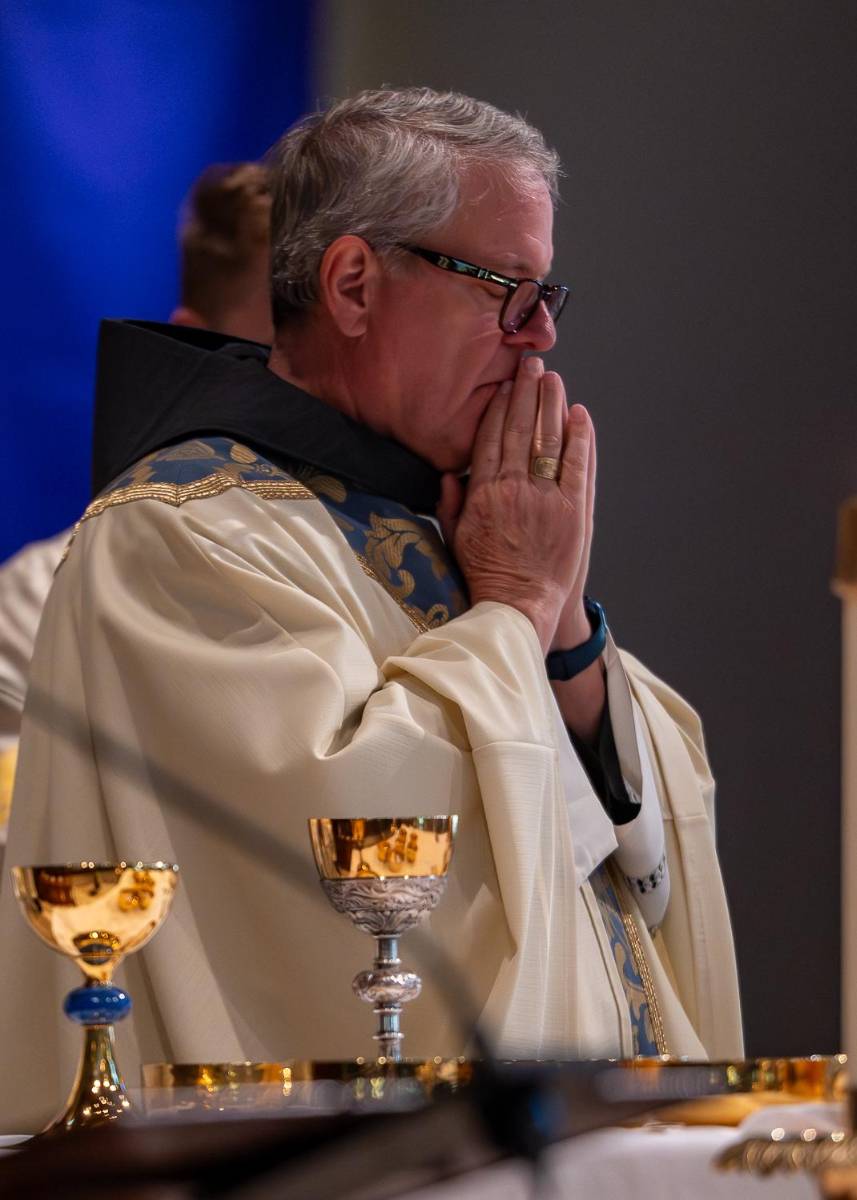
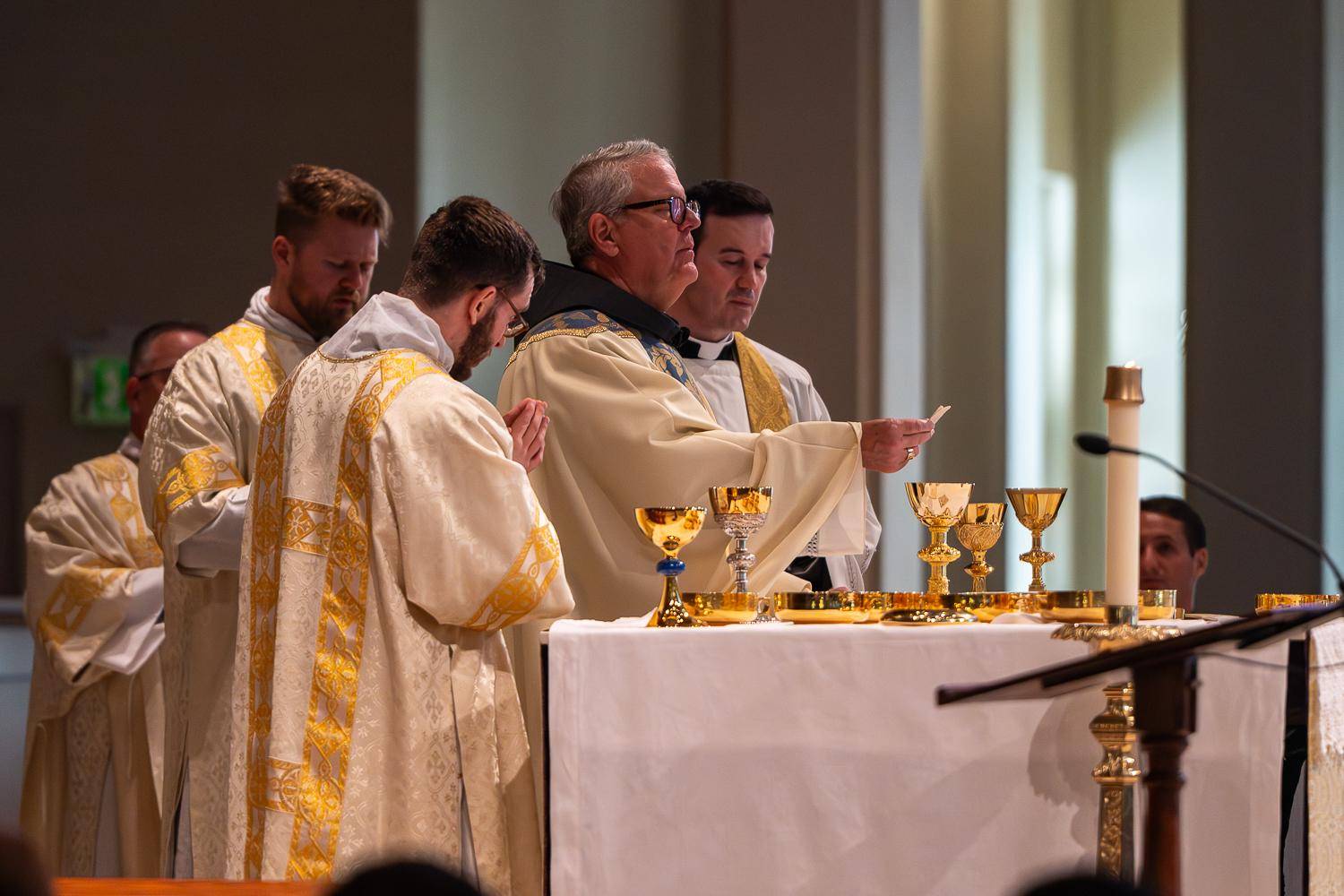
Retiring priest Father Collins celebrated Mass with fellow parishioner and friend, newly ordained Father Anthony del Cid Lucero. (Troy C. Hull | Catholic News Herald)NEWTON — Father Jim Collins never let his disability stop him from answering God’s call. After a two-decade journey to ordination, he spent three decades serving the Diocese of Charlotte – 26 of them as pastor of St. Joseph Parish. Now retired, he continues his vocation, joining dozens of other retired priests who still faithfully minister to the people of God.
“My parish is my life. I love this church. I’ve learned love and acceptance, especially within this community,” he says. “No matter what, I will try to stay in this area.”
Father Collins is the featured priest for the diocese’s 2025 Priest Retirement Collection campaign, which raises funds to support our retired priests.
Parishioners admire Father Collins’ faith, his sense of humor and his stand-out homilies, but most of all, his perseverance in the face of adversity. Born with cerebral palsy, he talks with a mild speech impediment. Despite his physical handicap, his persistent and joyful faith shines through.
Dennis Schell, a parishioner since 1978, still remembers Father Collins’ first homily: “He said, ‘I’m sure that you all have a hard time understanding me, but you’ll be surprised at how much of what you’re hearing improves in 30 days.’ And, sure enough, it did.
“His journey has been so hard. His whole life people told him he couldn’t do things because of his handicap, but he has proved them all wrong,” Schell says.
A Miraculous Start
Father Collins was born six weeks premature at Mercy Hospital in Rockville Center, Long Island, New York, in 1949. He had severe jaundice that doctors treated with a series of blood transfusions, but they lost hope as the infant went in and out of shock.
A nurse at the hospital, Sister Philomena, and her fellow nuns prayed a novena asking for the intercession of St. Philomena, the patron saint of infants.
“I credit the intercession of St. Philomena for my life,” he says. During a later trip to Italy, he touched the catacomb where her remains were discovered and acquired a relic which remains encased in the sanctuary.
While he survived, there was a cost: cerebral palsy. The permanent disability left him 60 percent deaf, with a speech impediment and impaired motor skills.
An Early Call
Reading and writing did not come easy for the young Jim Collins. The intentions of his eyes and ears never matched the direction of his mouth and hands.
“I hated school so much because I couldn’t do the things the other kids could do. I couldn’t hear,” he recalls. “Now I have a hearing aid, and I can read lips.”
His second year of first grade, during Mass when he received his first Holy Communion, is when he first sensed “the call.”
“I remember saying I’m going to be a priest. Every time I talked about it, people would say I couldn’t do that because of my handicap. Maybe a (religious order) brother, but not a priest.”
Collins knew all things were possible with God, so he never gave up. He just fought harder.
Father Collins baptized one more child before his retirement, but there will be many more to come, as he lives minutes from the parish and is still actively moving forward with his priestly ministry.
What to do with the call
In the 1970s, Collins moved to Shelby with his parents and six siblings. They attended St. Mary Help of Christians Church, yet his hunger for God had him traveling to churches from the Triad to the mountains.
He befriended many clergy, became a leader in the Cursillo movement, and taught OCIA classes.
In 1976, he wrote his first letter to the diocese’s vocations director expressing his desire to become a priest. For three years, he did not receive a definitive answer. He knew there was one thing causing hesitation: his cerebral palsy.
His friends prayed for his healing. “After a while, I stepped away from that,” Father Collins said. “I told them, I don’t need to be healed. I need your love and acceptance.’”
Then he wrote to Charlotte Bishop Michael Begley. Would the diocese support him in becoming a priest? The answer was no.
Driving by the Diocesan Pastoral Center one day, he paid the bishop a courtesy call and talked face to face. He recalls telling Bishop Begley, “Bishop, I know you said ‘no’ to the priesthood, but what do I do with the call? The call won’t go away.”
Bishop Begley told him, “Jim, maybe the diaconate program would be good for you.”
Road to Ordination
At that time, the diocese’s permanent diaconate program was just getting established. Collins joined the inaugural class of men set to be ordained for the diocese.
In his third year of formation, he became ineligible for ordination due to his unemployed status, but he still finished the program and volunteered to help Father John Pagel at St. Lucien Parish in Spruce Pine.
Father Pagel saw Collins’ devotion to the faith and advocated for his ordination. In 1987, Collins was finally ordained a permanent deacon during a personal ordination Mass in Spruce Pine celebrated by then-Bishop John Donoghue. St. Lucien Church was too small to accommodate the crowd of family and friends, so a nearby Baptist church was used.
Still called
Serving as a deacon only strengthened Collins’ desire to be a priest. He yearned to consecrate the Eucharist and minister to his own flock.
Father Richard McCue, who by then had replaced Father Pagel at St. Lucien, saw his deacon’s deep faith and asked, “Jimmy, you ever thought about being a priest?”
With a deep chuckle, Collins shook his head. “You don’t want that story, Father.”
But Father McCue did listen, and the timing was perfect.
Father Collins recalls: “They were ordaining a transitional deacon for the priesthood, and he was a blind man. When (the vocations director) saw that, he said to himself, ‘What’s my problem with Jimmy? He can see, he can hear, he can do everything I can do. Then I realized, I don’t have a problem with Jimmy.”
Nearly 15 years after first inquiring, his application to the seminary was accepted, and he was sent to Sacred Heart School of Theology in Wisconsin. He earned a master’s degree in divinity and was ordained a priest by then-Bishop William Curlin in 1995.
Through three bishops, 19 years and many challenges, Father Collins never settled for less than what God wanted.
Life as a priest
“Being a priest is not a right but a privilege, and the Church has to agree with that privilege,” he says. “I really appreciate the bishops over the years for giving me the opportunity to serve God.”
Father Collins officially retired on July 8, moving into an apartment a couple of miles from his former church. His 300 parishioners are overjoyed he’s remaining close by.
“His story is very inspiring, and he is a testament to me never to give up,” says Kara Antonio, St. Joseph’s office manager. She grew up with Father Collins as pastor. Like many parishioners,
Antonio was confirmed and married by Father Collins, and he baptized her four children.
“I can’t imagine not having him around. When I was a child, we would go to daily Mass and then our family would eat lunch with him outside,” she reminisces. “He introduced me to my husband and let my kids play in the office while I worked. He knew me when I was 7, and now he knows my 7-year-old. He’s been a huge part of my life.
“He has been the face of this parish. He knows the accounting side, the holy side. He can say very inspiring homilies. He is a jack-of-all-trades when it comes to priests,” she says.
Father Collins’ relationships with his parishioners run deep. He has traveled with them on family vacations and pilgrimages to Italy, Mexico, Ireland and more.
His “retirement” plans include a return trip to Italy to visit the daughter of one of his 90-year-old parishioners and voyaging with Schell to visit St. Joseph Oratory of Montreal.
With brothers and sisters throughout the Carolinas, there is no lack of places where Father Collins could live, but he can’t really imagine a home far from his Newton parish. He plans to remain close to the flock he has shepherded for decades, hoping to spend more time with those he considers his Church family.
— Lisa M. Geraci
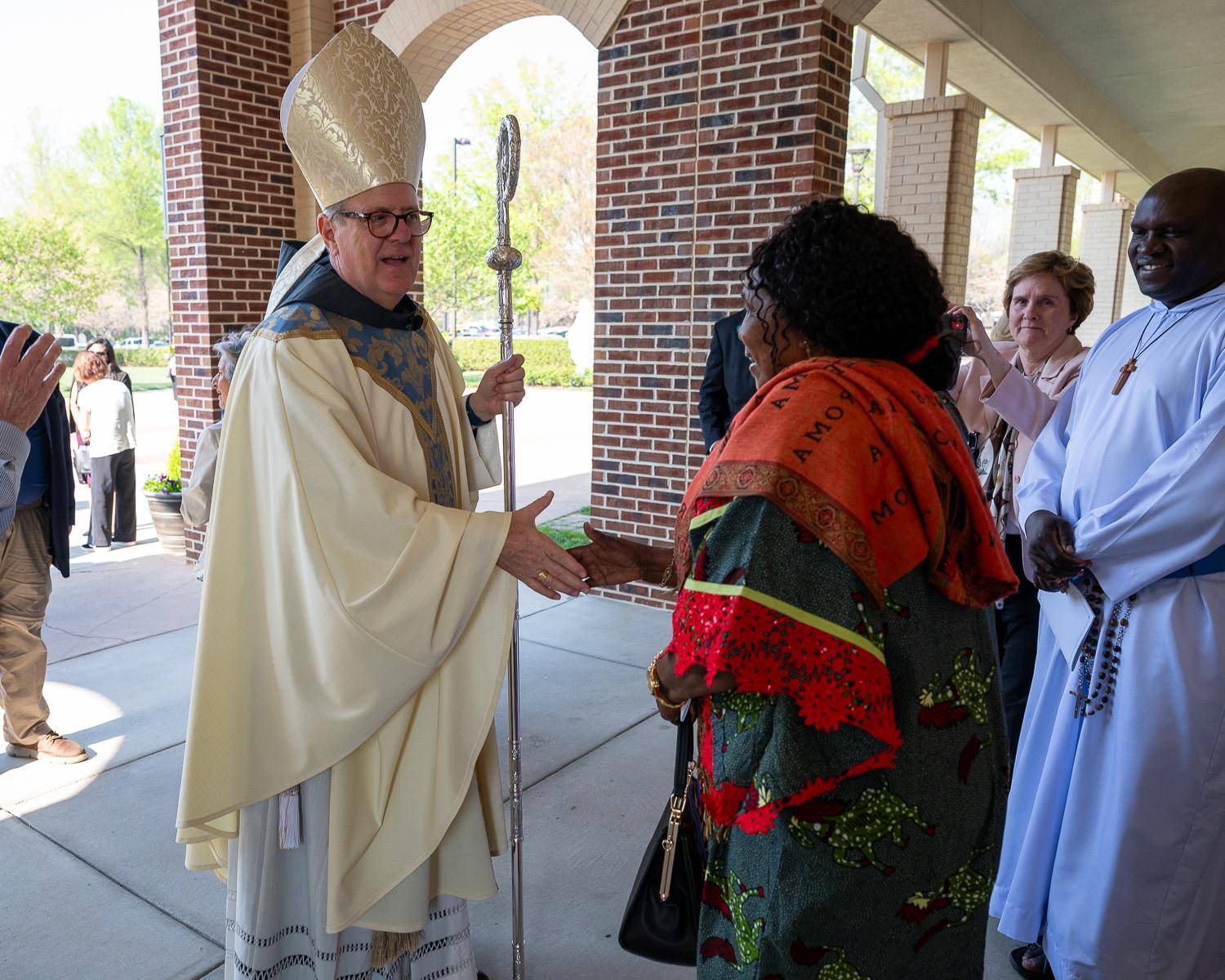
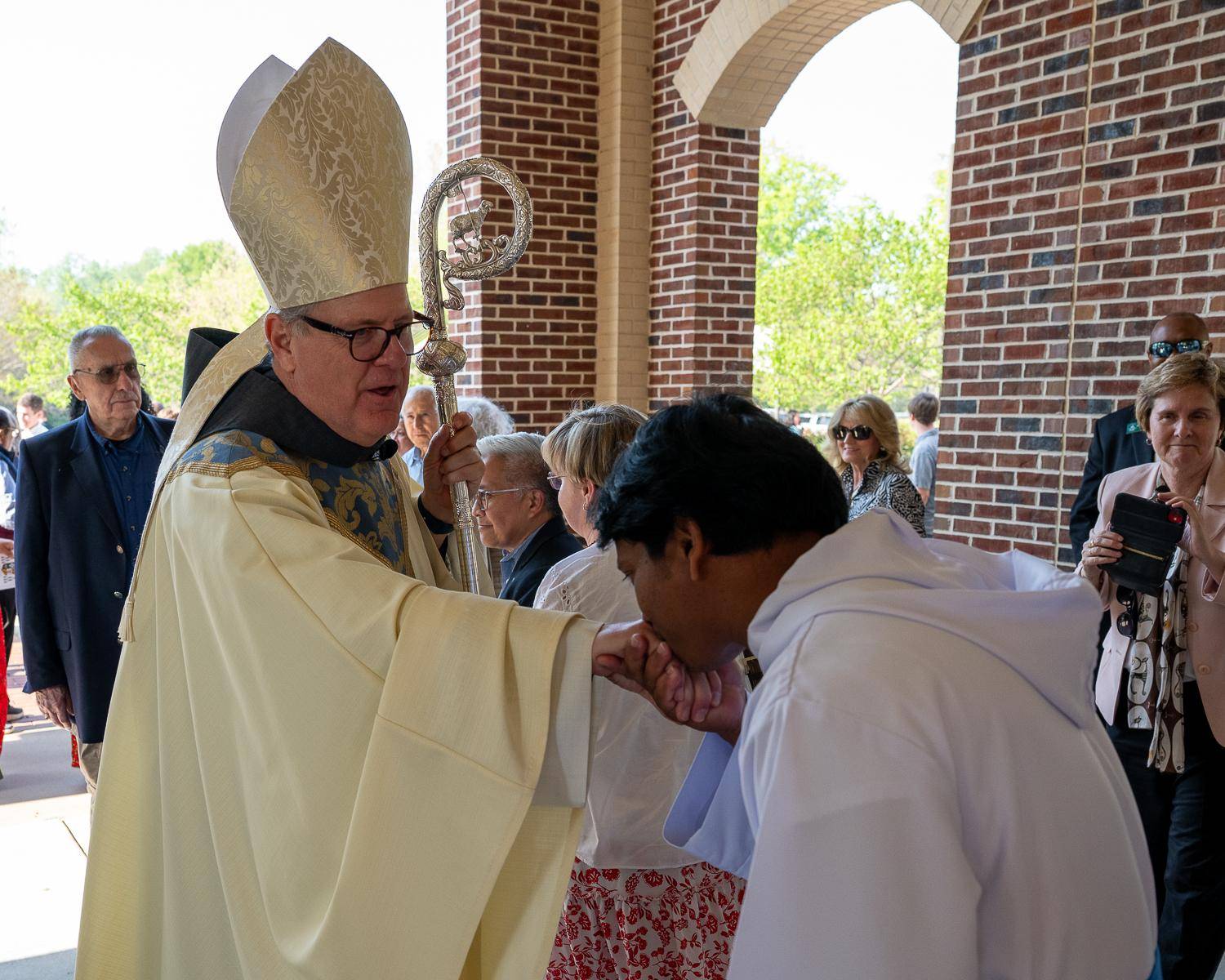
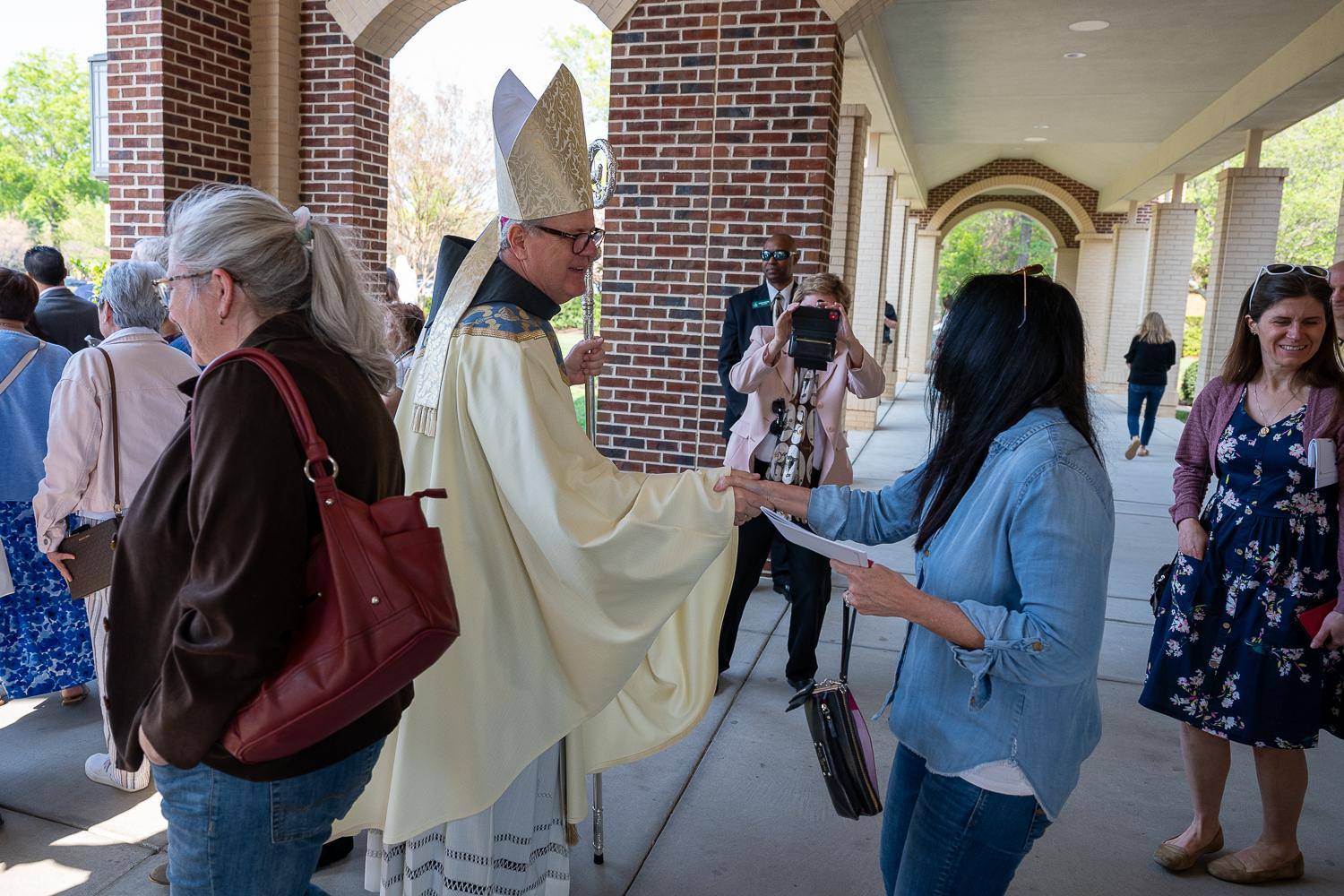
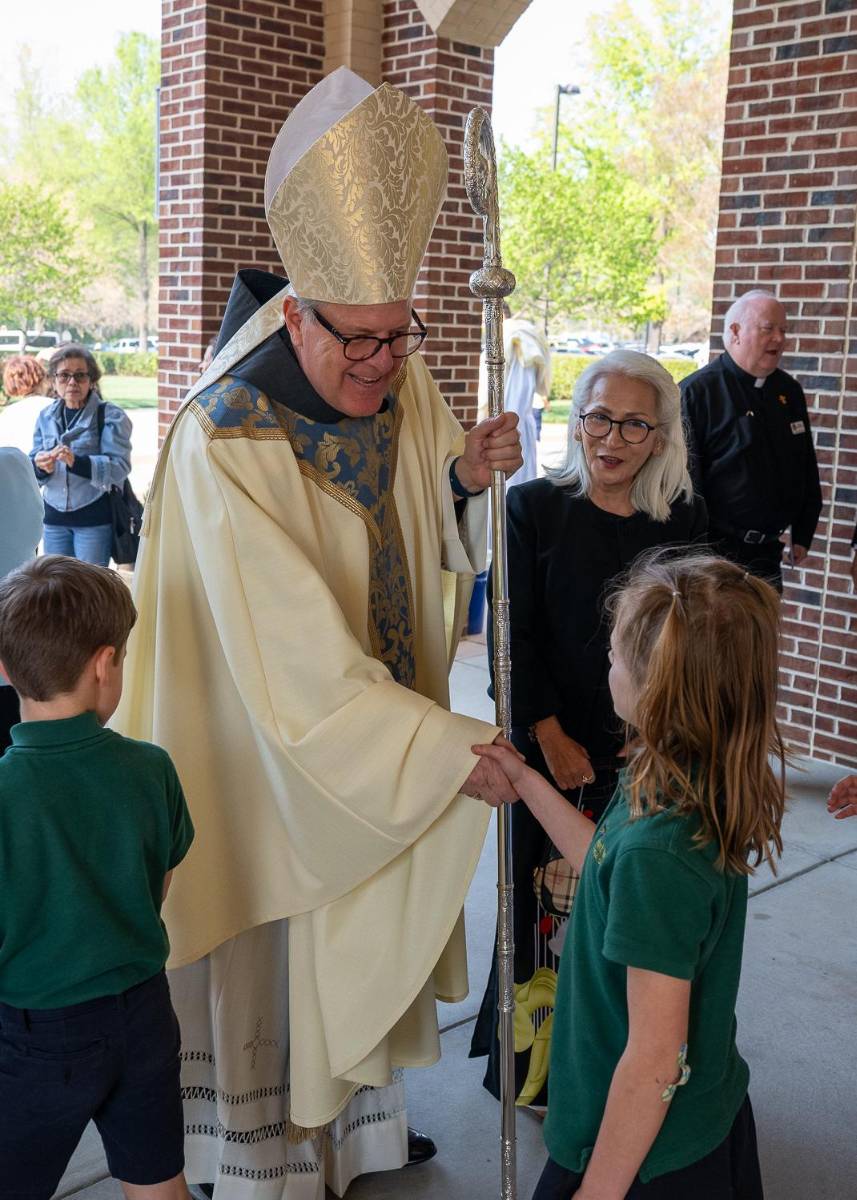
CHARLOTTE — In his homily for the closing Mass of the 21st Eucharistic Congress, Bishop Michael Martin encouraged nearly 9,000 people to go out into the world and “bring hope to the darkest places that need it the most.”
The bilingual closing Mass wrapped up an inspirational two-day celebration at the Charlotte Convention Center that was a joyful mix of music, worship and fellowship, all centered around the Eucharist as the source and summit of the Catholic faith. The Eucharistic Congress, themed “Pilgrims of Hope” in acknowledgment of the Vatican’s Jubilee Year, opened its doors Sept. 5 with a praise-and-worship concert headlined by contemporary Catholic singer Matt Maher.
It resumed Sept. 6 with one of the largest Eucharistic processions in the nation as thousands of people sang, danced and prayed their way through the streets of Uptown Charlotte to the convention center. It was followed by a Holy Hour led by Bishop Martin and talks by nationally known speakers in an event that overall drew an estimated 14,000 people.
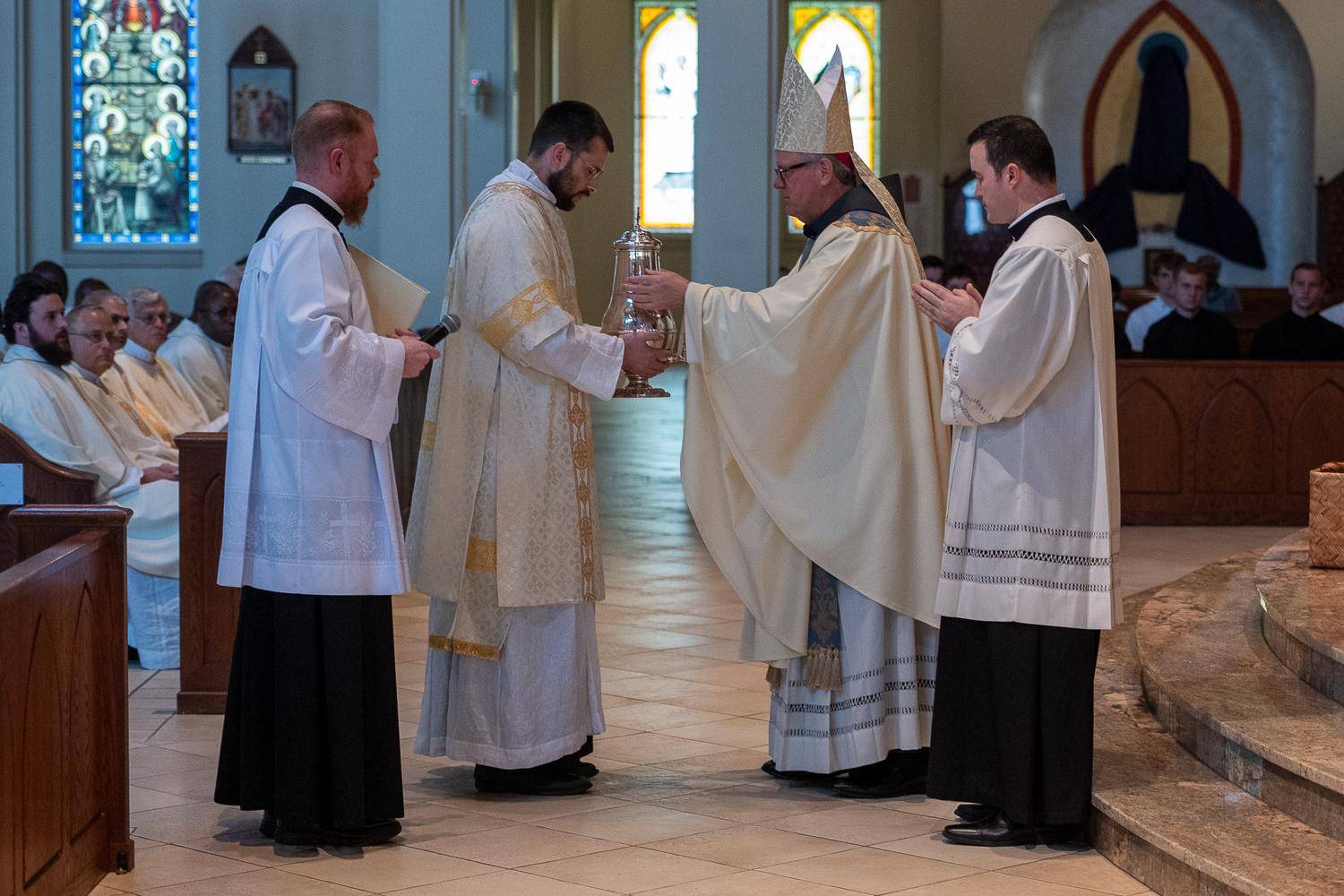
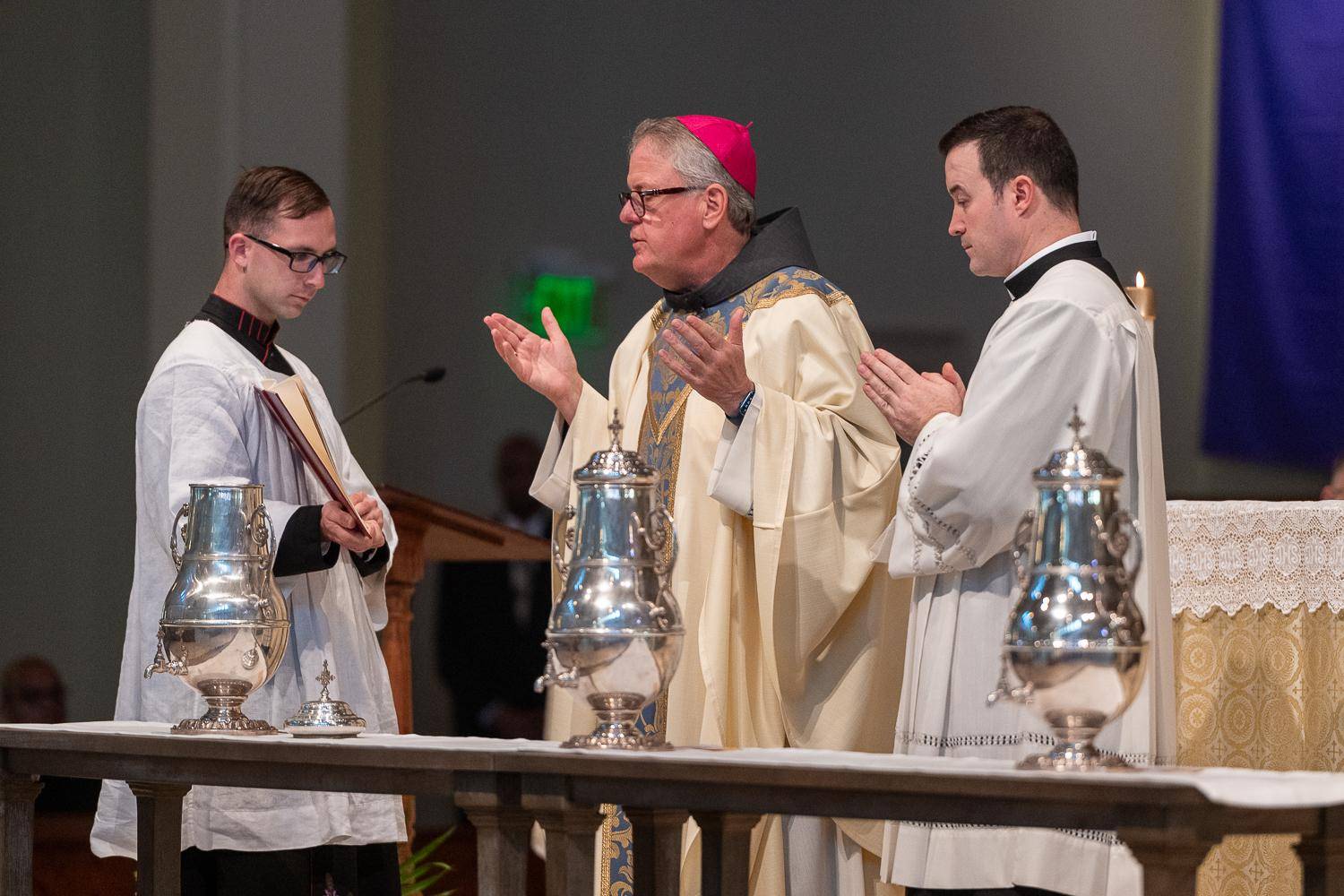
This year’s Eucharistic Congress saw changes that reflected the growth and diversity of the diocese. Programming was consolidated onto one main stage, exhibit space was expanded to serve 84 vendors, and the chapel and confession areas were moved to better accommodate long lines.

Sounds of praise
More than 4,000 people turned out Friday night for a concert by Maher to kick off the 21st annual event.
In an interview before the concert, Maher said sharing his music at the Eucharistic Congress was special to him.
“As a Catholic, what’s central to my faith is the mystery of the Eucharist,” he said. “The whole Church is built on Jesus, and at the very center, the very seed of our faith, is His Real Presence in the Eucharist.”
Before the concert, Bishop Martin welcomed the crowd.
“My hope is that we are so empowered by the Holy Spirit during the next 24 hours that we don’t just use this as a spiritual pep rally,” he said. He asked the crowd to commit “to take the message of hope that only Jesus Christ can give and take it out into every space,” he said. “Into every space, every square foot – not just of our diocese, not just of North Carolina, but to a world that so misunderstands what true hope is.”
Maher has performed for four popes – St. John Paul II, Pope Benedict XVI, Pope Francis, and in August for Pope Leo XIV.
Maher said despite those prestigious events, some of his favorite moments have been playing music during Adoration.
“Adoration shows us the true message of the Eucharist – that the gift of Christ’s peace is waiting in the Eucharist,” he said. “A lot of times in this world, people avoid the suffering they’re feeling … Silence and contemplation can help us get through that outer level and bring everything to the Lord.”
Maher’s performance ended in adoration, as concertgoers fell to their knees.
It spoke to Ellen Gil, a member of St. Matthew Parish: “Seeing everyone kneeling during the adoration was amazing … I still have chills.”

Processing through Charlotte
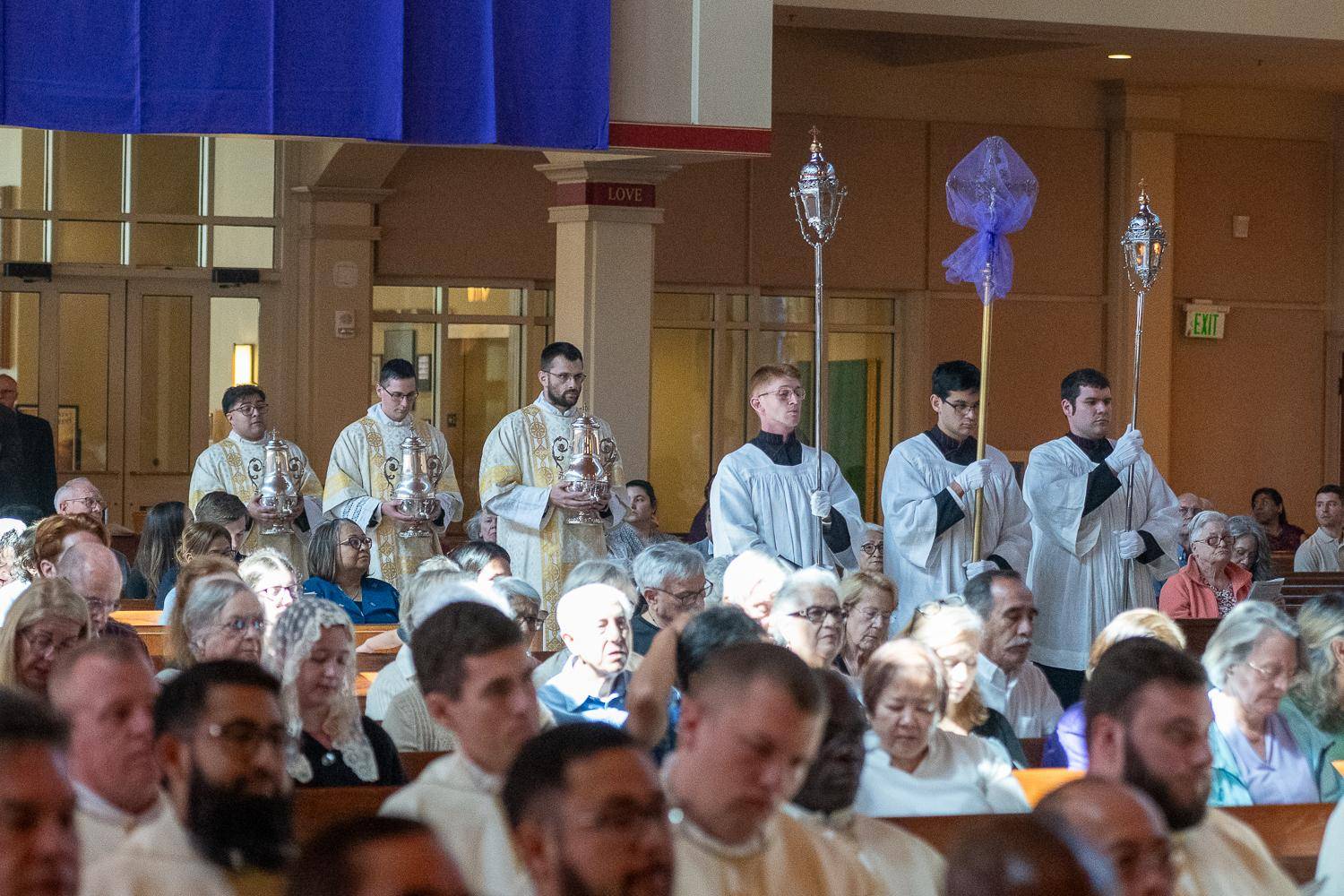
The Congress resumed Saturday morning with one of the nation’s largest Eucharistic processions as thousands of people sang, danced and prayed their way through the streets of Uptown Charlotte.
The procession showcased the diversity of the Church, with representatives hailing from the diocese’s 93 churches, 20 schools, 36 religious communities, Belmont Abbey College and eight campus ministries, St. Joseph and Mount Saint Mary seminaries, and other organizations.
The cornucopia of regalia, umbrellas, habits, hats, vestments, incense, musical instruments, banners and faith-slogan T-shirts enlivened the Queen City skyline.
Marie Desmarattes traveled from Rock Hill, South Carolina, where she attends St. Mary. She prayed the rosary as the procession passed. This was her second visit to the Eucharistic Congress.
“What I get from the Holy Spirit here helps me make changes in my life and change my heart,” she said.

The Eucharistic Procession culminated inside the convention center, where Bishop Martin presided over the Holy Hour.
His homily conveying a message of hope was inspired by the Gospel of Luke’s reading about the miracle of the loaves and fishes. The bishop explained that instead of Jesus’ disciples working to feed the hungry crowd, they waited for God to do a “quick fix.”
Sometimes, he said, we can do the little things on our own while trusting God to take care of the larger obstacles.
“We need to see Him as the power to transform us,” the bishop said, “so that we can be part of the solution, so that we can help to feed others.”
Attendees acted on those words by going to confession and being uplifted by inspirational speakers including TV and radio personalities Chris Stefanick, Father John Riccardo, Father Tito Serrano and author Paula Umaña before attending the closing Mass.

Closing Mass ends in a charge
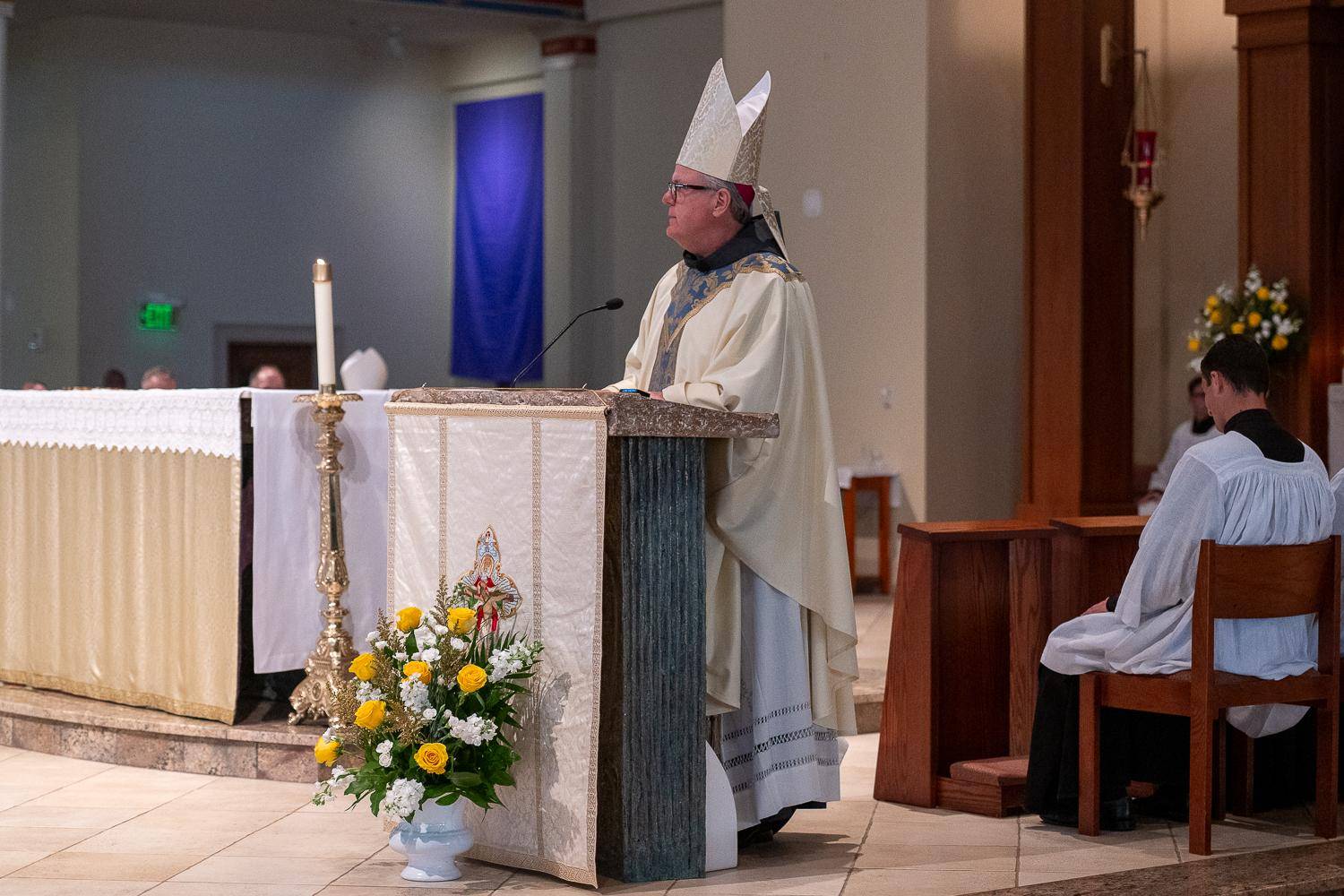
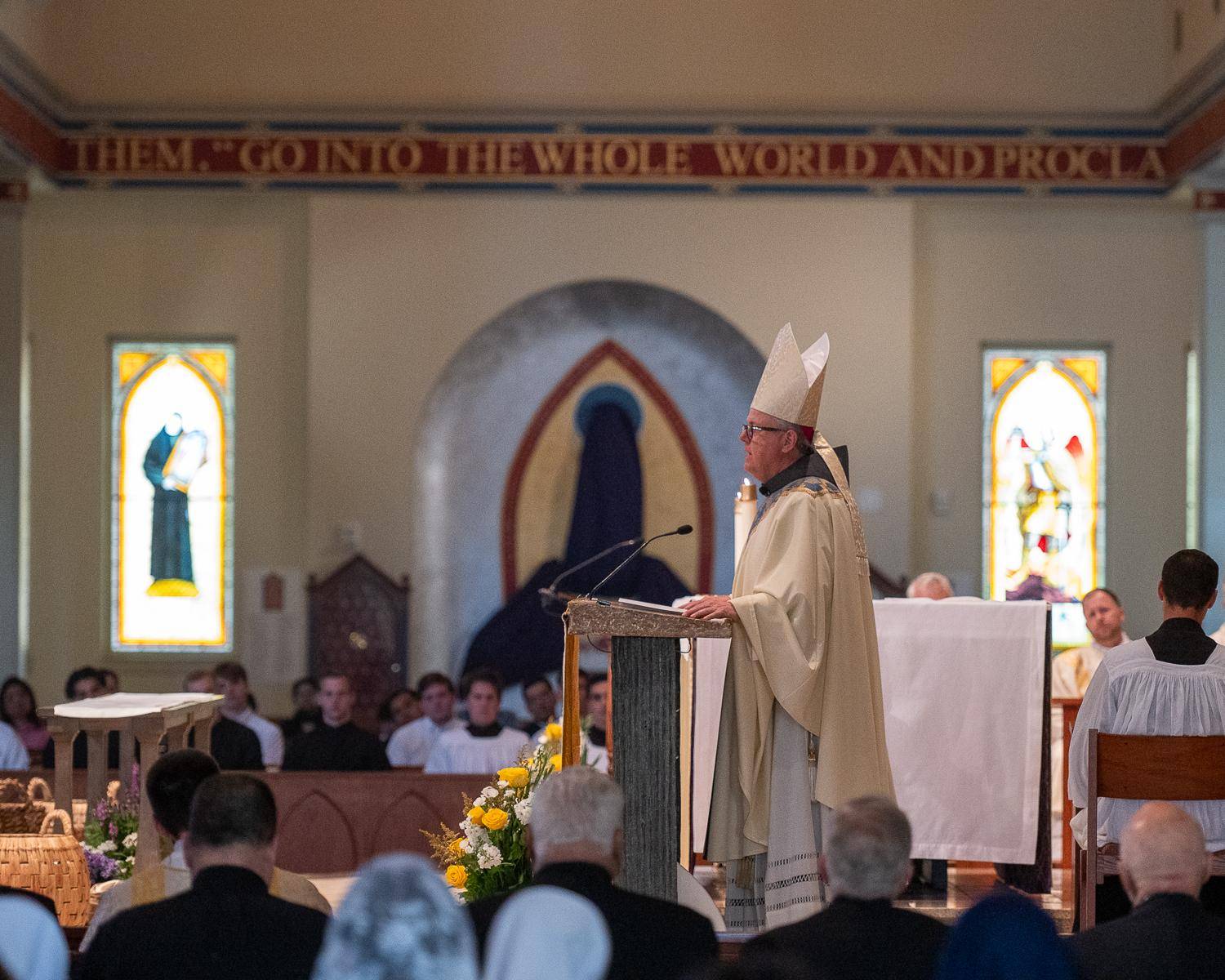
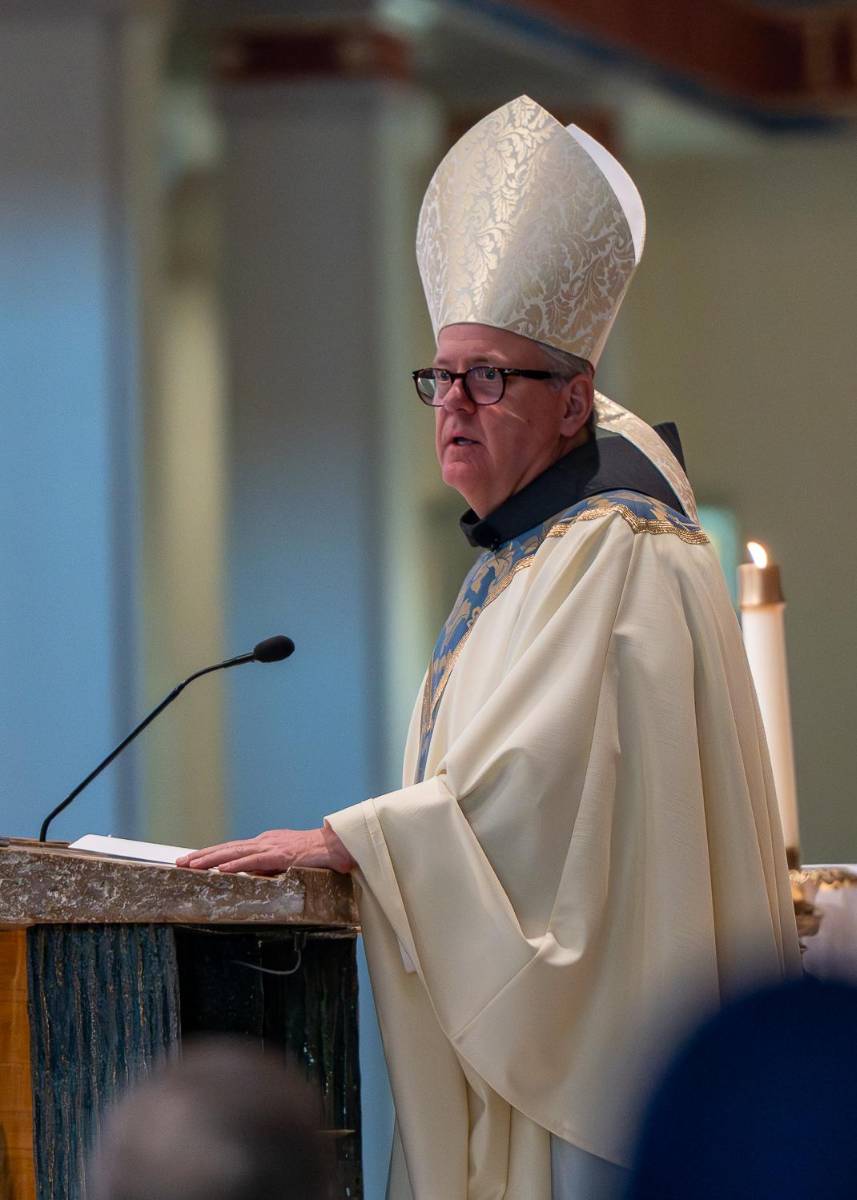
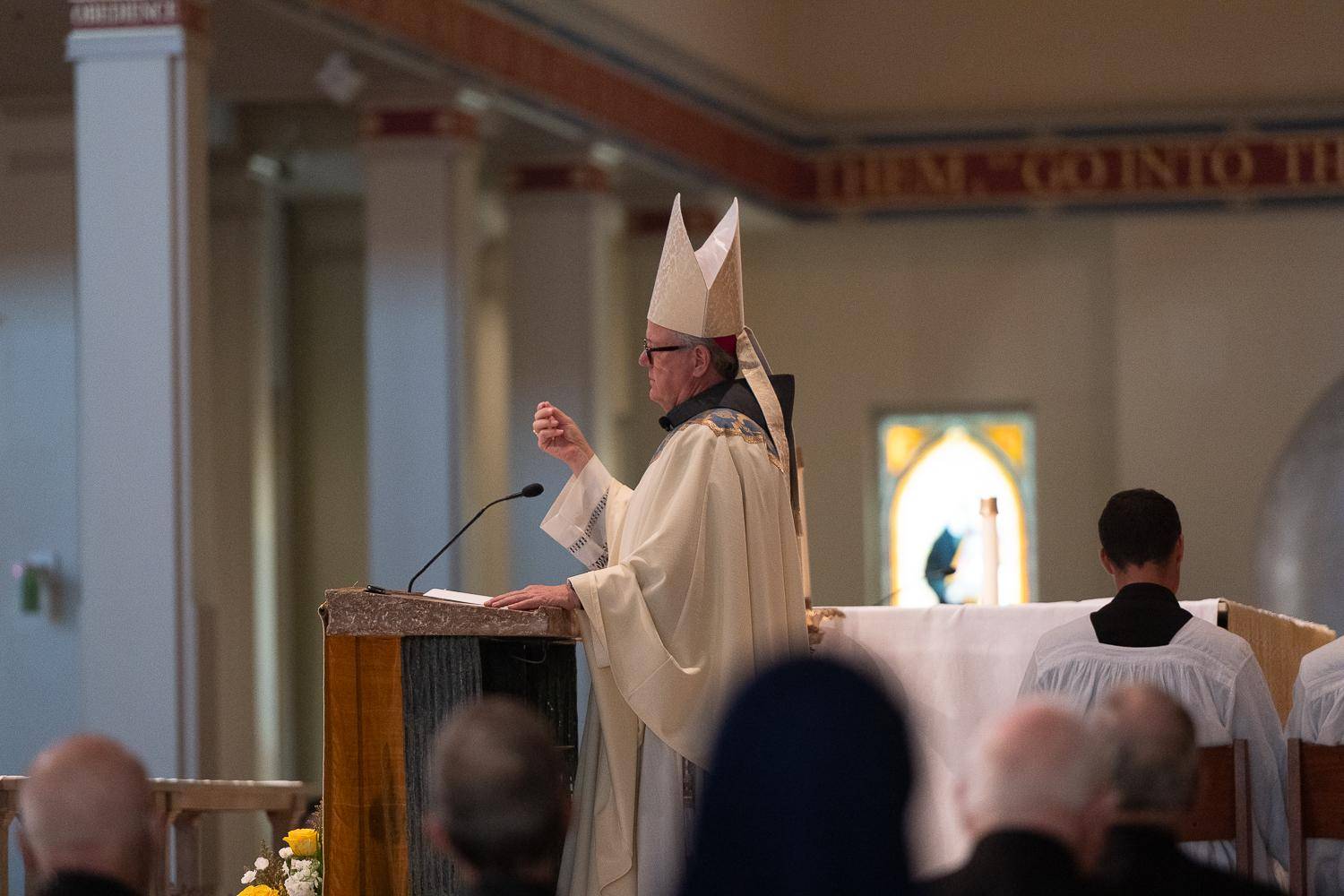
Bishop Martin referred to Stefanick’s talk in his closing Mass homily. “I was so impressed to hear Chris Stefanick today, here on the stage, say two-thirds of the word ‘God’ is ‘Go.’
“Go, get out!” the bishop exclaimed. “You’ve got work to do.”
Referring to the first reading from the Book of Kings, in which the prophet Elijah was fed by an angel, Bishop Martin noted, “That refreshment is given him for the journey. He’s got more to do.”
Likewise, he said, participants should share the spiritual nourishment they received from the Congress with the people in their lives: “My brothers and sisters, we’re called tonight to take this
Eucharist and go out into the spaces of our private and public lives, where sin and evil reign most, there where the Eucharist wants to be shared.”
Jesus, the bishop said, wants us to be disciples and bring Him “to the worst places, to those cracks and crevices of your life and the life of our community. Why? To bring hope there. Bring hope to the darkest places that need it the most. That’s why we come with our need, our deep hungers and why we’re fed at this table, so we can bring that hope to a hopeless world wrapped in sin.”
The message was inspiring to Silvia Church from St. Vincent de Paul Church in Charlotte.
“It’s always spiritually uplifting, it gives food for thought and food for the soul,” she said. “What I get here helps me go forward.”
Bishop Martin ended the Congress by tying into an earlier theme: overcoming the fear that often holds us back. He noted that the temptation to fear, particularly among many in the Hispanic community right now, is great.
He drew a round of applause as he appreciated their attendance and said, “Join me in thanking them for overcoming that fear and giving witness to faith which is greater than every fear.”
— Story by Lisa M. Geraci, Christina Lee Knauss and Trish Stukbauer. Photos by Amy Burger, Rachel Burgess, Travis Burton, Liz Chandler, Edward Chaplinsky Jr., Olivia DiGiovanni, Lisa M. Geraci, Troy C. Hull, Christina Lee Knauss, David Puckett, Patrick Schneider, Brian Segovia and provided
Read more about the Eucharistic Congress:
21st Eucharistic Congress begins with the end in mind
Thousands of Catholics from across the Carolinas walk in the Eucharistic Procession
We belong together walking in faith
‘Go, get out. You’ve got work to do’
Gallery: Sights of the Eucharistic Congress
Did you participate in the 2025 Eucharistic Congress? Take this survey and help make next year’s event even better! The survey is anonymous, independent and takes 5 minutes or less to complete: https://www.truthly.ai/ec-survey