diofav 23

Catholic News Herald

Serving Christ and Connecting Catholics in Western North Carolina

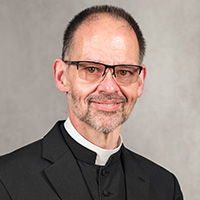
CHARLOTTE — Bishop Michael Martin has joined a number of bishops across the United States in urging Catholics associated with the Society of St. Pius X to return to full communion after the Vatican’s declaration that the traditionalist group has broken away from the Catholic Church.

071726 bishop martinIn a special pastoral letter issued July 17, Bishop Martin personally invited local followers of the SSPX to return to the Church and cautioned Catholics in the Diocese of Charlotte not to participate in liturgies of the now-schismatic society.

“I write as your bishop and spiritual father,” he said. “I recognize the sincerity of many who have been drawn to the Society over the years. Your desire for holiness, fidelity, prayer, and devotion is not in question.”

“At the same time,” he continued, “authentic Catholic faith is never separated from communion with Peter and the bishops united with him. The unity of the Church is not merely an administrative arrangement; it is a gift of Christ Himself.”

“Dear brothers and sisters,” he told SSPX followers, “the door of the Church is open. The heart of Christ is open. As your bishop, I welcome every effort toward reconciliation and assure you of my prayers, my affection and my pastoral support.”

If you have been attending a chapel of the Society of Saint Pius X and are now uncertain about your place in the Church, know that you are loved. The Church is your home. We desire to walk with you, answer your questions honestly, and help you experience the peace that comes from full communion with the Catholic Church. The door is open, and you are welcome.
— Bishop Michael Martin, OFM Conv.

READ THE FULL LETTER AND FAQS: Letter to the Faithful Associated with the Society of Saint Pius X


Vatican declares SSPX in schism

Bishop Martin’s message echoed statements issued by other bishops and the Vatican after the Society of St. Pius X’s July 1 consecration of four bishops without papal approval in Ecône, Switzerland.

Just days earlier, Pope Leo XIV had issued an unusual personal appeal to the society’s leaders, warning them that going ahead with the consecrations would constitute a schismatic act and could deprive the faithful of valid access to the sacraments.

“I pray for you, because to tear the seamless garment of Christ is a sin of extreme gravity,” the pope said. “I plead with you and ask you with all my heart: please turn back!”

After the consecrations, the Vatican’s Dicastery for the Doctrine of the Faith declared the society’s bishops had incurred automatic excommunication and clergy belonging to the SSPX “are in schism and therefore must be considered schismatics.”

Accompanying the Vatican’s July 2 decree was a note explaining that sacraments requiring the Church’s jurisdiction – including confession and marriage – are now invalid when celebrated by SSPX clergy.

SSPX leaders ignored the pope’s personal plea, dismissed the excommunication decree, and have filed an appeal with the Dicastery for the Doctrine of the Faith.

A movement at odds with Vatican II

Founded in 1970 by French Archbishop Marcel Lefebvre, the SSPX emerged in opposition to the Second Vatican Council. Although the society is best known for celebrating the Traditional Latin Mass, it rejects key teachings and reforms associated with Vatican II, including those concerning religious liberty, ecumenism, changes to the liturgy and liturgical calendar, broader participation by the laity, and the Church’s relationship with the contemporary world.

The current conflict dates back to 1988, when Archbishop Lefebvre consecrated four bishops without the approval of then-Pope John Paul II. Decades of talks failed to resolve the society’s objections to the authority of the Church and the legitimacy of Vatican II.

The society operates three chapels in North Carolina: one west of Charlotte in Mount Holly, and two near Raleigh. They are not in communion with the Catholic Church and are not under the jurisdiction of the Charlotte or Raleigh dioceses.

Bishop Martin cautioned local Catholics that participating in liturgies at SSPX chapels “could be construed as a schismatic act and should therefore be avoided.”

At the same time, he emphasized the Church’s desire for reconciliation.

“I invite all who have been attending Society chapels to prayerfully examine their relationship with the Catholic Church and to consider returning fully and visibly to communion with the Successor of Peter and the Church throughout the world,” he said.

“To those who may be fearful, uncertain, or wounded by these events, I say: do not be afraid. The Church desires not punishment but reconciliation; not exclusion but communion.”

A path back to communion

The Vatican has released instructions outlining a path for SSPX adherents to return to the Church and has emphasized that penalties for lay Catholics associated with the society are not automatic but must be evaluated case by case.

According to the Holy See, laypeople who formally embrace the society’s positions, promote its separation from the Church, or knowingly and persistently reject the authority of the pope and bishops have incurred automatic excommunication. By contrast, Catholics who have attended SSPX chapels out of confusion, family obligation or attraction to traditional worship are not presumed to be excommunicated.

Church law notes that excommunication is intended to call people to repentance and reconciliation, not simply to punish them. Those who incur the penalty remain baptized Catholics but are barred from receiving the sacraments and from exercising certain ministries or offices in the Church.

The Vatican’s guidance states that Catholics seeking to return to full communion must profess the Catholic faith and affirm their adherence to the pope and the Church’s teaching authority under the direction of their local bishop.

In his pastoral message to SSPX followers, Bishop Martin emphasized the diocese “stands ready” to help anyone who wishes to return or affirm their communion with the Church. He advised those associated with the society not to presume their status in the Church and to seek guidance from a priest or diocesan representative.

“I ask our priests to be available with patience and charity to anyone seeking guidance,” he said. “I also ask all the faithful of the Diocese to pray for those affected by these developments, for the priests and faithful associated with the Society, and for the restoration of unity in the Church.”

— Patricia L. Guilfoyle. Additional reporting by OSV News and Vatican News.


FAQs for faithful returning from the Society of St. Pius X (excerpted)

Q: If I have attended an SSPX chapel, does the Church consider me excommunicated?

A: The Holy See has distinguished between those who have formally adhered to the Society and those whose degree of involvement and responsibility must be assessed individually. The recent guidance from the Dicastery for the Doctrine of the Faith specifically notes that questions of personal culpability and responsibility are to be evaluated on a case-by-case basis. No one should presume his or her own canonical status without speaking to a priest or diocesan representative. However, Catholics are now called to refrain from participation in liturgical celebrations and activities of the SSPX.

Q: Must I accept the authority of the pope, the Second Vatican Council, and the Mass promulgated by St. Paul VI?

A: Yes. Full communion with the Catholic Church includes fidelity to the Roman pontiff and the bishops united with him, acceptance of the Second Vatican Council as a legitimate ecumenical council, and recognition that the Mass celebrated according to the liturgical books promulgated by Sts. Paul VI and John Paul II is valid and legitimate. The reconciliation norms issued by the Holy See require a profession of faith and adherence to the Church’s magisterium.

Q: What about baptisms, confirmations, marriages and confessions previously received at SSPX chapels?

A: Questions concerning the validity and canonical status of particular sacraments can involve important distinctions. Anyone with concerns should consult a priest or the diocesan tribunal so that his or her individual circumstances can be carefully reviewed.

Q: Will I be judged or treated harshly if I come forward?

A: No. The Church seeks to accompany persons with charity, patience and understanding. Many who attended SSPX chapels did so because of a sincere desire for reverent worship and fidelity to the Catholic faith. The bishop and his priests desire to assist all who seek communion with the Church.

READ MORE FAQS: Letter to the Faithful Associated with the Society of Saint Pius X

St. Matthew parishioners respond with aid to devastated coastal town

071426 V mainPadre Martin Vegas stands at the site of his chuch, Nuestra Señora de la Soledad Church, which was left in ruins by the earthquakes.

CHARLOTTE — It was just after 6 p.m. when Veronica Rodriguez settled in to watch the World Cup on TV and the phone rang.

There’s been an earthquake.

Your mother’s home in Venezuela was hit.

It’s bad.

“Oh my God,” Veronica said to herself, “I’ve got to call my mother.”

No answer.

Veronica flipped to follow the news on social media: Two earthquakes, 7.2 and 7.5. Buildings collapsed. People were killed.

“It was terrifying,” says Veronica, a St. Matthew parishioner who moved to the U.S. 15 years ago. “The buildings looked like Legos falling down – and my mom was right in the most affected area.”

Veronica’s mother, Beatriz Borregales, lives in the capital city Caracas but often spends weekends and holidays at a family home in Naiguatá, a small fishing and tourist town on the Caribbean, 25 miles east of Caracas. June 24 was a national holiday in Venezuela, so Veronica wondered if her mother might be there.

A similar scramble for information was unfolding among other St. Matthew parishioners. For the past eight years, the Diocese of Charlotte’s largest parish has supported a soup kitchen at the Catholic parish in Naiguatá.

Texts flew among parishioners: Is anyone hurt? Is the soup kitchen OK? Has anyone heard from Padre Martin?

Padre Martin Vegas is pastor of San Francisco de Asís Parish, where he oversees two churches and a Catholic school that hosts the soup kitchen. He wasn’t answering calls or texts either.

The twin earthquakes had wiped out communications and devastated structures at a time when most people were at home in Venezuela, celebrating the holiday. So, as night fell on June 24, the people of St. Matthew could only watch and wait.


071426 V Veronica 1Veronica and her daughter pose with a photo of their mom, who they could not contact after the June 24 earthquakes.


 Is my mother alive?

071426 V dulce 2Dulce Peña holds a photo sheet of her family members.

Finding it impossible to sleep, Veronica turned to her Catholic chat group on WhatsApp and found similar panic among her Venezuelan friends now living in Charlotte. Everyone wanted information.

One friend, Dulce Peña, a parishioner at St. Mark in Huntersville, wrote that she too was looking for her mother. Her aunt, her brother and his wife were also unreachable. The four family members lived on the 13th and 14th floors of a high-rise condo building named “Riomar” on the edge of Naiguatá (pronounced Nye-gwah-TAH).

“We were on the phone with one another the whole night, praying,” Veronica says of her friend Dulce. “We promised whoever found their mother first would then help the other.” 

Across Charlotte, Bruce Anderson’s heart sank as it became clear that Naiguatá had been among the areas hardest hit. He helps organize St. Matthew’s support for the soup kitchen, and he stayed up late searching online for any word of Padre Martin and the Venezuelan parish.

Before midnight, Veronica made a clever connection: She managed to reach an errand runner in Caracas and hired him to go look for her mother the next morning.

“I needed to know if she was alive,” Veronica says.

071426 V bond 3Volunteers help distribute bags containing food, hygiene products, water bottles and clothing.

A growing Catholic bond

It was Veronica and her mother who originally connected St. Matthew with Venezuela’s San Francisco de Asis Parish back in 2018. The two had learned about St. Matthew’s efforts to combat hunger, so they asked parish leaders to include Venezuela in its annual food-and-funds drive.

“People are eating out of trash cans,” Veronica had explained to leaders of St. Matthew’s Monsignor McSweeney World Hunger Drive, which last year raised $430,000 to aid people in eight countries.

The Venezuelan economy had collapsed under the authoritarian rule of Nicolas Maduro, she said, and people needed help. Her mother sent photos of hungry children lined up at the parish soup kitchen, which operated on a shoestring.

“We knew we could have an impact,” says Hunger Drive leader Steve Favory, who vividly remembers Veronica’s presentation. “The fact that this mother and daughter were reaching out, they were so sincere and grateful, and sending photos of the priest feeding the children – it touched our hearts.”

St. Matthew sent $1,000 that first year and has steadily increased its support – with parishioners donating $74,000 so far.

072226 Venezuela map onlineThe soup kitchen has fed about 150 people a day from two locations. Naiguatá is a modest, working-class town that benefits from tourists who come for its mountain-to-sea views, but significant poverty has crept in.

The day after the quakes, Bruce Anderson emailed Padre Martin and Bishop Alberto Castillo for information about Naiguatá.

“Your friends at St. Matthew Catholic Church in Charlotte, North Carolina, USA, are concerned about your community following yesterday's earthquake,” he wrote. “When you are able to communicate with us regarding the situation, we would like to know what your needs are. You are in our prayers.”

Bishop Castillo responded later that day, June 25: “The state remains without electricity or communications, with significant loss of life and material damage to buildings, homes, churches, and infrastructure…I have not yet been able to contact Father Martín Vegas to learn about the damage sustained by the San Francisco de Asís parish, the church facilities, and the soup kitchen. However, I have heard from others that the priest is alive and well.”

“We are counting on your prayers,” the bishop wrote, “and any assistance you might be able to provide.”

With that, St. Matthew sprang into action, immediately preparing to wire $27,000 for whatever food and supplies were available. Within days, they would also be working to increase funding earmarked for the parish during this year’s World Hunger Drive, which kicked off July 11.

“St. Matthew has a big heart for people in need,” says Father Patrick Cahill, “and this time, one of own parishioners – Veronica Rodriguez – was dramatically impacted.”

Search for the missing

The errand runner set out early the morning after the earthquakes to search for Veronica’s mother. On a motorbike, he navigated streets clogged with debris and desperation, from Caracas to Naiguatá, weaving around collapsed homes, damaged roadways and people digging through the rubble by hand for loved ones.

He had the address and a photo of Veronica’s mother on his phone. He also had a picture of the colorful mural that adorned the wall in front of Beatriz Borregales’ home, depicting Our Lady of Coromoto, Venezuela’s patron saint. It was a landmark. 

Hoodlums stopped painting graffiti on the wall when the mural went up. “People are very Catholic there,” Veronica says.

071426 V missing 4The runner sent to find Veronica’s mother the morning after quakes was told to look for the image of Our Lady of Coromoto, Venezuela’s patron saint, to identify the location of her home.

Finally, the errand runner was standing outside Beatriz Borregales’ modest home on a picturesque parcel passed down from her father, Germán Borregales, an anti-communist political leader who had run unsuccessfully for president of Venezuela several times in the 1960s.

Beatriz Borregales had maintained the property since his death in 1984 and frequently vacationed there with Veronica and her siblings, and now hosted gatherings for her San Francisco de Asís Parish community.

Borregales guardedly answered the door. She warmed up when the errand runner flashed a photo of Veronica, smiling. He asked if he could take Borregales’ picture and record her voice, so he would have evidence to send Veronica when a signal became available. “Proof of life,” Veronica had called it.

Borregales felt blessed to be alive. On the night of the quakes, she’d been watching TV and suddenly felt dizzy as the floor began to move. She looked outside and saw a four-foot wave of water splashing from her swimming pool.

“People began coming down from the higher part of town shouting, ‘Earthquake! Earthquake!’” she told the Catholic News Herald. “I remained calm, praying, and asking God to protect us. All night, everyone stayed out in the streets – children, mothers, entire families.”

It was around 2 p.m. on June 25 – 20 hours after the quakes – when Veronica’s phone buzzed with good news. She wept.

“My mother was overwhelmed, but she was safe,” Veronica says. “Everything around her collapsed. The house was the only thing left intact, but she was alive.”

He would also send photos of a collapsed high-rise with nothing but its sign remaining: Riomar, where Dulce Peña’s mother lived.   

071426 V feeding 5Padre Martin stands inside of his parish Our Lady of La Soledad, which the local authorities consider a complete loss following the earthquakes.

Feeding the hungry

A day later, on June 26, Padre Martin Vegas finally replied to Bruce Anderson:

“Thank God, we are alive. The church and the parish house have been rendered unusable and have suffered severe structural damage,” he wrote of Nuestra Señora de la Soledad Church.

“We need basic supplies: water, lighting, medicines, and non-perishable food. … Aid is not reaching us due to the distance and the difficulty of access.

“We need your prayers.”

On the same street as the church, Padre Martin later said, 12 people had died. But the parish school and the soup kitchen were still standing, so he had relocated there along with 120 of his parishioners who had lost their homes.

Padre Martin restructured the soup kitchen. Instead of serving hot meals, he instructed parishioners to start packaging food and hygiene products. They went door to door delivering goods and taking a head count to see who was missing.

In the first week, Padre Martin said, “We have been able to assist people with 2,953 bags of food, hygiene kits, drinking water, and clothing. Despite everything we have experienced, people have shown great solidarity. … We have also seen many signs of hope. The church may have suffered damage, but the faith of the people remains standing.”

To Anderson, the devastation felt like Hurricane Helene all over again, just further away. Still, St. Matthew would be there in support.

071426 V purpose 6Rubble from the nearby Our Lady of la Soledad Church meshes into the landscape of devastation in Naiguatá after the quakes.

A mother’s new purpose

With no services or supplies, Veronica’s mother decided to drive back to her apartment in Caracas on June 26.

“If one nail hit any of her tires,” Veronica laments, “she would have been stranded in the middle of nowhere.” 

Indeed, the trip was traumatic, Borregales said. High-rises lay in rubble. Friends were missing. Sadly, she realized people were trapped beneath debris and no search parties were coming.

“I saw the reality with my own eyes. Completely collapsed buildings, like an accordion. People in the streets. Destroyed roads. Fallen bridges,” she said. “I was praying the entire time, asking my guardian angel to accompany me.”

When she reached Caracas hours later, she called Veronica with new purpose: She wanted to use the family property in Naiguatá for an orphanage or maybe a seminary, since the quakes had destroyed the Diocese of La Guaira’s seminary.

“She was heartbroken,” Veronica recalls. “She especially wanted to take care of the kids. These kids no longer had homes, no beds, no food. … All she has there is some property and a will to help. Helping others is a priority for her as a Catholic.”

071426 V unity 7Padre Martin offers Mass outside at the Plaza of Bolívar de Pueblo Arriba near San Francisco de Asís Church in the town of Naiguatá.A call to unity

It would be another six days after the quakes, June 30, before Dulce Peña got news of her mother. A search team digging through rubble had found a woman’s body. In a photo, Peña and her sister recognized the striped pajamas and the rosary-style necklace the woman wore.

Yes, this was Dulce Avila Peña, age 88.
071426 V unity 7 3Padre Martin leads a Eucharistic Procession after the quakes in Naiguatá.

While there was still no word on her aunt, Peña was relieved to learn that her brother Julio and his wife had survived.

“It’s a miracle,” she says, “they fell down 14 floors. When they woke up, they were buried under bricks and dust and columns, and it was dark. My brother and his wife started screaming. They could hear each other but they couldn’t see each other.”

Peña would later learn her aunt Gladys had perished alongside her mother. Last weekend, July 18-19, St. Mark Church added their names to the Prayers of the Faithful at all six Masses.

As promised in their group chat, Veronica is reaching out to Dulce, recently hosting her for dinner.

Now, both women are asking for everyone to help provide relief to Venezuela – echoing the words of Padre Martin, whose soup kitchen has survived.

“Regarding the tragedy that has struck us with this double earthquake, which has caused so many deaths and destruction throughout the diocese, we too have been severely affected,” Padre Martin advised St. Matthew by email. “We have a team of very valuable servants who are ready to serve our brothers and sisters.

“In this moment of emergency and contingency, we would like to use the (St. Matthew) resources to serve the entire community,” including “neighbors sleeping in the square” because of damaged homes.

“So far, we have spent three days providing them with breakfast, lunch, and dinner, until our resources run out.”

“Any help you can send us at this time,” he wrote, “would be designated to address this emergency in the food sector.

“We are immensely grateful for your prayers and your charity, turned into solidarity. United in prayer.”

— Lisa Geraci and Brian Segovia. Liz Chandler contributed. Photos provided and by Troy C. Hull.


HOW TO HELP

Donate now to support the Church’s emergency response through Catholic Relief Services, securely online: www.crs.org/donate/venezuela-earthquake.
A special collection will be taken up at all Masses in the diocese this weekend (July 18-19). Donations will be sent directly to fund Catholic Relief Services’ humanitarian response on the ground. Learn more.

071426 V 7 2Volunteers from the soup kitchen are going around the town to give food and drinks to those in need. More than 120 people in the small coastal town have been left homeless.

Scale of the damage

  •  7.2 and 7.5: Magnitude of the two earthquakes that hit on June 24, devastating the capital city of Caracas and the coastal state of La Guaira
  • 5,208: Death toll as of July 21
  • 16,740: Number of injured 
  • 17,907: Estimated number of homeless 
  • 23,820: Living in temporary shelters
  • 58,000: Buildings damaged or destroyed
  • $37 billion: Initial estimate of the damage to housing and infrastructure
  • 650,000: People, including 234,000 children, in need of humanitarian assistance, according to the U.N. Children’s Fund
  • 25 of 100: Churches in the Archdiocese of Caracas that sustained damage