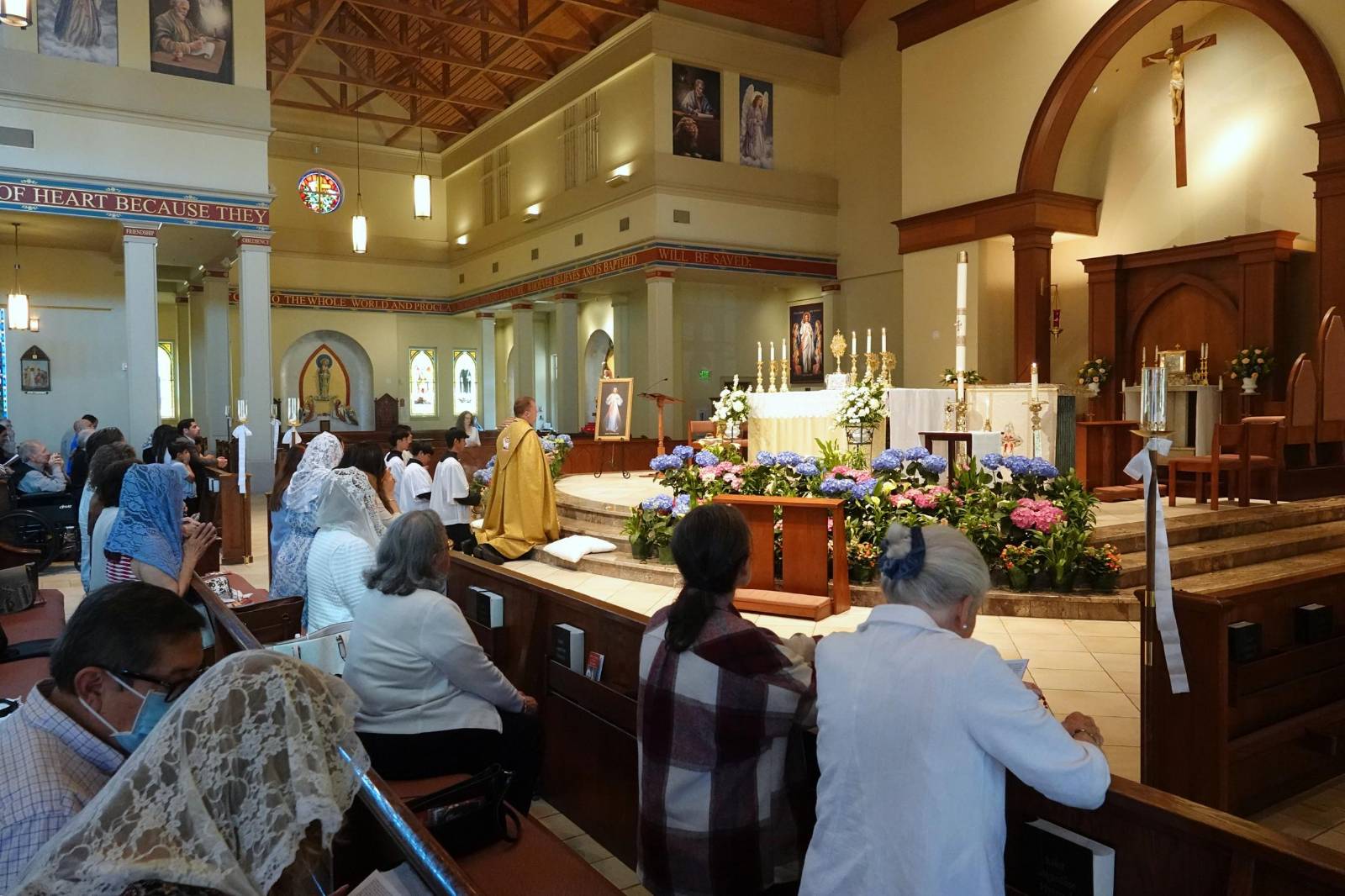
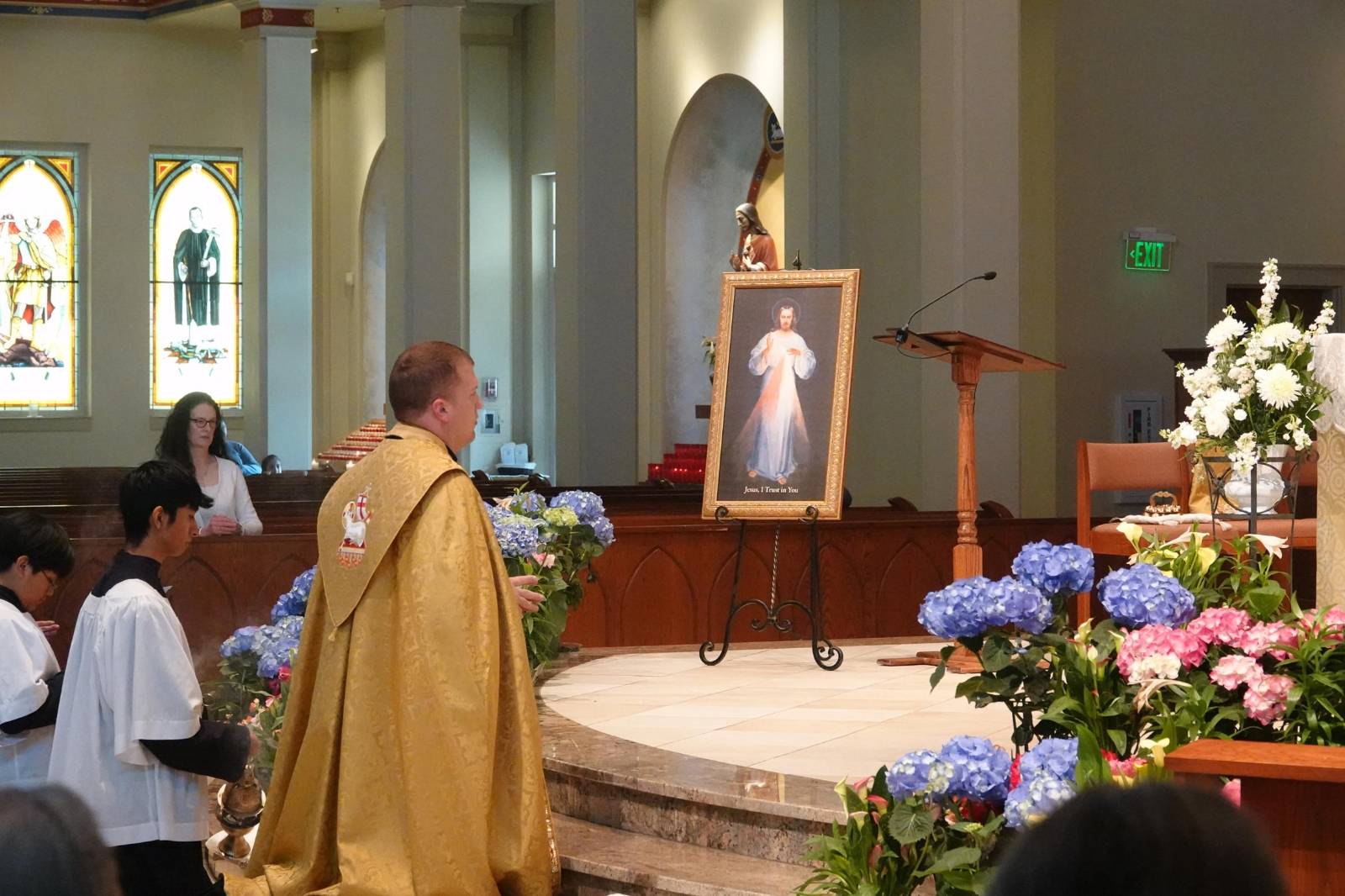
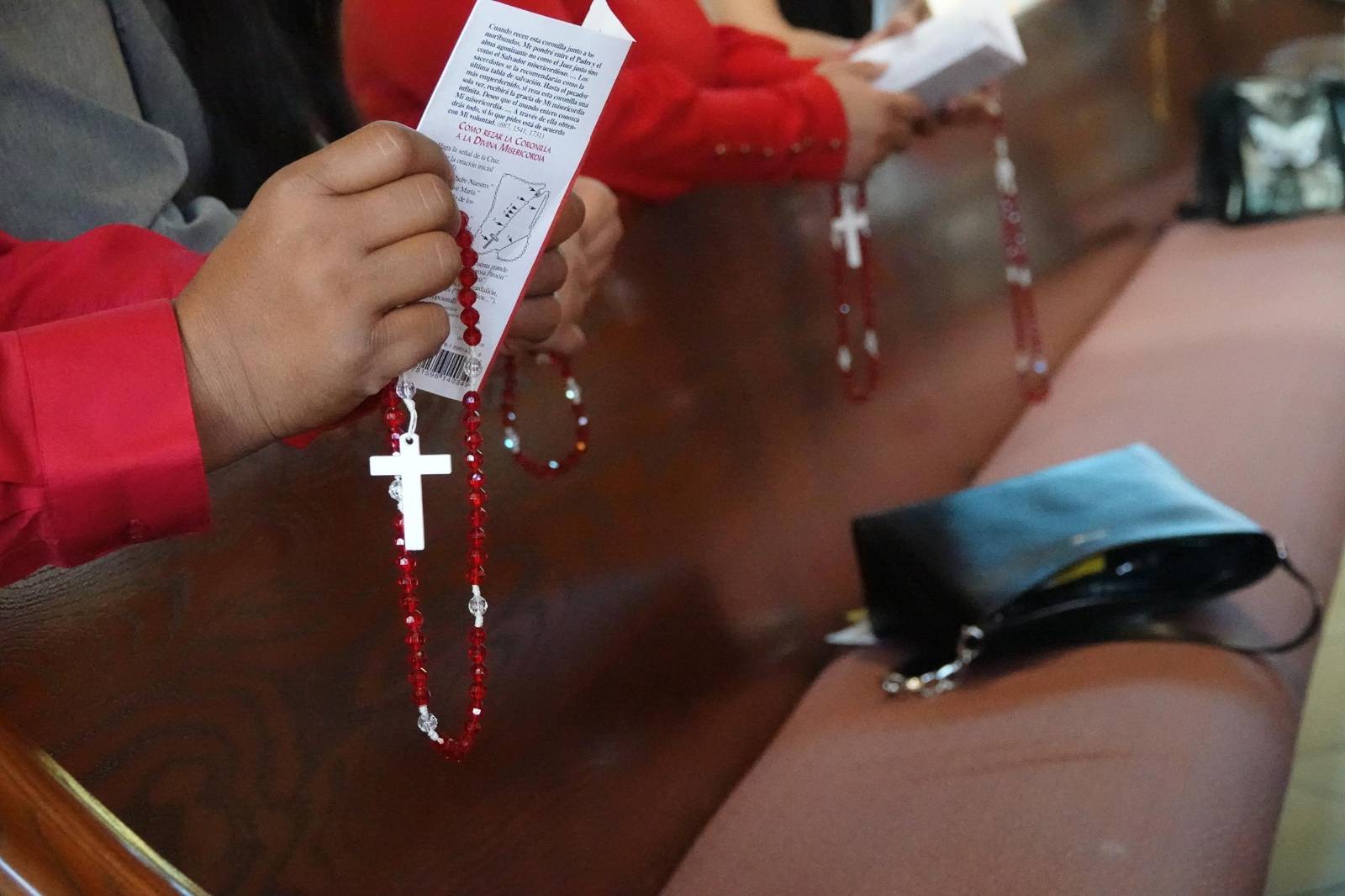
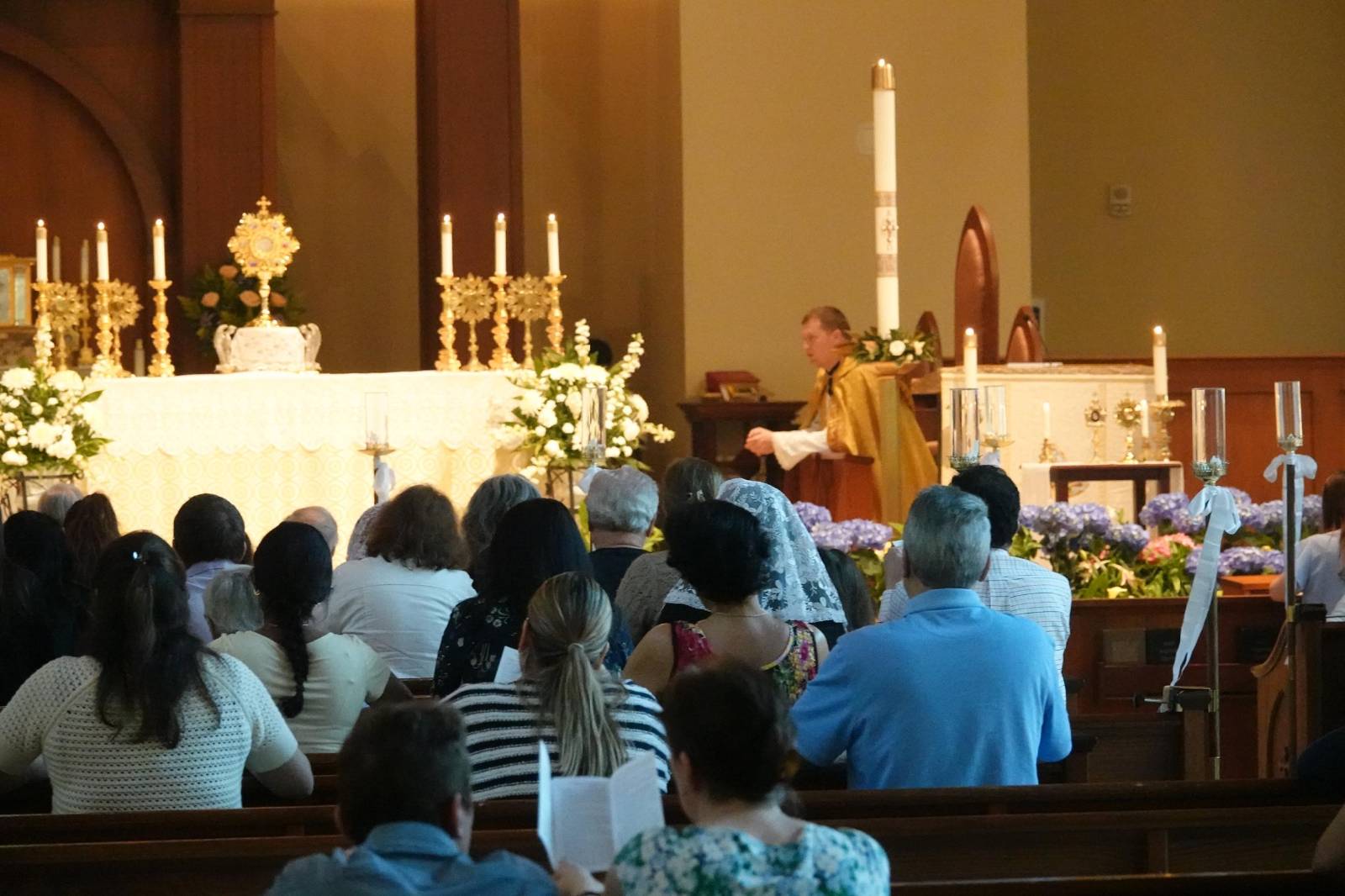
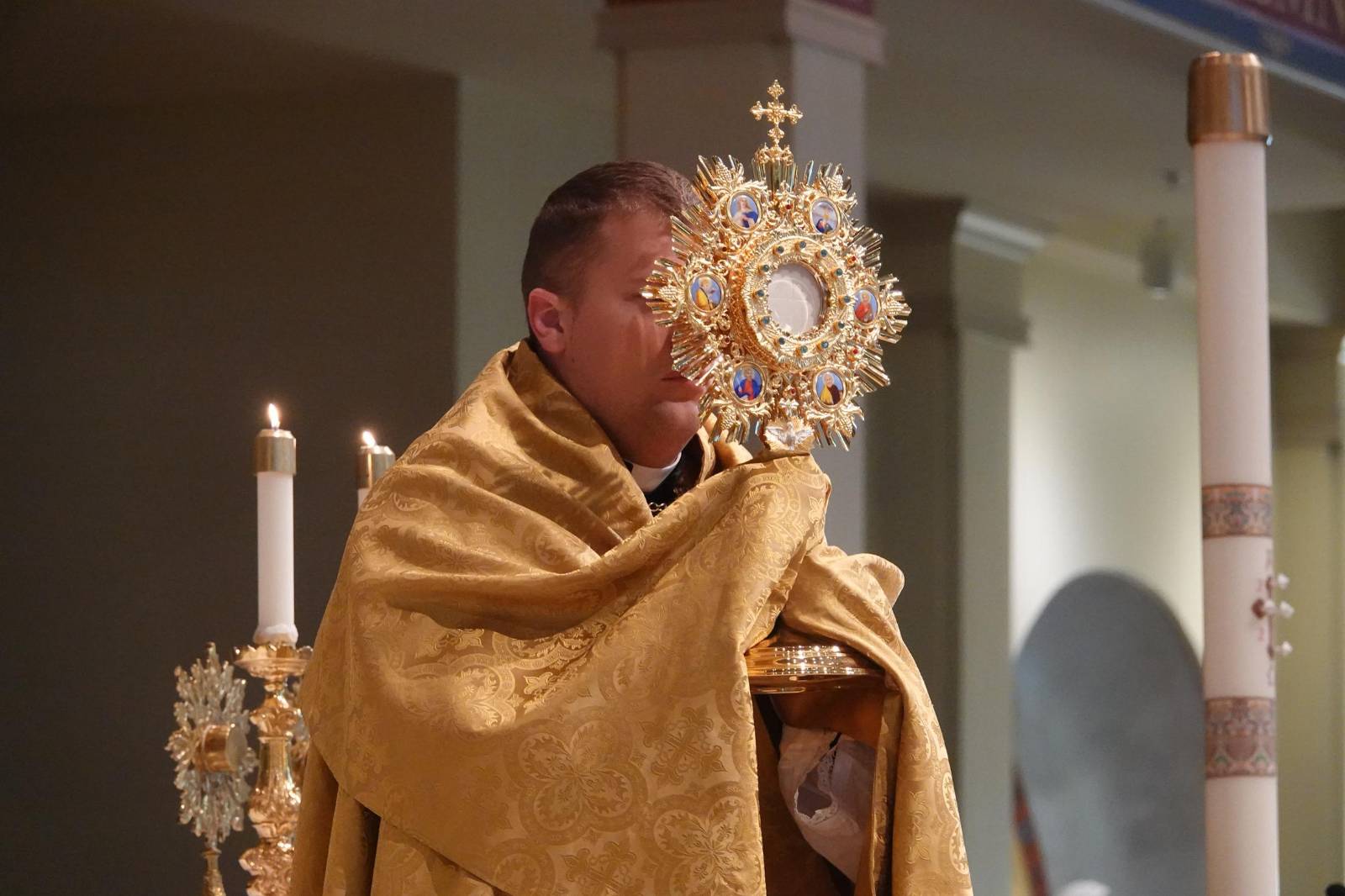
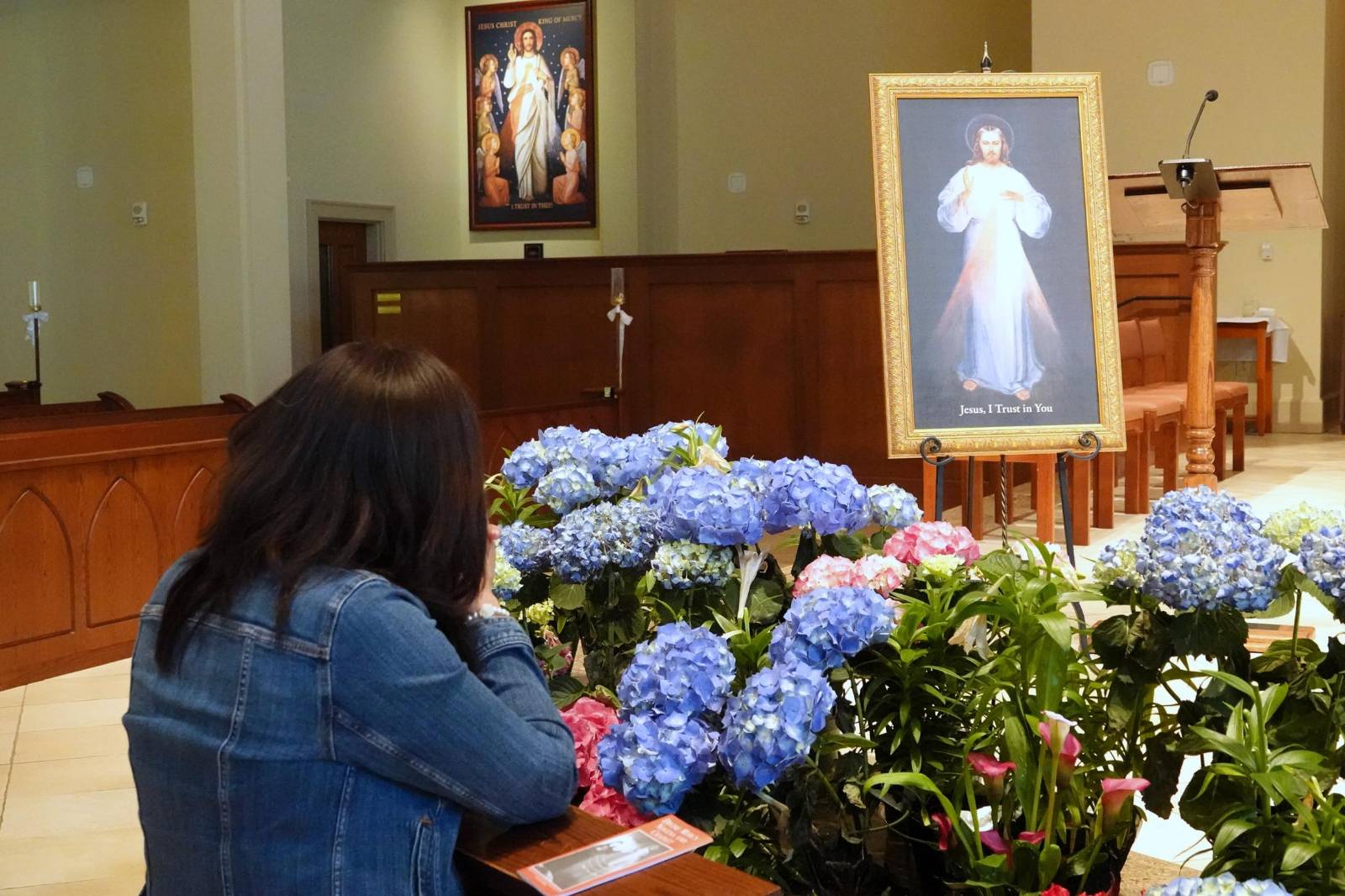
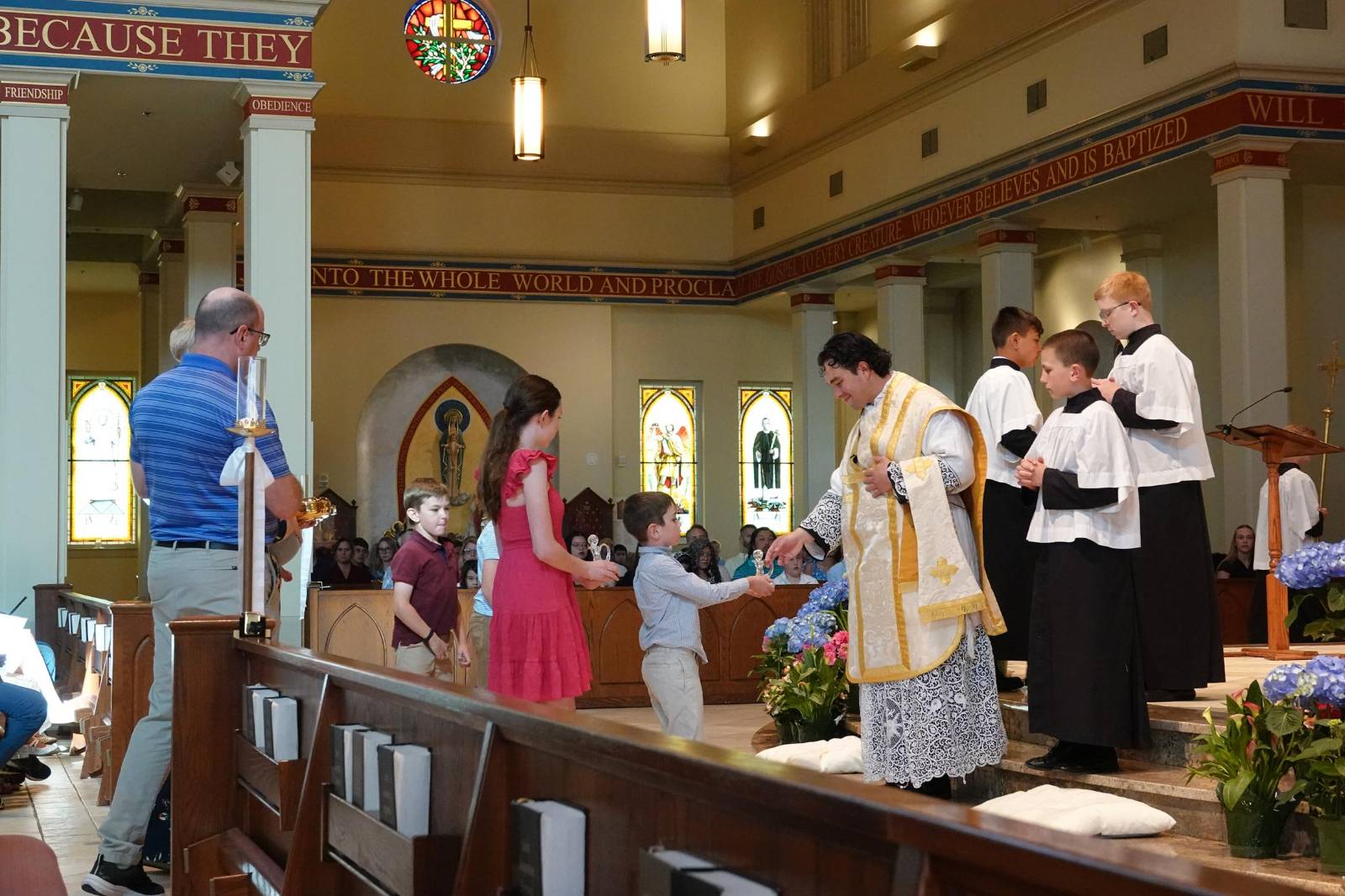
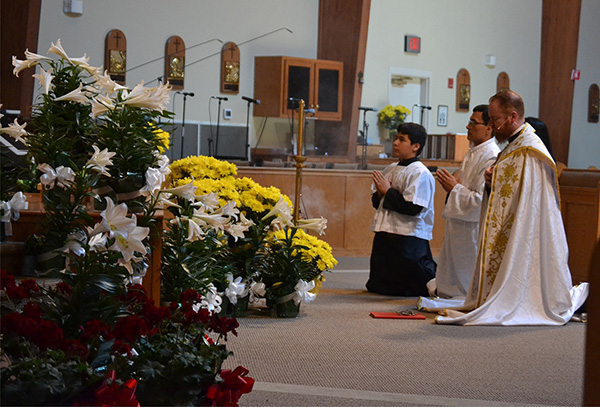
 KERNERSVILLE — Father Noah Carter, pastor of Holy Cross Church, celebrated Divine Mercy Sunday on April 12 by leading a Divine Mercy Chaplet. Across the diocese, parishes celebrated the Sunday after Easter with special services that included Eucharistic Adoration and confession, displayed the image of Divine Mercy and said the chaplet and other prayers.
The day recognizes Our Lord’s private revelations to Polish nun St. Faustina Kowalska that promised forgiveness and grace.
On May 5, 2000, five days after the canonization of St. Faustina, the Vatican decreed that the Second Sunday of Easter would henceforth be known as Divine Mercy Sunday.
— Paul Doize
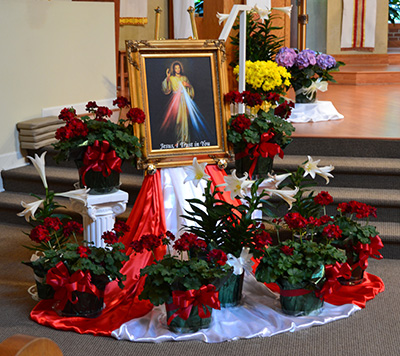
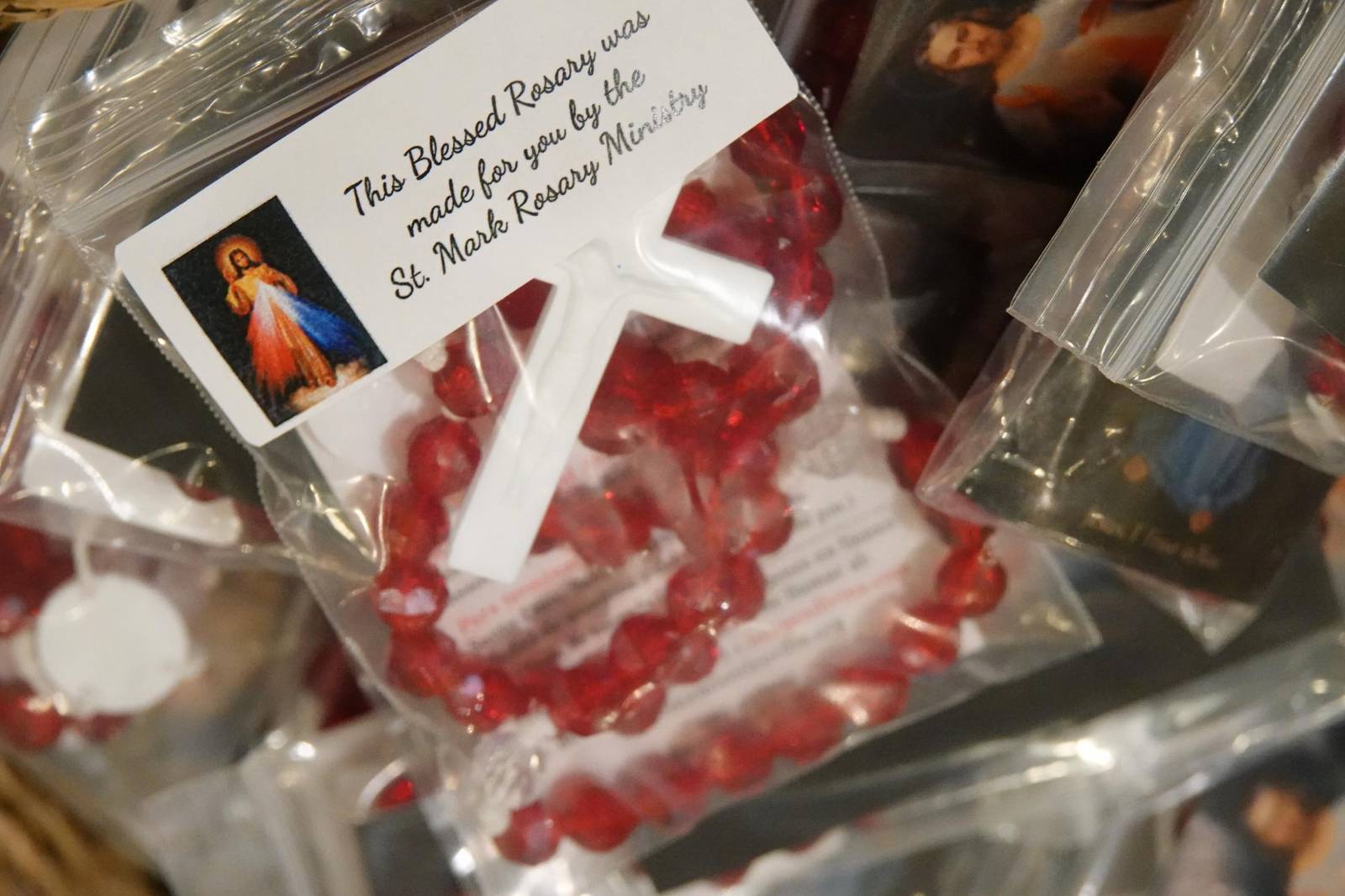
HUNTERSVILLE — At the Hour of Divine Mercy at St. Mark Church, Father Christopher Angermeyer reflected on the connection between the crucifixion and the Church’s celebration of Divine Mercy.
“Nine days ago, we were here in this church remembering the crucifixion of our Lord,” he said. “That same day marked the beginning of the Divine Mercy novena. That is not a coincidence. To truly understand our Lord’s mercy, we have to begin with the cross.”
He explained that the mercy of Christ is revealed most fully in His sacrifice. “The crucifixion shows the mercy He had for us, to die on the cross,” Father Angermeyer said. “And that same mercy is being poured out even now, as we return at the hour He died to ask for it.”
Reflecting on the image of Divine Mercy, he pointed to the two rays flowing from Christ’s heart. “What I love most about the image is the two colors,” he said. “The blue represents the water, and the red represents the blood that flowed when Christ was pierced.”
He explained that these carry a deeper meaning. “The water represents Baptism, the cleansing of our souls, the forgiveness of sins,” he said. “There can be no mercy without forgiveness. That is the first step.”
— Amy Burger