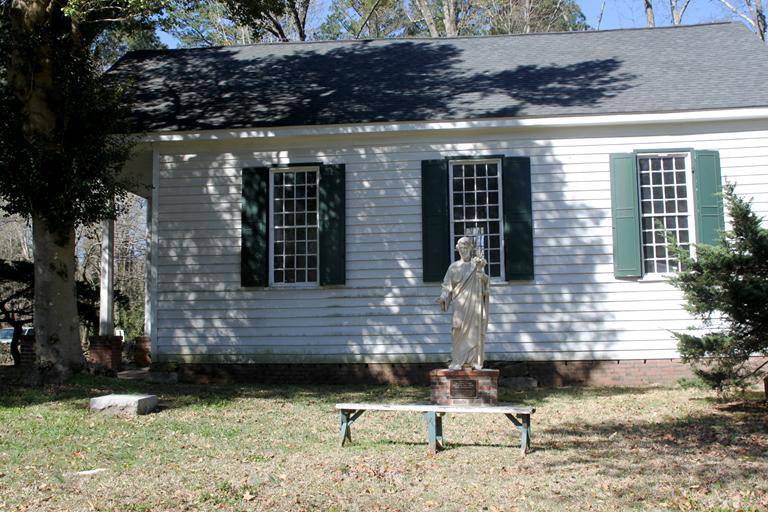
 MOUNT HOLLY — Irish Catholics celebrated the Feast Day of St. Patrick with a diocesan tradition, morning Mass at the oldest Catholic church standing in North Carolina – the small St. Joseph Church in Mount Holly.
St. Joseph Church, erected in 1843 to sustain Catholicism within the Irish Catholic immigrant communities who relocated to the Carolinas in search of their own pot of gold, opens its doors to the public only twice a year. The two special Masses fall just 48 hours apart, March 17 for the Feast of St. Patrick and March 19 for the Feast of St. Joseph.
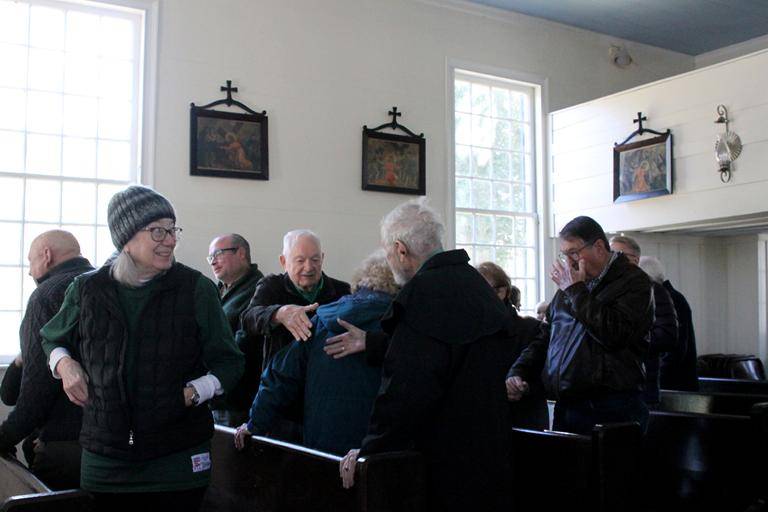
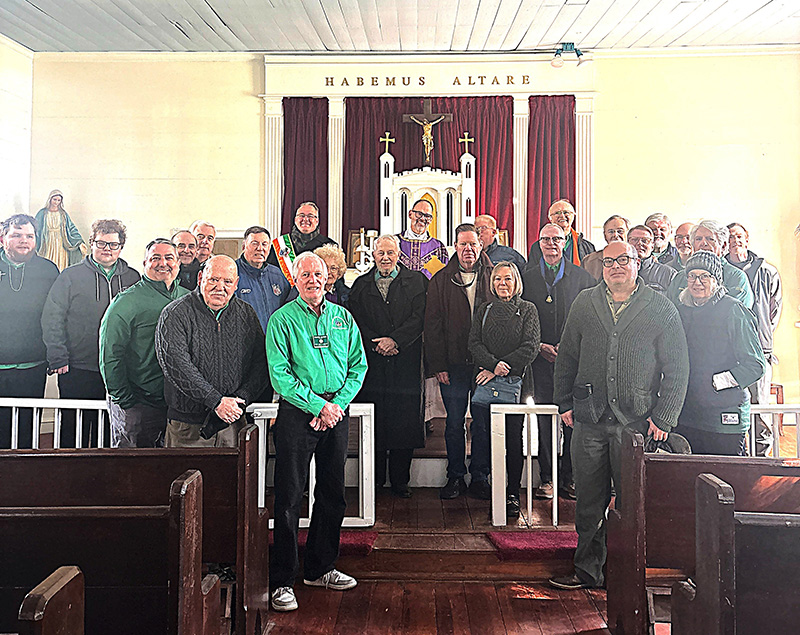
The St. Patrick’s Day celebration at St. Joseph Church was hosted by the oldest Irish Catholic fraternity in the United States, the Ancient Order of Hibernians, founded in 1836. Though the crowd of 40 left their kilts and bagpipes at home, they were proud of two things – their Irish roots and their Catholic religion.
As is customary, everyone gathered in the cemetery to form a circle around Father T.J. Cronin’s grave. Ironically, Father Cronin lies about 30 feet from the church where he never set foot. He died of yellow fever on a trip to Salisbury six months before the church’s last nail was pounded in, but was nonetheless the first priest assigned to the small Irish Catholic community.
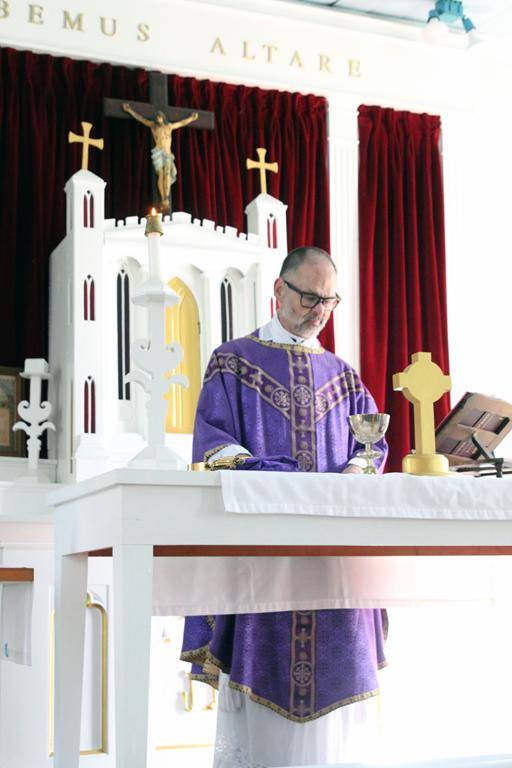
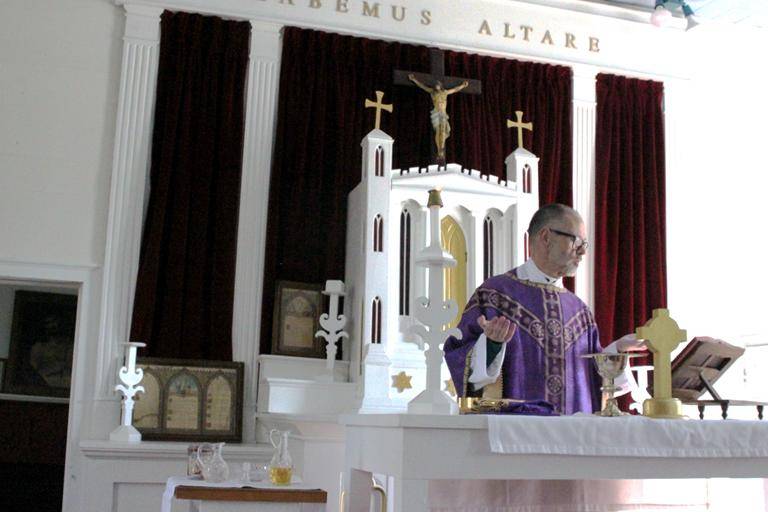
Father John Putnam, pastor of St. Mark Parish in Huntersville and celebrant for the special Mass, blessed and sprinkled Father Cronin’s tomb with holy water while David Foley scattered fresh soil from Dublin, Ireland, on the ground, a tradition of his own for the past decade.
“I pour some genuine imported Irish dirt at the foot of the crypt, so he will have Irish dirt under his feet once again,” Foley said.
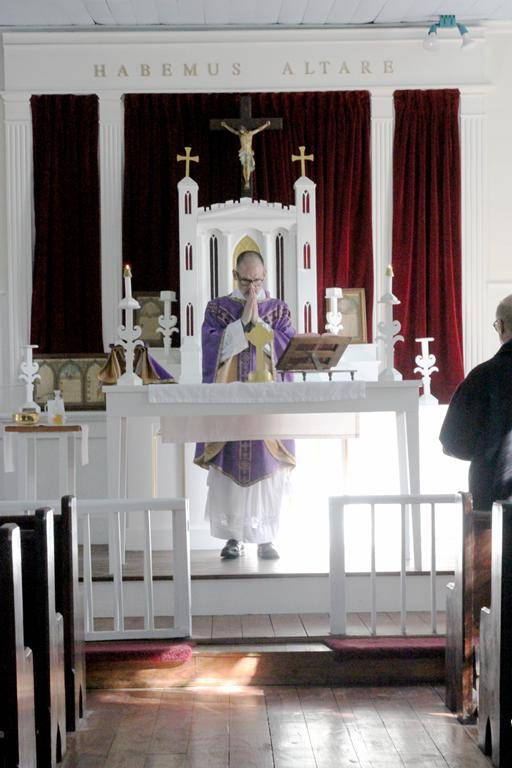
The chill in the morning air followed the small congregation inside the heavy green wooden doorway. The hard wooden kneelers were not easy on the knees, and the closest bathroom was an outhouse on a neighboring property that probably had not been used since the last time the church was active in 1877. However, Father Putnam reminded the crowd, sacred ground comes in many shapes and sizes, and a special one within the Diocese of Charlotte was right there in those wooden pews, the etching above the altar that says, “Habemus Altare,” meaning “We have an altar,” and outside the antique glass windows that overlook the cemetery.
“To be here at St. Joseph’s as we celebrate this Mass is a beautiful reality when we hear these words from prophet Ezekiel,” Father Putnam said. “It really underscores the importance of a place of worship, and certainly when we think of the history of this particular place and how important it was to the Catholic community back at the end of the 19th century in Gaston. It is something that should hopefully give us all a deep sense of appreciation for the sacrifices that were made by those faithful Catholics so long ago.”
He then refocused his homily on the Irish saint, “When we think about St. Patrick and his own life, a life that experienced slavery, imprisonment, and then a willingness to go back to that place to bring Christ to the multitudes, it also makes us recognize that the building where we are nourished with the Lord is also to be a place from which we go and willingly share the Gospel…with those we encounter.”
After Mass, congregants looked over the Greek Revival-style wooden frame church with wonder and reverence and shared knowledge – and a few myths – gained from their annual visits.
Father JJ O’Connell, who said the first Mass there and also served as pastor of the tiny Catholic congregation, once lived in the quarters behind the sanctuary, which still maintains the same look with furniture consistent with the period.
The bed, though historically relevant, is not the original, but one Foley personally crafted to match the ambience of the church.
“The bed was a 1960 GI steel bunk bed, so I went online and did some research and built them a proper hemp bed,” Foley said.
Father O'Connell's stories echoed inside the church walls, where the Irish priest was said to dismount straight from his horse right into his room through a side door, and one of his mules left physical evidence of its existence on the property.
“Way back in the 1840s, Father’s mule kicked over the wall here, and it has been like that ever since,” attendee Michael Sommerville pointed out.
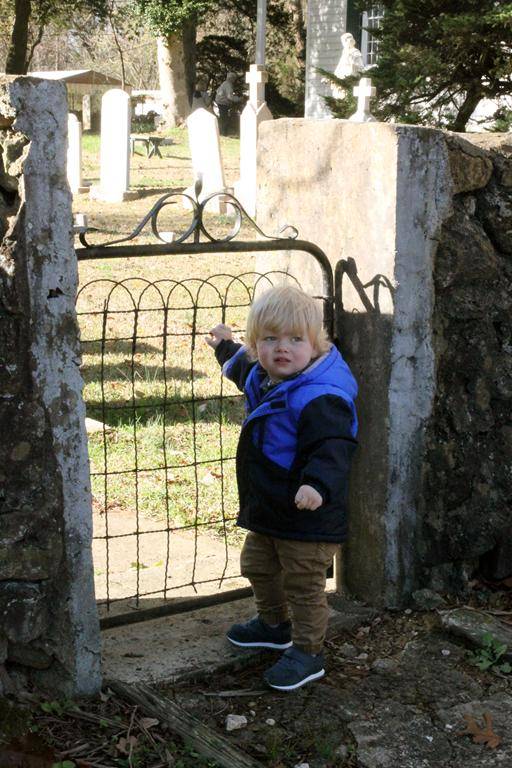
In the cemetery, unmarked graves of the enslaved found a place to rest with God forever in the consecrated soil. There were tales of children buried beneath the line of holly trees.
“It is just a myth; there is nobody lying under there by the fence,” Foley said, after relaying that one of the members of AOH had the ground mapped with a ground-penetrating radar to no avail.
Despite the lack of findings, records by the groundskeeper, Queen of the Apostles Church in Belmont still state at least 10 unmarked graves were found along the rock-lined fence.
“There are a lot of stories you can find,” Foley said. “Confederate soldiers rode up and camped here and were surrounded by Union soldiers. But many of the Union soldiers were Catholics, so instead of fighting, they sat around and smoked cigarettes, drank a little whiskey, and then separated and went their merry way.”
Though his hair is grey and his eyes as blue as a regular Irishman, he ended the tale with more mystery: “I wouldn’t know if that was true. I mean, I wasn’t there.”
Although the church, which was revitalized in the 1970s after years of storing hay, contains both historic truth and some folklore, its importance to the diocese is uncontested.
The church, which is considered the Mother Church of Western North Carolina, with its preserved features like the Stations of the Cross, the antique glass windows, and the original walls, was declared a national historical site by both the State of North Carolina and the U.S. Department of the Interior in 1979.
Though closed most of the year, some people, like Foley, still visit year-round, finding solace on the same dirt on which their ancestors once worshipped. Foley often walks the peaceful grounds of the small cemetery and sits on a small wooden bench, where he prays under the large St. Joseph statue.
“This church helps to continue the Irish-Catholic tradition and heritage,” Foley said. “This is such a unique place. It is interesting to walk through and see what is on some of the gravestones. ‘Here lies so-and-so, a son of the old sod.’”
— Lisa M. Geraci. Photos by Lisa M. Geraci and Amelia Kudela