


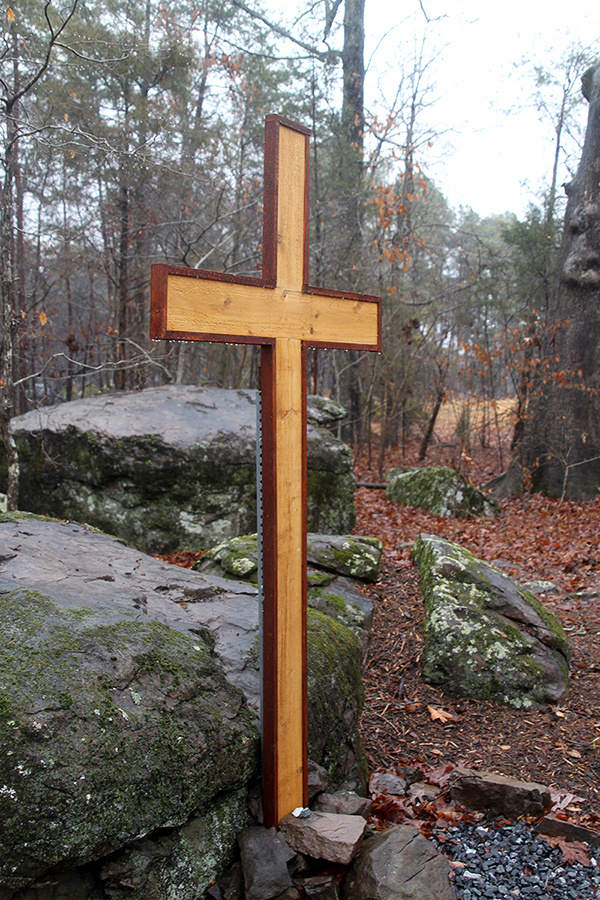
STONEVILLE — Rain kept visitors from gathering beneath the trees, but it could not keep them from remembering why they had come.
On a cold, wet morning Feb. 15, about 70 people crowded into the small chapel at the St. Francis Springs Prayer Center to dedicate a new outdoor worship space called “Hush Arbor” – a place meant to honor the secret prayer gatherings enslaved African Americans once held in wooded clearings. The dedication was the first event of the center’s Black History Month celebration.
“Hush Arbor” is a new prayer space that pays tribute to the region’s history of African American slaves, who often resorted to secretly hiking through swamps to forgotten property edges that were protected by leafy pines or oak trees to practice their religion.
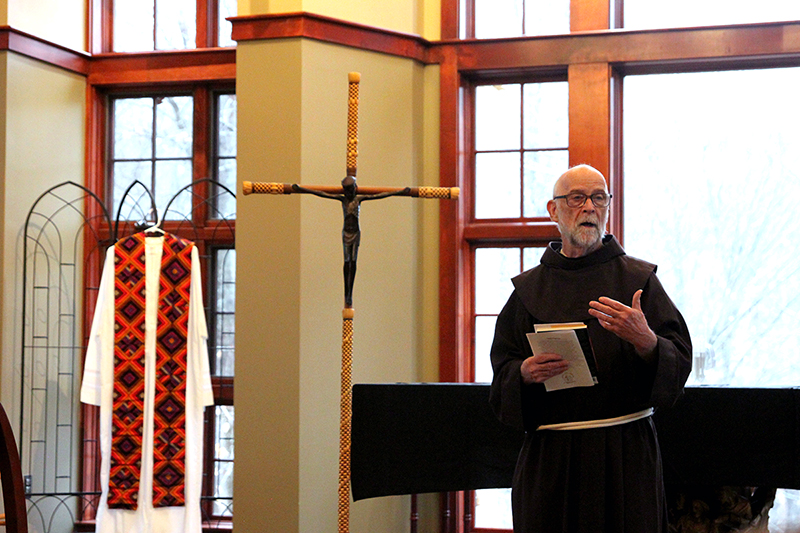
“They called it ‘Hush Arbor’ because it was behind trees and rocks of the plantation, so the sound wouldn’t carry,” explained Franciscan Father Bob Menard, friar in residence at the St. Francis Springs Prayer Center. “That’s where they would sing their spirituals, share their information, and praise God.”
Through rain set the visitors apart from the new space they had come to dedicate, Father Menard called the guests to imagine a different time, when slaves secretly gathered to share their humanity, love of God and unique gifts.
“The Africans during that time were from different countries and cultures, and this place is where they forged what would be recognized today as African American worship,” Father Menard said.
The prayer vestments of African American ministers of the time hung in the four corners of the Franciscan chapel, while the Rev. Allen Jones sang plantation spirituals such as “Open Unto Me,” “Sing a New Song,” and “Joy, Joy, God’s Great Joy.”
“They called it ‘Hush Arbor’ because it was behind trees and rocks of the plantation, so the sound wouldn’t carry. That’s where they would sing their spirituals, share their information, and praise God.”
Franciscan Father Bob Menard, friar in residence at the St. Francis Springs Prayer Center
In an act of libation, bridging African American ancestral roots with the new spiritual worship space, four celebrants poured water into a large container, which will be brought out to consecrate the grounds of Hush Arbor on a better weather day.
Father Menard prayed, “With the energy of Your love, help us to take what we have inherited and what we have heard and carry it, first in our hearts, so that they may radiate it in every fiber of our flesh and we are able to walk with our ancestors, our heads held high…bringing peace, justice, mercy and sacrifice into the world in which we walk.”
The new “Hush Harbor,” like those of old, is not easily found on the expansive 140-acre property. It consists of the same natural elements used in the original safe places that dotted the Carolina landscape from the late 1700s up to the end of the Civil War.
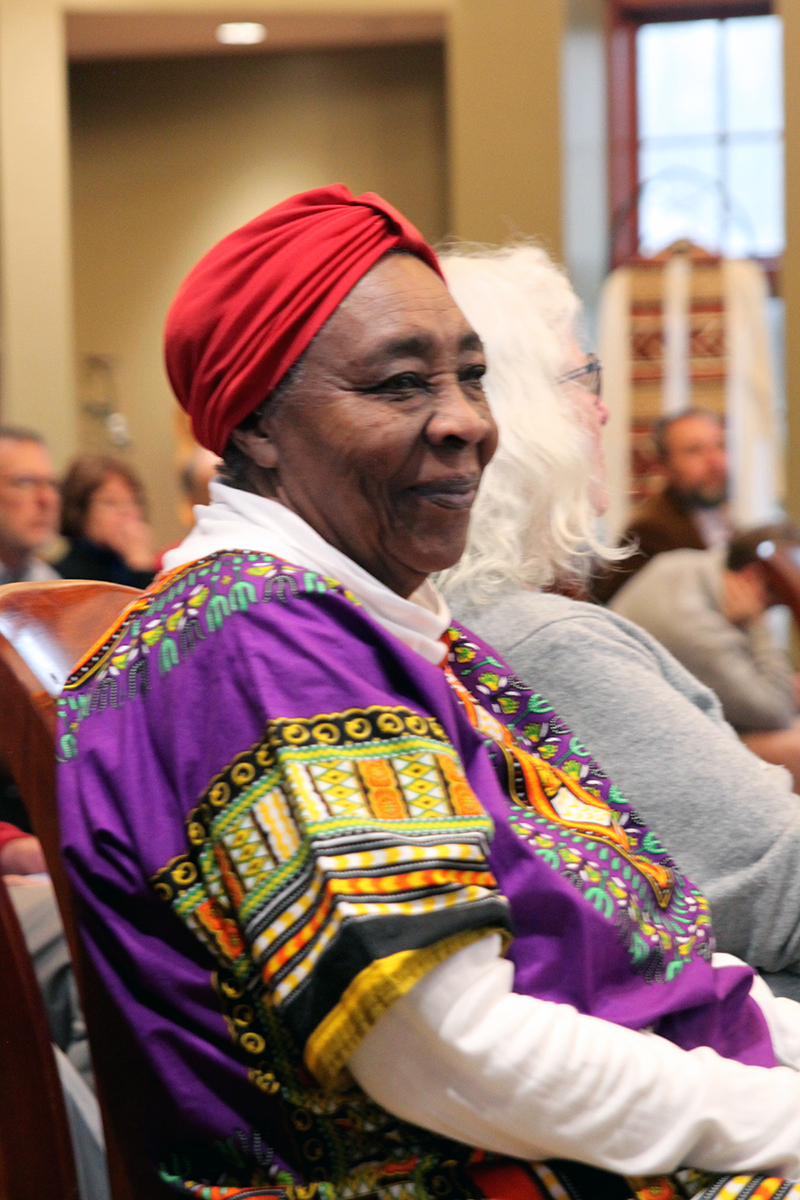 “They had the opportunity to cry out with all their strength and with their whole voice in the shelter of the hush harbor,” Father Menard said.
These “invisible churches” were where Blacks could celebrate liturgy on their own terms without biased interpretations of the Bible delivered by slaveowners, sermons focused on the need to obey a master, and hymns that reminded them how far from their African choral roots they were.
In that small natural space, many found a God who did not measure their worth by the color of their skin. Hush Arbors transcend time – their existence still evidenced in the hymns and preaching style found in Black churches throughout the United States.
The idea to recreate a “Hush Arbor” came from Father Menard. The prayer center made the beautiful outdoor, natural-looking chapel in an outcropping of trees, with graveled walkways and benches surrounded by trees and large rocks. Upon its completion, Director Steve Swayne was still in need of a name for the unique space.
“Have you ever heard of a ‘Hush Arbor’?” Father Menard asked him.
Swayne was inspired by the recommendation and called 20 of his Black friends for feedback on the name suggestion, and they all agreed it was a great idea.
— Lisa M. Geraci
Books and hopes
For some, St. Francis Springs Prayer Center has become a new Hush Harbor, a safe place for people to connect with God in nature.
“I keep a running list of the Black and Brown people that come to my office and explain how safe they feel here,” St. Francis Springs's director Steve Swayne said. “That has happened to me 121 times in six years.”
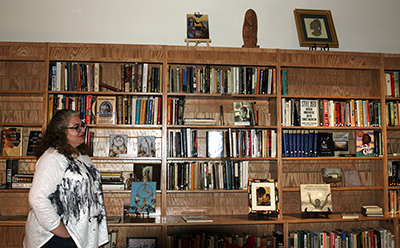
The prayer space pairs well with the Library of the Disinherited, whose 1,800 books constitute the largest private collection of minority-written books in North Carolina.
It was started by the center's former director Franciscan Father David Hyman, who spent most of his years ministering in African American communities.
“He collected 1,600 books, and the whole library is his collecting and reading and learning about Black culture,” Swayne said. “That whole library is basically dedicated to all the people who have been kicked around in America.”
There is also a prayer wall of African Americans in the process of becoming saints. While there are no canonized African Americans yet, on Feb. 9, the Diocese of Jackson, Mississippi, closed its investigation and sent Servant of God Sister Thea Bowman’s case to the Vatican to be reviewed. Others on the path to canonization are Venerable Pierre Toussaint, Venerable Henriette Delille, Venerable Augustus Tolton, Servant of God Mother Mary Lange, and Servant of God Julia Greeley.
“There are no Black saints in North America yet. So, we wanted to highlight those six and to encourage the Catholic Church to canonize them – like, now is the time,” Swayne said.