 This is the day of Christ's Passion, death and burial, now primarily celebrated by a service combining a number of features.
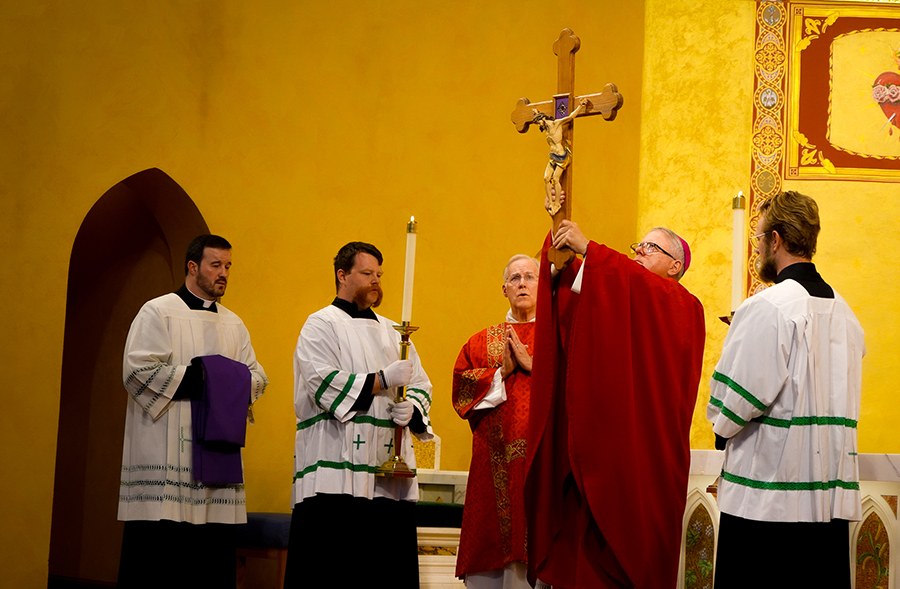
First are the reading of three sets of lessons followed by "bidding prayers." Secondly, there is the Adoration of the Cross. The dramatic unveiling and adoration of the Cross, introduced into the Latin Liturgy in the seventh or eighth century, originated in the Church in Jerusalem, where a relic of the True Cross was venerated.
In the "Peregrinatio Sylviæ," (written from 378 to 394), that early ceremony is described: "Then a chair is placed for the Bishop in Golgotha behind the Cross ... a table covered with a linen cloth is placed before him; the Deacons stand around the table, and a silver-gilt casket is brought in which is the wood of the holy Cross. The casket is opened and (the wood) is taken out, and both the wood of the Cross and the Title are placed upon the table. Now, when it has been put upon the table, the Bishop, as he sits, holds the extremities of the sacred wood firmly in his hands, while the Deacons who stand around guard it. It is guarded thus because the custom is that the people, both faithful and catechumens, come one by one and, bowing down at the table, kiss the sacred wood and pass on."