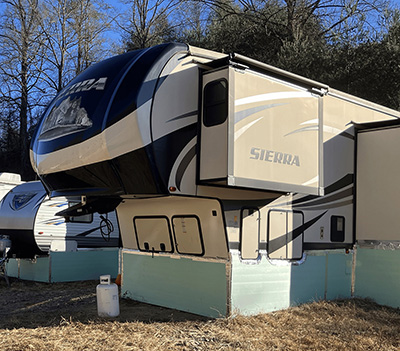
 Catholic Charities Diocese of Charlotte has been working alongside two regional recovery groups in the mountains to help ensure that temporary housing for Helene victims is as weatherproof as possible. ASHEVILLE — For the first time in recent memory, severe winter weather hit the Diocese of Charlotte two weeks in a row – first a mix of snow and ice, then a blanket of near record-breaking snow that fell from the mountains to the Triad area.
Both storms also brought frigid temperatures at a time when Catholic Charities Diocese of Charlotte is working to help Tropical Storm Helene survivors in the mountains keep warm as they rebuild their homes or seek permanent housing.
Many people are still in transitional housing, living in campers that often weren’t designed to withstand severe cold.
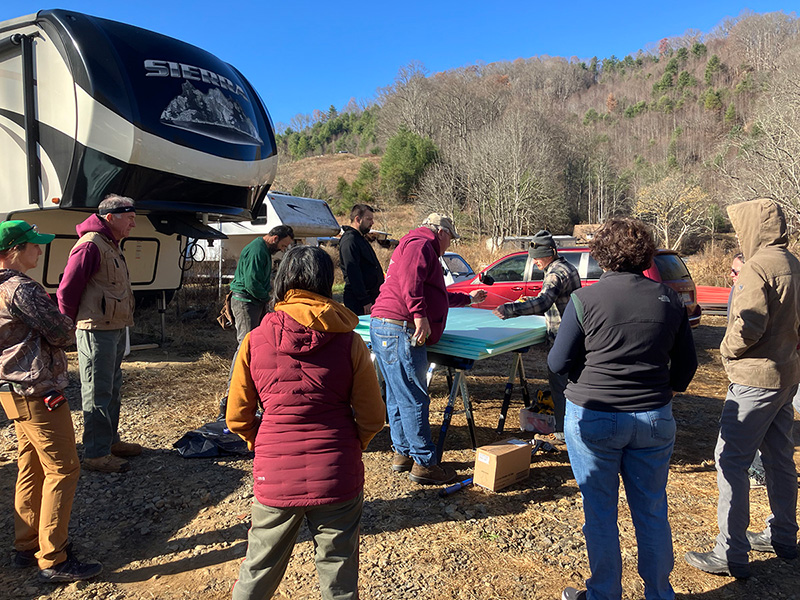
In response, Catholic Charities has been working with two regional recovery groups – Rebuild Haywood and Beacon Network – to help more than 250 families with weatherization work to keep their campers warm, said Glenn Middleton, disaster parish and community resource coordinator for Catholic Charities in Asheville.
Weatherizing a camper involves multiple steps, including protecting plumbing systems, sealing gaps, and improving insulation on windows, doors and under the floor.
Rebuild Haywood focuses on the central and southern counties in the region such as Haywood, Jackson, Buncombe, McDowell, Henderson, Transylvania and Polk, while The Beacon
Network handles clients in the high country area, including Yancey, Avery, Madison and Mitchell counties.
“These groups determine what material is necessary for each camper and have a process where people can contact them,” Middleton explained, “and then their folks come out to do the actual weatherization – it’s a seamless process.”
The agency is also working to launch a program to supply propane for residents who use the versatile fuel to heat their campers or homes.
Middleton said the agency is in contact with long-term recovery groups and partner organizations that are working to identify families with ongoing needs for propane and to find local or regional propane distributors who could provide 20-gallon tanks.
Initial estimates indicate a propane distribution program would help about 1,000 families who have been identified with ongoing heating needs. The agency was working on organizing funding for the distribution program as of Feb. 1.
The long-term goal for these families is getting them out of temporary housing and back into permanent homes, whether that’s securing new housing or completing rebuilds on homes damaged by the storm.
“Most of the folks who are in transitional housing either need or want to stay there, but don’t want to stay there for very long,” Middleton said. “We’re still hopeful for permanent housing for these folks, but it’s not going to happen for most folks this winter. When the weather warms up, the rebuilds can start.”
— Christina Lee Knauss