

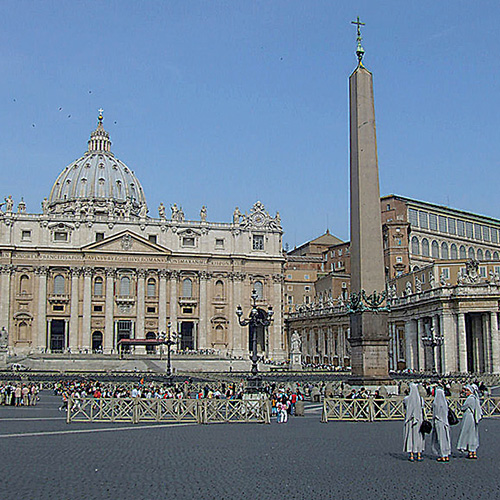
 According to tradition, the tomb in which the Apostle Peter was buried after his crucifixion was on the highest point of Vatican Hill. It was on that spot that Emperor Constantine built St. Peter’s Basilica in the fourth century in what is now Vatican City. Many of the greatest artists in history – Bramante, Raphael and Michelangelo – were involved in the construction and decoration of this structure, the largest church in the world. The Vatican recently teamed up with Microsoft to create a stunningly accurate 3D basilica replica powered by artificial intelligence. It combines more than 400,000 photos into a seamless virtual experience through which you can see every inch of the holy space – including intricate details most visitors would never see in person.
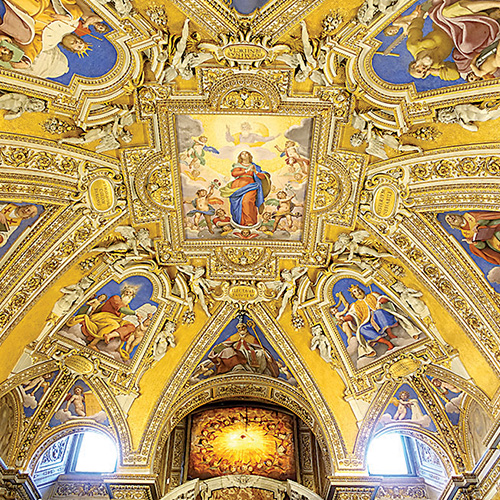 According to tradition, the Virgin Mary appeared in a dream to the Patrician John and Pope Liberius, telling them to build a church on the spot where she would cause snow to fall. On the morning of Aug. 5, 358, snow was seen on the Esquiline Hill, outlining the perimeter of what was to become the Papal Basilica of St. Mary Major in Rome. The basilica is home to one of the most important Marian icons, the “Salus Populi Romani” (“Our Lady Savior of the Roman People”). Tradition attributes the artwork to St. Luke the Evangelist, patron of painters. Pope Francis visits the icon before and after his apostolic journeys. The relic of the holy crib – the bedding on which the baby Jesus was laid – is under the papal altar, and the mortal remains of St. Matthew and St. Jerome are in this church. The basilica offers in-depth descriptions and photos as well as a podcast discussing many of its treasures on its website.