

 The name Hallows’ Eve comes from the Old English “hallowed,” meaning holy or sanctified – now shortened to the familiar word “Hallowe’en.” In the early Church, communities gathered to celebrate Mass and pray for the intercession of saints and for deceased loved ones. While the celebration has evolved to a more secular day of pumpkin carving, trick-or-treating, costumes and treats, you can still indulge while taking time to go to Mass, pray for the departed, or spend time with holy relics of the saints. (Dozens of relics to be displayed for All Saints Day). You can also enjoy sweet treats like chocolate covered pretzels, whose twisted shape originally represented arms crossed in prayer.
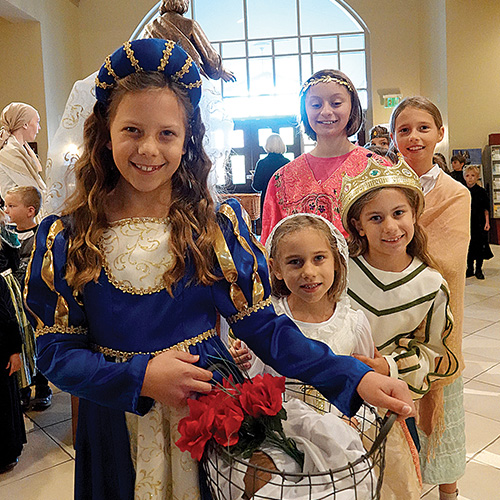 On All Saints Day, we pray to the saints, known and unknown, that they continue to help and guide us along our path to salvation. One tradition associated with the feast day is going to Mass, and it is typically a holy day of obligation (but not in 2025 in the United States, since it falls on a Saturday). Other traditions include reading and learning about the saints, saying special prayers to the saints, and asking for their intercession so that we too might become saints. Either on Oct. 31 or Nov. 1, it is also tradition for children to dress up in costumes of their favorite saints.