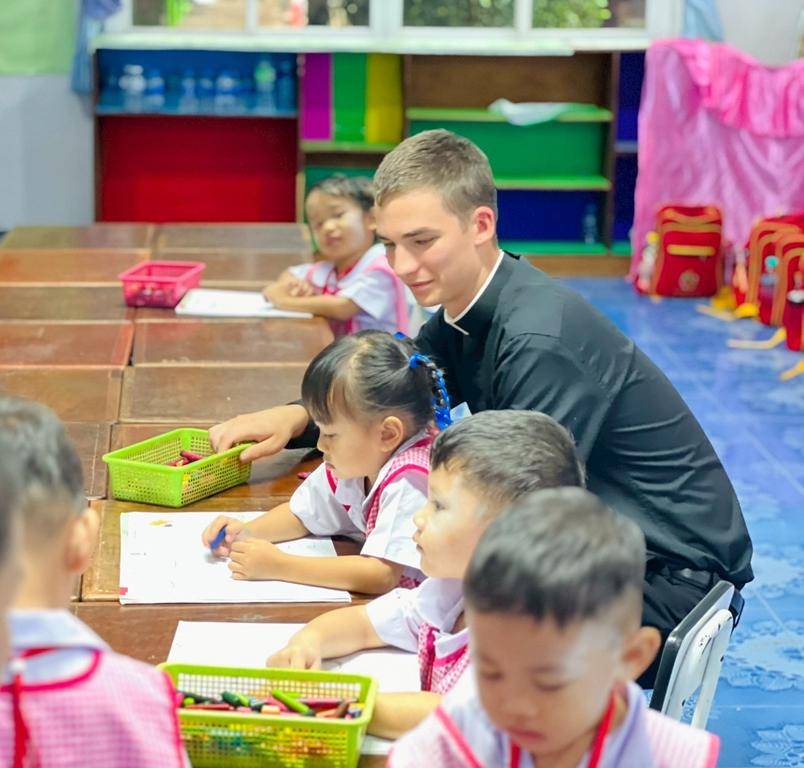
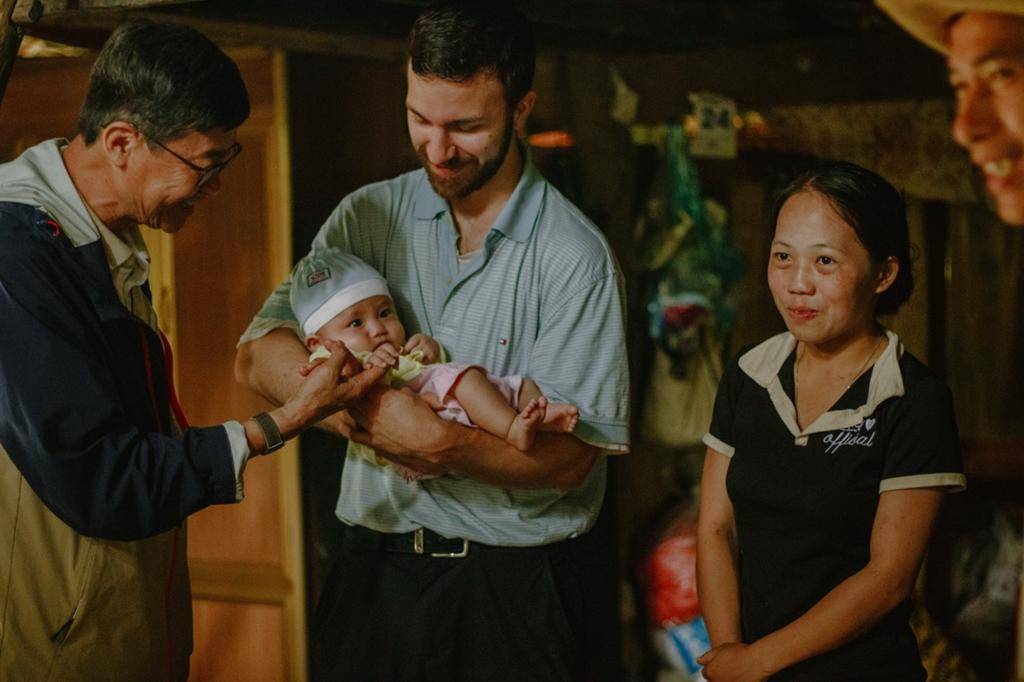
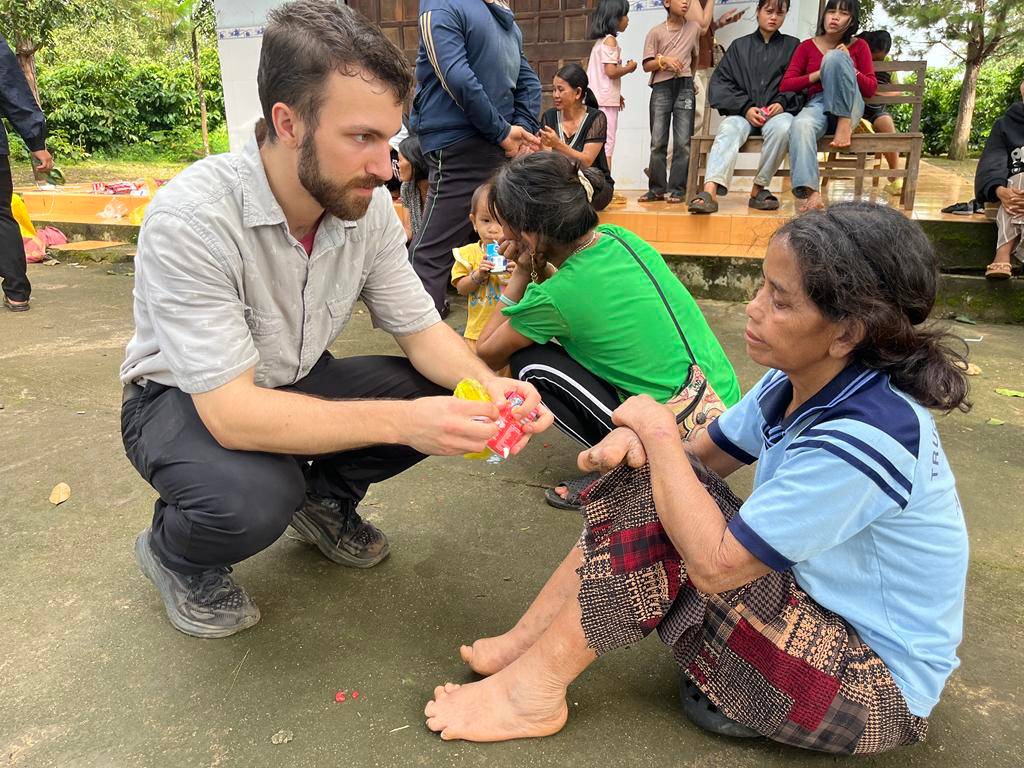
 Seminarian John Harrison (left) spent two weeks on a mission trip in Vietnam. (Photos provided)CHARLOTTE — Four seminarians from the Diocese of Charlotte recently stepped outside the classroom for a different kind of learning experience – traveling the world, serving the poor and visiting holy sites in Europe and Asia.
John Harrison, Gabriel Lugo, Ronan Ostendorf and Elijah Buerkle are studying at the Pontifical North American College in Rome. During a recent school break, they kept up their formation by learning more about how God is working in the world.
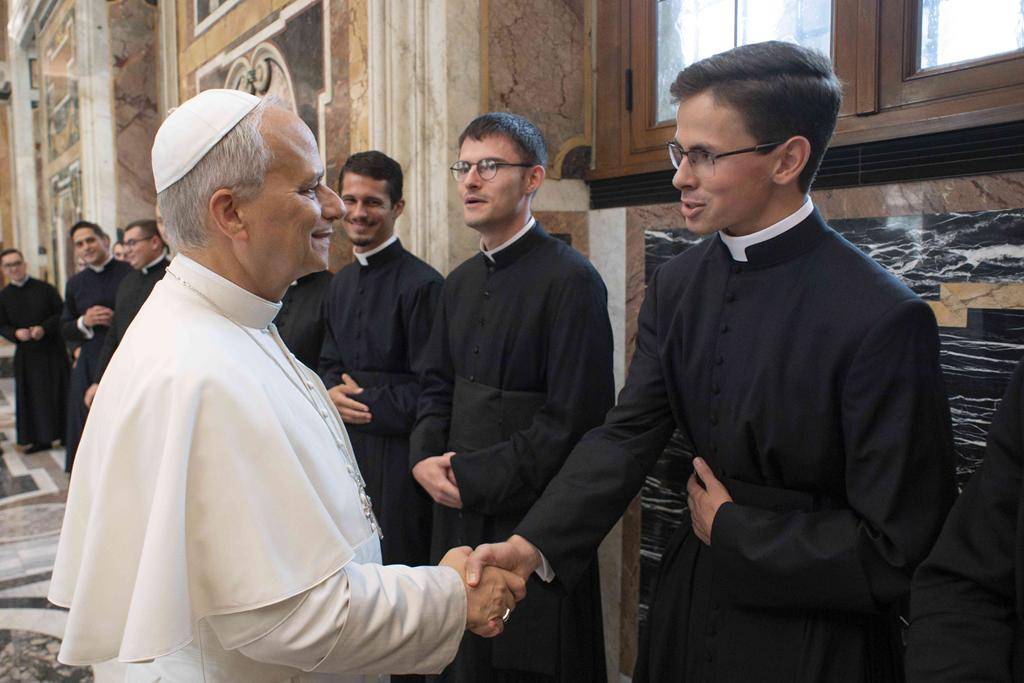
Buerkle’s break entailed Italian language studies and visiting holy sites in Siena, Assisi and Rome, an audience with Pope Leo XIV, and attending the canonization Mass for Sts. Pier Georgio Frassati and Carlo Acutis in St. Peter’s Square.
One of his most memorable spiritual moments came during a six-day retreat all new students at the NAC make before beginning their studies. This year’s retreat took place in the town of Greccio.
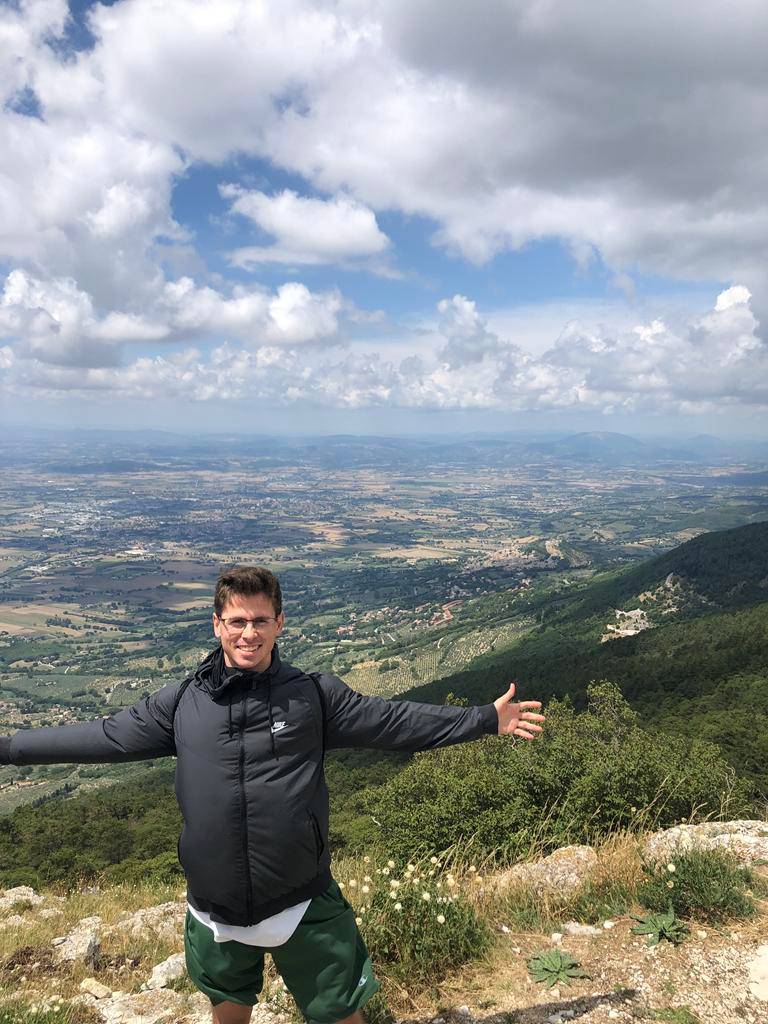
Buerkle left after Vespers one evening to make a two-hour hike from the retreat center to a humble chapel on a mountaintop where St. Francis of Assisi once lived.
“Sitting by the campfire, I was able to give thanks to a kind soul who had left some firewood stacked by the chapel and savor the sweet, silent dance of the mountain valley and the night sky,”
Buerkle said. “The answer to God’s question was clear to my mind: I am here to share this moment and every moment of my life with God and to do His will.”
Sharing God’s love in Vietnam
Harrison spent two weeks on a mission to Vietnam with Redemptorist Father Peter Vang Cong Tran and others from the Viet Toc Foundation, a Concord-based nonprofit that funds education for children and other needs of the very poor in rural Vietnam.
He spent the first week living at a parish boarding school north of Hanoi. The missionaries took trips into nearby mountains, meeting families with scarce clean water and no farmland to sustain themselves, hoping to build relationships that will help the foundation provide them more lasting, practical aid.
Harrison then flew on his own to the city of Pleiku in southern Vietnam, where he stayed with a family from the Montagnard or “Highland” group of people.
In Pleiku, Harrison traveled by motorbike or car to distribute supplies. He discovered that he was one of a very few Americans, if not the only one, many of the local residents had ever seen.
He and Father Vang visited a community of people suffering with leprosy, and the home of an elderly husband and wife who were both blind from the effects of the chemical Agent Orange used during the Vietnam War.
“We learned that they had married after having gone blind and so they had never even seen each other, yet despite the strong objections from their families, their love for each other prevailed,” Harrison said. “They had a tiny rice field and a little shack for a house, but they were happy together.”
Harrison said he felt at home with the people he met, moved by their faithfulness and happiness despite living difficult lives.
“The furthest thing from God is the noise and luxury of the world, so I felt grounded in reality and at peace by living in these communities of poor and simple Christians,” he said.
Visits to Italy and Thailand
Gabriel Lugo spent the first part of the summer in Canale d’Agordo, the hometown of Pope John Paul I. He worked with a local priest, serving at many Masses at the local church and helping out at a summer camp for middle schoolers.
“At the camp, I was struck by the campers, who were all filled with the joy of youth, but many of them didn’t take the faith seriously,” Lugo said. “Hardly any of them attended Mass regularly. I prayed a great deal for them and also had an opportunity to reflect on the gift of grace and to be grateful to God and my parents that I was instructed in the faith and learned to appreciate and love it.”
Lugo also got to work on his Italian through lessons with one of the local parishioners.
He spent a few days of vacation in Assisi and was able to serve at a Mass presided over by Cardinal Matteo Zuppi, Archbishop of Bologna, then joined fellow seminarian Ostendorf on a mission trip to Thailand. There, the two helped out at schools and orphanages and visited the Shrine of the Thai Martyrs in Songkhon, which honors seven Thai Christians executed in 1940.
Walking ‘The Original Way’
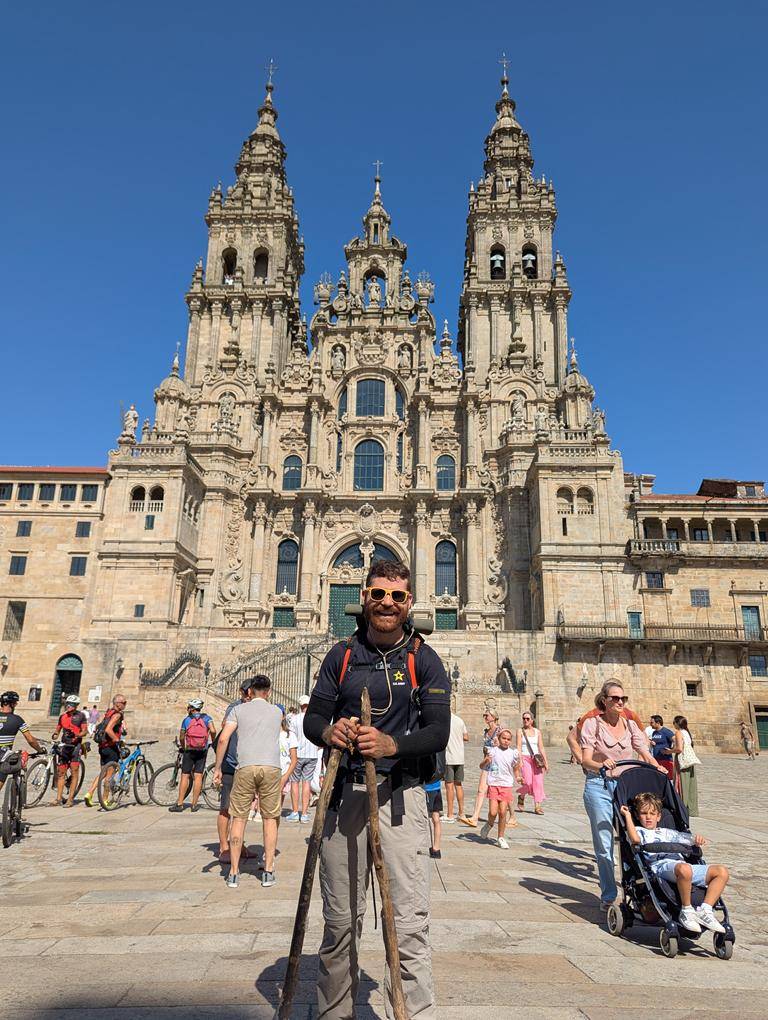
Ostendorf made a pilgrimage in northern Spain on the Camino Primitivo (“Original Way”), a route between the cities of Oviedo and Santiago de Compostela for more than 1,100 years beginning with its first pilgrim, King Alfonso II of Asturia. Most pilgrims make the 190-mile hike in about 13 days.
“Many of the people who hike the Camino are not exactly pilgrims,” Ostendorf said. “For many it’s just a good hiking route. Others are re-evaluating their lives after major events. Still others seek respite from war-plagued homelands. … A few see it as a way to get closer to God. It’s a remarkable microcosm of humanity.”
The long walk through the countryside to Santiago de Compostela, where the apostle St. James the Greater is buried, taught him lessons about not worrying and trusting in the Lord.
“Every day I walked, I met different people, had important decisions to make, problems to solve and opportunities to rest and pray,” Ostendorf said. “I never knew for sure where I would eat or sleep. But day after day, carrying everything I needed on my back, I learned to worry less. All one had to do was stick to the way and keep moving forward.
“So it is with our Way, who is Truth and Life. Yes, life gets very complex, but when we really focus on Him, reality snaps back into focus, and it’s good and peaceful.”
— Christina Lee Knauss