

Put your Catholic faith into action this holiday season by buying gifts certified as “fair trade”
WHAT IS FAIR TRADE?
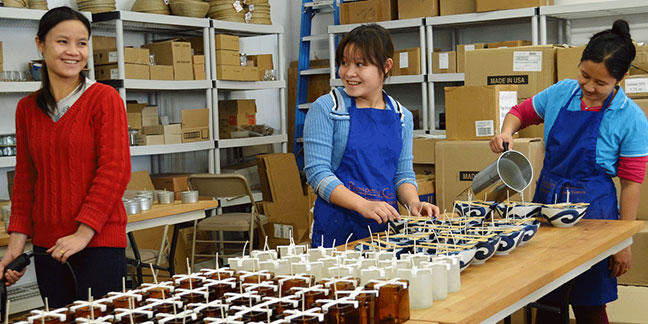 Fair trade products are items which guarantee that producers in developing countries are paid fair prices for their work and that labor and environmental conditions are what they should be.
Fair trade is meant to help producers in developing countries or economically marginalized areas escape exploitation and achieve better working and business conditions. Transparency and accountability, respect for workers, equity in trading partnerships, and dialogue between producers and consumers are all key aspects of fair trade. Members of the fair trade movement also advocate for improved social conditions and sustainable environmental standards.
Fair trade particularly focuses on commodities and products typically exported from developing countries to developed countries. Handicrafts, coffee, chocolate, wine, sugar, fresh fruit, flowers and gold are all popular fair trade items.
WHAT IS FAIR TRADE ROOTED IN?
Fair trade is grounded in three core beliefs. First, producers should have the power to express unity with consumers. Secondly, trade practices have generally promoted an unbalanced distribution of wealth between nations and exploited the developing world, so efforts should be made to promote fair trade practices that help the developing world as well as benefit the developed world. Lastly, buying products from producers in developing countries at a fair price is a more efficient way of promoting sustainable development than traditional charity and aid.
One aspect of fair trade is the “social premium” that buyers of fair trade goods pay to the people or groups who produce them. Producers or producer-groups decide where and how this social premium is spent – usually towards socioeconomic development at the local level, such as environmental initiatives, public schools, water projects and other infrastructure that their government is not providing. Producers also use the premium to invest in capital, such as trucks and equipment, and provide education for their workers, such as learning sustainable farming techniques.
IS FAIR TRADE CATHOLIC?
The fair trade concept is deeply rooted in the Catholic faith. Fair trade is an approach to business and trade that is based on a commitment to uphold the dignity of every person and promote the common good.
The common good is “the sum total of social conditions which allow people, either as groups or as individuals, to reach their fulfillment more fully and more easily,” the Catechism of the Catholic Church tells us (CCC 1906).
Fair trade is based on cooperation and mutual benefit, and is in many ways consistent with the Catholic vision for economic activities that promote the common good.
St. John Paul II wrote in his encyclical “Centesimus Annus” that a business should act not as a “society of capital goods” directed solely toward the attainment of financial goals, but rather as a “society of persons” that serves the common good.
In a 2013 letter to the G8 nations, the U.S. bishops also noted: “Trade and trade rules must serve the universal common good of the whole human family and the special needs of the most vulnerable nations. It is counterproductive to provide agricultural development assistance on the one hand and then to use unfair agricultural trade policies that harm the agricultural economics of poorer nations on the other.”
By buying fair trade products, we put Catholic values into concrete action. Our purchases respect human dignity, promote economic justice and cultivate global solidarity.
HOW DID FAIR TRADE START?
The first attempts to commercialize fair trade goods began in the 1940s and 1950s with religious groups and non-governmental organizations. Ten Thousand Villages, an NGO within the Mennonite Central Committee, and SERRV International were the first, in 1946 and 1949 respectively, to develop fair trade supply chains in developing countries.
Their products, almost exclusively handicrafts ranging from jute goods to cross-stitch work, were sold mostly at churches or fairs. The goods themselves often had no other purpose than to indicate that a donation had been made.
The current fair trade movement was shaped in Europe in the 1960s. Fair trade then was often seen as a political gesture against neo-imperialism, when radical student movements began targeting multinational corporations and raising concerns that traditional business models were fundamentally flawed.
The slogan at the time, “Trade not Aid,” gained international recognition in 1968 when it was adopted by the United Nations’ Conference on Trade and Development to emphasize establishing fair trade relations with the developing world over focusing on direct aid.
HOW ARE FAIR TRADE PRODUCTS CERTIFIED?
Items certified as “fair trade” not only purport to guarantee fair prices, but also abide by ethical principles. Child and slave labor are not used in producing fair trade items, for example. Workplaces are safe, and workers have the right to unionize and have a say in their working conditions. Prices cover the cost of production, yes, but are also sufficient to enable social improvement, promote business development, and protect the local environment.
Fair trade certification also promotes long-term business relationships between buyers and sellers, crop financing, and greater transparency throughout the supply chain.
To become certified as fair trade, producers and farmers must follow standards set by Fairtrade International, also known as Fairtrade Labeling Organizations International or FLO International. This international non-profit, based in Bonn, Germany, handles inspecting and certifying producer organizations in more than 50 countries throughout Africa, Asia and Latin America. It also licenses companies offering fair trade products and governs who can use the “Fair Trade Certified” label. FLO International independently audits producers, traders and the entire supply chain to ensure that the internationally-agreed fair trade standards are met.
The fair trade certification system covers thousands of products and commodities, and the fair trade certification mark can now be found on about 30,000 different items. Popular items are bananas, honey, coffee, oranges, cocoa beans, cotton, dried and fresh fruits and vegetables, flowers, nuts and oil seeds, quinoa, rice, sugar, tea and wine. Clothing, sustainable wood products and jewelry are also growing in popularity.
FLO International reports having 1,599 certified producer organizations in 75 countries as of 2017 – representing more than 1.6 million farmers and workers around the world.
Global sales of fair trade products rose by 8 percent to approximately $9.6 billion in 2017, generating estimated premiums of more than $200 million for farmer and worker organizations, FLO International’s latest annual report shows. The United Kingdom, Germany and the U.S. were the largest fair trade markets according to 2017 retail sales, with American consumers buying $1.1 billion in fair trade goods.
HOW DO YOU SHOP FAIR TRADE?
Basically, look for the label. Fair trade labeling in the United States is usually described as “Fair trade,” “Fair Trade Certified” or “FTC.” There are five widely recognized labels (two of which are pictured here): Fair Trade International, Fair Trade U.S.A., Fair for Life, the World Fair Trade Organization and the Fair Trade Federation.
Fair trade certified products are available in most cities as well as online. (Several retailers located in the Diocese of Charlotte are listed at right.)
Catholic Relief Services also has a CRS Ethical Trade Holiday Gift Guide, featuring vendors here including Mama Tierra Coffee, Equal Exchange, Serrv, Maggie’s Organics, CauseGear and Prosperity Candle and more. A portion of your purchase benefits CRS.
“Our faith calls us to respect the dignity of work, God’s people and His creation,” says CRS ethical trade program officer Erin Mackey. “With every purchase, a donation goes to CRS – for twice the impact!”
— SueAnn Howell, senior reporter. World Fair Trade Organization, Wikipedia and Providence Coffee contributed.
Learn more
At www.ethicaltrade.crs.org: Support Catholic Relief Services’ fair trade efforts by using its easy-to-shop “Ethical Trade Holiday Gift Guide,” featuring vendors like Mama Tierra Coffee, Equal Exchange, Serrv, Maggie’s Organics, CauseGear, Prosperity Candle and more.
At www.fairtradecertified.org: What does it mean to be “fair trade certified,” especially in the U.S.?
At ww.fairtradewinds.net/guide-fair-trade-labels: Fair trade labeling and what the different labels actually mean
Local fair trade retailers
 Ten Thousand Villages
10 College St.
Asheville, NC 28801
828-254-8374
www.tenthousandvillages.com/asheville#fndtn-home
A fair trade retailer of artisan-crafted home decor, personal accessories and gift items from across the globe.
Highland Books
277 N. Broad St.
Brevard, NC 28712
828-884-2424
www.highlandbooksonline.com/
Sells fair-trade products from Ten Thousand Villages and Serrv.
Crosstrade Jewelry and Gifts
1087 Main St. #2
Blowing Rock, NC 28605
828-295-8691
https://www.facebook.com/Crosstrade/
Aims to promote artisans and producers in impoverished areas of Brazil by connecting their handmade goods to customers in new markets.
The Marketplace at Oak Street
19725 Oak St., Unit 8
Cornelius, NC 28031
980-613-2120
www.themarketplacenc.com
Partners with Christian organizations around the world that are empowering people with employment, which then opens the door to share the love of Jesus. Sells clothing, jewelry, handbags, home goods, coffee, tea, chocolates and more from Elegantees and Hands Producing Hope and Woven Grace.
Pura Vida Worldly Art
3202a N. Davidson St.
Charlotte, NC 28205
704-335-8587
www.puravidaart.com/
Fair-trade clothing, jewelry, home goods, textiles, musical instruments, food and more from around the globe.
Just Be
352 S. Elm St.
Greensboro, NC 27401
336-274-2212
www.onlyjustbe.com/
Sells clothing from Elegantees.
Unique World Gifts
2751 North Center St., Viewmont Area
Hickory, NC 28601
828-328-5595
www.uniqueworldgifts.org
Sells products from Serrv and Ten Thousand Villages.
Ten Thousand Villages – Montreat 303 Lookout Road
Montreat, NC 28757
828-669-1406
www.tenthousandvillages.com/montreat
Shopping Guide
Put ethically produced gifts on your list.
With every purchase, a donation goes to CRS – for twice the impact! Put Christmas back in your shopping, with ethically produced gifts that uplift a world of people. Every partner is vetted for fair wages, safer working conditions and environmentally sustainable practices. Give better, live better – starting now. https://ethicaltrade.crs.org/guide/holiday-gift-guide/
Here are just a few of the fair trade gift options:
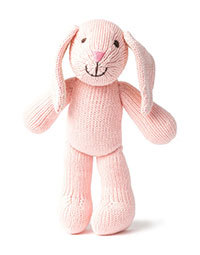 Blush bunny stuffed animal
The Little Market is non-profit founded by women to empower women, offering items from $10 and up. Each bunny purchase empowers artisans at Naguska in Peru.
www.thelittlemarket.com
Mama Tierra coffee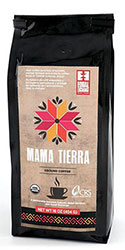
Every purchase of Mama Tierra Coffee supports the work of Catholic Relief Services ($2 per bag) to restore and protect coffee communities across southern Mexico and Central America with clean water, healthy soil and resilient farmers.
www.equalexchange.coop
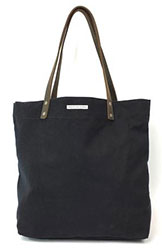 CauseGear Daytote
Designed in Chicago and handcrafted in India, CAUSEGEAR is social enterprise committed to transforming the lives of one million people trapped in unfathomable poverty and injustice. This daytote comes in a rainbow of colors, in leather or canvas, with prices starting at $18.
www.causegear.com
Tegu Pocket Pouch magnetic wooden blocks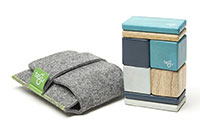
The Tegu Pocket Pouch is a set of magnetic wooden blocks made from FSC-certified Honduran hardwoods that fit neatly into a felt pouch. The blocks easily connect via tiny magnets in each block, so kids can create lots of fun shapes.
www.fairtradewinds.net
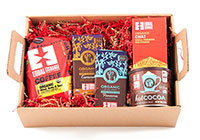 Treat and coffee gift boxes from
Fair trade chocolates, coffee and food in a recycled gift box – ideal for businesses and to send to friends and family far you don’t see at Christmas. Equal Exchange was founded in 1986 to challenge the existing trade model (which favors large plantations, agri-business and multi-national corpora-tions), and support and promote small and Fair Trade farmers.
www.equalexchange.coop
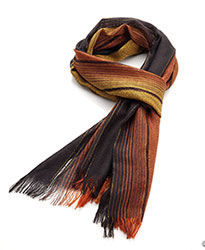 Ecuador scarf
Serrv sells handcrafted gifts, food, apparel, jewelry and home decor from 55 artisan
and farmer organizations in more than 30 countries. The non-profit is dedicated to lifting disadvantaged artisans, farmers and their families out of poverty.
www.serrv.org
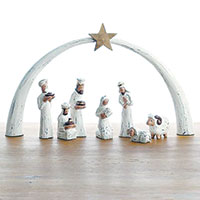 Indonesian Wood Nativity
One World aims to improve the livelihood of disadvantaged artisans and help pay for food, education, healthcare and housing for those who would otherwise lack opportunity for a stable income. This Fair Trade Indonesian Wood Nativity Set is hand carved from sustainable Albizia wood, crafted by
Fair Trade artisans in Indonesia.
www.oneworldfairtrade.net
Haiti Rubble Pillar Candles from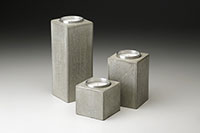
Candles (starting at $12) support people in Haiti, Burma and victims of human trafficking in the U.S. With every purchase, a donation is made to support CRS programs. These concrete pillar candle hold-ers are made with actual material from the 2010 earthquake that devastated Port-au-Prince, symbolizing the work to shine a light despite darkness.
www.prosperitycandle.com
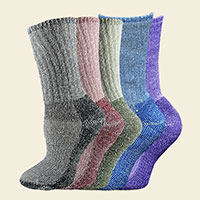 Organic Wool Killington Hiking Sock
Maggie’s Organics sells organic cotton and wool socks, leggings, accessories and apparel for men, women and children. It believes in using certified organic fibers and ensuring fair labor practices, supporting U.S. textile workers for more than 20 years.
www.maggiesorganics.com
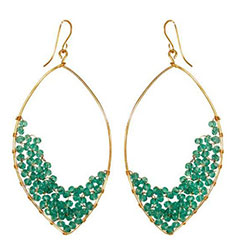 Dawn Drops
Purpose Jewelry (three designs featured here) is handcrafted by artisans
who have escaped human trafficking. All proceeds go
to the nonprofit organization International Sanctuary, which provides holistic care ad job training to these women. Use the promo code CRS.
www.purposejewelry.org
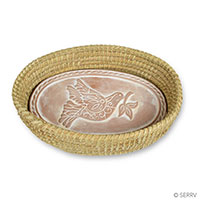 Peaceful Dove Bread Warmer
Whitewashed terracotta and handwoven kaisa grass basket
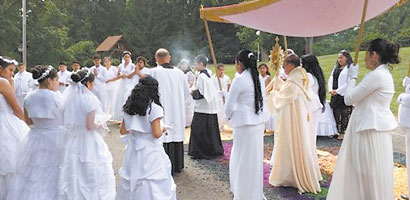 Father Tien Duong carries the Blessed Sacrament in a Eucharistic procession for the Feast of Corpus Christi May 29, surrounded by parishioners at St. Francis of Assisi Church in Franklin. Church members worked for hours that day to create colorful sawdust carpets (in Spanish, "tapetes de aserrín") laid out in large, intricately chalked designs on the ground to decorate the path of the Eucharistic procession. (Photo provided by Erika Diaz)FRANKLIN — The story of Father Tien Duong, his brother Father Duc Duong and their family is a story of survival and grace. The two priests of the Diocese of Charlotte are celebrating their 15th anniversary of ordination this year, which is a testament to their tenacity and their faith given the circumstances of their lives in fleeing Vietnam and coming to the United States.
Father Tien grew up in a family with 10 brothers and sisters (eight boys, two girls) in Saigon. The family was very faith-filled and active in their parish.
"I believed that I wanted to become a priest even before I received my first Communion," Father Tien recalls. "I went to minor seminary as a sixth-grader in 1973."
Just like all those who had family members involved in the armed forces of South Vietnam, their family endured a great deal of hardship after the Communists took control in Vietnam, Father Tien notes, particularly when his father was arrested and put in a labor camp or "re-education" camp.
"I escaped by boat with my brother, now Father (James) Duc Duong, for the first time, but it was not successful and we were put in prison. The second escape occurred in 1989 with my younger brother, and we ended up at Galang refugee camp in Indonesia," he says.
A few years later he came to the U.S. following the rest of his family, and they settled in Charlotte. Father Tien resumed his efforts to follow God's will and become a priest. He went to Central Piedmont Community College for two years, then studied philosophy for two years at St. Joseph Seminary College in Covington, La., before graduating from St. Vincent Seminary in Latrobe, Pa.
"I was ordained by Bishop (William) Curlin with my brother (Father Duc Duong) and with Father Bob Ferris and Father Kurt Fohn on June 2, 2001, at St. Gabriel Church, which was also my first assignment as associate pastor," he says.
Over the past 15 years, Father Tien has served as associate pastor at St. Gabriel Church, then in-residence for a few months at St. Mark Church in Huntersville.
He says he "came to the top of the mountain in Highlands at Our Lady of the Mountains for three years, and then came down to Franklin," where he has served as pastor of St. Francis of Assisi Church since 2008.
"The love of people, the cold weather and the love for people in the mountain area have kept me here since," he says.
He believes people would be surprised to know that one of the things he loves most about living in western North Carolina is the cold weather, even though he grew up in the tropical climate of South Vietnam.
About his priestly ministry, Father Tien shares, "My spiritual director at seminary and other friends asked me, 'If God will not choose you, what would you do?' My answer was very simple. I never had a second thought of giving up the call. God calls, and I will answer, and God will never turn His face away from me. He will provide!"
"I am doing God's will, and it is not easy to fulfill His will," he continues. "When you try to fulfill His will, certainly people will not like it as they look at it with human wisdom. And that is true for me as a priest, as well.
"However, my big lesson that I learned when I was in the refugee camp was: Trust in God's power and wisdom. And another one when I studied philosophy: God will provide.
"So, no matter what others criticize or misunderstand, gossip or even slander, or the tasks I thought, 'How can I do them?', at that time God reminds me of these two lessons."
He also credits his guardian angel for assistance.
Like his brother priests, Father Tien says, "the Eucharist (visiting, adoring, receiving) is the key for me today as a priest and also for those who want to discern the vocation to the priesthood. That is the key that Jesus uses to open my heart, mind and soul, and I have to let Him do so sincerely.
"I do not want to 'do a show' for people to see. I want to do it for Jesus, and then Jesus is the one to show it to His people."
— SueAnn Howell, senior reporter