


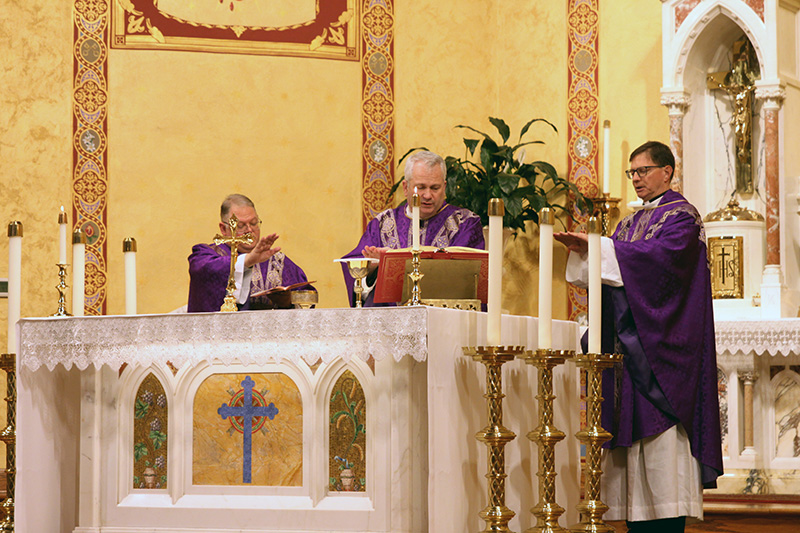
 CHARLOTTE — Human trafficking, care for patients with special needs and redemptive suffering were a few of the bioethical topics contemplated during this year’s Converging Roads Conference, “Medicine and the Dignified Mission to Heal,” held March 21 at St. Patrick Cathedral.
The regional conference, hosted by the Diocese of Charlotte’s Office of Family Life in conjunction with the St. Paul II Foundation and Belmont Abbey College, serves as an annual opportunity for Catholic healthcare professionals to learn how to better practice their faith and uphold the dignity of the patients they serve.
“It was one of our best conferences yet,” said Batrice Adcock, the diocese’s natural family planning program director. “It was clear by the engaged reception of the audience this year that we targeted some of the most compelling issues in medicine right now, such as assisted suicide and compassionate care for persons with disabilities.”
The morning started with about 40 medical professionals attending a White Mass concelebrated by Monsignor Patrick Winslow, vicar general and chancellor of the Diocese of Charlotte, Father Robert Gahl, an associate professor at the Catholic University of America, and Father Benjamin Roberts, pastor of Our Lady of Lourdes Parish in Monroe.
The tradition of the White Mass originated in the 1930s with the founding of the National Catholic Medical Association and garners its name from the white coats healthcare professionals wear. During his homily, Monsignor Winslow encouraged them to vigilantly “weed out” erroneous ethics.
“Small and basic errors, when extrapolated out, can have large consequences,” he said. “It is a noble work to be in, and we need good people in it. We need people sorting through the facts, but not just facts that are based on materiality but other realities as well. Metaphysical realities. When does life begin? How does life end? What is consciousness?”
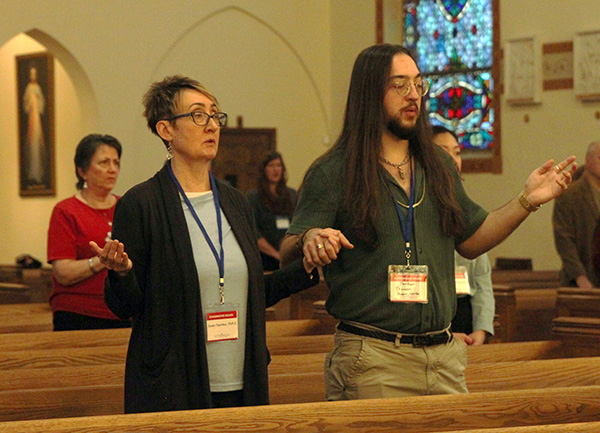
Following Mass, six speakers answered those tough questions by bringing Catholic faith and teachings to medical issues.
Dr. Joseph Dutkowsky, a leader in orthopedic surgery who has dedicated his life to advocating for people with disabilities, introduced attendees to a program that has children who are physically and mentally disabled leaving their braces and worries aside while dancing in movement workshops under the direction of the New York City Ballet Company.
“I don’t want to shock, but as a physician and a surgeon, one can easily become very narcissistic,” Dutkowsky said. “But my patients have rescued me from that snare, because they taught me to love myself sometimes because of my imperfections, and not in spite of them. Instead of finding me humanly imperfect, they taught me to accept being perfectly human.”
Dutkowsky told participants that although it is impossible for medical professionals to carry the cross for their patients, they can hold up a corner and make it a little lighter.
“The ground is never more level than at the foot of the cross,” he reminded. “There, there is no ‘them’ and ‘us,’ just ‘us’.”
Dr. Frances Broghammer spoke of the emotional struggles of mental health patients and their caretakers. In her experience as the Clinical Director of Inpatient Mental Health for the State of Minnesota, she explained that humanity goes a long way.
“There are very few times in medicine that we are able to cure. So, what are physicians called to do? We are called to heal,” Broghammer said. “To heal a patient is to be able to walk with somebody.”
Broghammer said she works with more than 100 mental patients “that society would rather assume did not exist.”
Broghammer relayed a story about a patient who had an incident at a previous institution but responded well when treated with respect.
“He just wanted a cup of coffee, a pair of shoes that fit and to call his mother,” she said. “He got two of these three identified needs before he even sat down with a psychiatrist… We didn’t need any more exceptional resources to handle him. We just needed to treat him like a human being.”
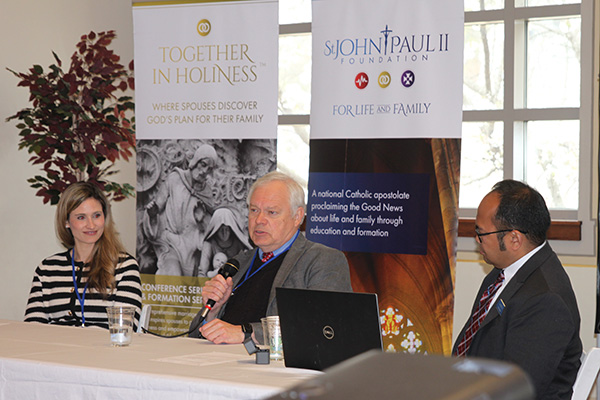
While the first part of the conference was filled with uplifting stories, the afternoon tackled some jarring realities.
Dr. Jessica Peck, a Baylor University professor, pediatric nurse and policy advocate, spoke about the global human trafficking industry that is estimated to generate $236 billion annually.
“Human trafficking is second only to the drug trade, and I believe it will soon surpass it, because drugs are commodities that need to be packaged and hidden, and while it is very difficult to hide drugs, it is very easy to hide a person,” Peck said. “One victim makes traffickers about $300,000 a year.”
Peck said while trafficking can happen to anyone, the likelihood of becoming a victim increases with environmental factors that include abuse, low self-esteem, and a family with addiction problems.
“Anyone can be a victim of human trafficking, and traffickers can be family members, elected officials, pastors, principals, teachers, anyone,” Peck said, noting that 35% of traffickers are family members. “The cycle is always generally the same. They will befriend and establish trust, intoxicate and introduce drugs and alcohol, and alienate and separate them from their family.”
She said recruiters are now using artificial intelligence to find and groom vulnerable children on social platforms.
“Parents are so worried about the stranger on the street, but at the same time they’re allowing their child to invite thousands of strangers into their bedroom almost every night,” Peck said.
By the end of the conference, medical professionals took away six professional development credit hours and a renewed understanding of human dignity from a Catholic lens.
As Broghammer said, “hope comes from your faith, and I see hope embodied in the dignity of every individual I work alongside.”
— Lisa M. Geraci