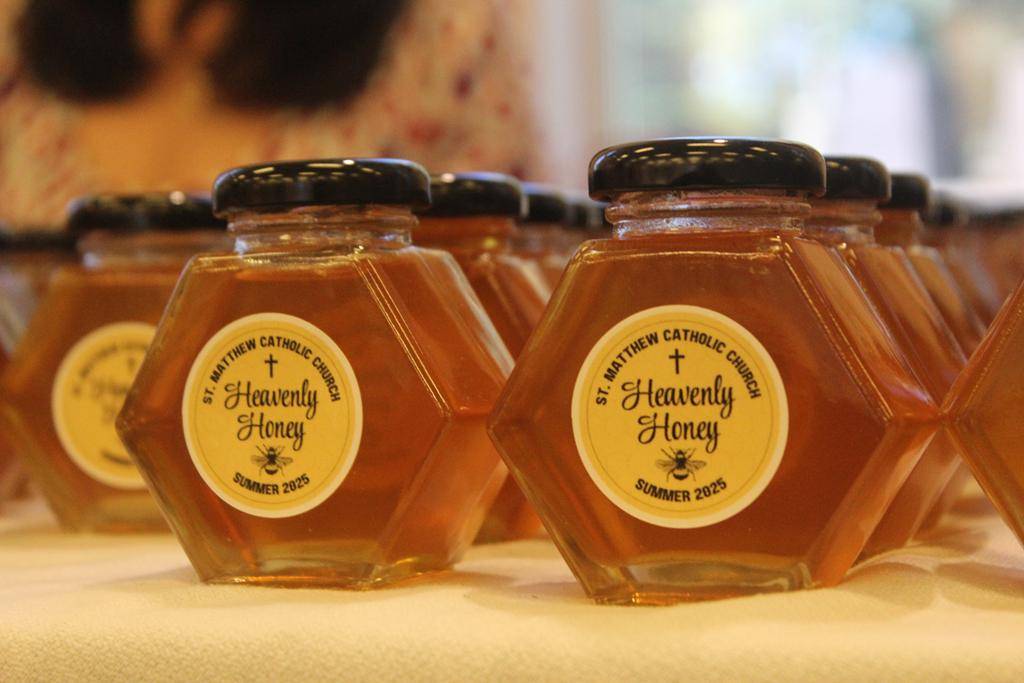
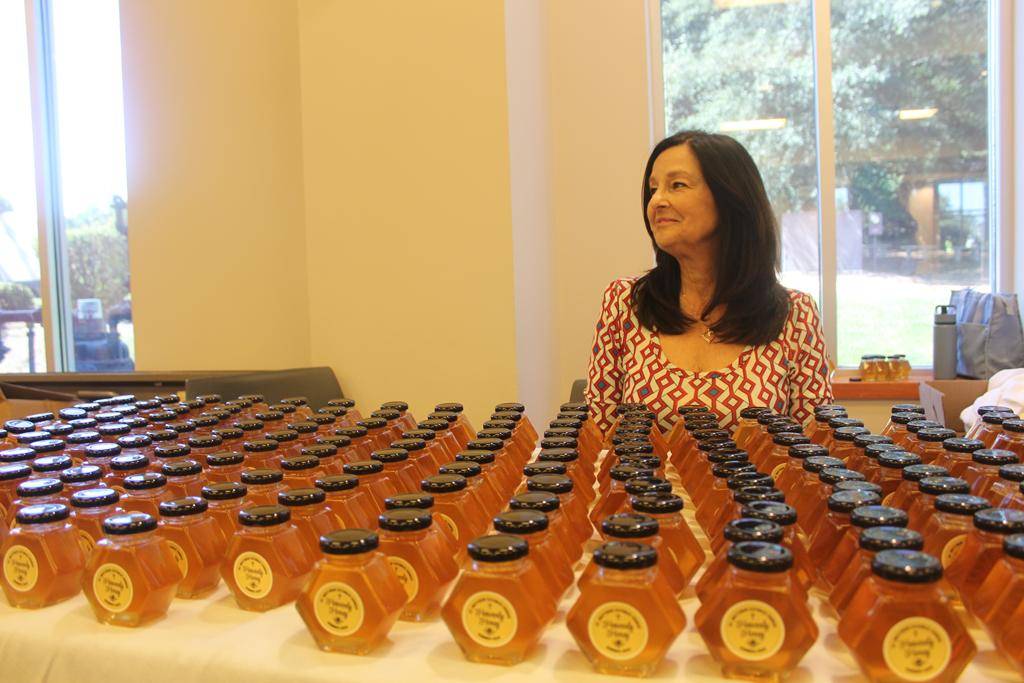
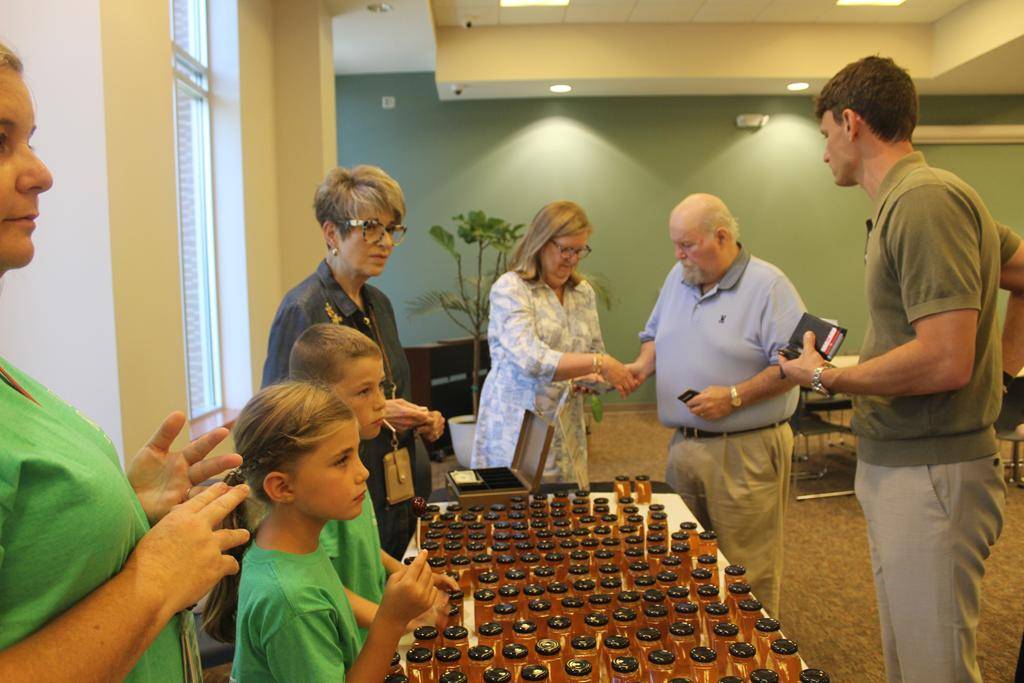
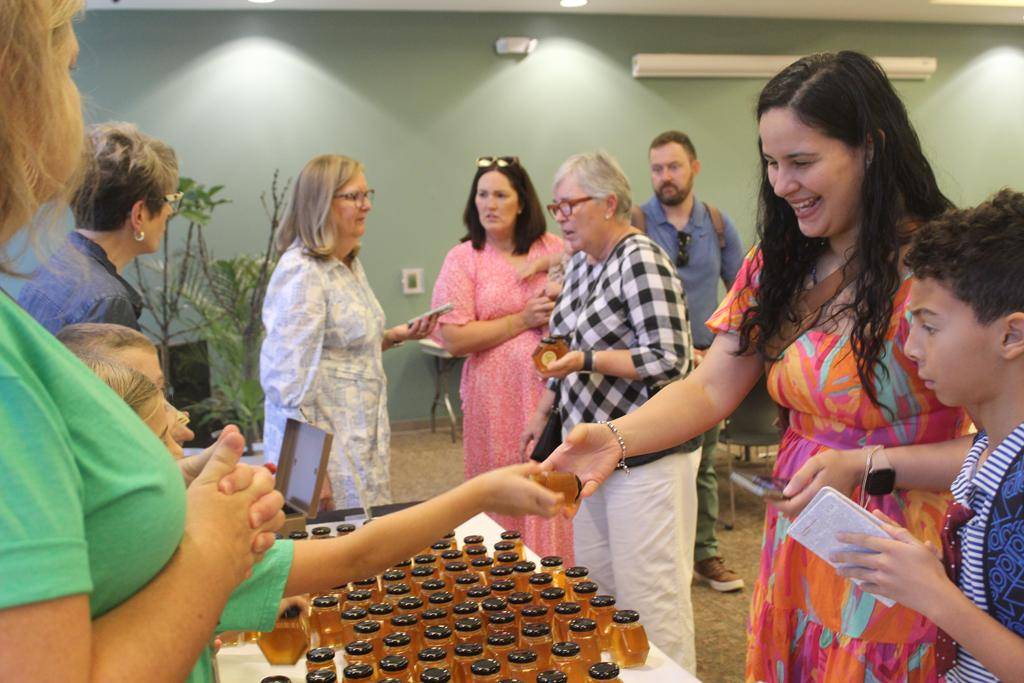
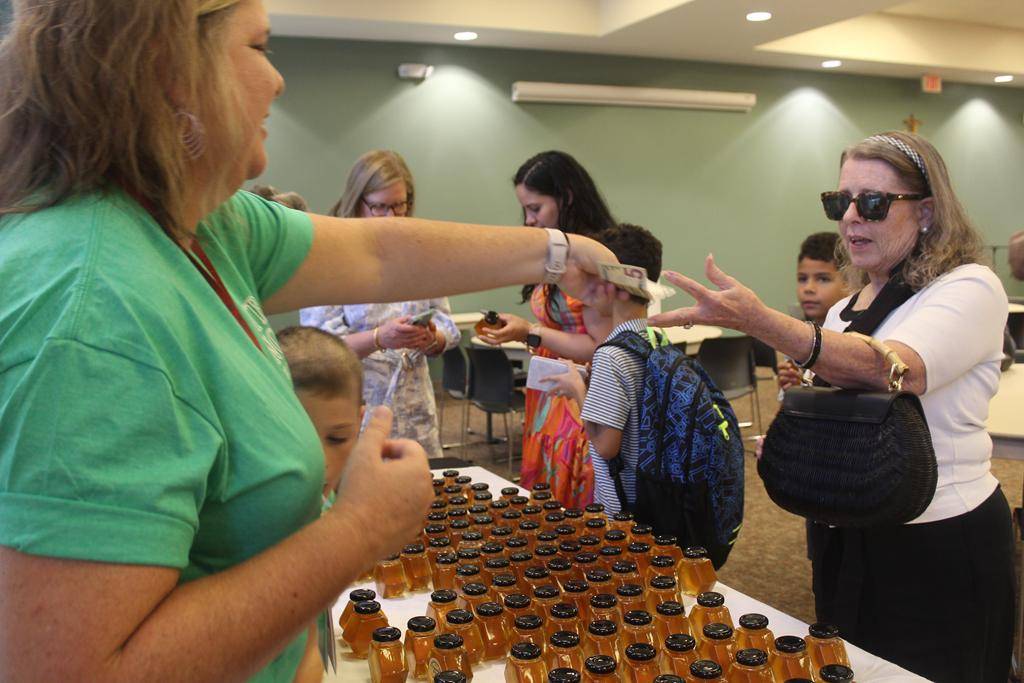
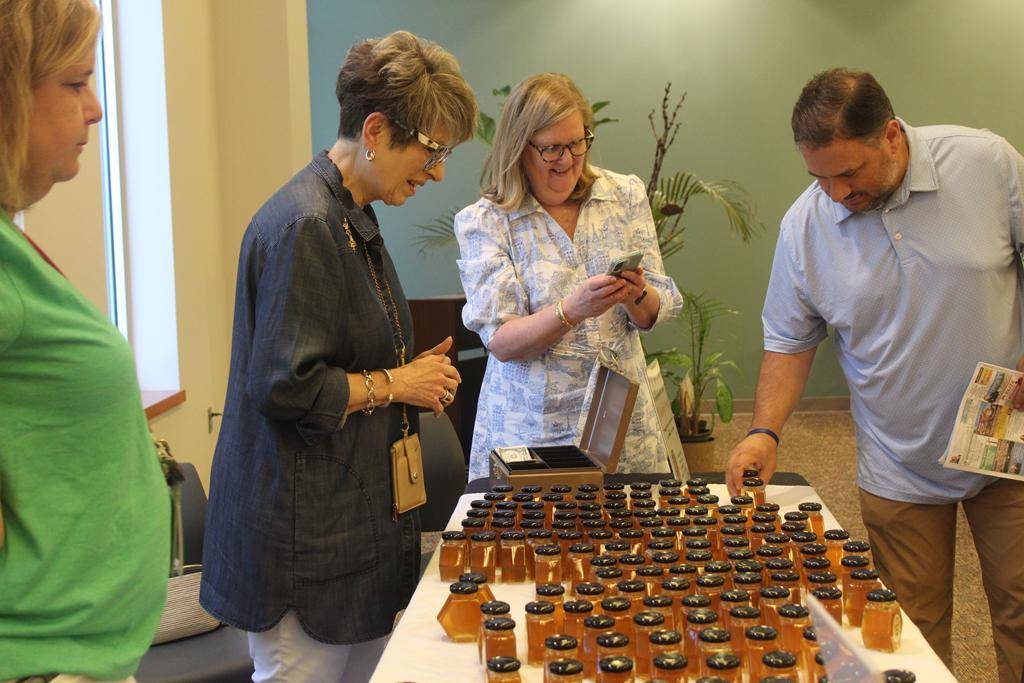
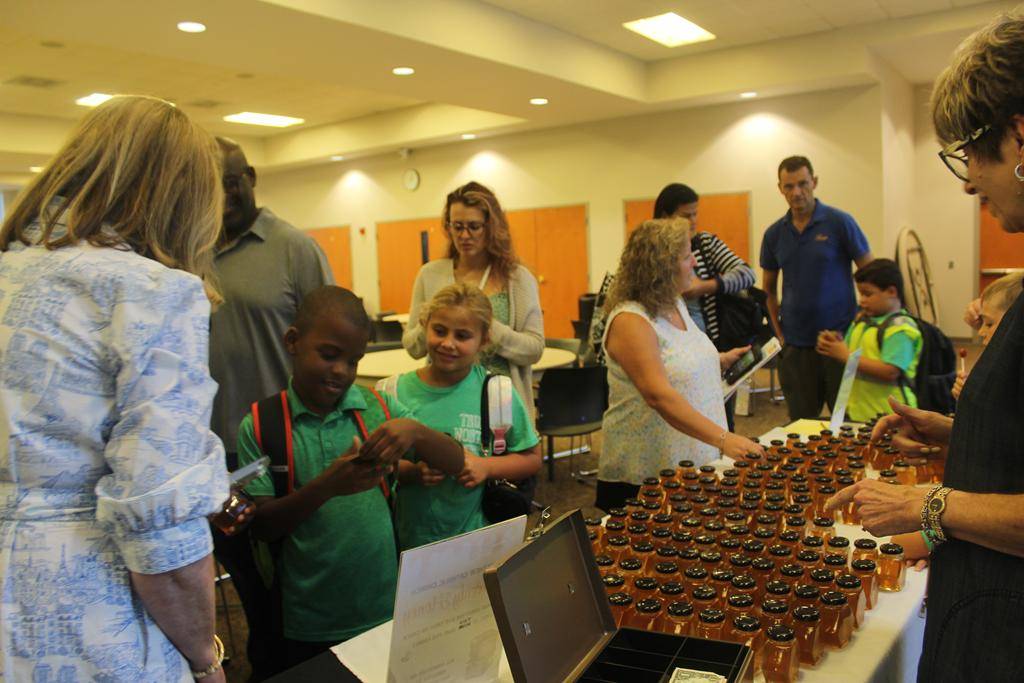
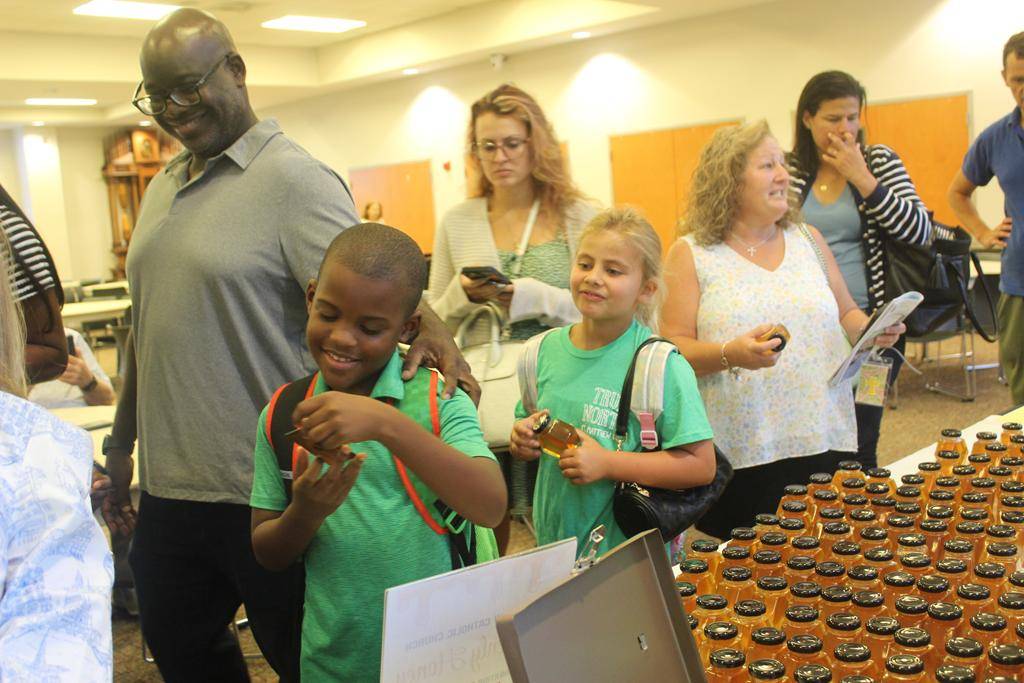
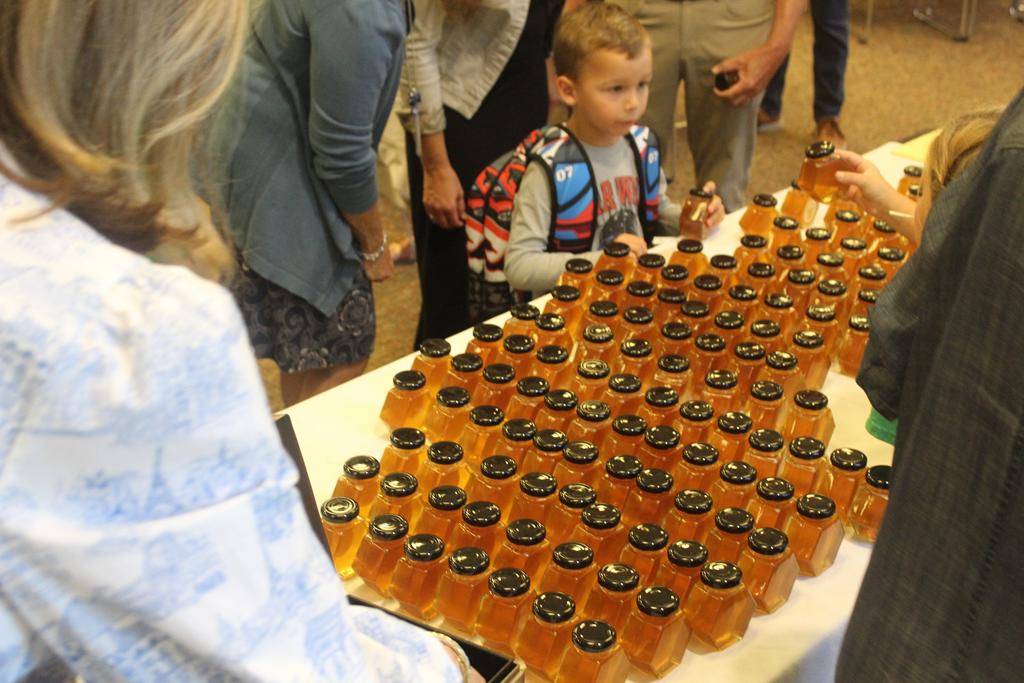
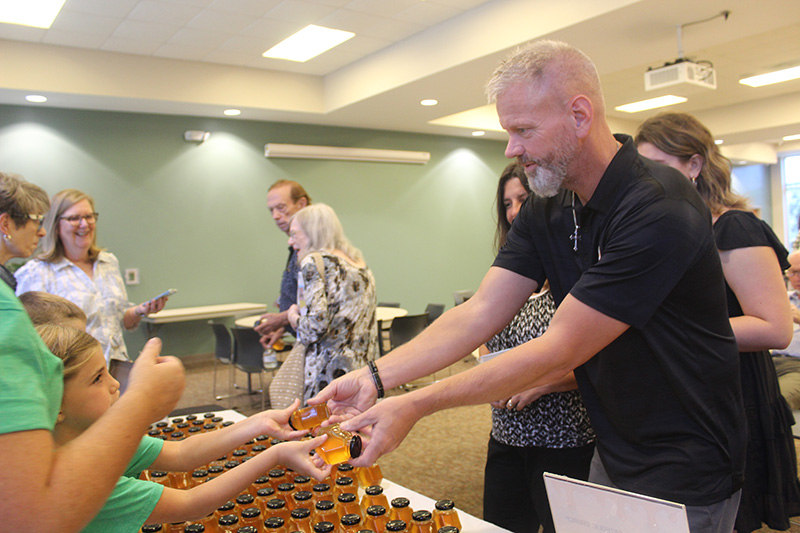
 CHARLOTTE — Bees have been busy at St. Matthew Church for the past year, and they recently yielded a crop of honey which sold out rapidly once it went on sale in mid-August.
The first crop of “Heavenly Honey,” a name selected by parishioners, was the result of a year’s worth of work by a massive colony of bees originally discovered inside a wall of the parish’s New Life Center as workers were installing a new roof in 2024.
Because honeybees are pollinators vital to the environment, parish leaders wanted to protect them, so they enlisted the help of local beekeeper Jesse Holland to relocate the bees elsewhere on church property. Their rescue plan was doubly sweet since it entailed harvesting and then selling the bees’ honey to raise funds for the parish’s hunger ministries.
Holland, owner of Charlotte-based Bizzy Bee Honey, Hives and More, moved more than 100,000 bees to 10 hives on church property on Elm Lane. This year, those bees produced their first crop of honey.
“This whole thing has been absolutely wonderful – parishioners were so supportive and were inquiring for months about when the honey would be ready,” said Antoinette Usher, chief operating officer for the parish. “It’s beautiful that we’re both able to help the bees and feed the hungry with this project.”
Holland said the past year of tending the St. Matthew bees has been mostly good, with the “usual ups and downs like anybody dealing with nature.”
One spell of bad luck hit earlier this year when three of the hives were lost because foraging bees got into an insecticide or fungicide, then brought it back to their hives.
The seven remaining hives have continued to thrive. Holland said the three that were lost will be replaced in the spring when he divides the other seven. This process prevents overcrowding and keeps bees from swarming to find new homes elsewhere.
Holland checks on the St. Matthew hives every two weeks, opening each to do a full inspection and pulling a few frames of bees to make sure that the colonies are healthy.
“We look to see that we have a queen in there laying eggs, along with healthy larvae, a healthy brood and then healthy adult bees,” he said. “Big, strong hives are the most important thing.”
He also continually monitors to make sure hives haven’t been invaded by natural pests like wax moths and hive beetles.
The honey from St. Matthew was harvested in early July and yielded about 1,000 jars, Holland said.
Parishioners will soon know what type of flowers their bees favor. Holland ran DNA sequencing on the honey to see which blossoms their bees have been pollinating.
“Everybody over there has been really excited to learn about what we’re doing,” Holland said. “I even went and did a little show and tell for the vacation bible school to talk bees with the kids. It’s just all around been a great experience.”
As fall approaches, Holland will be getting the hives ready for winter, when bees start raising “winter worker” bees. These bees generate enough heat to ensure the hive’s survival. They do so by clustering together and rapidly vibrating their wing muscles to warm the area around the queen and brood to an average temperature of 90 to 95 degrees. These winter workers live on average four to six months, much longer than the 45-day life span of a summer bee. In preparation for colder weather, Holland is feeding the bees sugar water with added protein and vitamins.
That extra food will give the bees a head start in preparing next summer’s crop of “Heavenly Honey.”
— Christina Lee Knauss. Photos by Christina Lee Knauss and Binh Nguyen