


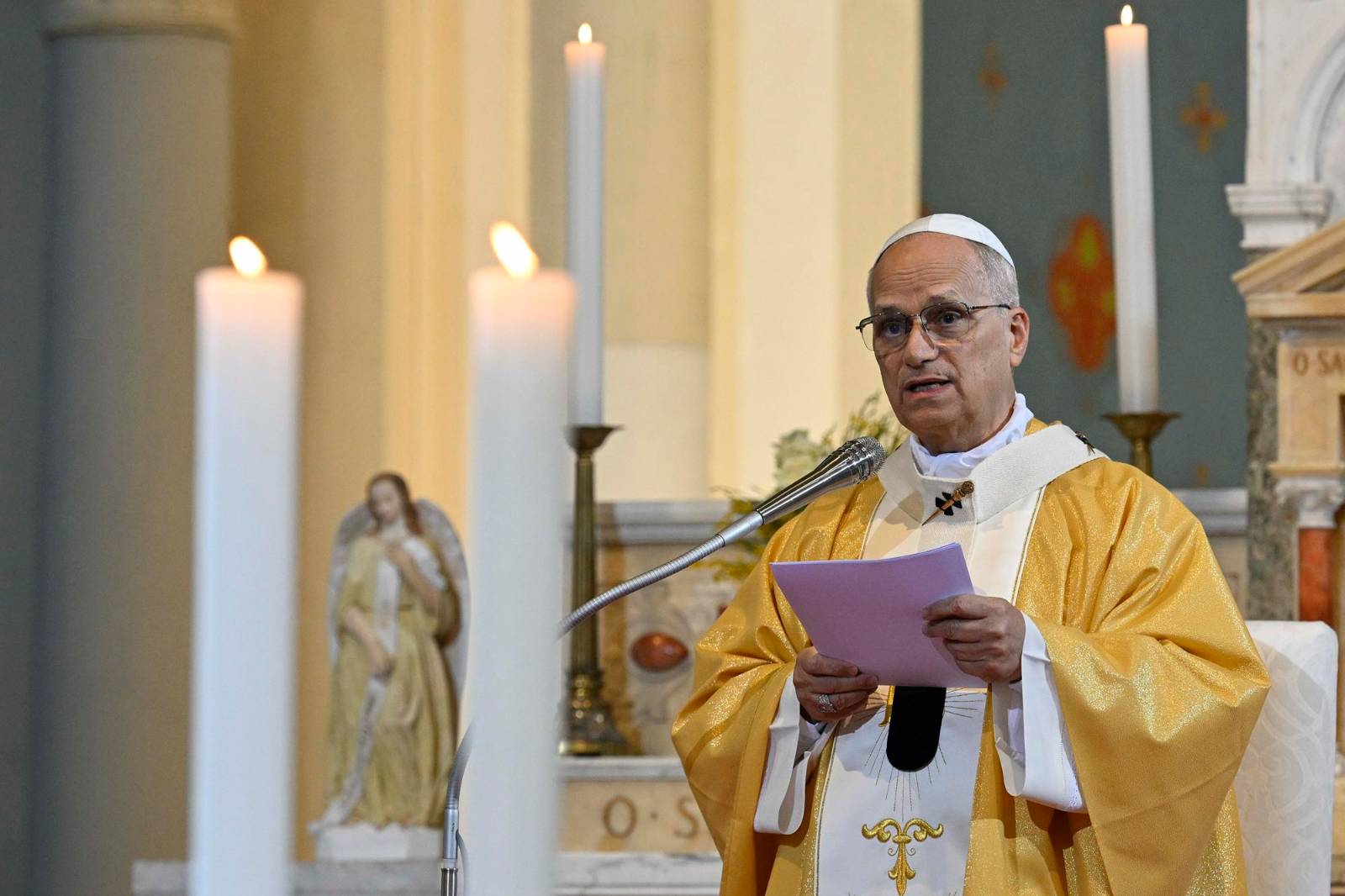
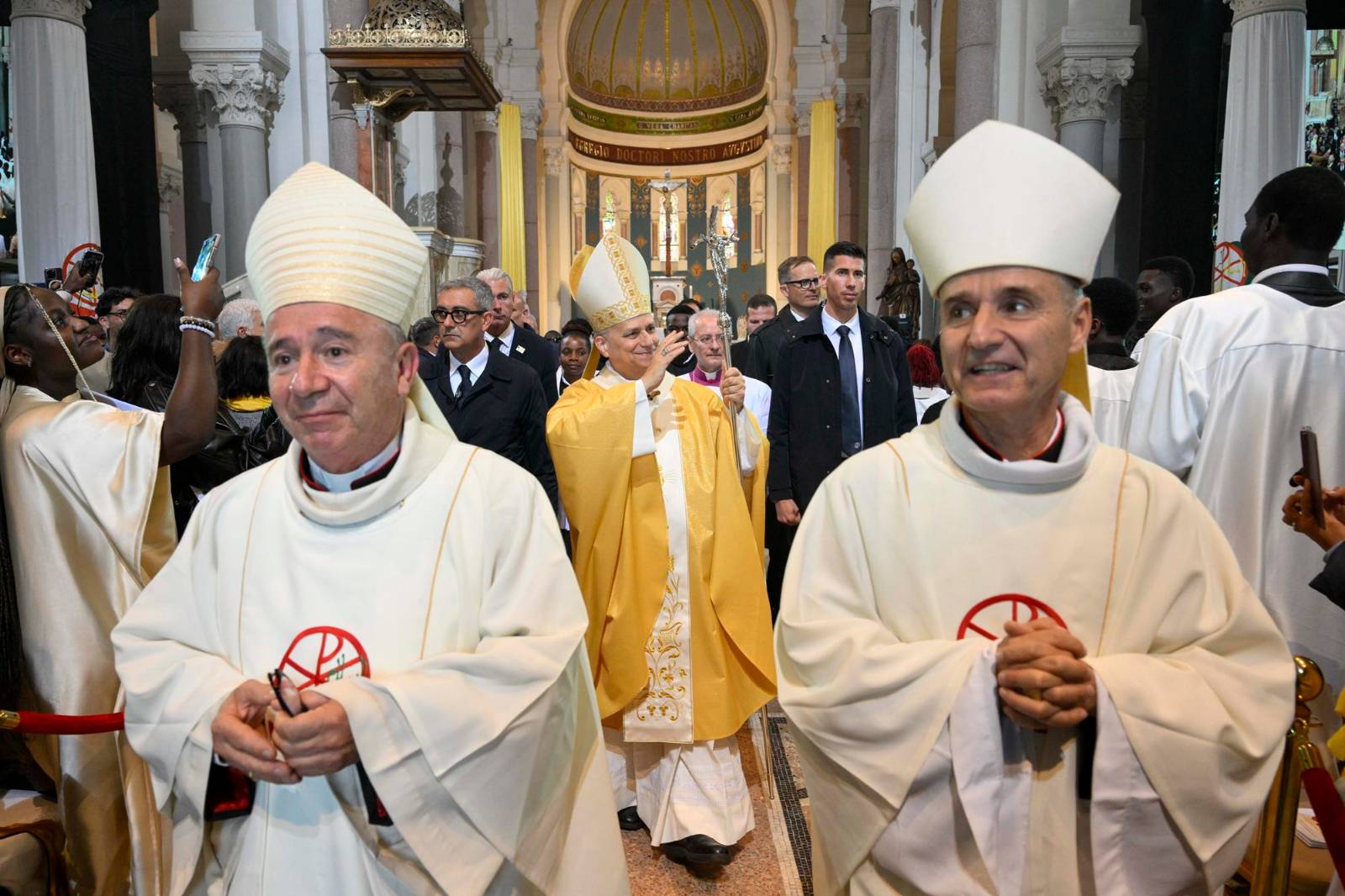
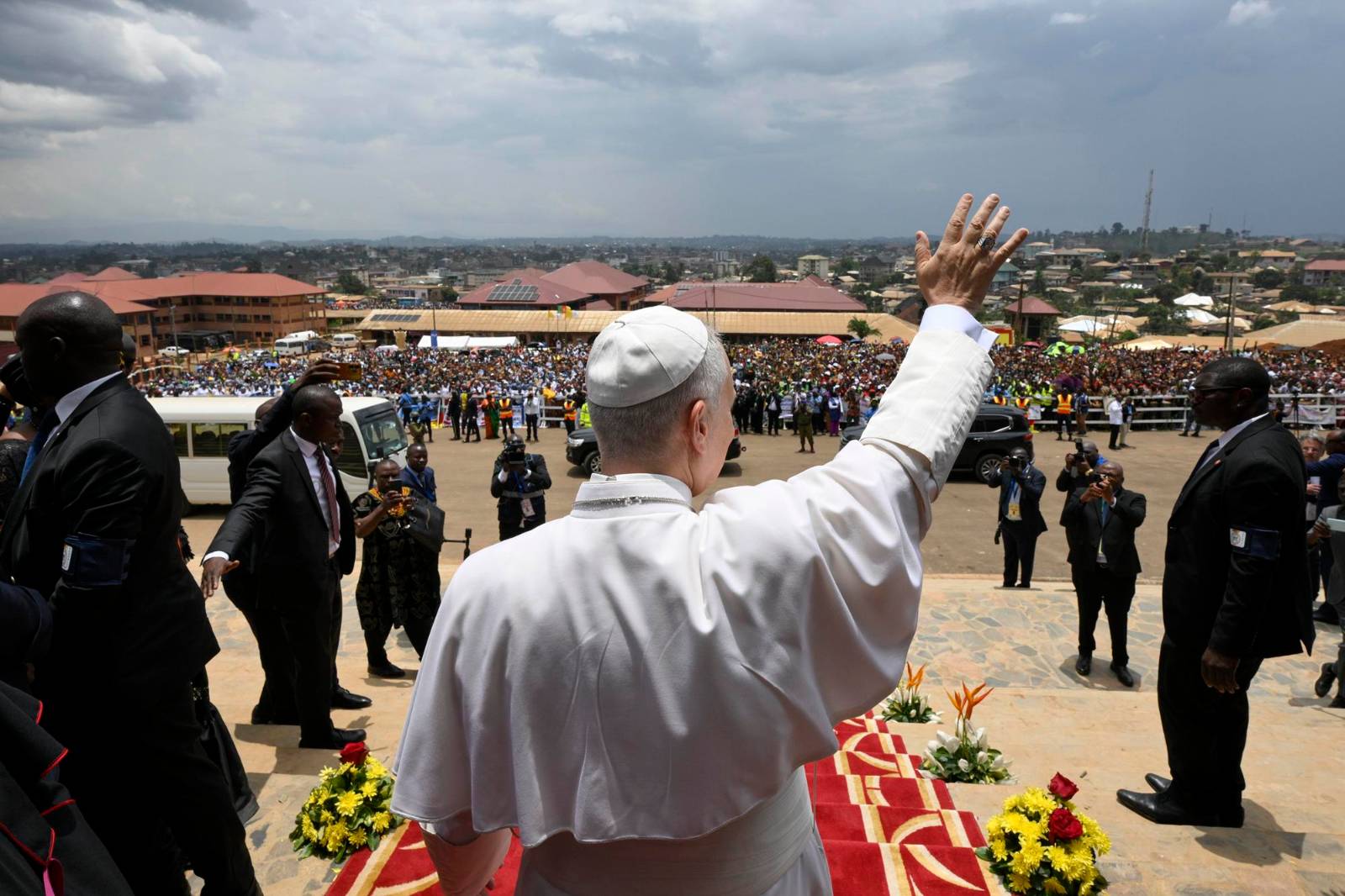
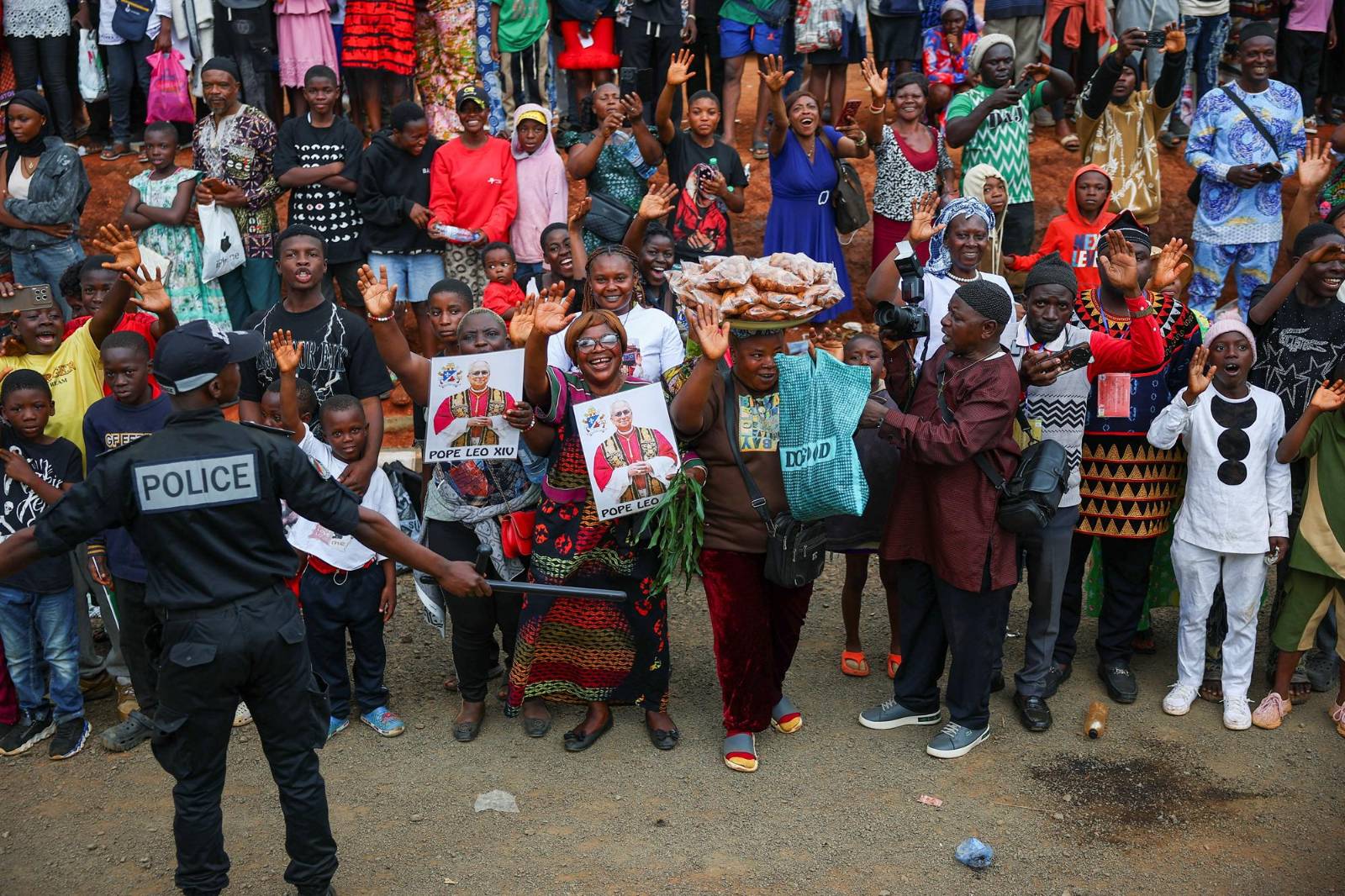
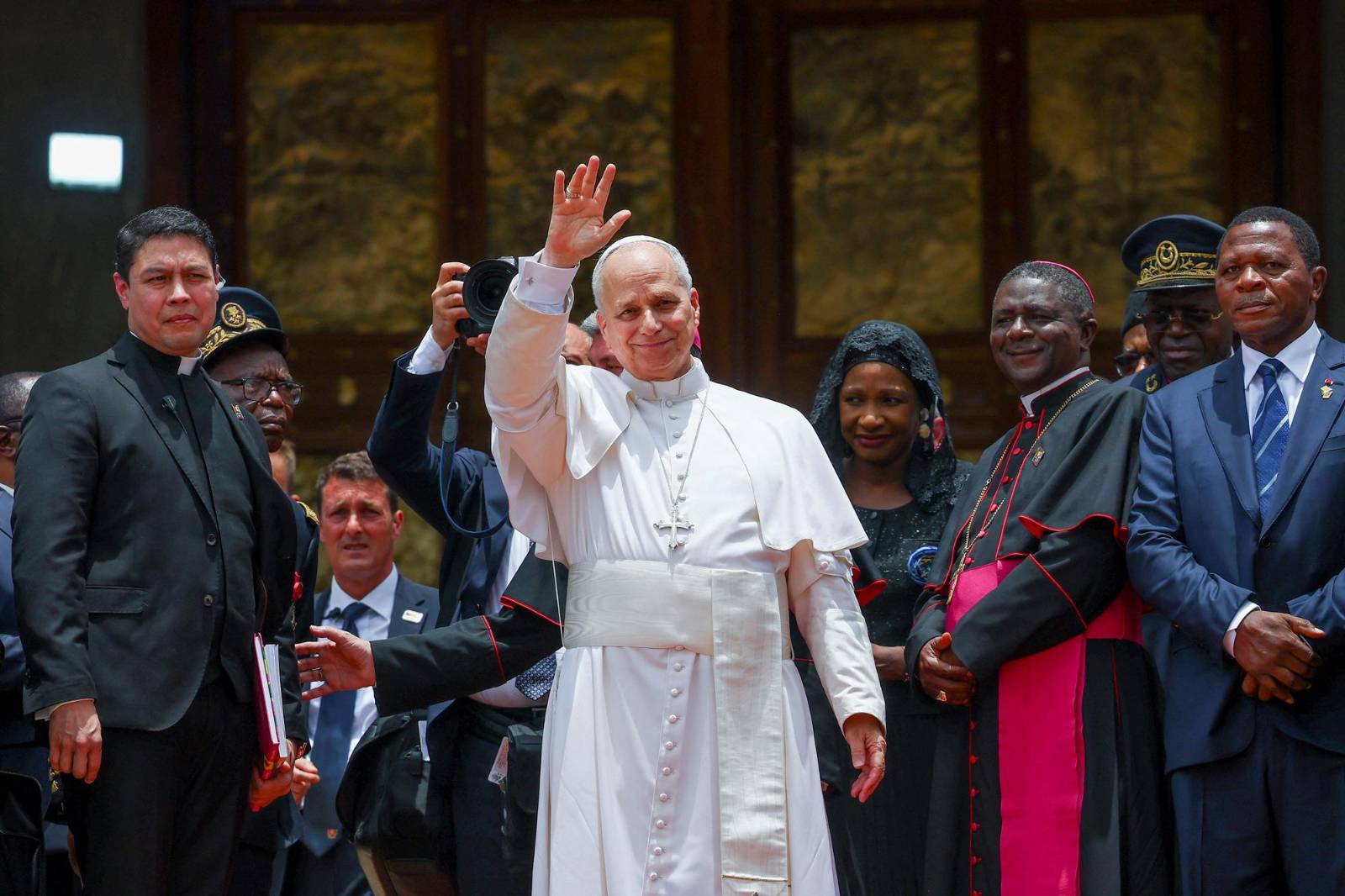
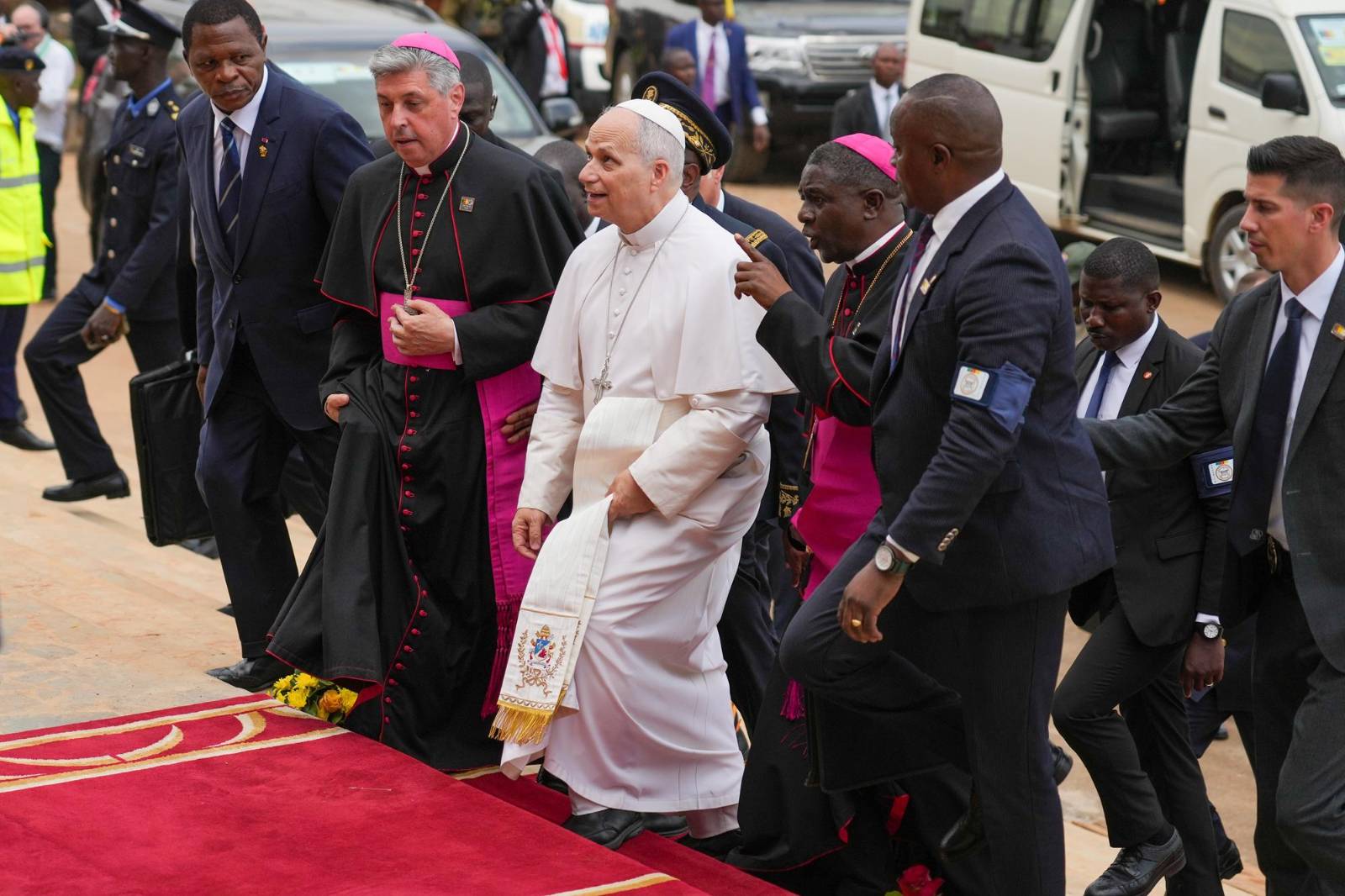
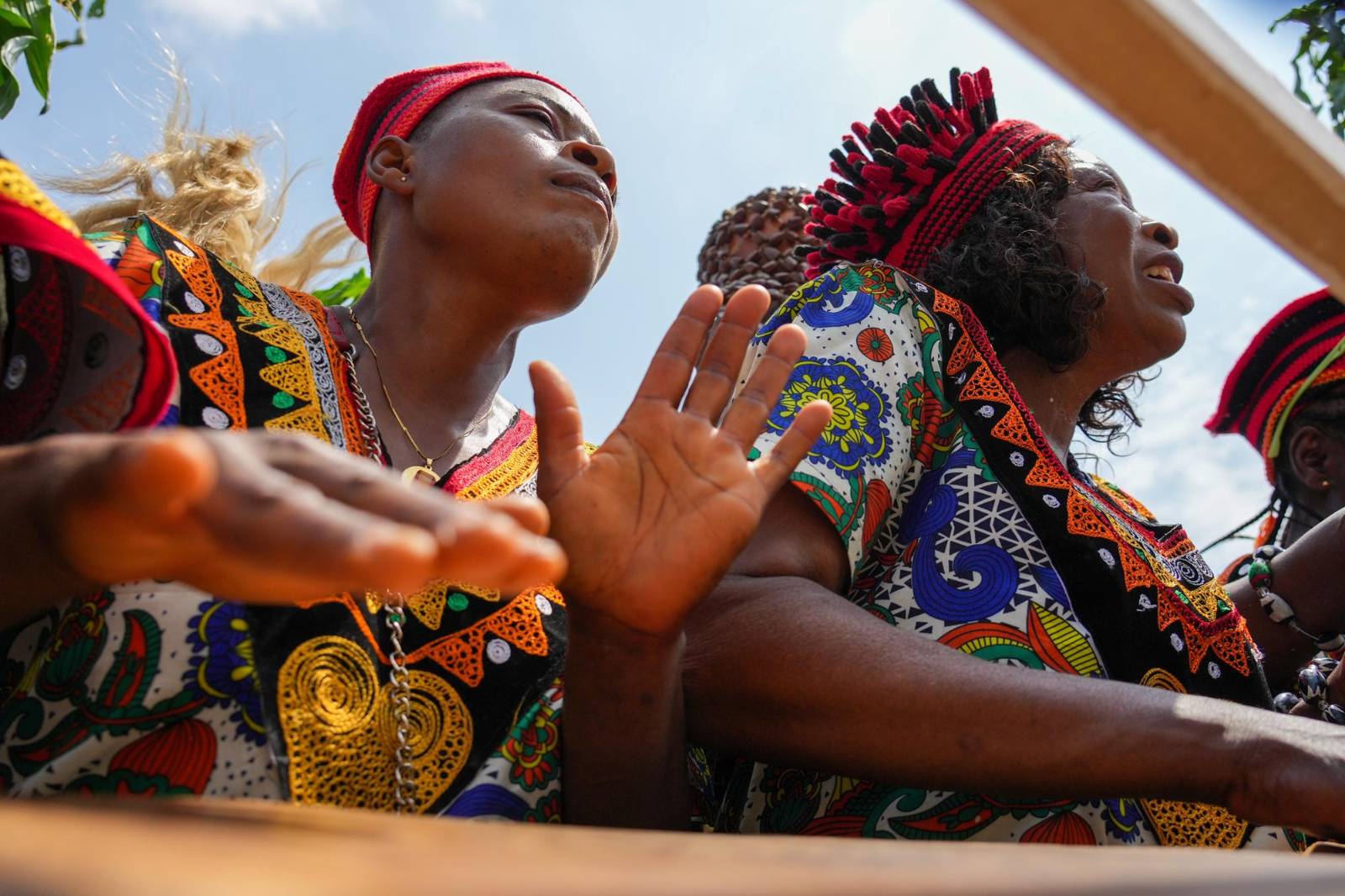
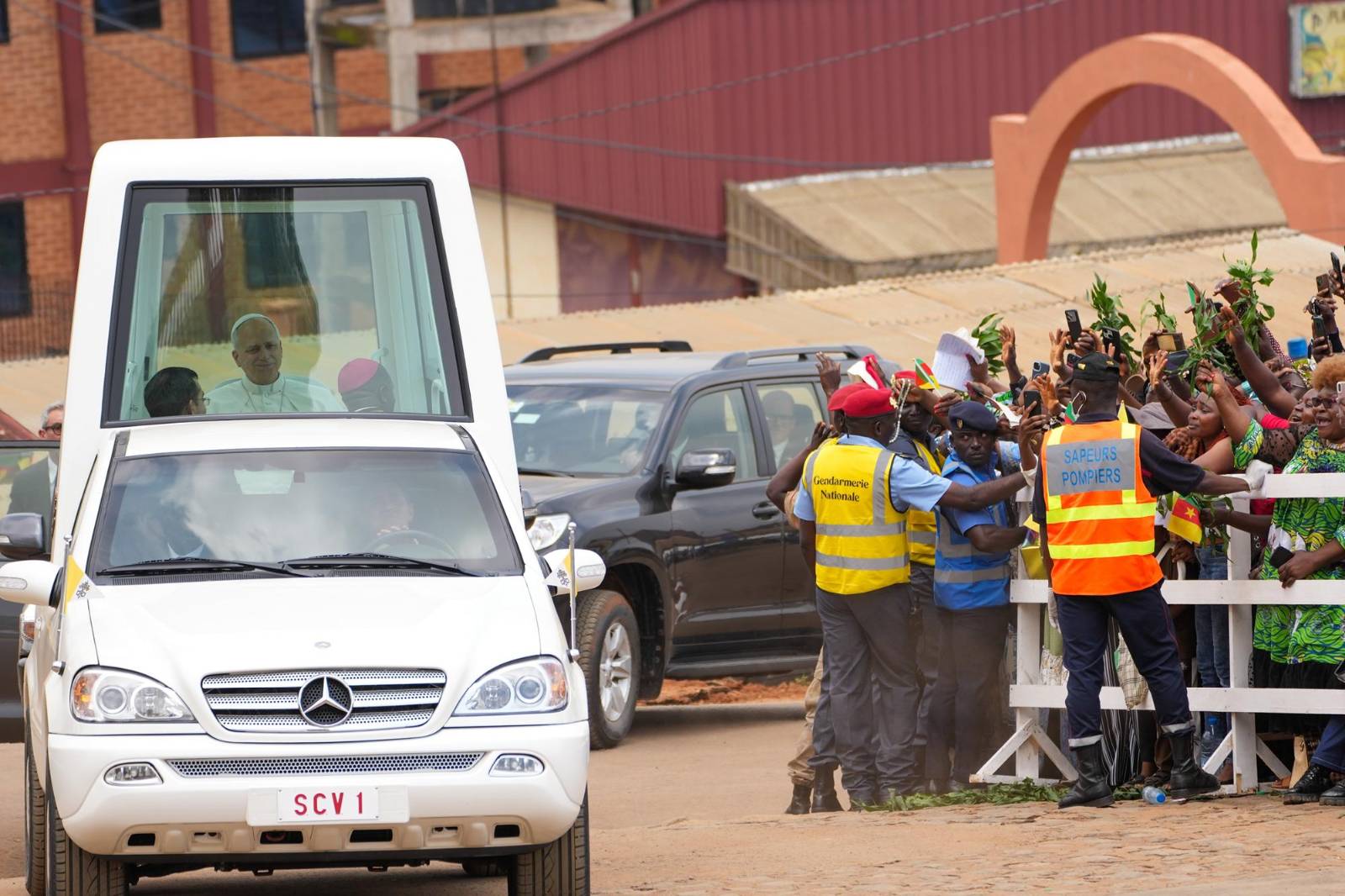
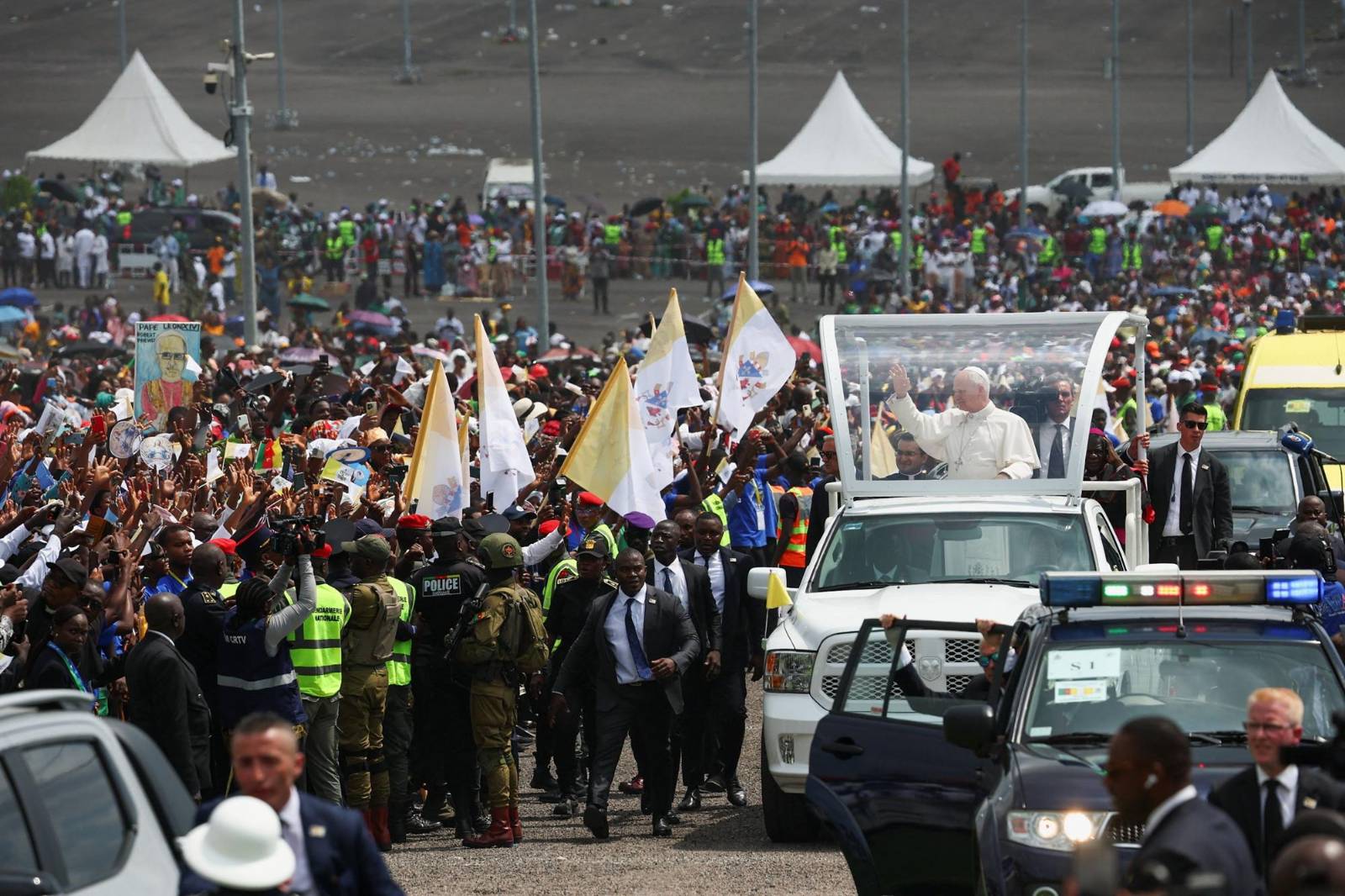
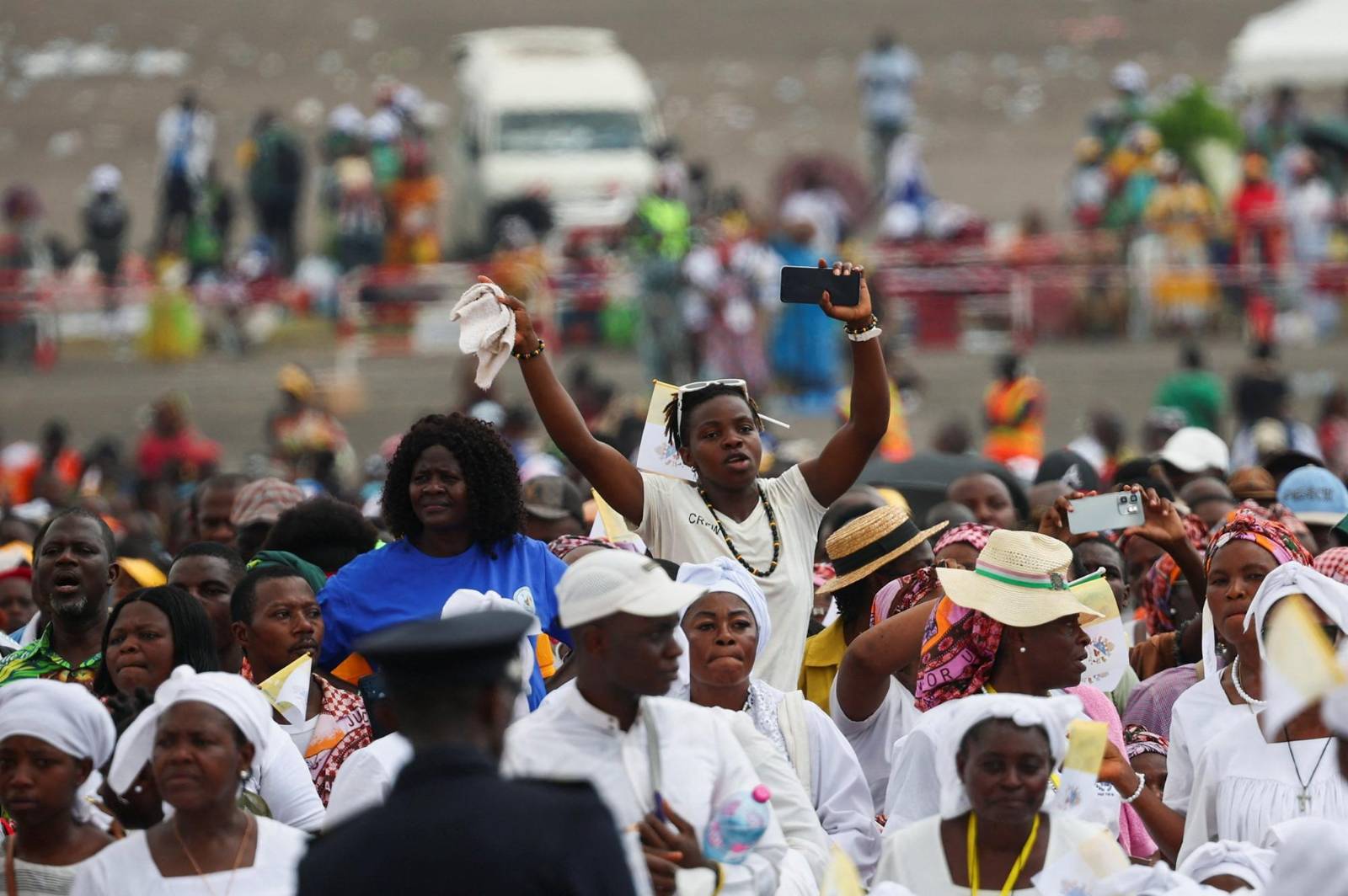
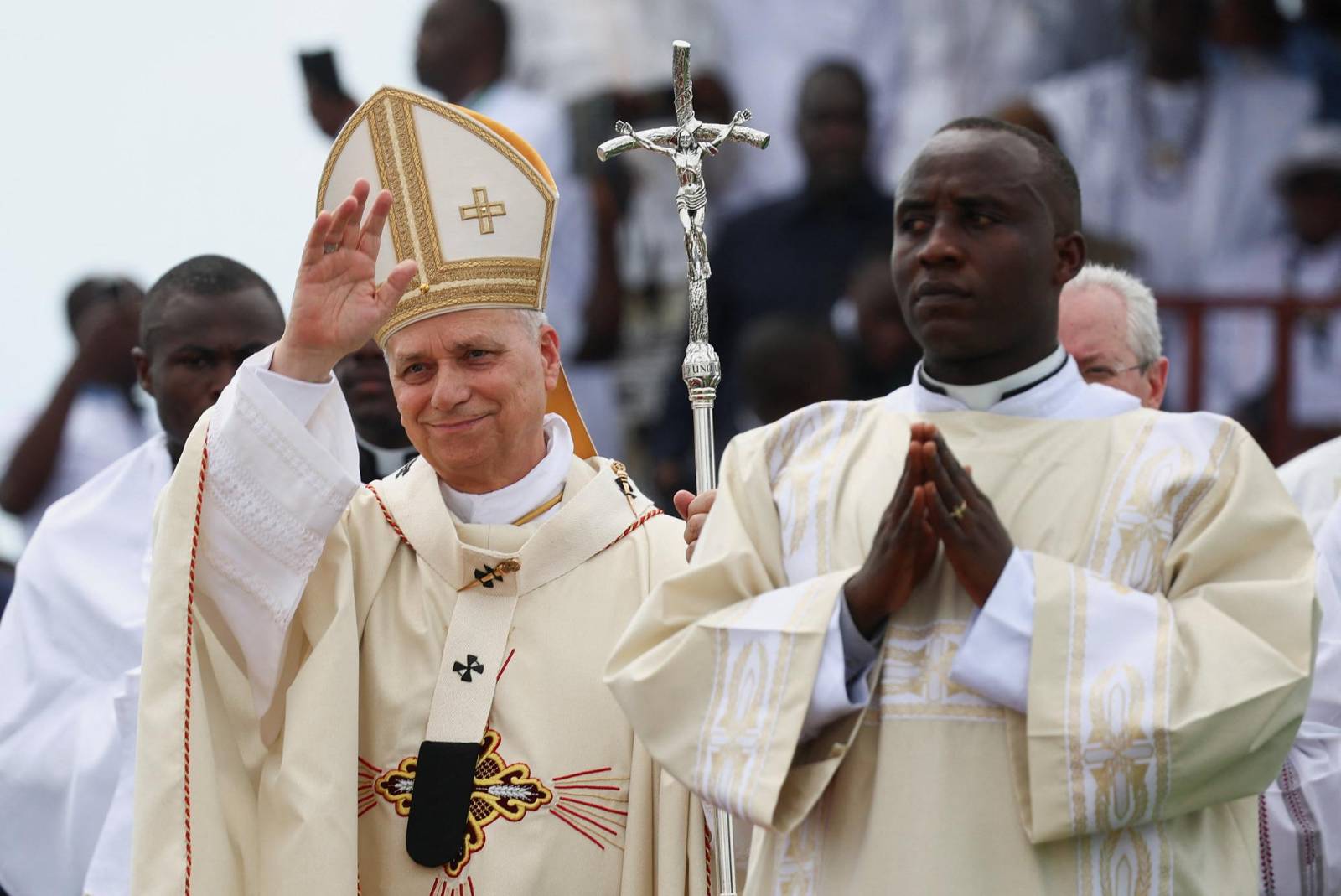
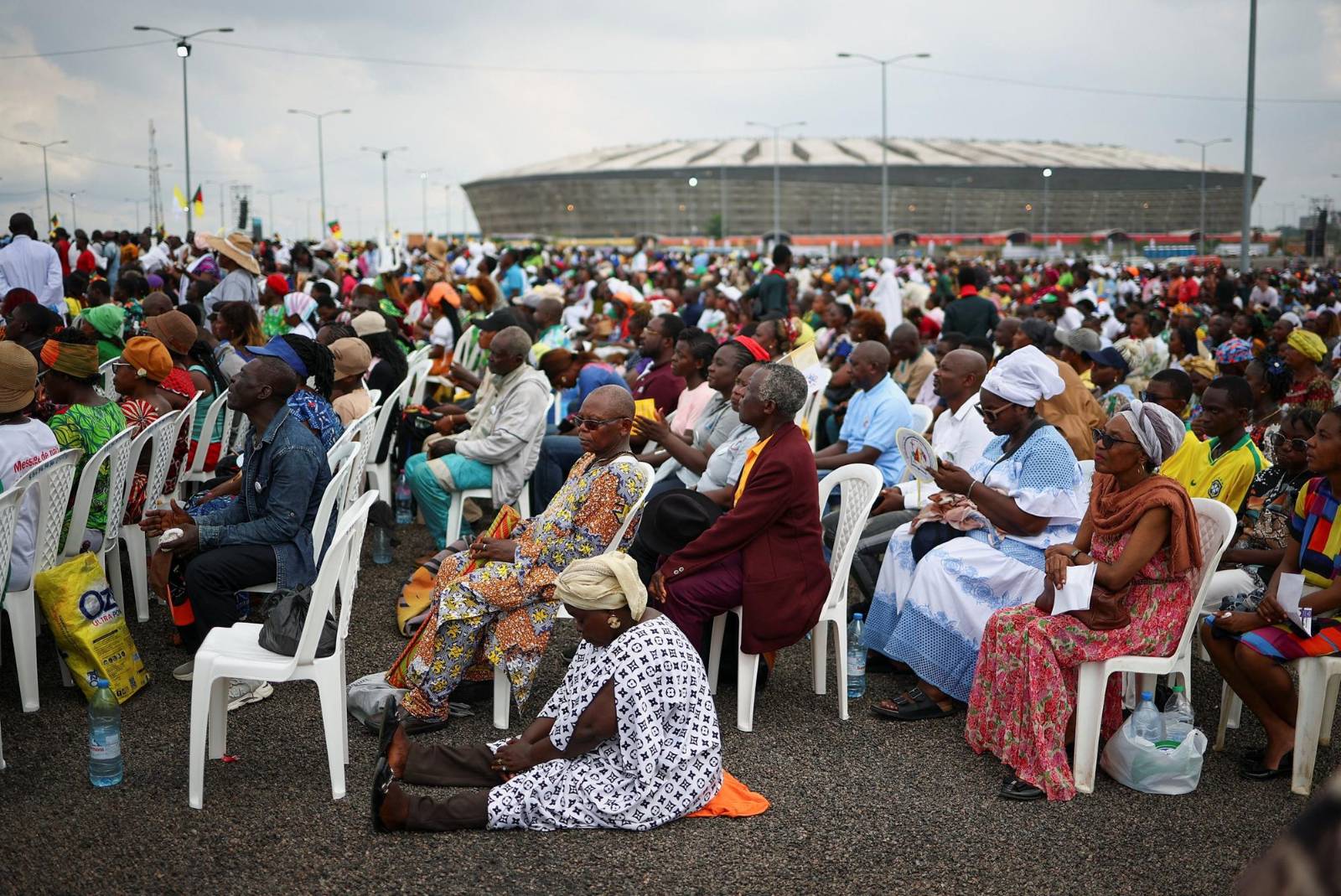
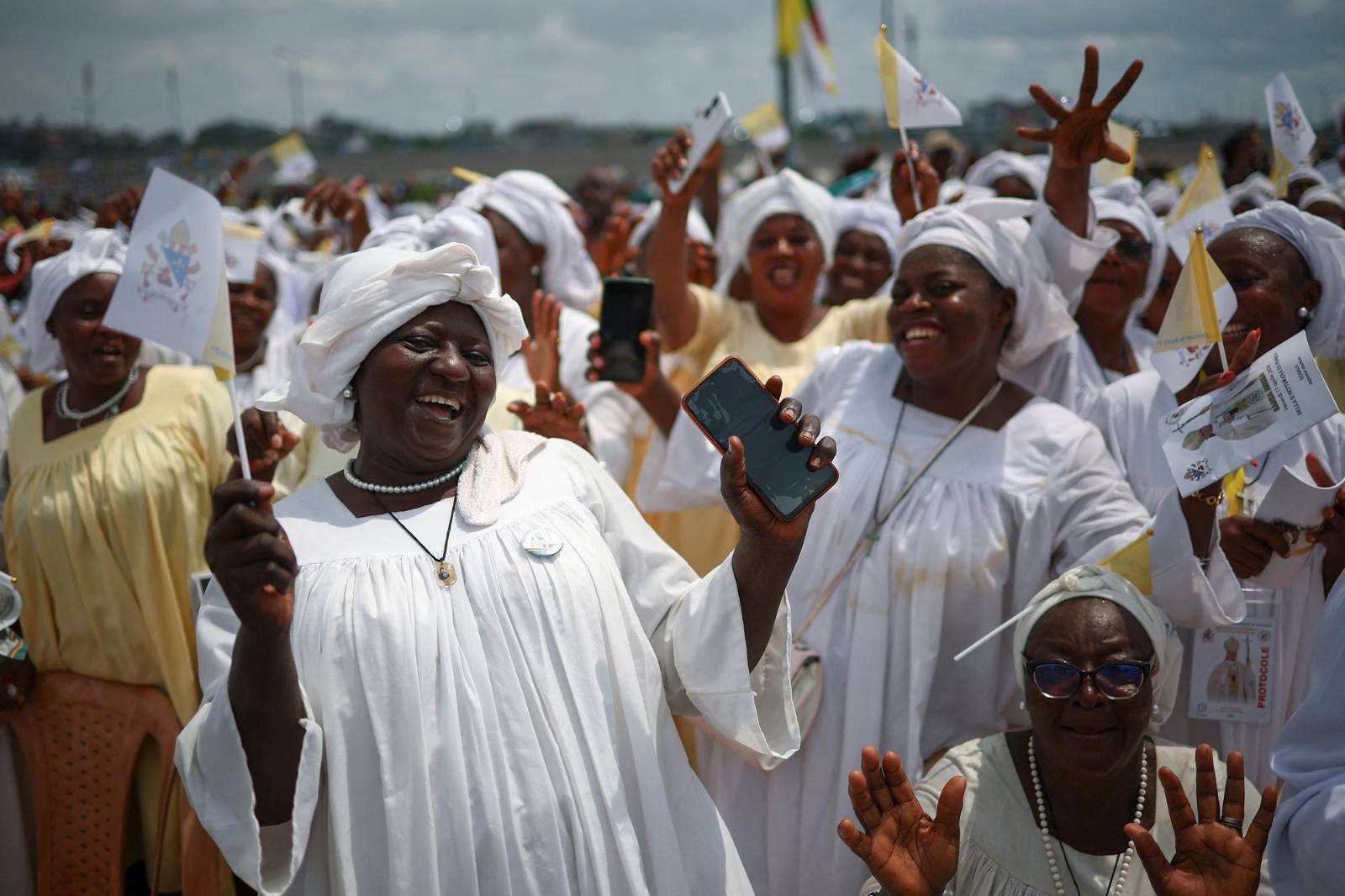
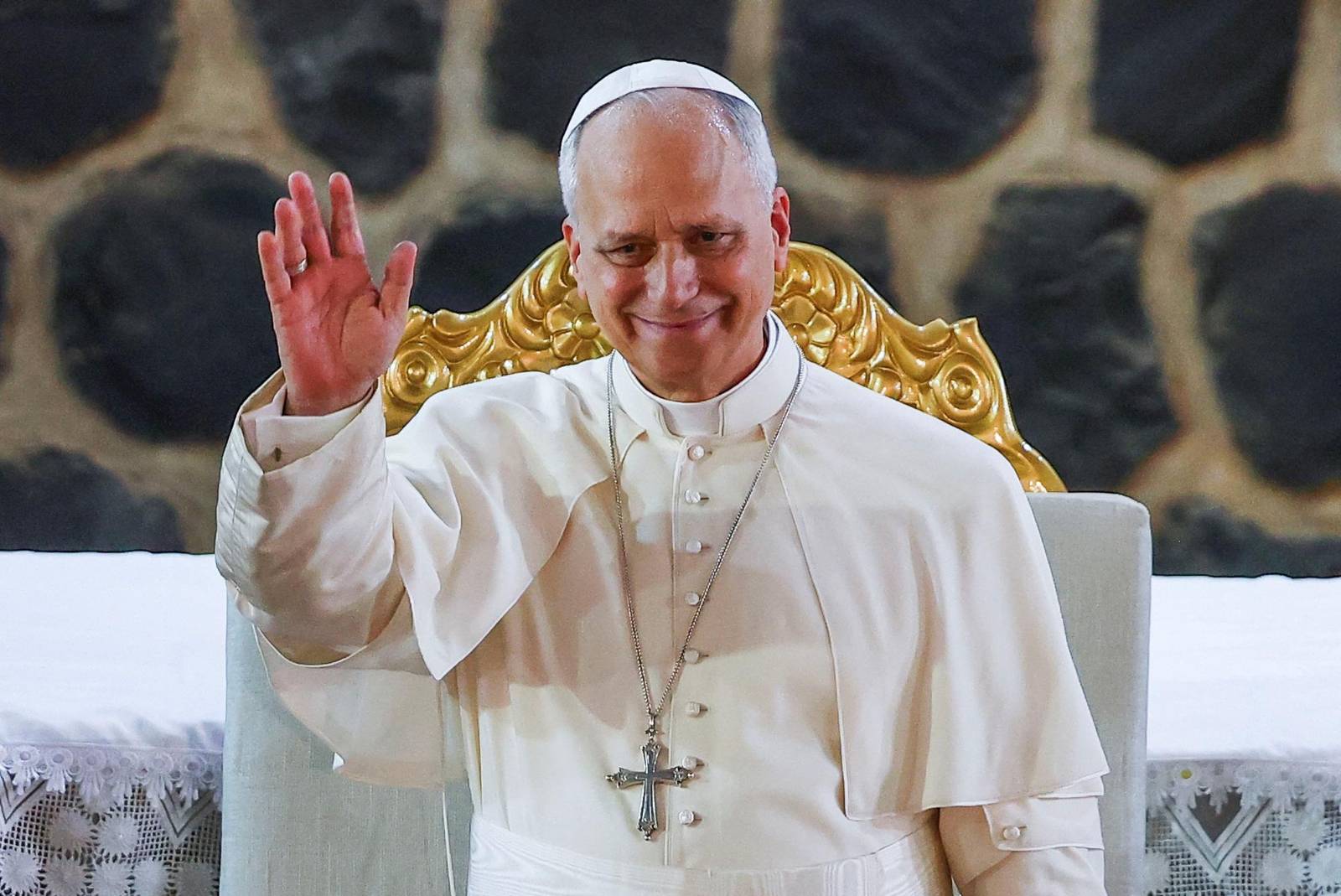
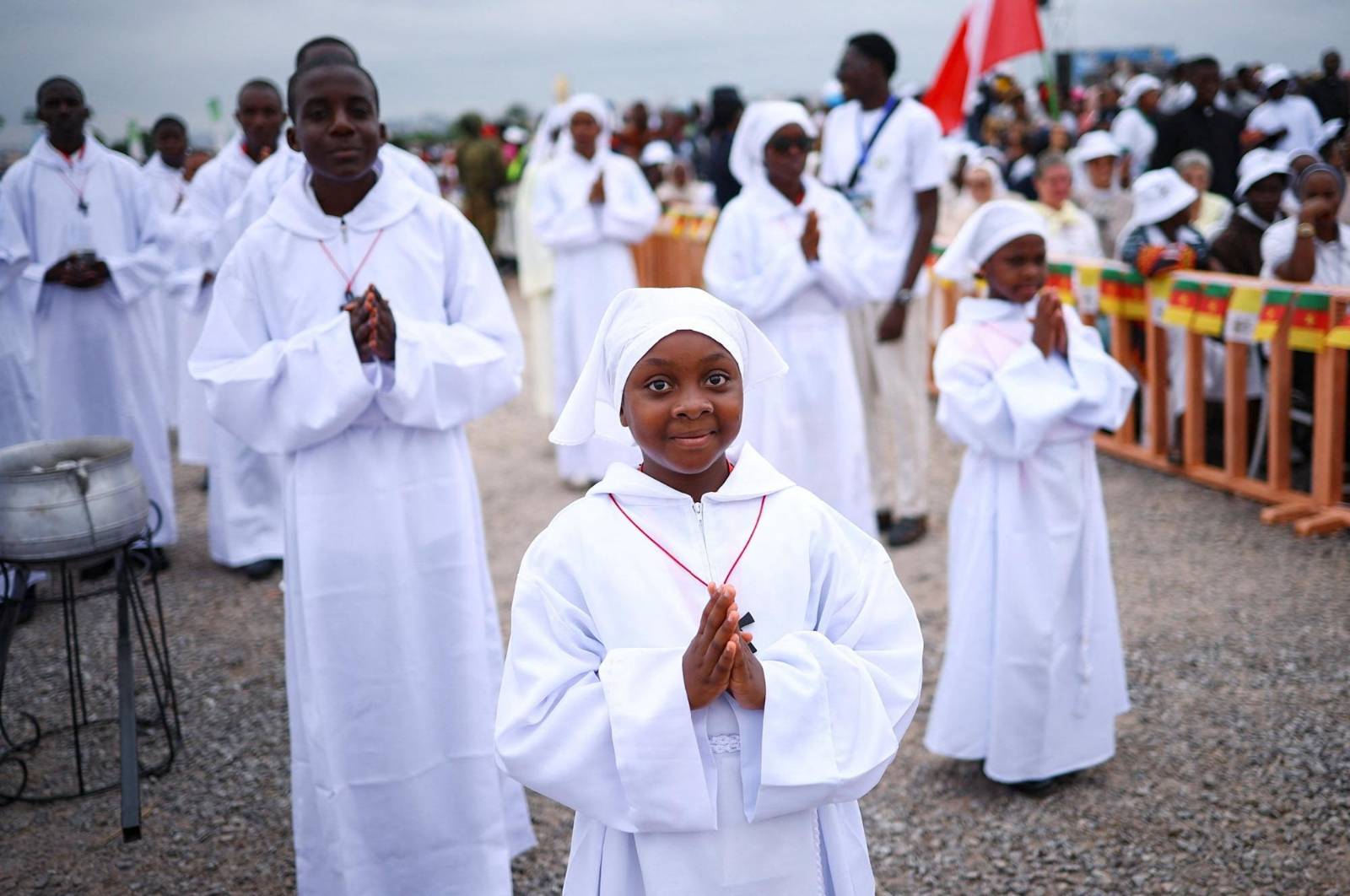
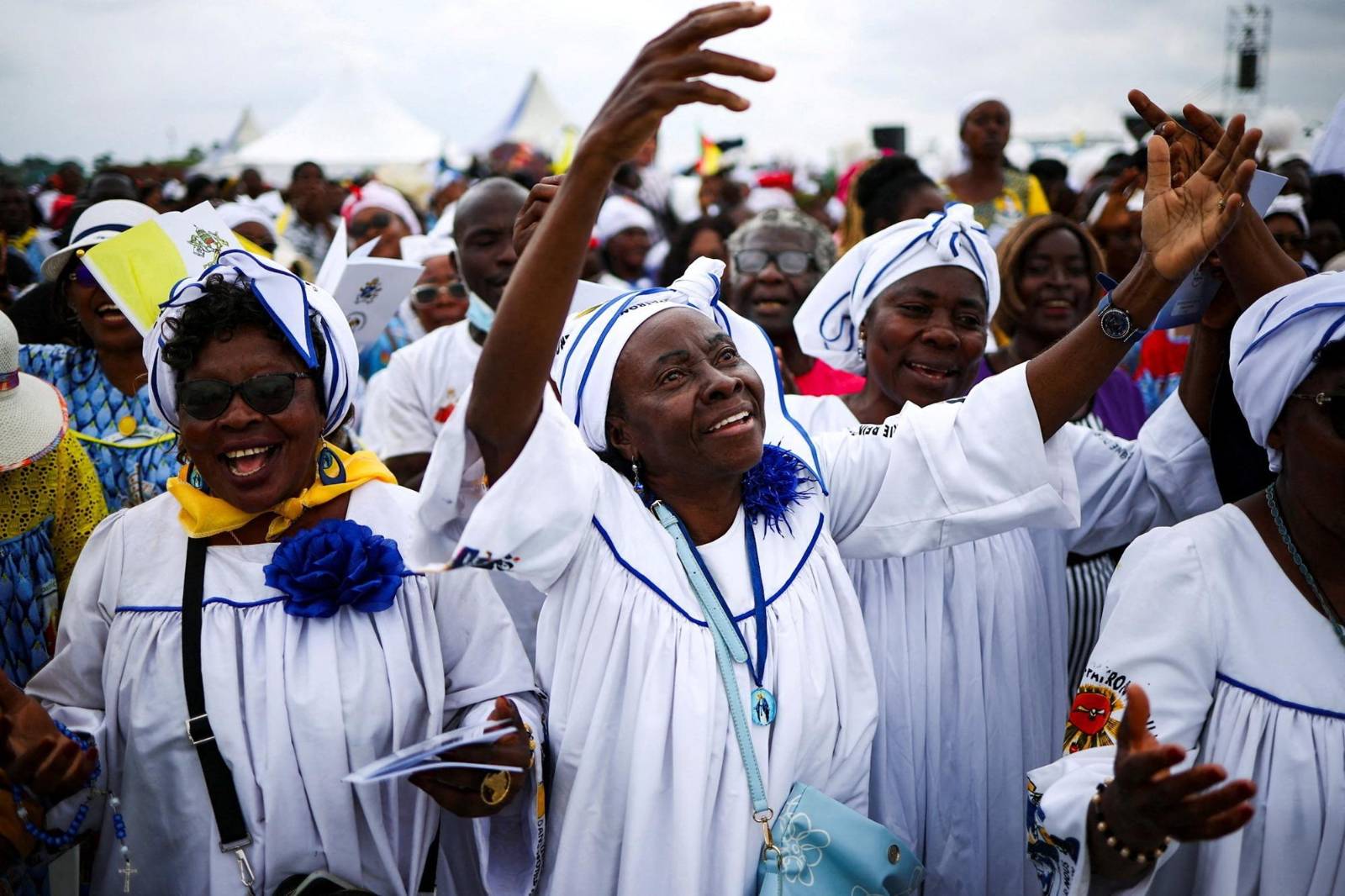
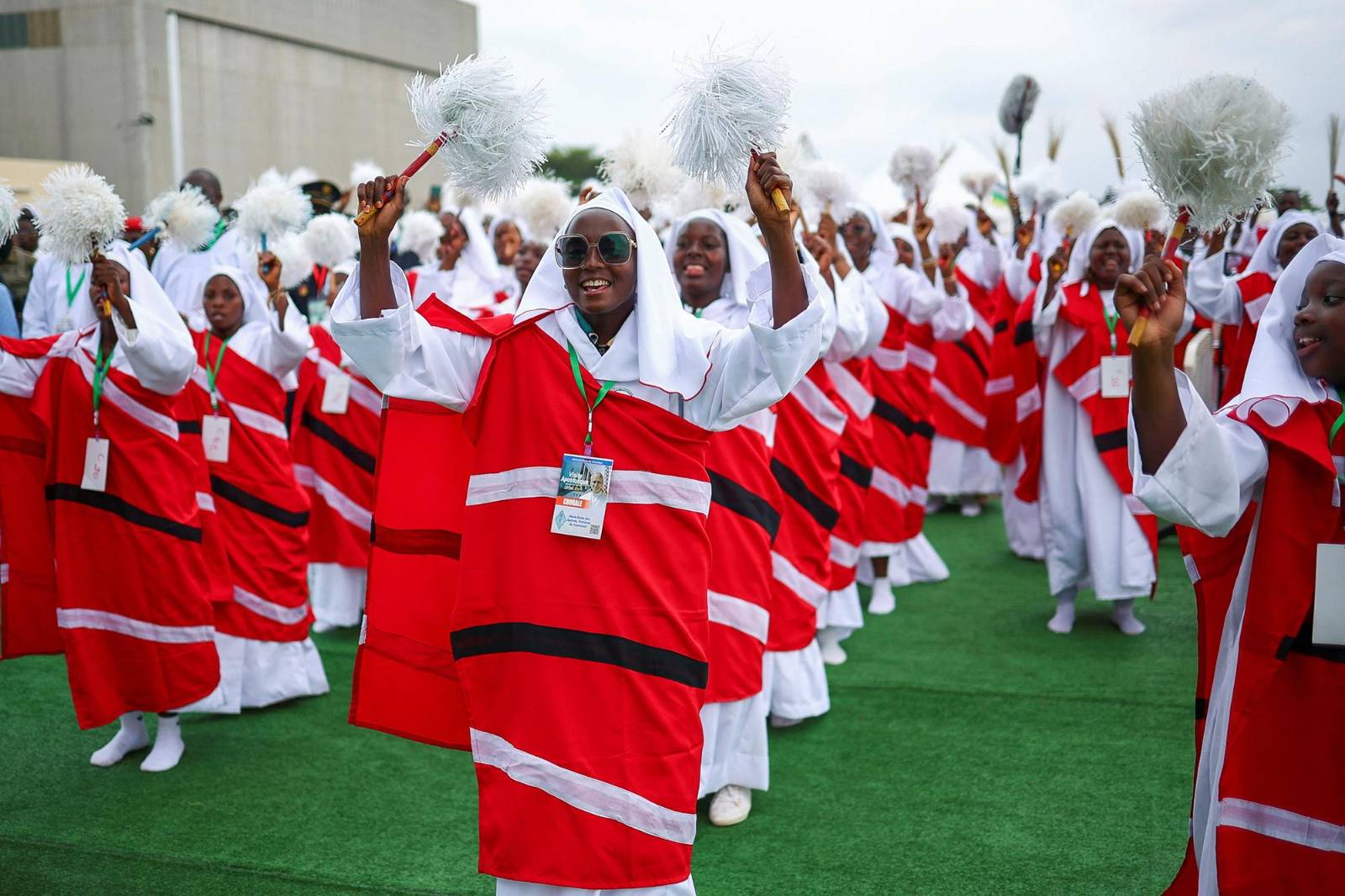
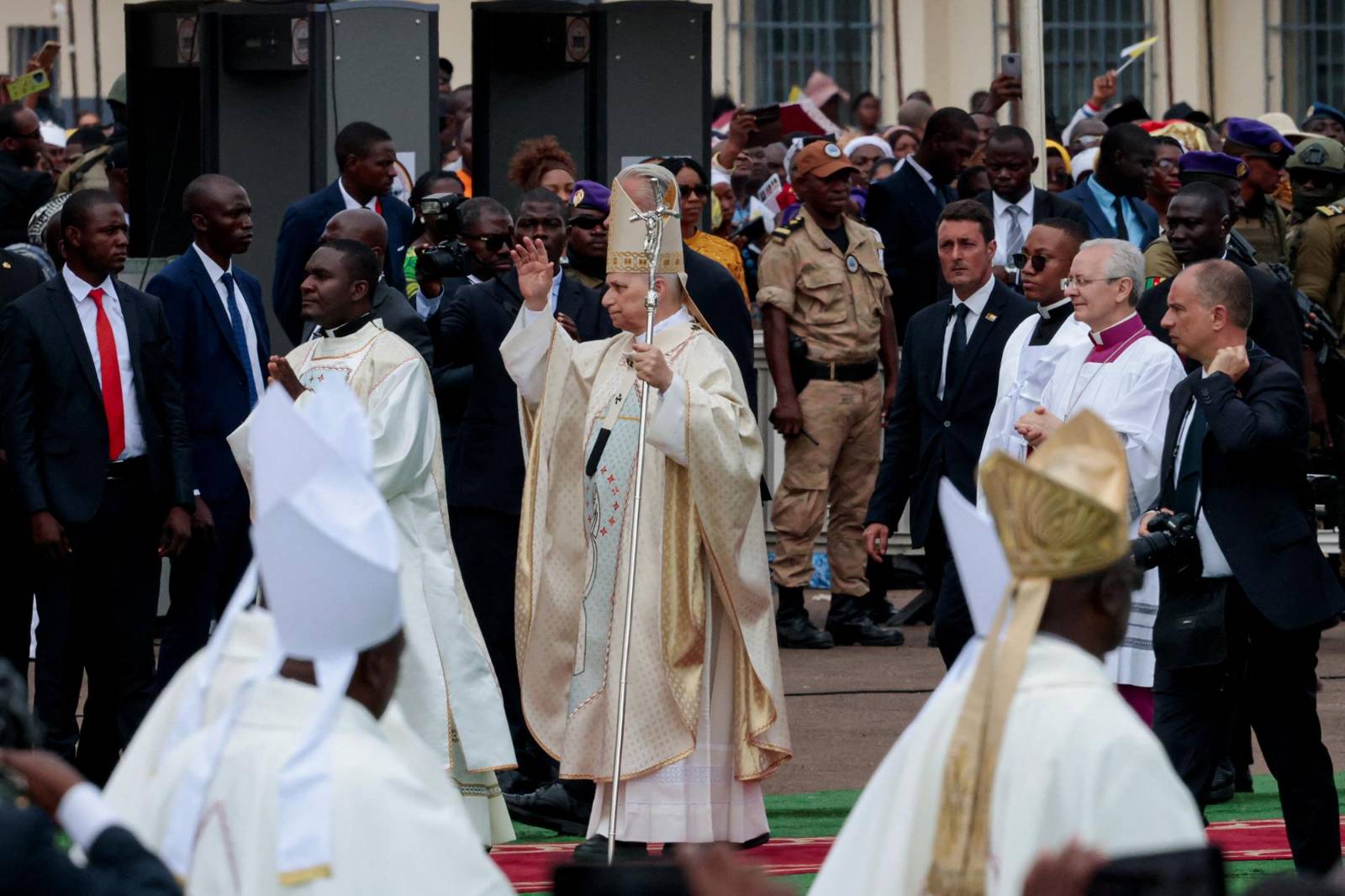
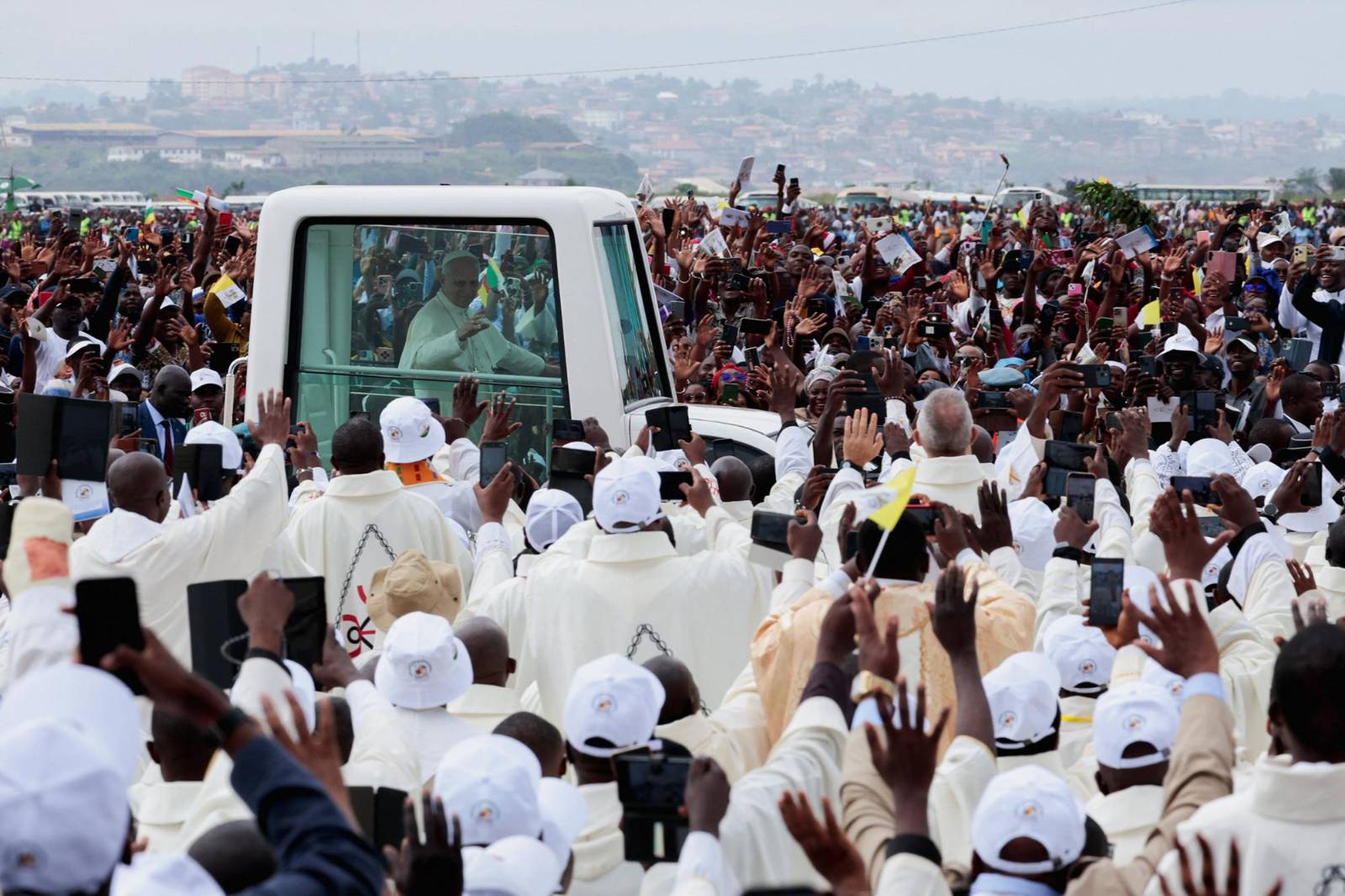
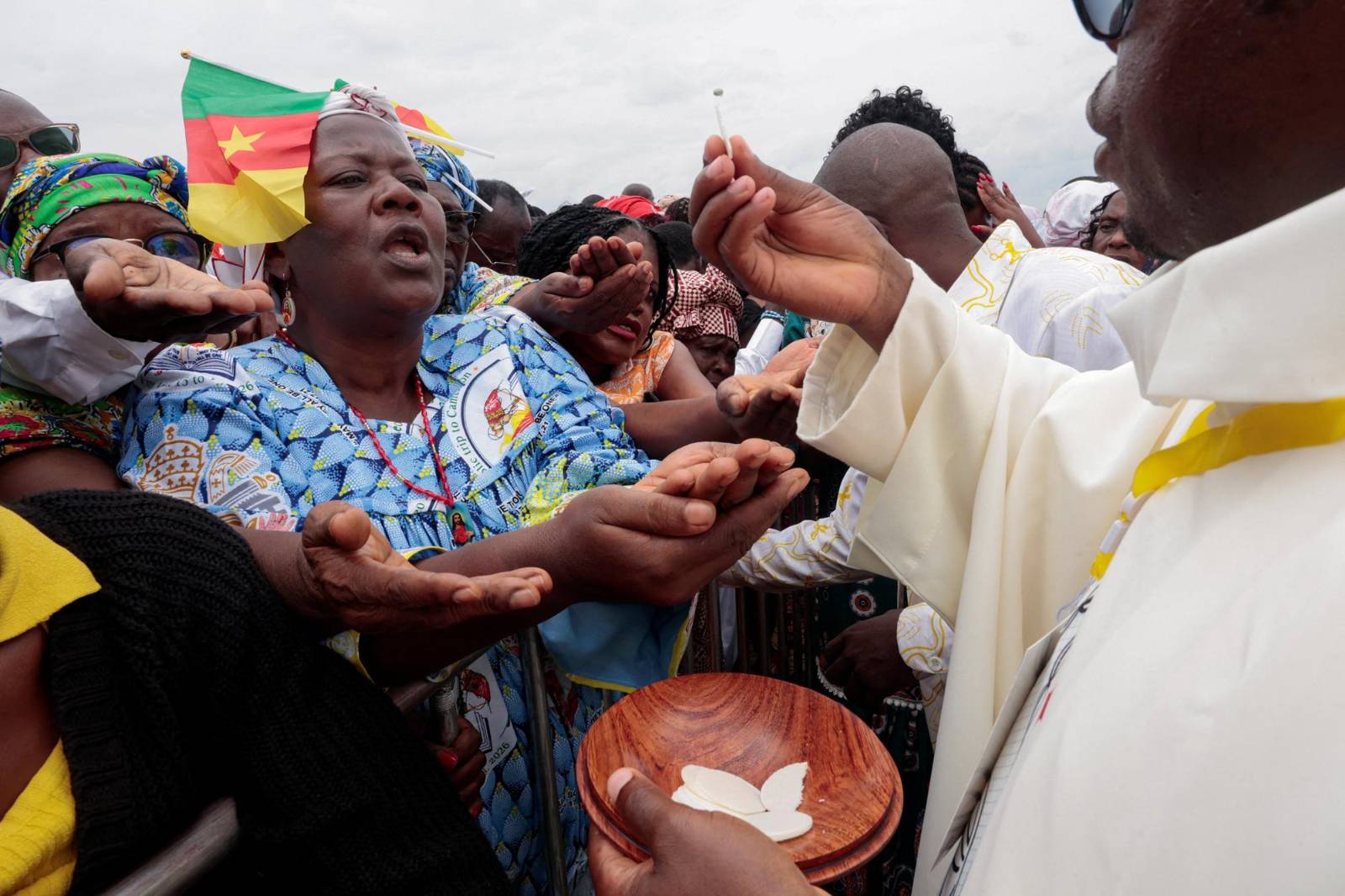
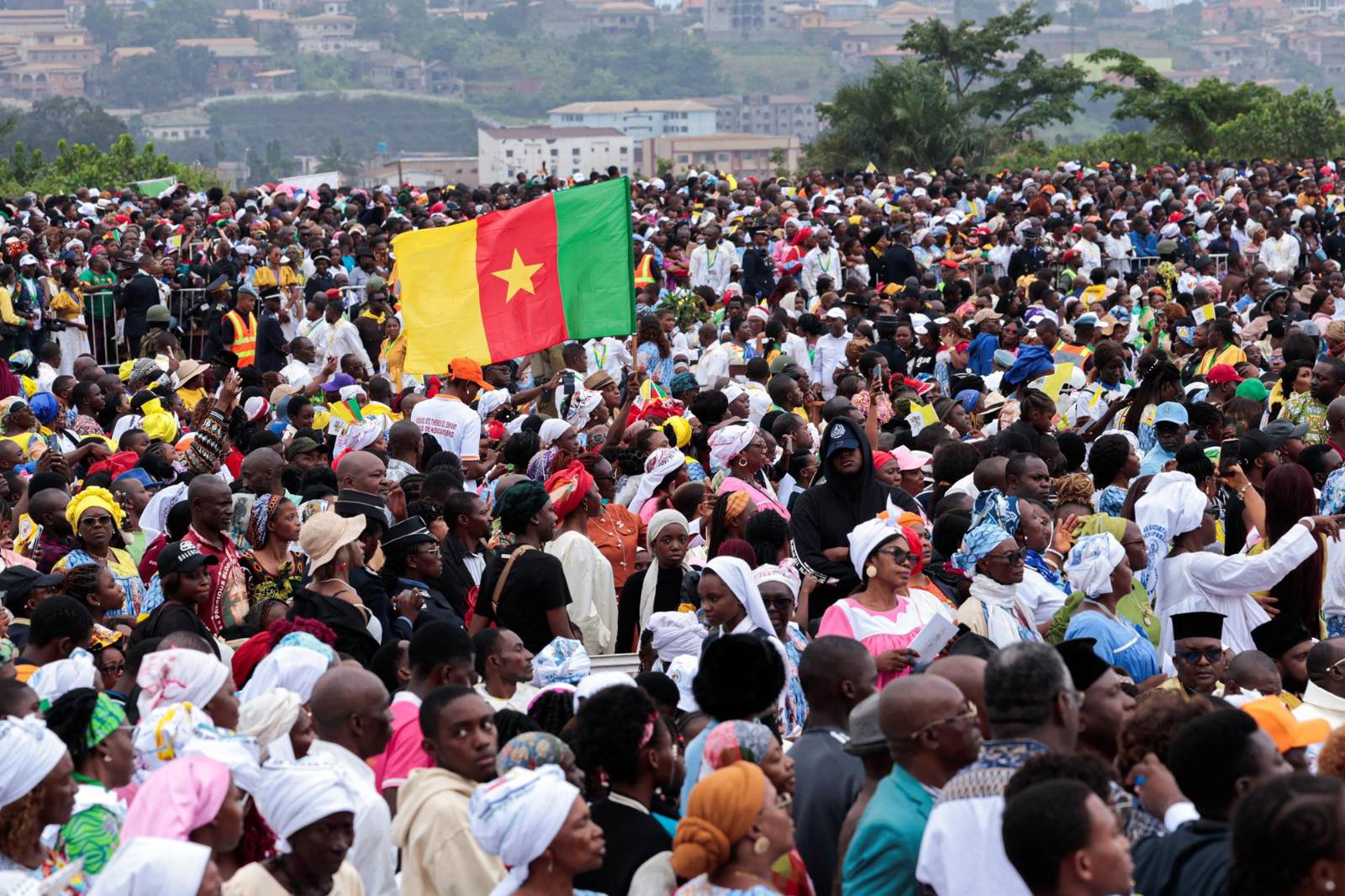
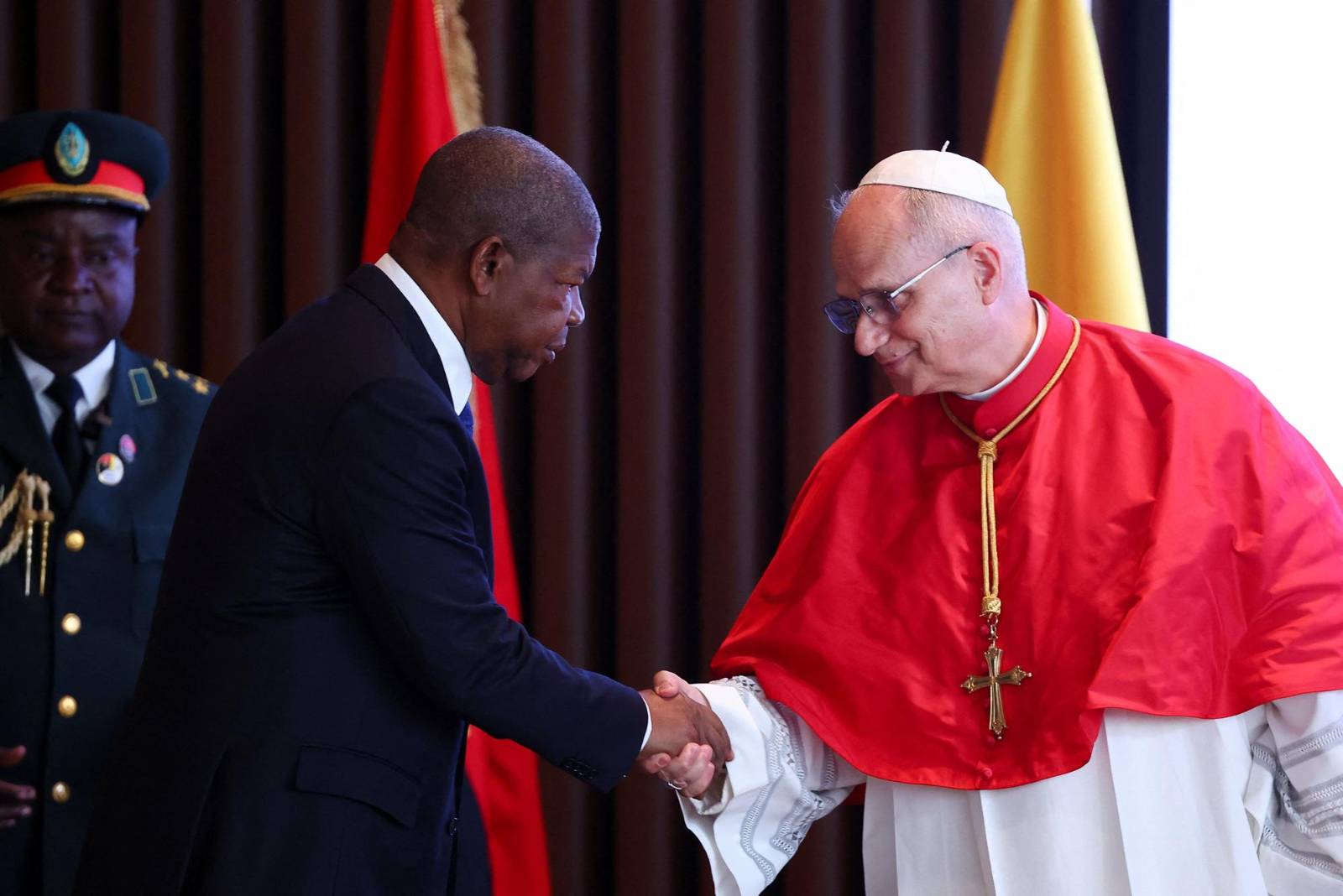
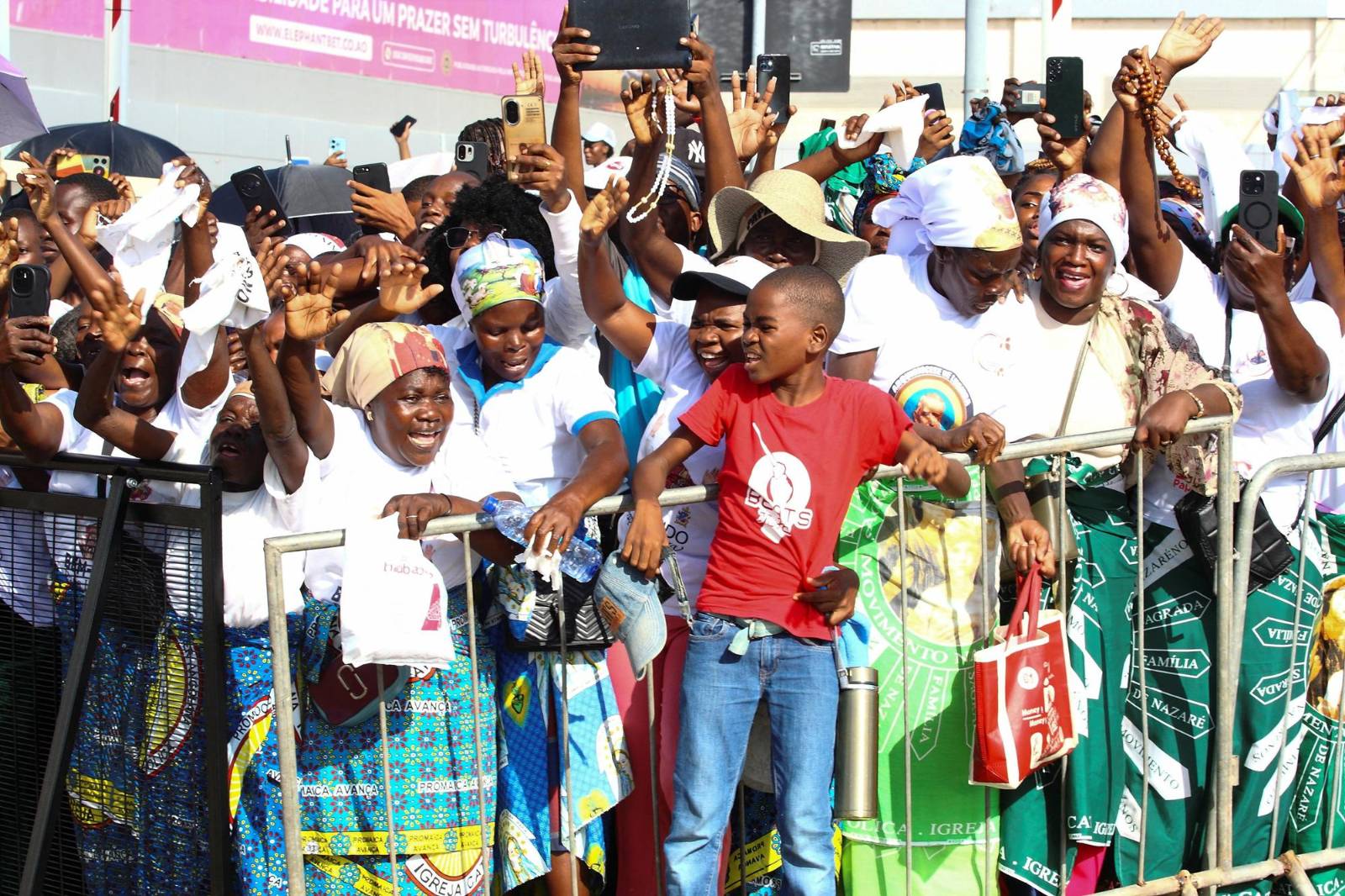
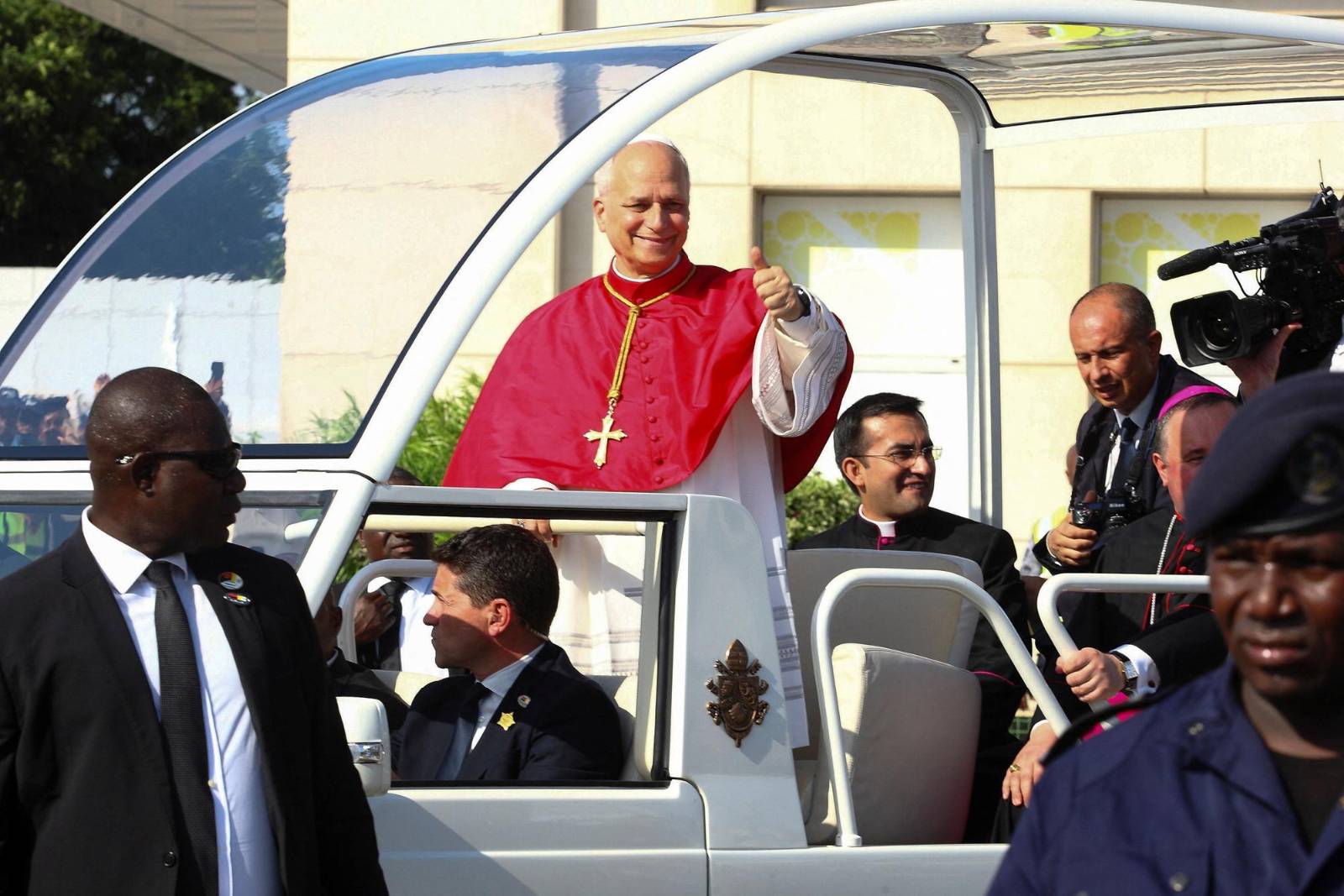
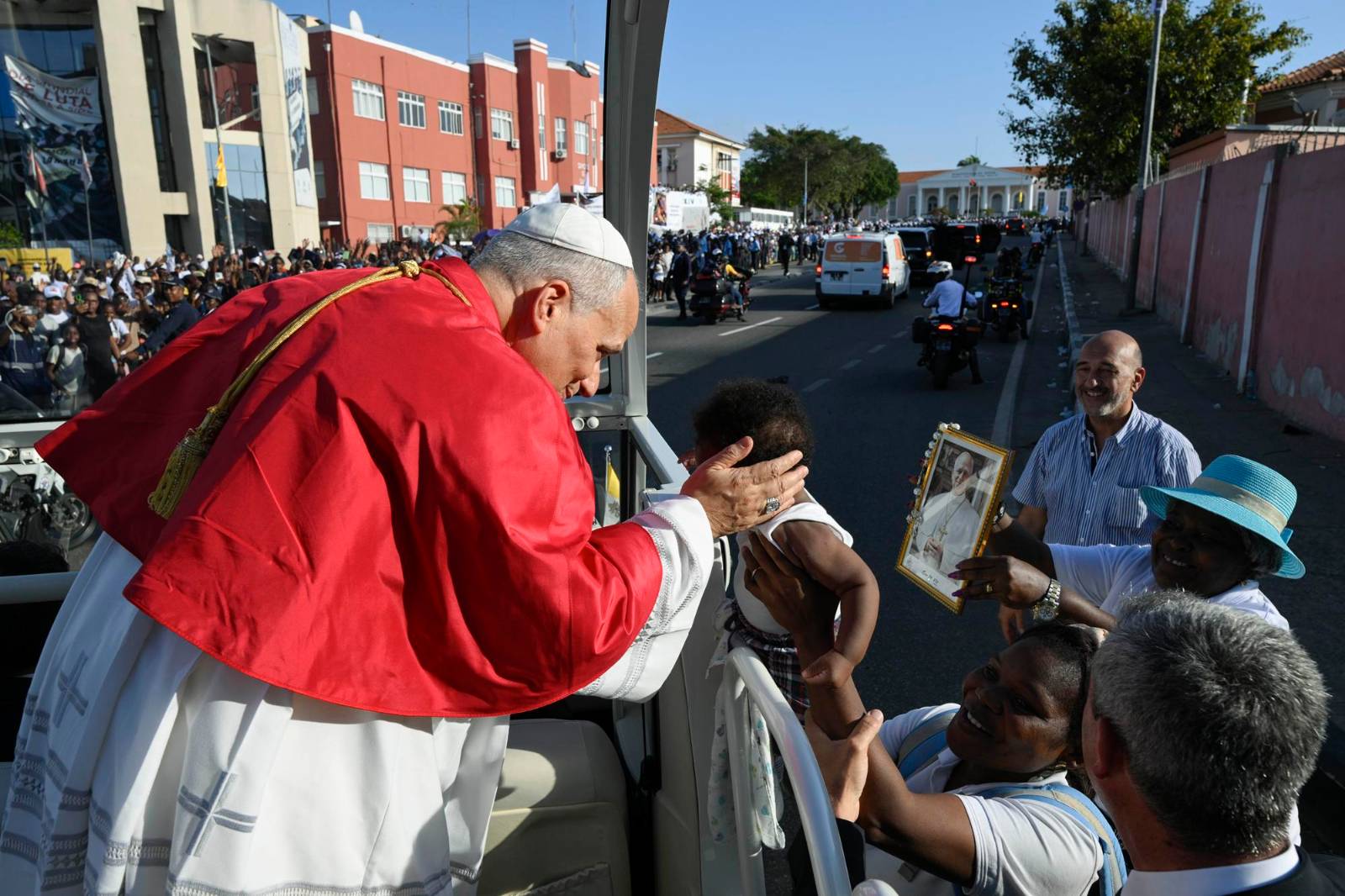
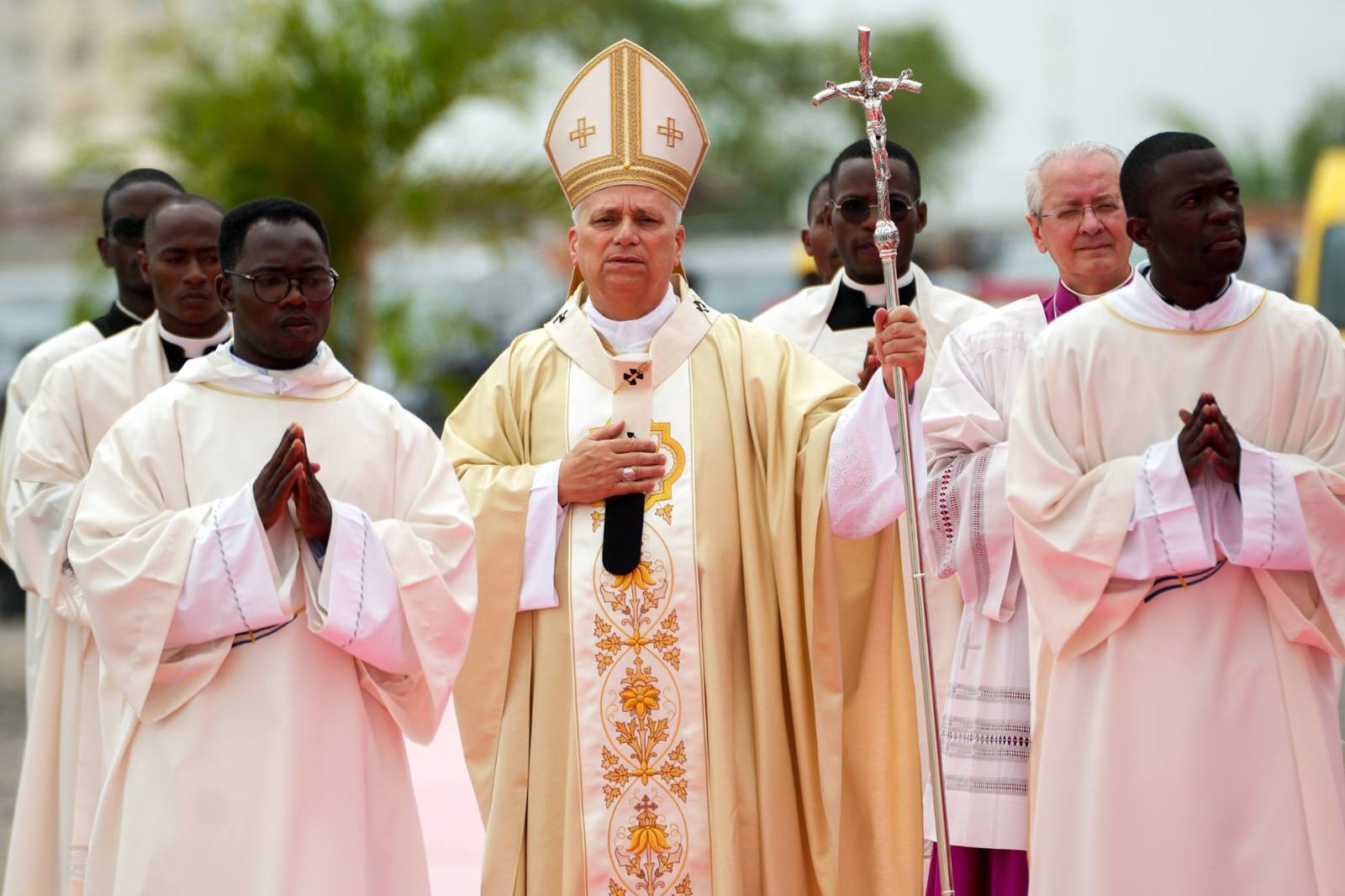
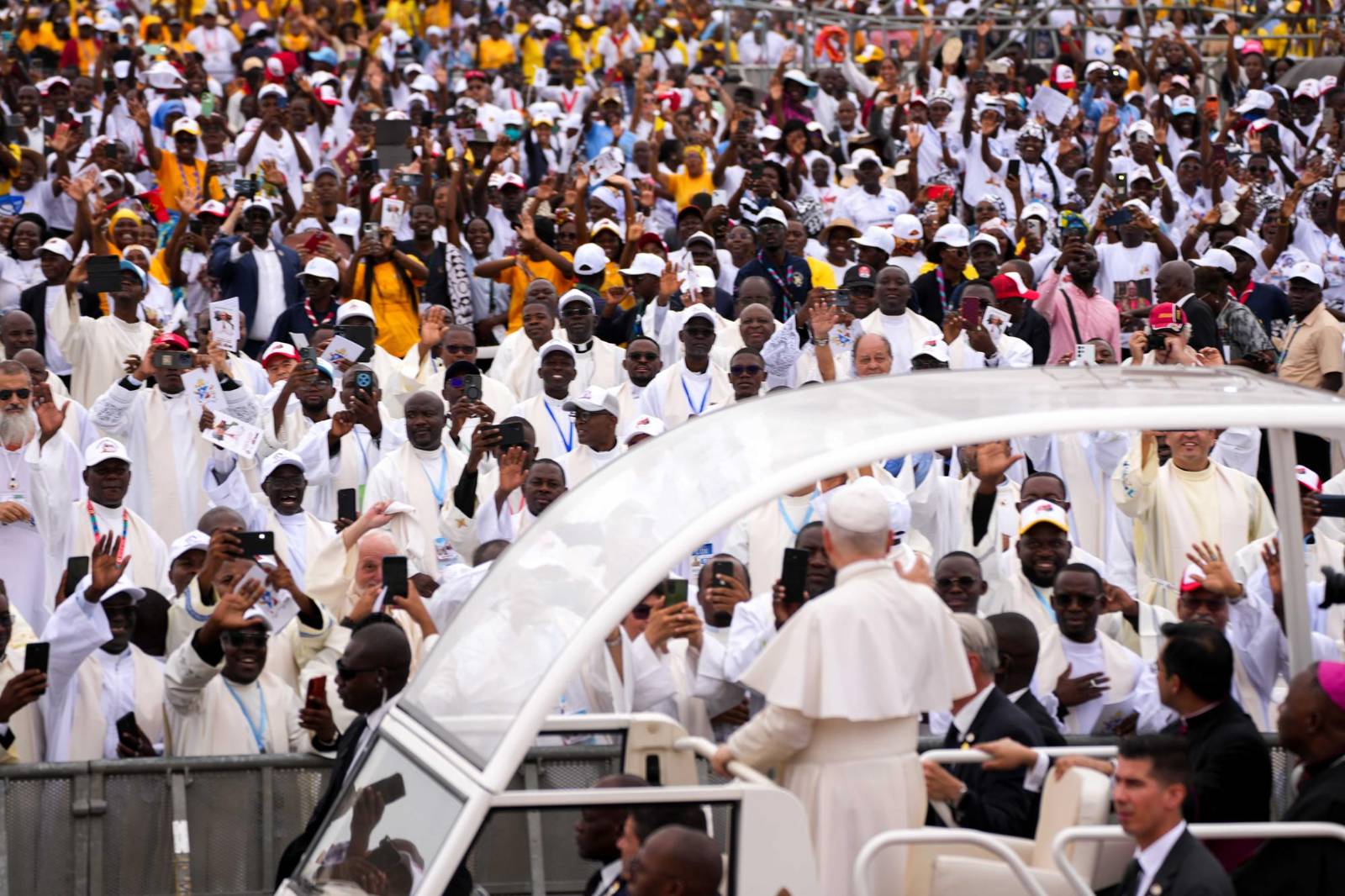
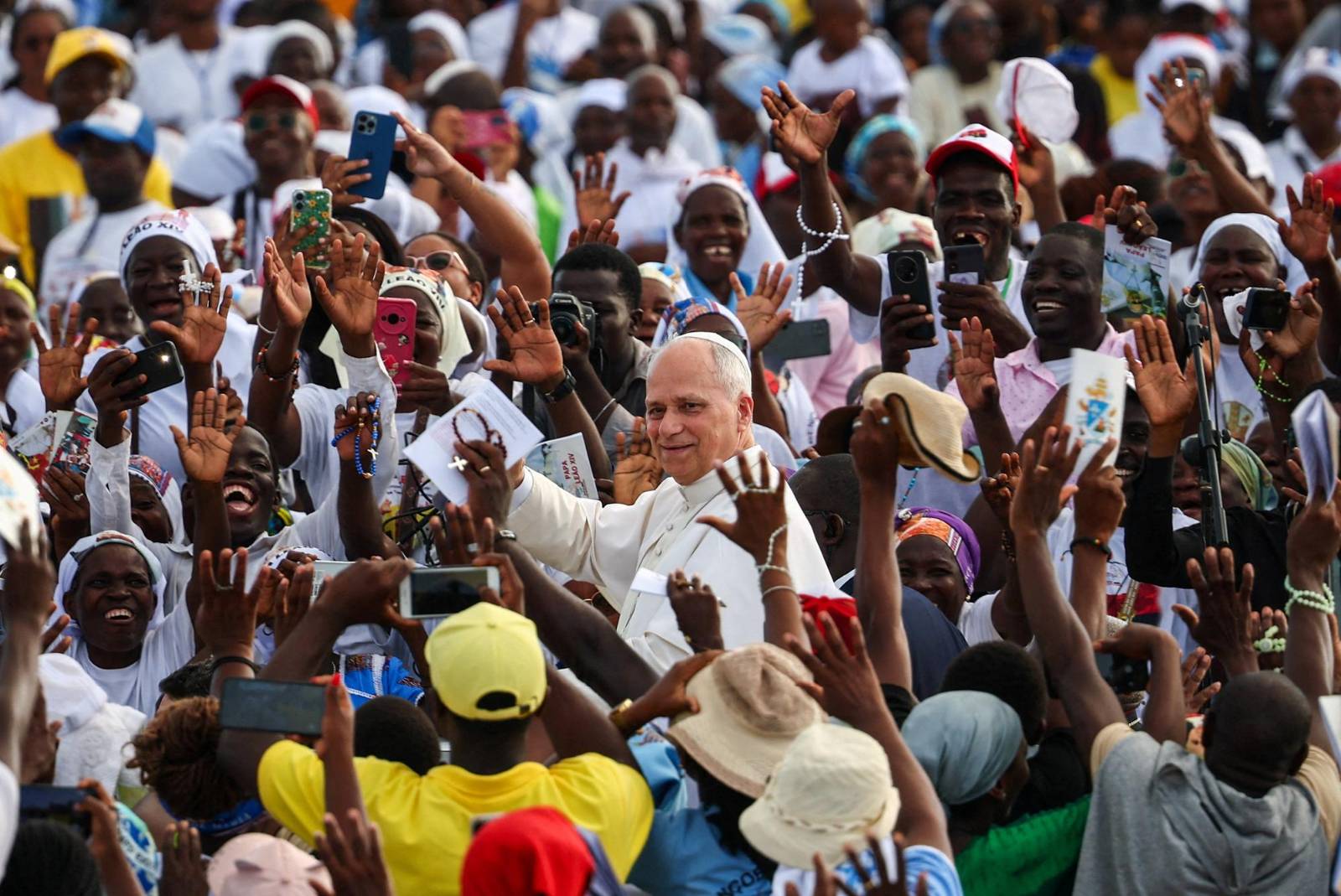
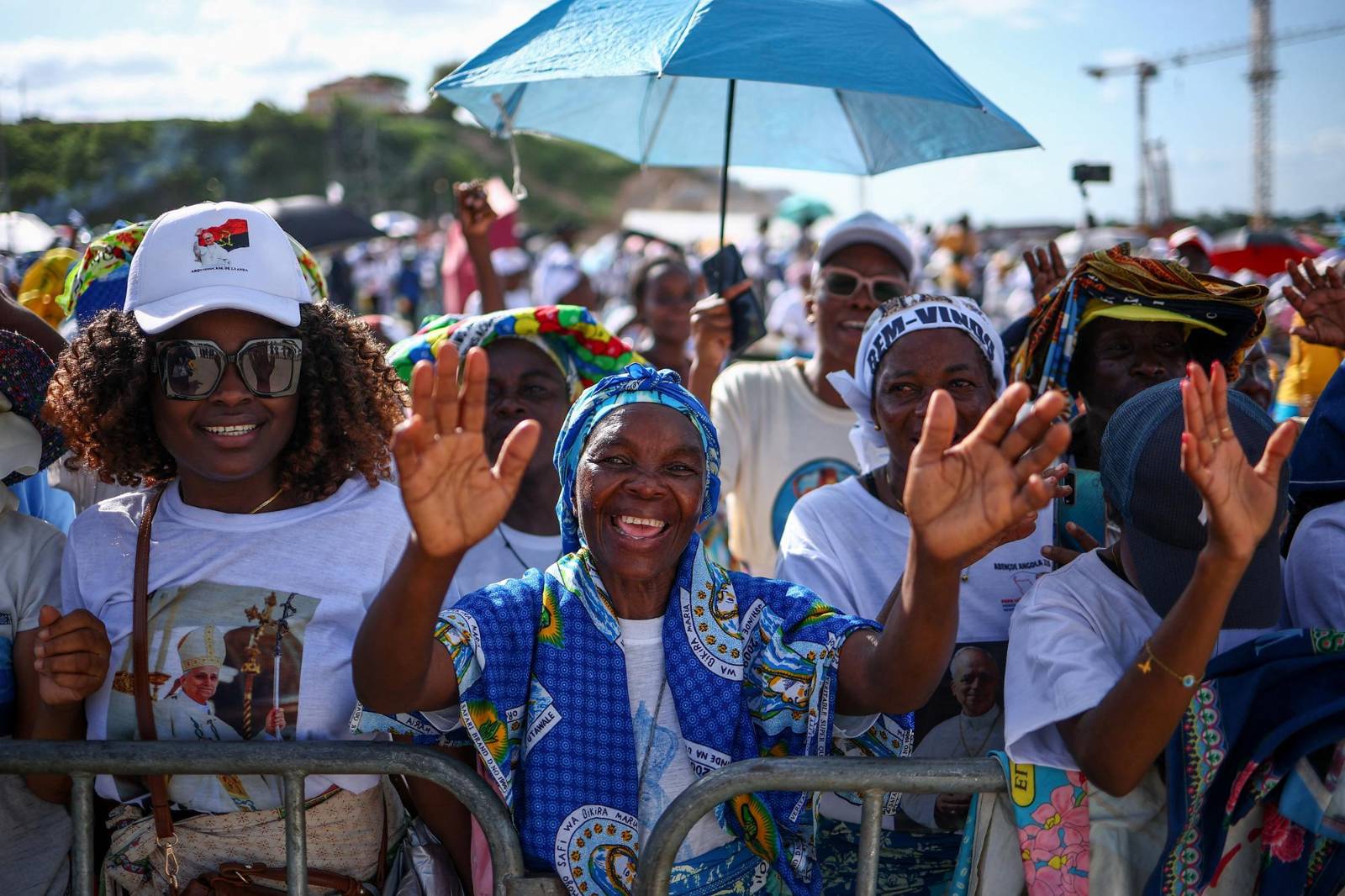


SAURIMO, Angola — Pope Leo XIV traveled to the heart of Angola's diamond country April 20, urging the tens of thousands gathered at the papal Mass in the country's northeast to trust that "Christ hears the cry of the people" in the face of evil.
On the eighth day of Pope Leo's apostolic journey to Africa, the pope flew some 500 miles east of the Angolan capital Luanda to Saurimo, a city located near the country's border with the Democratic Republic of the Congo and about 20 miles from Angola's largest diamond mine, Catoca.
Amid the exploitation long associated with Angola's diamond industry, the pope delivered a homily in Portuguese that did not shy away from the social realities of a region long marked by resource extraction and inequality.
"We can see today how the hope of many people is frustrated by violence, exploited by the overbearing and defrauded by the rich," Pope Leo said in his homily. "Consequently, when injustice corrupts hearts, the bread of all becomes the possession of a few."
"In the face of these evils, Christ hears the cry of the people and renews our history by lifting us up from every fall, comforting us in every suffering and encouraging us in our mission," the pope said.
Local authorities estimated approximately 40,000 people gathered on the Saurimo esplanade under the hot sun for the Mass, with an additional 20,000 participating from beyond the boundaries of the liturgy's secured area.
In Christ, the pope told the crowd, "the proclamation of our resurrection finds its voice."
"Just as the Eucharist is the living bread that he never ceases to give us, so too his history knows no end. For this reason, the Risen One opens up our lives through the power of his Spirit and removes the end of our history, that is death," the pope said.
"We did not come into the world to die. We were not born to become slaves either to the corruption of the flesh or that of the soul: Every form of oppression, violence, exploitation and dishonesty negates the resurrection of Christ, the supreme gift of our freedom," he added.
In his homily, the pope warned against replacing genuine faith with "superstitious practices, in which God becomes an idol that is sought only when it is advantageous to us and only for as long as it is" and "even the most beautiful gifts of the Lord, which are always for the care of his people, become a pretext, a prize or a bargaining chip, and are misinterpreted by those who receive them."
Pope Leo said that there are "erroneous motives for seeking Christ, particularly when he is considered to be a guru or a good luck charm," but quickly added that the Lord "does not reject this insincere search, but encourages its conversion."
"Christ calls us to freedom," the pope proclaimed to the Angolan Catholics.
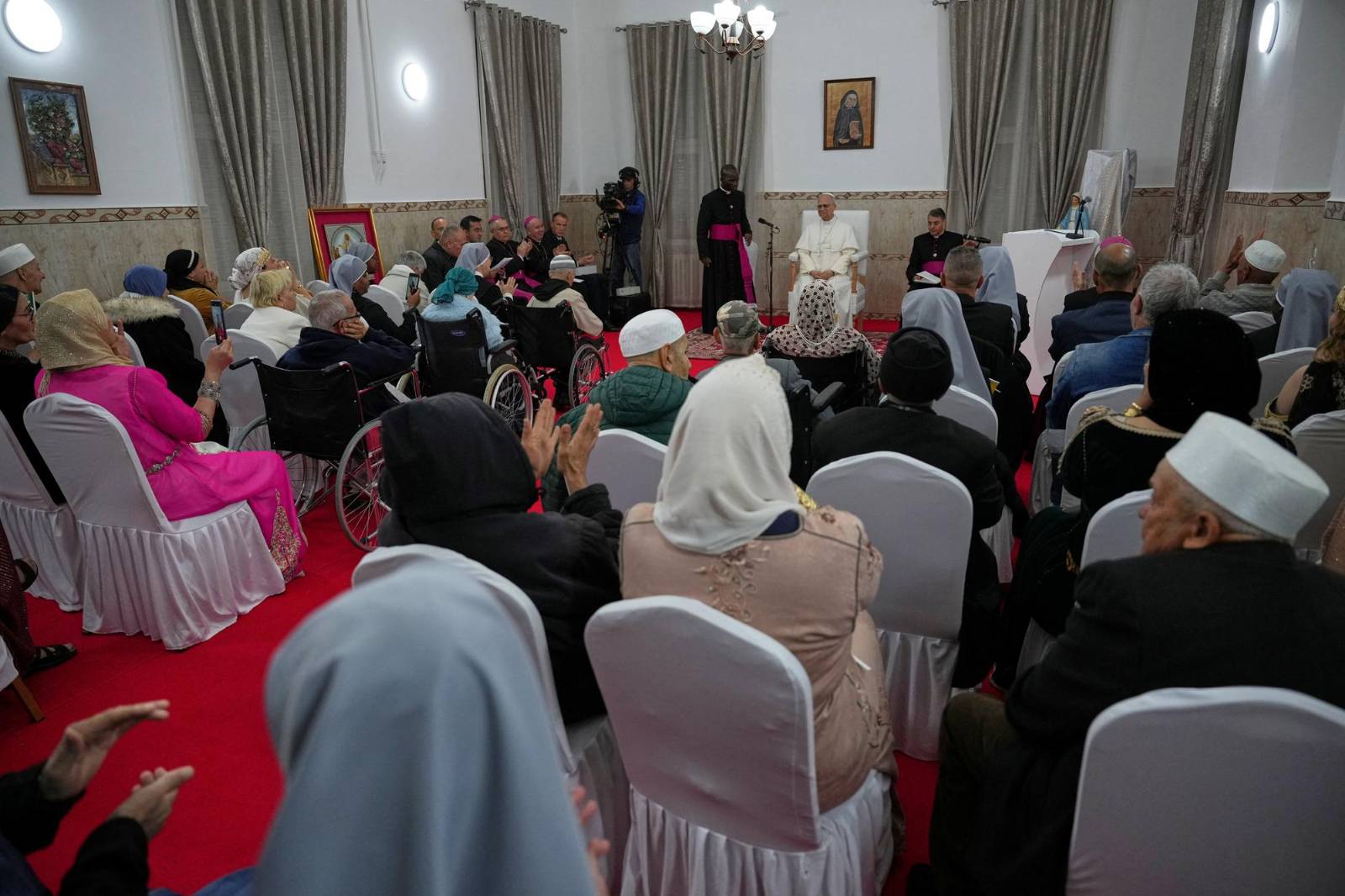
Before the Mass, Pope Leo visited a nursing home that is home to 74 elderly residents ranging in age from 60 to 93. Many arrive in poor physical condition, brought by police who intervene after family members abandon them, often accusing them of witchcraft.
Staff at the home have noted that such accusations are increasingly being used as a pretext to avoid the burden of caring for aging relatives. One caregiver at the residence told Vatican News she saw the pope's visit as "an immense lesson" for a society she believes must rediscover the value of its elders.
The visit was marked by moments of joy. Several residents danced in celebration of the pope's presence, including one elderly man who danced using a cane.
Pope Leo addressed the staff and residents directly, calling the care of the most vulnerable a measure of a society's moral health.
"The care of the weakest is a very important sign of the quality of the social life of a nation," the pope said.
He added: "Let us not forget that the elderly are not only in need of assistance, but first and foremost need to be listened to, because they preserve the wisdom of a people."
— Courtney Mares, OSV News
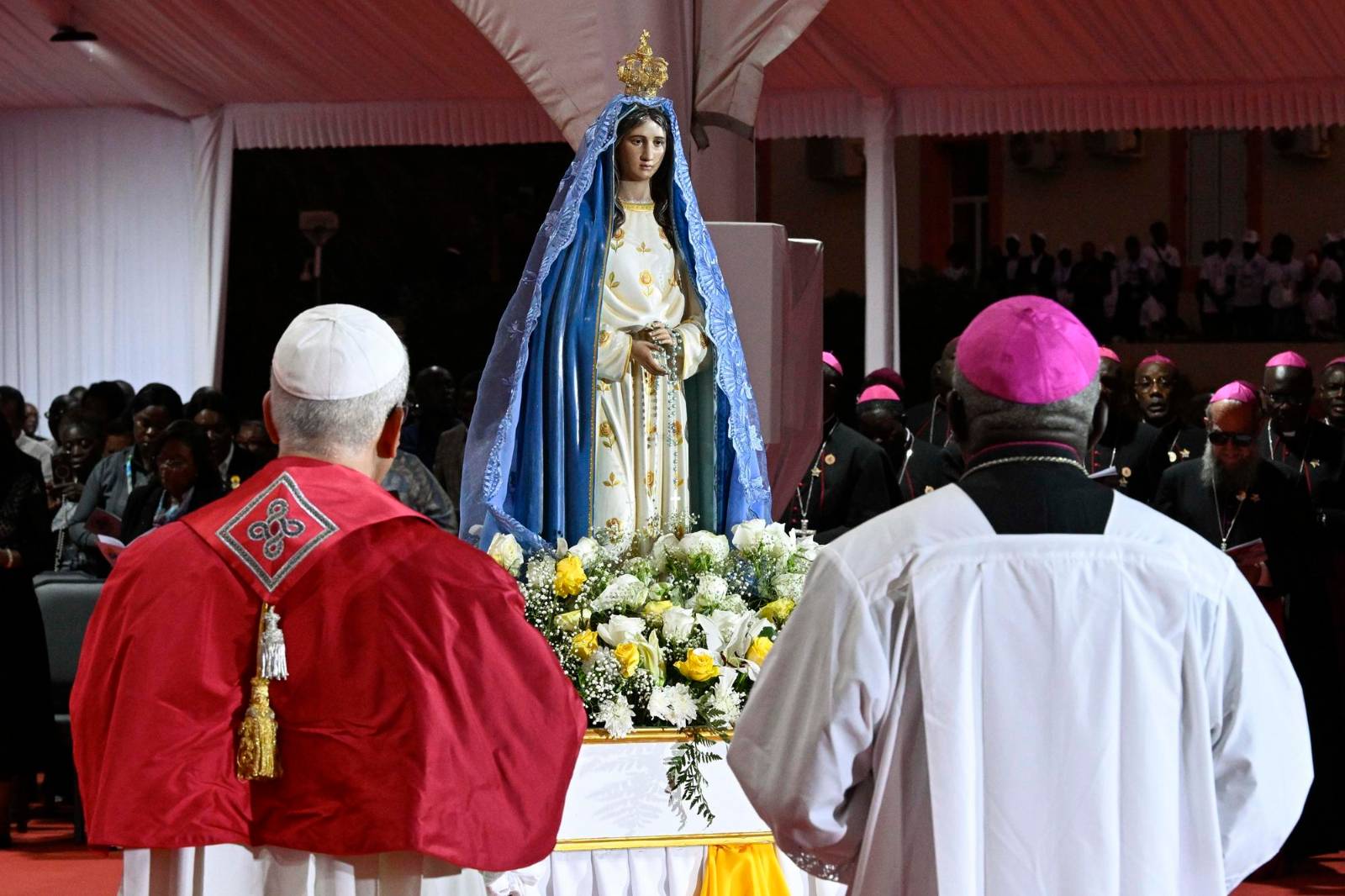
'The heart of the Church' is 'alive and beating': Pope Leo XIV leads rosary at beloved Muxima Marian shrine in Angola
MUXIMA, Angola — Pope Leo XIV led tens of thousands of Angolan Catholics in praying the rosary April 19 at southern Africa's most visited Catholic shrine, calling the pilgrimage site a place where "the heart of the Church" is "alive and beating."
The pope traveled by helicopter from Angola's capital, Luanda, to the Sanctuary of Mama Muxima, which means "Mother of the Heart" in the local Kimbundu language. Pope Leo made the pilgrimage to the beloved Marian shrine situated on the banks of the Kwanza River after celebrating morning Mass for roughly 100,000 faithful in Kilamba, a district near the Angolan capital city of Luanda.
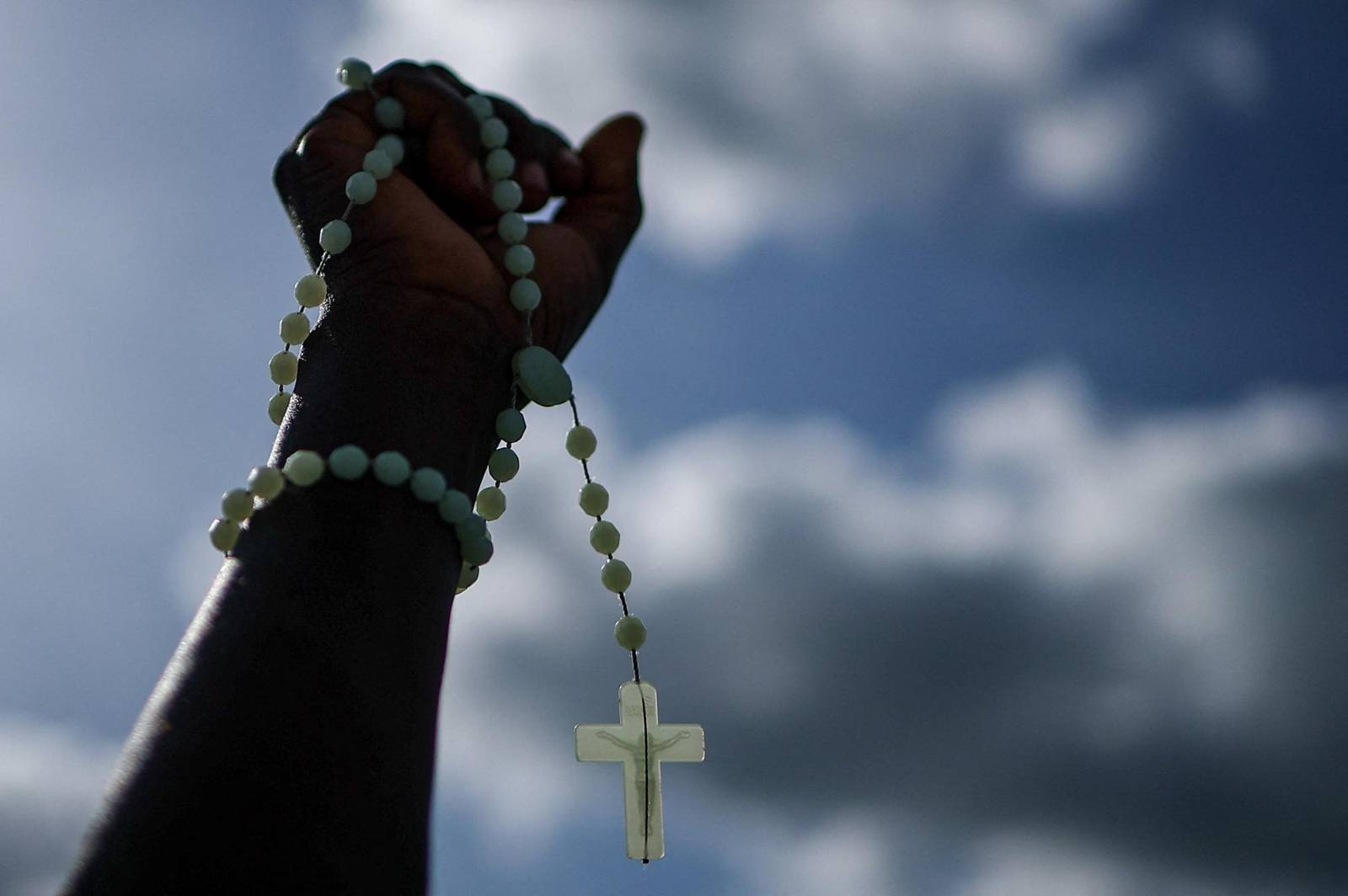
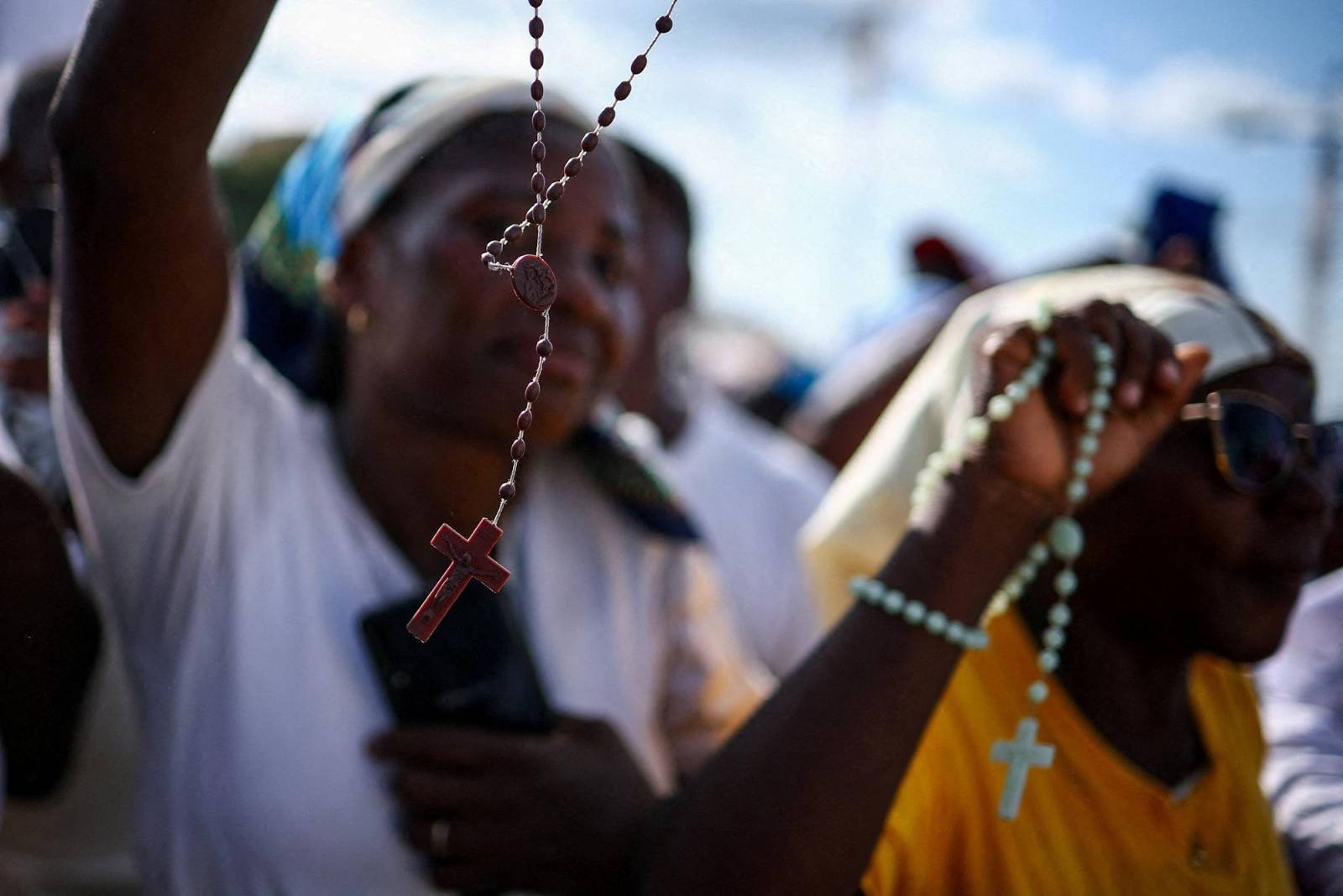
Local authorities estimated approximately 30,000 pilgrims gathered on the Muxima shrine's esplanade for the recitation of the rosary, with even more gathered in surrounding areas. Many had camped at the site for two or three days in anticipation of the papal visit, enduring 90-degree heat in the hours before his arrival. The crowd greeted the pope with singing and dancing as he moved through the grounds in a golf cart.
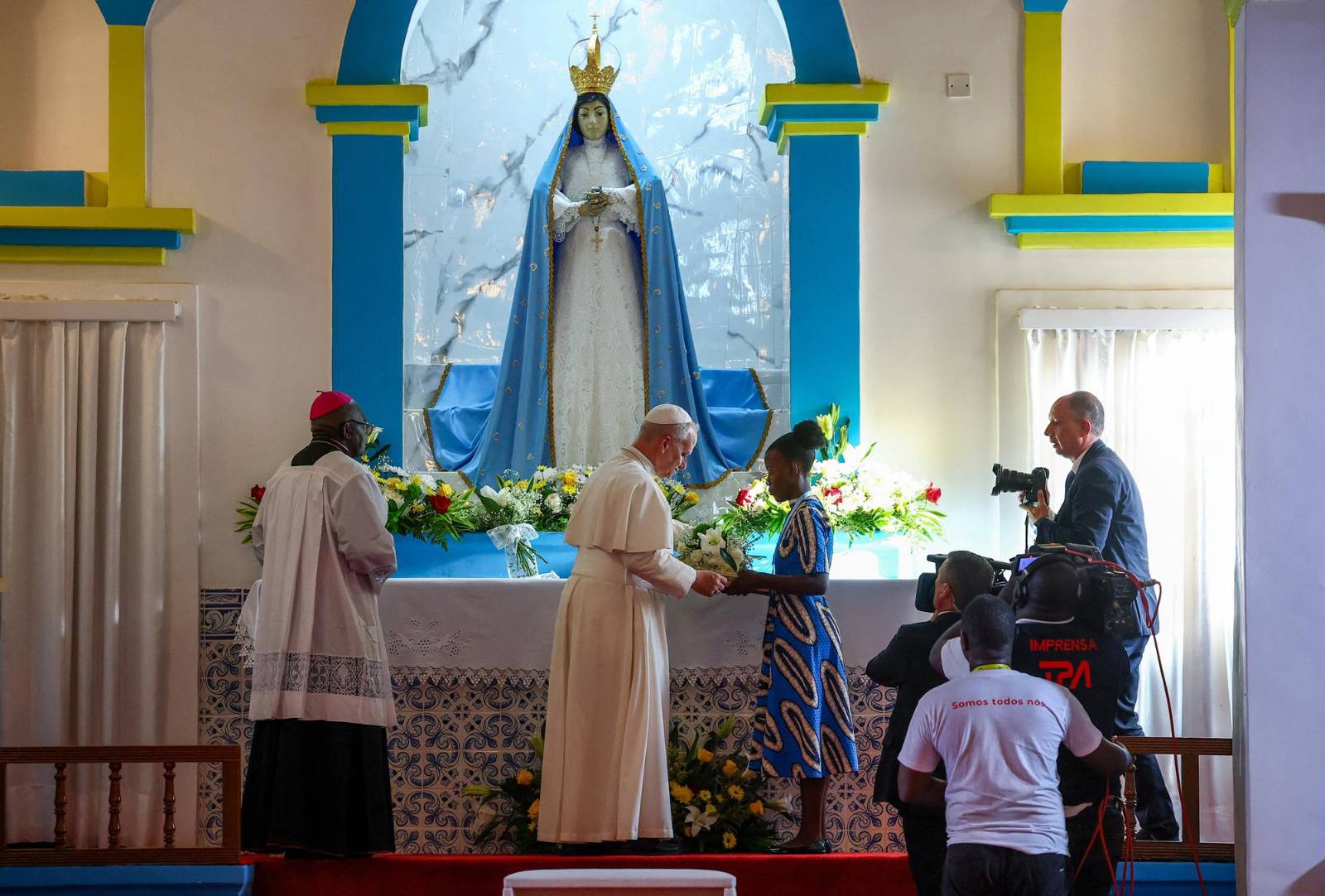
Upon arrival, Pope Leo entered the historic church for a moment of private prayer, which was broadcast on large screens for the crowd, who cheered loudly when they saw Pope Leo kneel before Our Lady, before presiding over the recitation of the glorious mysteries of the rosary and the Litany of Loreto.
As the sun set, casting orange light across the sky, the crowd joined the pope in singing the Salve Regina.
"We are in a sanctuary where, for centuries, many men and women have prayed in times of joy and also in moments of sorrow and great suffering in the history of this country," the pope said, speaking in Portuguese. "For a long time now, Mama Muxima has quietly worked to keep the heart of the Church alive and beating."
The church, formally dedicated to Our Lady of the Immaculate Conception, was first established in 1599 during the era of Portuguese colonial Angola. More than 1 million pilgrims visit the shrine during its largest pilgrimage alone, which occurs each year between Aug. 31 and Sept. 1.
Pope Leo reflected on how the faithful had over the centuries spontaneously renamed the shrine "Mama Muxima," calling it "a beautiful title, which makes us reflect on the heart of Mary: a pure and wise heart, capable of treasuring and pondering the extraordinary events in the life of the Son of God."
The pope also spoke one line in the local Kimbundu language, quoting a hymn the crowd had sung, "Mama Muxima, tueza kokué, Mama Muxima, tutambululé," meaning "Mother of the Heart, we come to you to offer you everything."
Pope Leo underlined that praying the rosary commits us to loving every person with a mother's heart and to "dedicating ourselves to the good of one another, especially the poorest."
"We strive without measure so that no one may lack love ... that the hungry may have enough to eat, that the sick may receive the necessary care, that children may be guaranteed a proper education, and that the elderly may live their later years in peace," he said.
Mirian Dos Santos, 25, of Luanda, said she had kept an all-night vigil at the shrine the evening before the pope's arrival.
"We are very happy to receive our dear pope here," she told OSV News. "Mama Muxima is our heart. Mama Muxima is the first Lady that we go to, we call her, we ask for her intercession."
Dinis Mayomona, a seminarian who attended the pope's Mass in Kilamba earlier in the day, described the shrine as a place of total surrender.
"We surrender all our suffering, all our dreams ... because we have got many problems here," he said, "and once we surrender our suffering in the hands of Mama Muxima, we know perfectly that she will solve our problems because she is beside her Son."
The shrine carries a complex and painful history. For nearly 300 years, the site along the Kwanza River served as a waypoint for enslaved Africans being marched to the Atlantic Coast for transport to the Americas. It is also intertwined with the legacy of Queen Nzinga (1582–1663), ruler of the kingdoms of Ndongo and Matamba in present-day Angola. Nzinga waged a 30-year war against Portuguese colonial forces, significantly disrupting the transatlantic slave trade, and eventually returned to the Catholic faith, signing a peace treaty with Portugal in 1656.
Angolan Catholic radio journalist Cornelio Bento, traveling with the Vatican press corps, told OSV News the shrine holds a special place in Angolan Catholic life, particularly for women hoping to conceive.
"If you go to Muxima Shrine, you will listen to a lot of history of miracles," he said.
Pope Leo also commended a construction project currently underway to build a new, larger shrine at the site -- a project that has been years in the making.
Following the rosary vigil, the pope returned by helicopter to Luanda, where he was to spend the night before flying Monday to Saurimo, in Angola's eastern Lunda Sul province.
— Courtney Mares, OSV News
Pope Leo arrives in Angola, calls for fostering 'just model of coexistence'
LUANDA, Angola — Pope Leo XIV touched down in the Angolan capital of Luanda on Saturday, April 18, beginning a three-day visit to the southern African country that is home to 20 million Catholics.
The pope's visit comes as Angola continues to grapple with deep social challenges. Despite robust economic growth fueled by oil and diamond revenues, the country ranks among the world's lowest in life expectancy and among the highest in infant mortality. Inequality and corruption remain persistent concerns in the country still healing from a decades-long civil war.
"Dear friends, I have mentioned the material riches upon which powerful interests lay their claim, even within your own country. How much suffering, how many deaths, how many social and environmental disasters are brought about by this logic of extractivism," the pope said in his first speech to Angola's government authorities.
Pope Leo urged Angola's wealthy political leaders to "place the common good before every particular interest, never confusing your own part with the whole."
"The Catholic Church, whose service to the country I know you greatly esteem, desires to be leaven in the dough and to foster the growth of a just model of coexistence, free from the various forms of slavery imposed by the elite who are laden with much wealth but false joys," he said.
The scars of Angola's brutal civil war, which killed between 500,000 and 800,000 people between 1975 and 2002, have not fully healed. Land mines still litter the countryside, and Bishop Vicente Sanombo of the Diocese of Kuito-Bié said he hopes the papal visit will serve as a catalyst for continued national healing, an aspiration expressed in the motto for the papal visit, "Pope Leo XIV, pilgrim of hope, reconciliation, and peace, blesses Angola."
"Your people have suffered time and again when this harmony was violated by the arrogance of a few. They bear the scars not only of material exploitation, but also of the presumption of imposing an idea upon others," Pope Leo said. "Africa urgently needs to overcome situations and dynamics of conflict and enmity that tear apart the social and political fabric of many countries, fostering poverty and exclusion."
Angola's Catholic roots run deep. Catholicism arrived with Portuguese missionaries in 1491, and the country remained under Portuguese colonial rule until 1975. According to the latest Vatican statistics, nearly 58% of the population identifies as Catholic, with 1,511 priests serving more than 20 million faithful, a ratio of more than 13,000 Catholics per priest.
"True joy frees us from such alienation -- joy which faith rightly recognizes as a gift of the Holy Spirit," the pope said. "Let us therefore examine our own hearts, dear friends, because without joy there is no renewal; without interiority there is no liberation; without encounter there is no politics; without the other there is no justice."
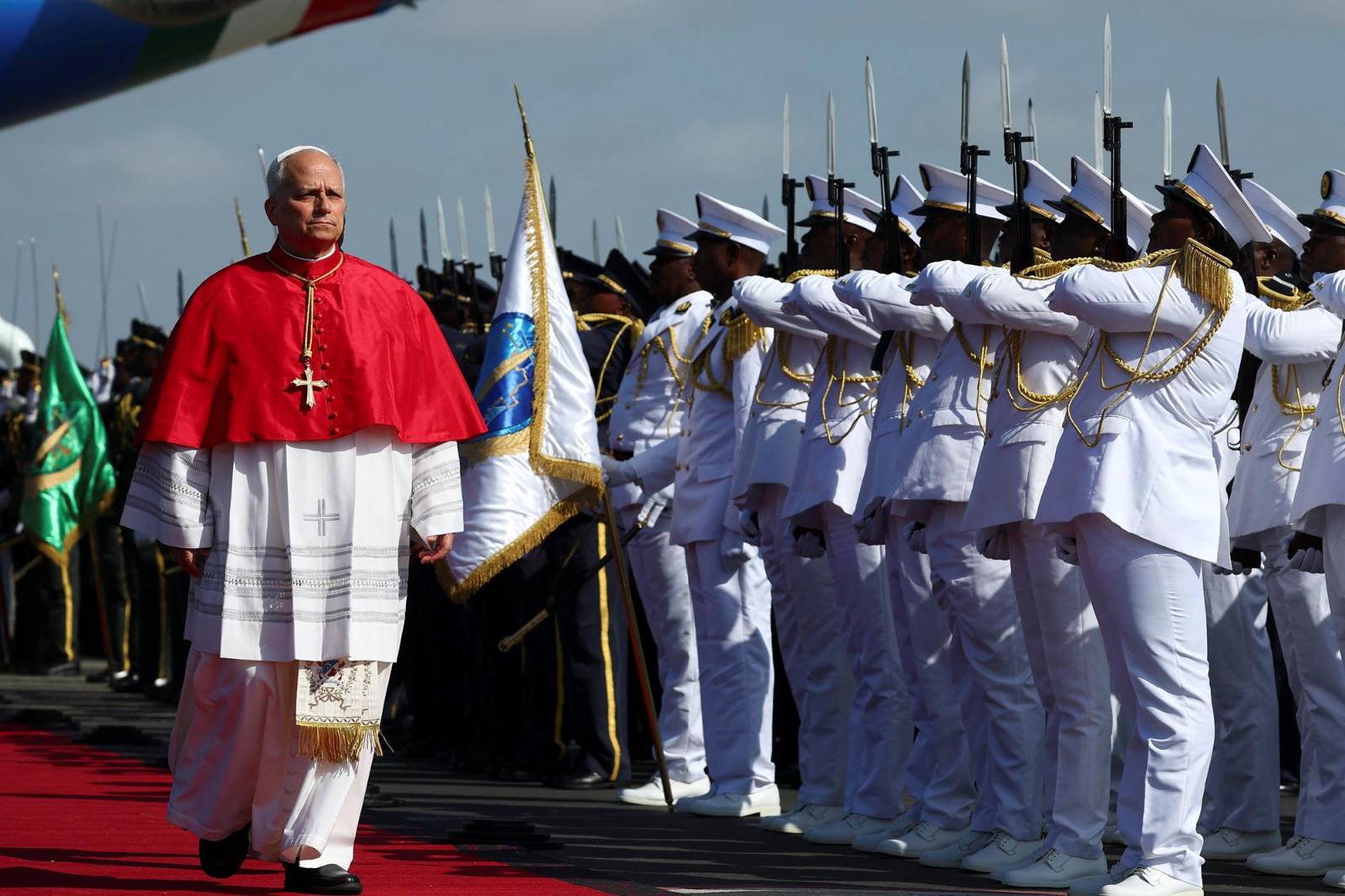
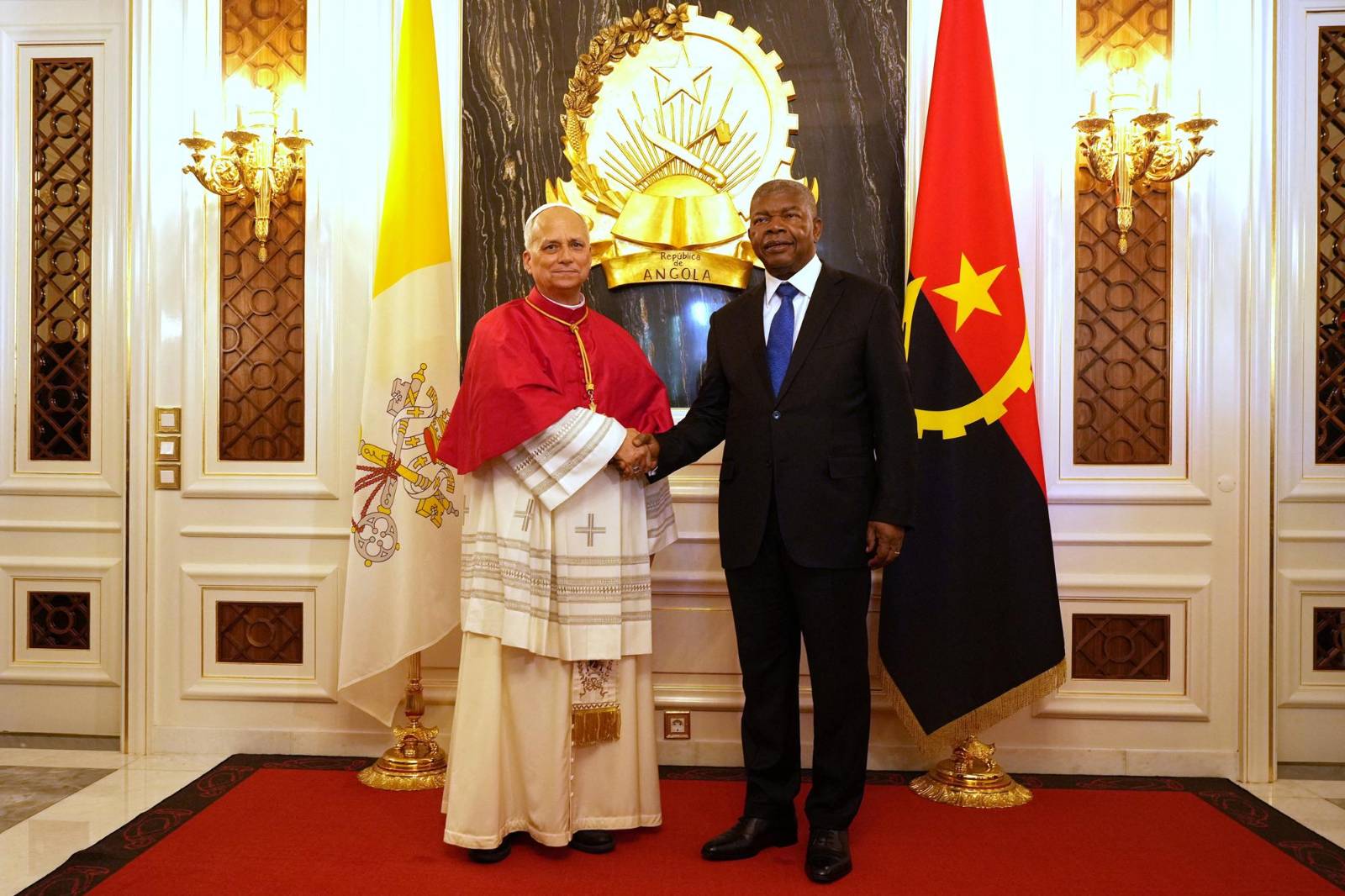
The papal plane, a chartered ITA Airways jet, landed just before 4 p.m. on Saturday afternoon after a two-hour flight from Yaoundé, Cameroon. At the airport, the pope was welcomed by Angola's President João Manuel Gonçalves Lourenço.
Aboard the papal plane, Pope Leo spoke to journalists, pushing back against the media "narrative" that has pitted him against President Donald Trump since the start of his 11-day apostolic journey to Africa.
"I primarily come to Africa as a pastor, as the head of the Catholic Church to be with and to celebrate with, to encourage and accompany, all of the Catholics throughout Africa," he told the press corps.
Pope Leo traveled from the airport to the presidential palace in an open air popemobile, greeting crowds who lined the streets. He then met privately with President Lourenço, who is currently serving his second term as president since 2017.
The papal visit to Angola, scheduled to run through April 21, will take Pope Leo beyond the capital city. He is set to travel to the pilgrimage site of Our Lady of Muxima Shrine, one of the country's most revered Catholic sites, where he will lead a public rosary with pilgrims. He will also visit the northeastern city of Saurimo to celebrate an outdoor Mass and visit a nursing home, where many refugees from neighboring Democratic Republic of Congo are expected to attend, before meeting members of the local Catholic community at Luanda's Parish of Our Lady of Fatima.
Cornelio Bento, an Angolan Catholic radio journalist traveling in the Vatican press corps for the trip with Pope Leo, told OSV News that Muxima is a place where many people go on pilgrimage every day, bringing their worries and their hopes to the heart of Our Lady. He added that it is a place of particular pilgrimage for women who are seeking to have a child.
"If you go to Muxima Shrine, you will listen to a lot of history of miracles," Bento said.
"The information I got from my colleagues in the country is that Muxima is full. It's full and the people continue coming," he added, noting that a large crowd has already gathered on the day before the pope is scheduled to visit the Marian shrine.
Bento works for the Catholic news outlet Radio Ecclesia, which was shut down along with other Catholic institutions by Angola's Communist government shortly after the country declared independence in 1975 and did not reopen until the late 1990s.
In Pope Leo's speech in the country, he assured Angolans that he is praying for the victims of the heavy rains and floods in the central city of Benguela, Angola, expressing his closeness to the families who have lost their homes. The pope's speech concluded his public schedule for the day and was followed by a private dinner with the Catholic bishops of Angola.
— Courtney Mares, OSV News
Pope Leo XIV rejects media 'narrative' his Africa remarks targeted Trump
ABOARD THE PAPAL PLANE — Pope Leo XIV pushed back against the media narrative that has pitted him against President Donald Trump since the start of his 11-day apostolic journey to Africa, telling journalists aboard the papal flight to Angola April 18 that "there has been a certain narrative that has not been accurate in all its aspects."
"Because of the political situation created when on the first day of the trip, the President of the United States made some comments about myself, much of what has been written since then has been more commentary on commentary trying to interpret what has been said," Pope Leo said aboard the papal flight from Yaoundé, Cameroon, to Luanda, Angola.
"Just one little example: The talk that I gave at the prayer meeting for peace a couple of days ago was prepared two weeks ago, well before the president ever commented on myself and on the message of peace that I am promoting. And yet as it happens, it was looked at as if I was trying to debate, again, the president, which is not in my interest at all," he said.
The pope underlined to the roughly 65 journalists aboard the papal plane, including major TV networks and newspapers from around the world, "I primarily come to Africa as a pastor, as the head of the Catholic Church to be with and to celebrate with, to encourage and accompany, all of the Catholics throughout Africa."
Pope Leo was speaking in response to the media storm in the United States with a narrative of "Trump versus Leo" ever since the U.S. president lashed out at the pope on social media and in verbal remarks over the pontiff's opposition to the Iran war over the course of several days starting April 12.
As the pope visited both Algeria and Cameroon over the past six days, the story continued to evolve as Vice President JD Vance spoke at an April 14 Turning Point USA event at the University of Georgia in Athens, Georgia, during which he invoked "the more than 1,000-year tradition of Just War theory" in justifying his opposition to the pope's comments objecting to the Iran war.
As Pope Leo presided over a peace meeting in Bamenda, Cameroon, which has been afflicted by violence in a conflict between separatists and government forces since 2017, some media outlets ran headlines that made it appear as if Pope Leo's comments to the suffering Cameroonian community were directed at Trump.
Reuters reported on the pope's peace event, "Pope Leo blasted leaders who spend billions on wars and said the world was 'being ravaged by a handful of tyrants', in unusually forceful remarks in Cameroon on Thursday days after U.S. President Donald Trump attacked him on social media."
The New York Times ran the headline about the same peace meeting on April 16, "'Woe to Those Who Manipulate Religion,' Pope Says Amid Standoff With Trump.'"
The article stated, "Amid a growing dispute with the Trump administration over the legitimacy of American attacks in Iran, Leo used a speech on Thursday in Cameroon to express 'woe to those who manipulate religion and the very name of God for their own military, economic and political gain, dragging that which is sacred into darkness and filth.'"
Pope Leo clarified to journalists aboard the papal plane that his speeches were written two weeks ago, long before Trump's comments.
The pope made these strong comments about tyrants and manipulating religion in a speech in the heart of a conflict zone in Bamenda, Cameroon, where the pope sought to bring the world's attention to the Anglophone crisis, which was described by one of the local participants in the peace meeting as "one of the forgotten crises on the planet earth."
In Pope Leo's remarks aboard the plane, he tried to put the focus back on the Cameroonian people.
"The visit in Cameroon was very significant because in many ways it represents the heart of Africa in many different ways," he said. "They are English-speaking and French-speaking, around 250 local languages and (ethnicities). At the same time it has great wealth and great opportunity, but also the difficulty that we find throughout Africa of many times an unequal distribution of wealth."
"We go on the journey, we continue proclaiming the Gospel message. The texts of the Gospels that we have been using for the liturgies give a number of different fantastic, beautiful aspects of what it's about to be Christian, of what it's about to follow Christ, of what it's about to promote fraternity and brotherhood, trusting in the Lord, but also looking for ways to promote justice in our world, to promote peace in our world," the pope added.
Before taking off for Angola, Pope Leo offered Mass in Cameroon's capital with an estimated 200,000 people at Yaoundé air base, according to local authorities.
"Jesus is with us always, stronger than any power of evil," the pope told a joyful crowd of Cameroonian Catholics.
In his homily, Pope Leo reflected on the Gospel account of Jesus walking on water, saying, "In every storm, (Jesus) comes to us and repeats: 'I am here with you: Do not be afraid.'"
"Jesus draws near to us. He does not immediately calm the storm, but comes to us in the midst of the danger, and invites us, in our joys and sorrows, to remain together with him, like the disciples, in the same boat. He invites us not to distance ourselves from those who suffer, but to draw near to them, to embrace them," the pope said in French.
The lively Mass concluded the pope's April 15-18 trip to Cameroon, where he visited three cities: Yaoundé, Bamenda and Douala. Pope Leo's second half of his 11-day Africa tour will bring him to Angola and Equatorial Guinea before returning to the Vatican April 23.
"Let us keep the memory of the beautiful moments that we have experienced together alive in our hearts," Pope Leo said at the end of his homily. "Even in the midst of difficulties, let us continue to make space for Jesus, allowing him to enlighten and renew us every day by his presence. The Church in Cameroon is alive, young, blessed with gifts and enthusiasm, energetic in its variety and magnificent in its harmony. With the help of the Virgin Mary, our Mother, may your joyful presence continue to blossom."
— Courtney Mares, OSV News
Pope Leo XIV celebrates Mass with 120,000 people in Cameroon: 'Bring the bread of life to your neighbors'
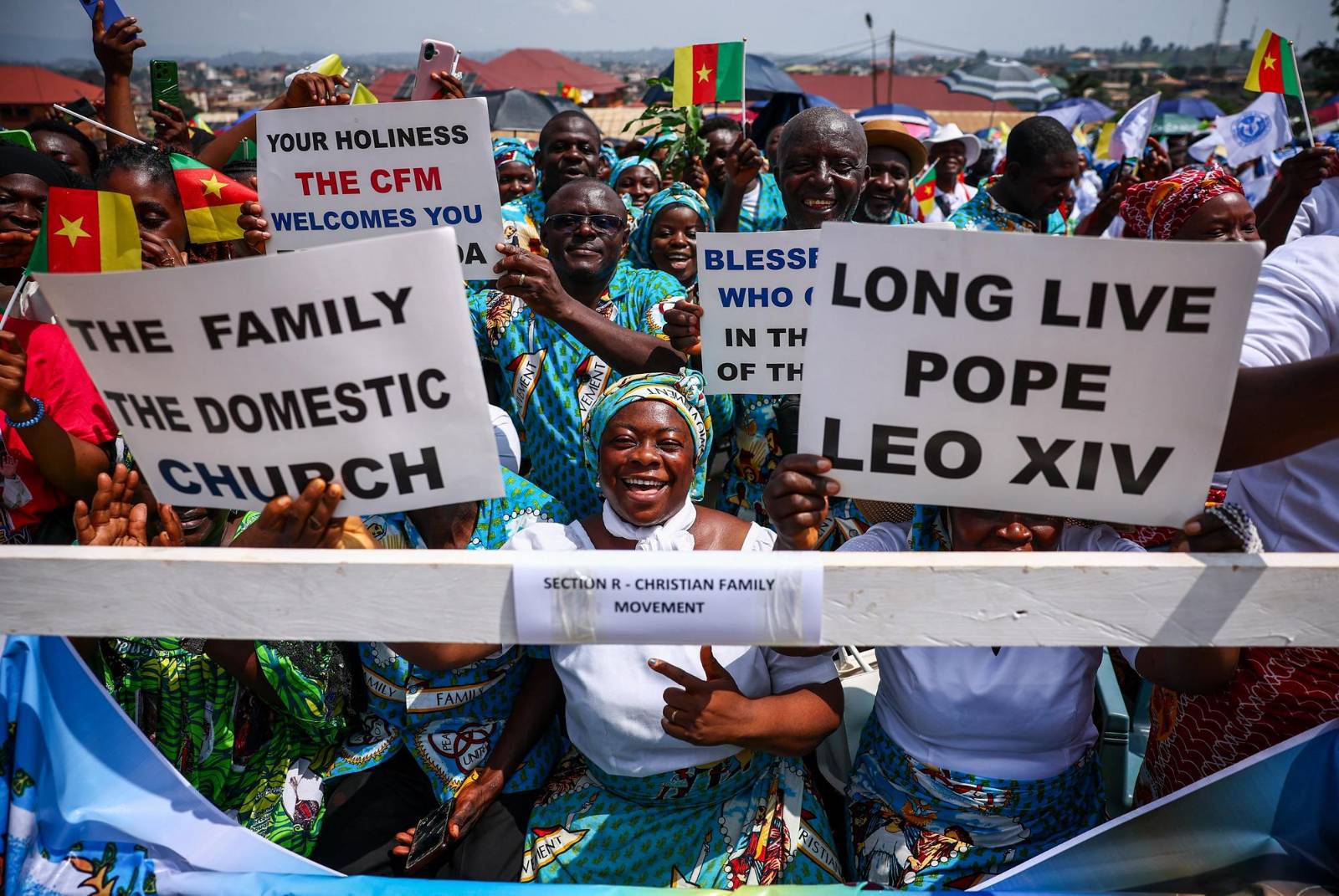
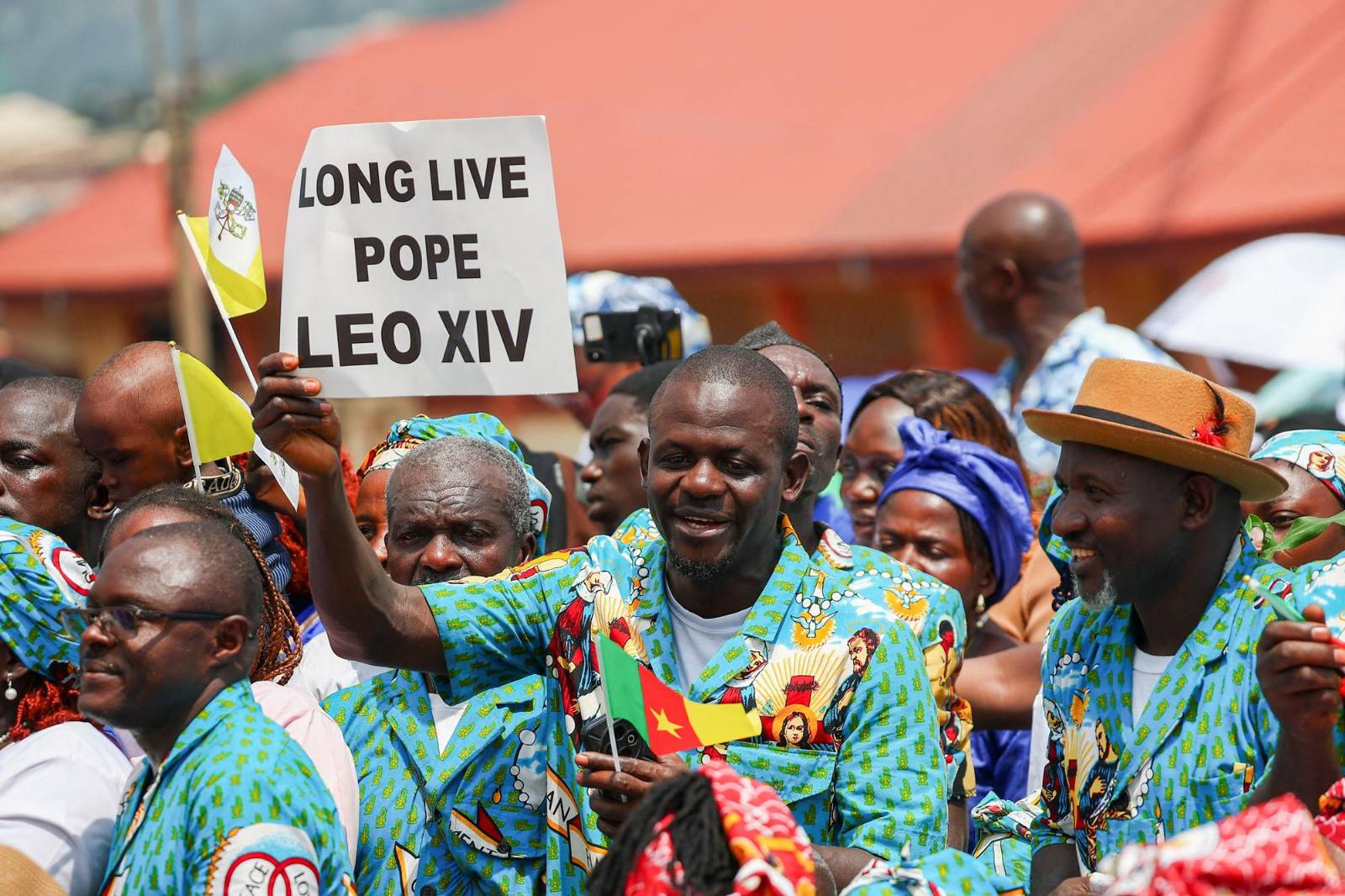
DOUALA, Cameroon — Pope Leo XIV celebrated Mass for more than 120,000 people in Cameroon's largest city on April 17, urging "beloved children of the African continent" to share God's love by feeding the hungry and offering the spiritual nourishment of "the bread of life."
Because of the large turnout, the Mass was held in a parking area next to Douala's Japoma Stadium under 90-degree heat. Catholics in the crowd told OSV News that they had spent the night outside to claim their spots for the Mass.
Remerit Ngwe, 28, waited 16 hours outside overnight for the papal Mass. "Since yesterday 7 p.m. we slept here on the stone waiting for the pope," she told OSV News. "We are so happy we finally saw the pope, Pope Leo, a once in a lifetime experience. Long live the pope!"
Speaking in both French and English during his homily, Pope Leo opened with a striking question to the Cameroonian congregation, "where is God in the face of people's hunger?"
He turned to the Gospel of John and its account of the multiplication of the loaves and fishes to respond.
"A serious problem was solved by blessing the little food that was present and sharing it with all who were hungry," Pope Leo said in French.
"There is bread for everyone if it is given to everyone. There is bread for everyone if it is taken, not with a hand that snatches away, but with a hand that gives," he underlined.
According to the World Food Programme, 2.9 million people in Cameroon face food insecurity and need humanitarian assistance, with about 23% of the population living below the poverty line.
The pope said the miracle of the multiplication of the loaves and fishes reveals a God who comes "to serve with love, not to dominate."
"It shows us not only how God provides humanity with the bread of life, but how we can share this sustenance with all men and women who, like ourselves, hunger for peace, freedom and justice. Each act of solidarity and forgiveness, every good effort, becomes a morsel of bread for humanity in need of care," he said.
"Yet this alone is not enough: the food that sustains the body must be accompanied, with equal charity, by nourishment for the soul -- a nourishment that sustains our conscience and steadies us in dark hours of fear and amid the shadows of suffering," he emphasized.
Pope Leo said that this spiritual nourishment is "Christ himself, who always gives his Church abundant sustenance and strengthens us on our journey by giving us his Eucharistic Body."
"Sisters and brothers, the Eucharist that we are celebrating is the source of renewed faith, because Jesus becomes present among us."
"This very altar, around which we gather for the Eucharist, becomes a proclamation of hope amid the trials of history and the injustices we see around us," he added.
The pope's message resonated with Cameroonians in the crowd. Ngwe said, "Being a Catholic Christian allows you to partake in the Eucharist, which is the highest celebration."
She said she loves the "oneness" of the Catholic Church, "When I see Cameroon, when I see Rome, when I see USA, we practice the same … Christianity. That is the pride of being a Catholic Christian."
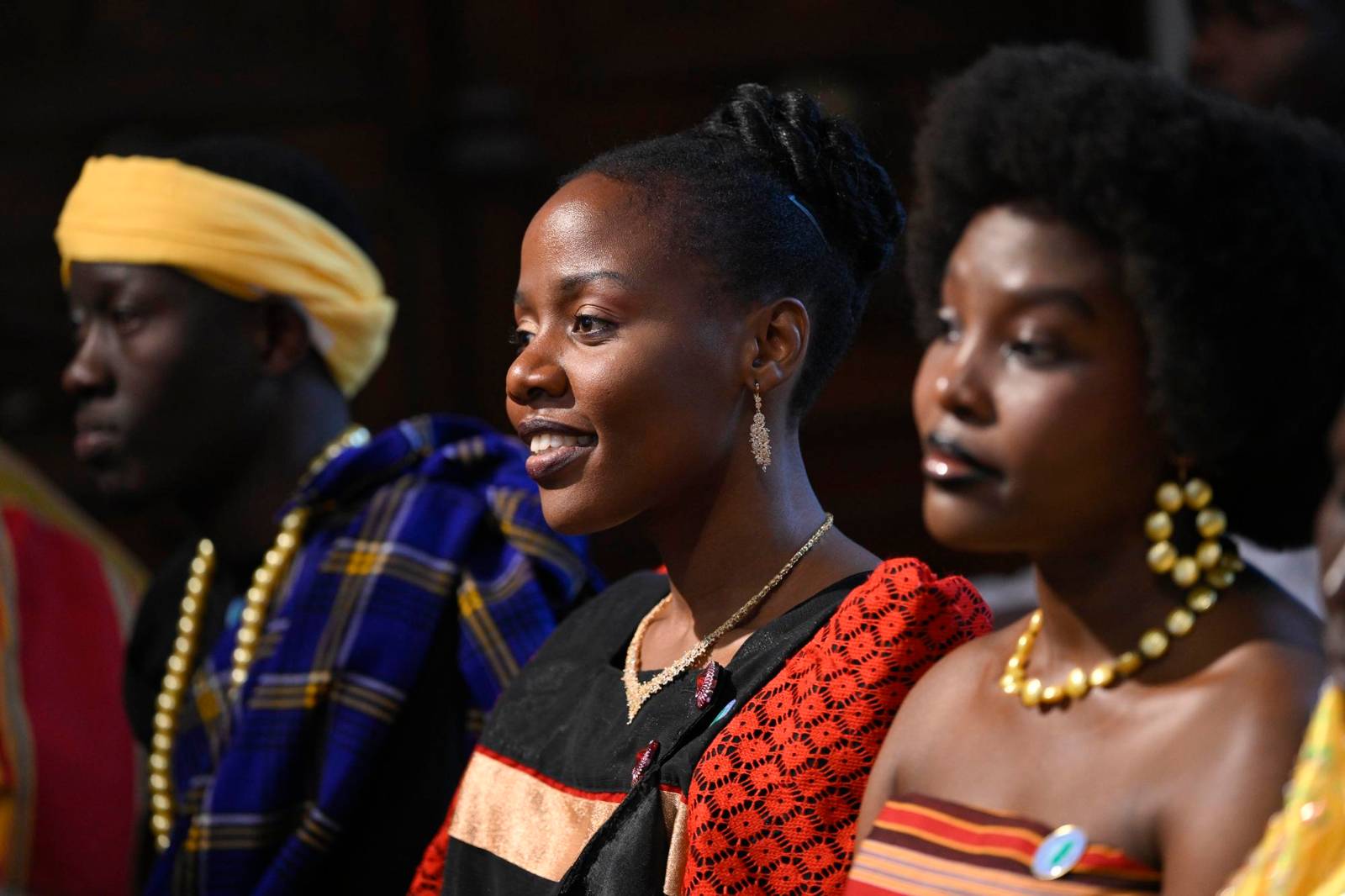
Cameroon is home to more than 8 million Catholics, nearly 30% of the population, and the Church often serves as a bridge across linguistic and political divides.
In an interview with OSV News, Father Gabriel Abega Owona of the Diocese of Sangmélima described the Church's mission in the country.
As a priest, he said, "our daily challenge is to nurture faith within a context of material poverty, yet of immense spiritual richness."
"Being a priest here means being a father, a social worker, and a mediator. My experience is defined by faces: young people seeking work and dignity, families praying for peace, and the explosive joy of the Sunday liturgy -- which lasts for hours and serves as a true foretaste of paradise."
"In Cameroon, the Church is not an institution standing 'alongside' society, but rather its beating heart -- particularly in those areas where the State struggles to reach. The Church manages nearly 1,000 primary schools and hundreds of health care facilities. Indeed, in many villages, the only doctor or teacher available is one provided by the Catholic mission," Abega Owona explained.
He added that the Catholic Church in Cameroon "serves as a bridge between the Francophone and Anglophone cultures" and strives "to translate the Gospel into concrete actions for human development."
Switching to English for part of his homily, the pope urged Cameroon's Catholics to "be the first faces and hands that bring the bread of life to your neighbors, providing them with the food of wisdom and deliverance from all that does not nourish them, but rather obscures good desires and robs them of their dignity."
The pope flew 160 miles from Yaoundé to Douala on Friday morning for the Mass, at which he greeted the enthusiastic crowd from the popemobile.
After the Mass, Pope Leo will make a private visit to the Catholic Hospital of St. Paul in Douala before returning by plane to Cameroon's capital in the afternoon, where he will meet with university students and professors at the Catholic University of Central Africa in Yaoundé.
— Courtney Mares, OSV News
'We can always begin anew'
Pope Leo leads peace meeting in heart of Cameroon's conflict zone
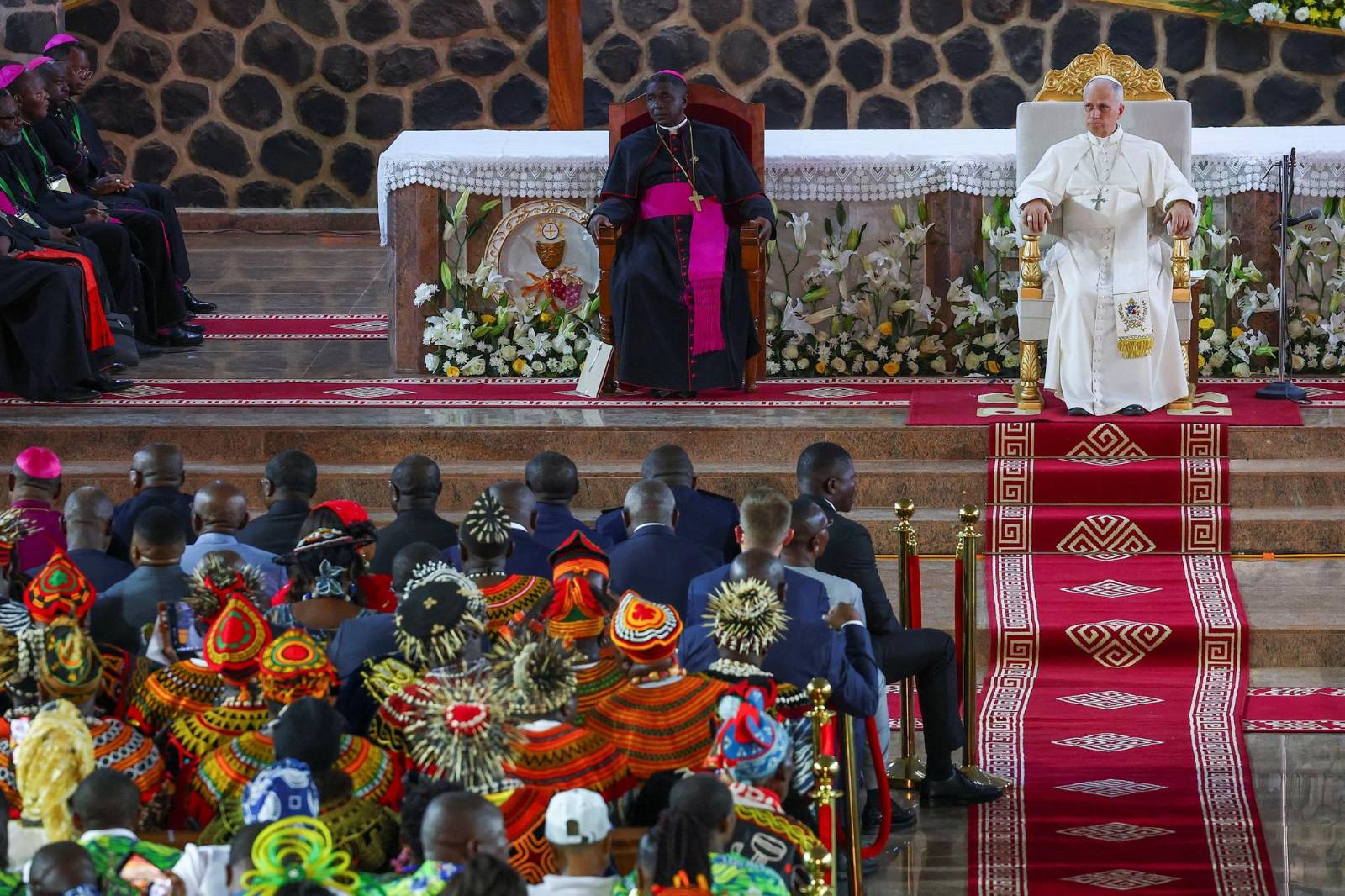
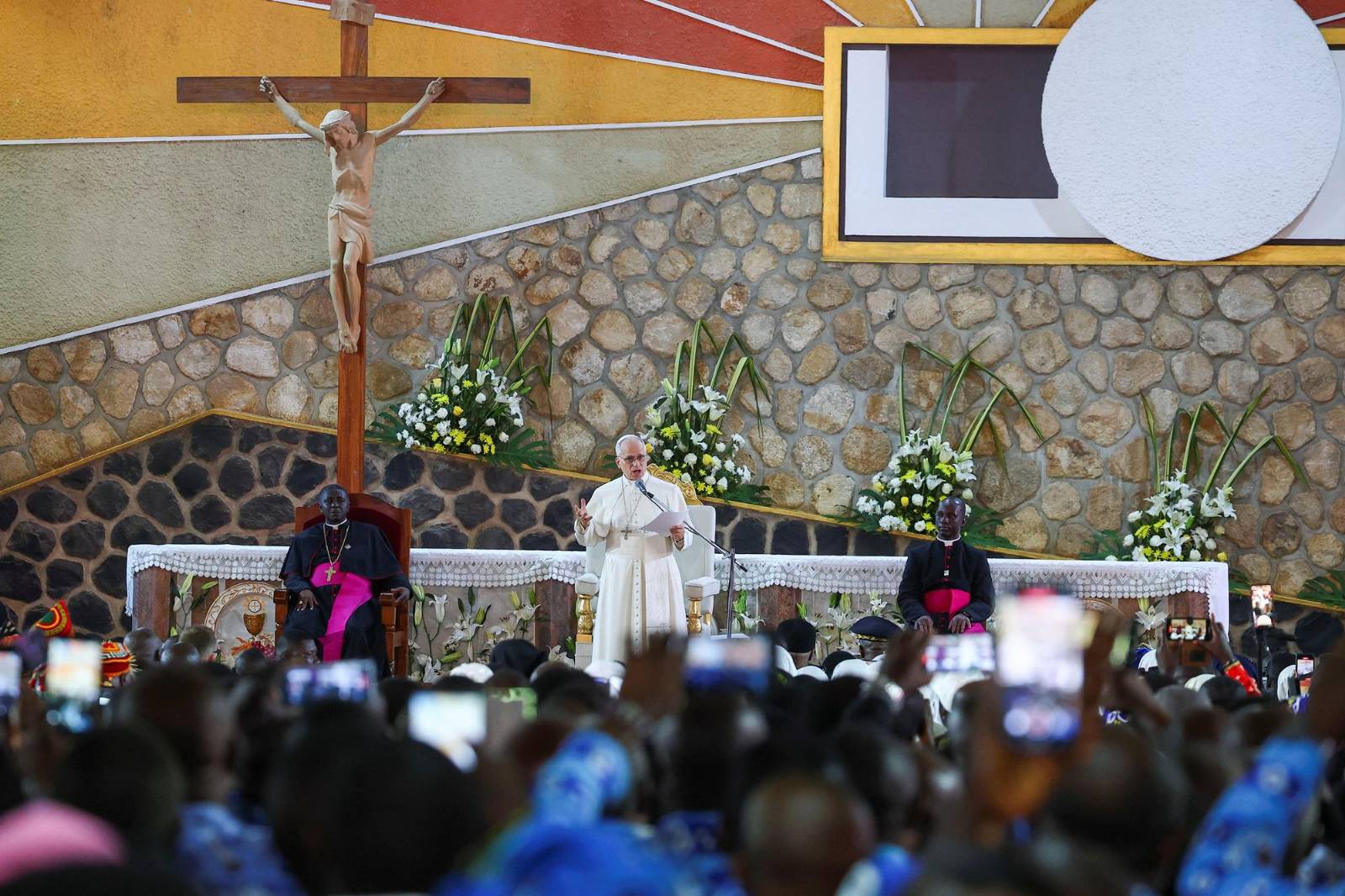
BAMENDA, Cameroon — A religious sister in Cameroon who was kidnapped just a few months ago by separatists and held hostage for three days in the bush was among those who shared her testimony with Pope Leo XIV April 16 in an emotional peace meeting in Cameroon's northwest city of Bamenda, a region marred by years of separatist violence.
"We were held hostage for three days and three nights. During those days and nights, we neither slept nor ate," Sister Carine Tangiri Mangu told the pope.
"What kept our hope alive was the rosary which we prayed continuously for those days," she added.
"Most Holy Father, this is the situation under which many consecrated women do their work and live their lives within this war zone. Some have undergone more dramatic and more traumatizing experiences, but we continue to rely on the help of God and the intercession of the Blessed Virgin Mary," she said.
Pope Leo led a historic peace meeting on April 16 in Cameroon's northwest city of Bamenda, a region marred by years of separatist violence.
The long-running separatist conflict in its English-speaking regions has killed thousands since 2017. The violence pits Anglophone separatists against the Francophone-dominated government, leaving entire communities displaced and children out of school in what humanitarian groups describe as one of the world's most neglected conflicts.
In his speech in St. Joseph's Cathedral, Pope Leo loudly and passionately said, "I am here to proclaim peace," to an enthusiastic reaction in the crowd.
The pope also had strong words of denunciation for those who perpetuate war. "The masters of war pretend not to know that it takes only a moment to destroy, yet often a lifetime is not enough to rebuild," the pope said. "They turn a blind eye to the fact that billions of dollars are spent on killing and devastation, yet the resources needed for healing, education and restoration are nowhere to be found."
Pope Leo strongly denounced those who "rob your land of its resources generally invest much of the profit in weapons, thus perpetuating an endless cycle of destabilization and death."
"The world is being ravaged by a handful of tyrants, yet it is held together by a multitude of supportive brothers and sisters," he underlined.
During the peace meeting, the pope heard testimonies from local traditional and religious leaders and a family displaced by the violence.
A local chief imam told the pope about how in November armed men invaded a mosque in Sabga, near Bamenda, during the time of prayer and killed three people, injuring nine others.
Mohammed Abubakar of the Buea Central Mosque continued that on Jan. 14, 2025, "Armed men targeted cattle rearers from the Mbororo ethnic community and killed at least 15 people, including 8 children." The chief imam added that "The Islamic community has suffered in many English speaking towns and villages, and there were Muslim victims in what has come to be known as the Ngabur Massacre, in which 23 civilians were killed in 2020.
"Holy Father, welcome, and please help us to have peace again," the imam added.
Denis Salo met the pope, along with his wife and three children, telling Pope Leo how "five of my neighbors were killed and one of my close friends was also killed. While we were being targeted by the separatist fighters, government soldiers were also burning down houses."
"In 2017, I escaped with my family out of Mbiame, abandoning all that I ever owned, including house, farms, and animals, and arrived in Bamenda. My kids had to abandon school. After seeing no better in Bamenda, I proceeded to Douala to look for livelihood and not finding anything better, I returned to Bamenda," he said. "I now live in a little rented house with my entire family, and working as a gateman in the hospital of Maria Soledad, and at the same time working as gardener in the Parish of the Immaculate Conception, Ngomgham," Salo said.
The pope affirmed to the afflicted community that "God has never abandoned us! In him, in his peace, we can always begin anew!"
In an emotional address welcoming the Holy Father in the cathedral, Archbishop Andrew Nkea of Bamenda told the pope: "Today your feet are standing on the soil of Bamenda that has drunk the blood of many of our children.”
"The archbishop mentioned the prophecy that exclaims: 'How beautiful upon the mountains are the feet of the messenger who announces peace!' (Is 52:7). He welcomed me with these words, and now I would like to respond: how beautiful are your feet as well, dusty from this bloodstained yet fertile land that has been mistreated, yet is rich in vegetation and fruit," the pope said.
The Rev. Fonki Samuel Forba, moderator emeritus of the Presbyterian Church
in Cameroon, described to the pope how religious leaders of different denominations have "bonded together and founded a Peace Movement through which we have tried to broker peace and dialogue with the government of Cameroon and the Separatist Fighters."
He said that under the leadership of Archbishop Nkea, they "have visited and spoken with many of the leaders of the separatist movements at home and abroad, and we have tried to engage the local separatist fighters on the ground in dialogue, convincing them that peace is better than war, and that war can never really solve any conflict," he said.
"Practically all of us gathered here are traumatized and need both psychological and spiritual healing," the reverend said.
"This Anglophone crisis is one of the forgotten crises on the planet earth, but it was brought to the notice of the Vatican, and the Vatican was even willing to facilitate dialogue between the warring factions," Rev. Forba said.
Bishop Michael Miabesue Bibi of Buea told OSV News that the Anglophone crisis made it impossible for people to live normally in the conflicted region.
On top of loss of life and education opportunities for children, he said people "experienced abject poverty" as farmers were unable to sell products due to violence.
"There are people whose houses have been destroyed and they have been rendered homeless," instantly becoming internally displaced, the bishop listed.
Even though pastoral work has been challenging, the bishop said, "we continue to hope in God, as we continue to pray and the situation will be better."
Pope Leo expressed support for how "religious leaders have come together to establish a Movement for Peace, through which they seek to mediate between the opposing sides."
He had however a strong condemnation for those who wage war in the name of God.
"But woe to those who manipulate religion and the very name of God for their own military, economic and political gain, dragging that which is sacred into darkness and filth," Pope Leo said.
"Yes, dear brothers and sisters, you who hunger and thirst for justice, who are poor, merciful, meek, and pure of heart, who have wept -- you are the light of the world! (cf. Mt 5:3-14)," he said.
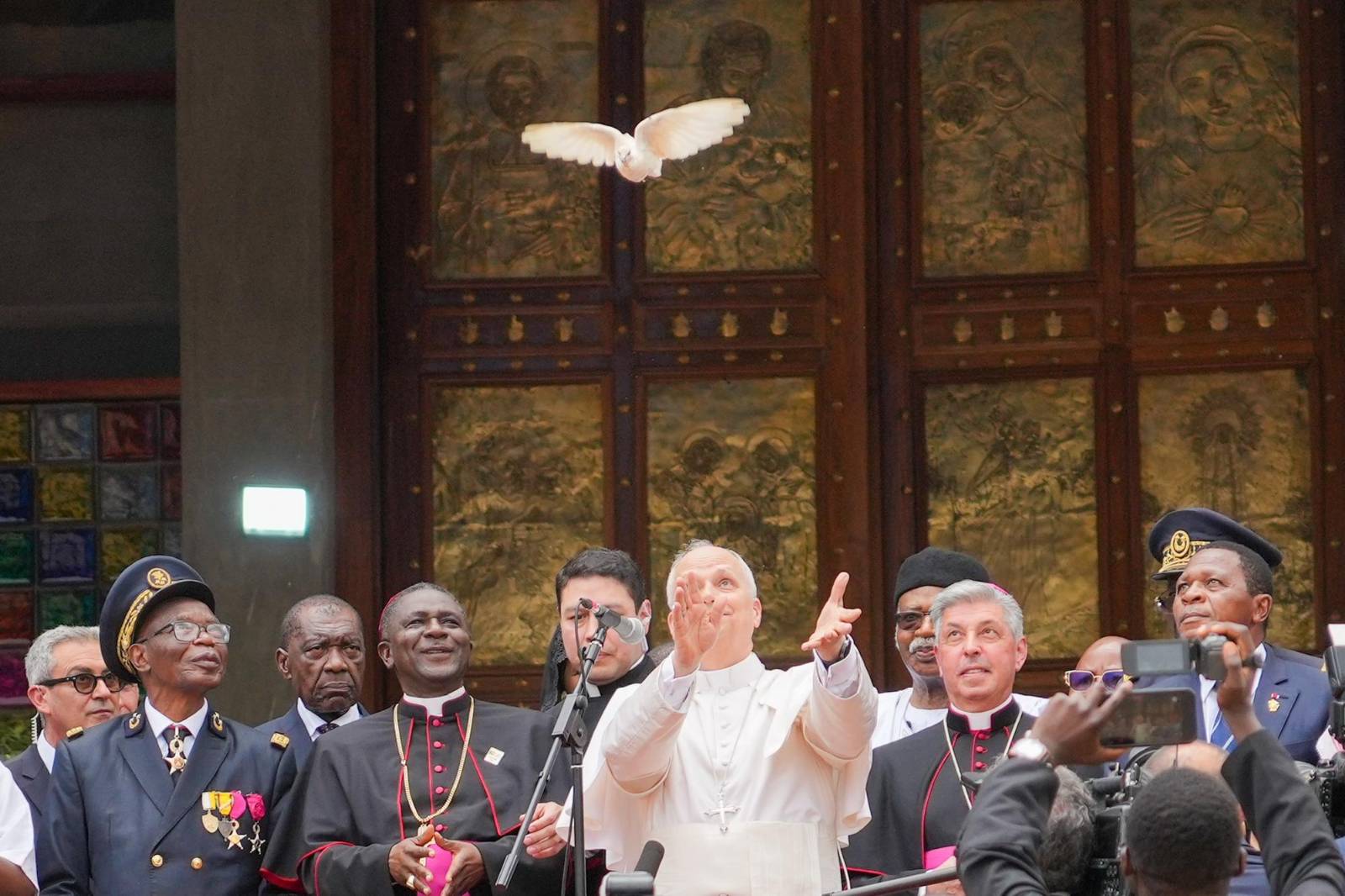
After the ceremony, Pope Leo XIV released doves outside of the cathedral, symbolizing peace. A crowd gathered outside of the cathedral, people sang and cheered enthusiastically.
"Our hearts are full of joy and it sounds unbelievable that the successor of St. Peter is among us in this remote part of Africa," Archbishop Andrew Nkea of Bamenda told the pope.
— Courtney Mares, OSV News
At Cameroonian orphanage, Pope Leo tells children they can always find a friend in Jesus
YAOUNDE, Cameroon — Pope Leo XIV brought joy to 64 orphaned and abandoned children on the evening of April 15 when he visited the Ngul Zamba orphanage in Cameroon, blessing the children and assuring them that despite their suffering, Jesus "cares especially for children like you."
The orphanage, whose name means "the power of God" in the Ewondo language, is run by the Congregation of the Daughters of Mary and currently houses children ranging in age from 3 to 20 years old.
"Dear children, I know that many of you have endured difficult trials," the pope told the children, speaking in French. "Some of you have known the pain of loss through the death of parents or loved ones. Others have experienced fear, rejection, abandonment, deprivation and uncertainty. Yet, you are called to a future that is greater than your wounds."
The pope drew on the Gospel to remind the children of Christ's particular love for the young, noting that Jesus "would often place them at the center of a gathering" and looks upon each child "with that same affection" today.
Among those meeting the pope was Florence, who was celebrating her 11th birthday on the day of the papal visit. She told OSV News she was "very happy."
The visit became a spontaneous moment of celebration when the children sang for the pope -- and he joined in. Afterward, children and religious sisters alike, including some elderly sisters in wheelchairs, danced and sang in praise, offering a hymn drawing from the Blessed Virgin Mary's Magnificat.
Pope Leo closed his remarks to the children by offering them an apostolic blessing and entrusting them to the care of Our Lady.
"As I impart my heartfelt blessing, I entrust each of you to the protection of the Blessed Virgin Mary, our Mother," he said. "May she always watch over you, console you in moments of sadness and help you to grow as true friends of her son, Jesus."
The superior general of the Congregation of the Daughters of Mary informed the pope that the congregation is marking its 100th anniversary of being founded in Cameroon this year. She noted that for more than 40 years, the congregation has welcomed abandoned children "to offer them a real family life," in keeping with their charism, "In the footsteps of Christ, at the service of the poor and the small."
The pope thanked the sisters, staff, volunteers and teachers who care for the children, urging them to persevere in their mission.
"Your faithful dedication is a beautiful testimony of love," he said. "By caring for these children, you are getting a foretaste of the joy that the Lord has promised to those who serve the little ones. Your patience reflects the face of divine mercy."
He added, "Through you, God's tenderness is made manifest."
The visit to the orphanage took place on Pope Leo's first day in Cameroon, and the third day of an 11-day apsotolic visit to four African countries.
— Courtney Mares, OSV News
'Son of Augustine': Pope Leo XIV retraces St. Augustine's steps in Algeria
ANNABA, Algeria — Pope Leo XIV offered Mass April 14 at the basilica built near the site where St. Augustine died nearly 1,600 years ago, making a deeply personal pilgrimage in the footsteps of St. Augustine in Algeria.
"Here the martyrs prayed; here St. Augustine loved his flock, fervently seeking the truth and serving Christ with ardent faith," the pope said in his homily, delivered in French. "Be heirs to this tradition, bearing witness through fraternal charity to the freedom of those born from above as a hope of salvation for the world."
Preaching to hundreds of people inside the Basilica of St. Augustine, the pope, who called himself a "son of Augustine" in his first speech as pope from the loggia of St. Peter's Basilica, emphasized Augustine's dramatic conversion from a restless seeker of truth to one of Christianity's greatest saints.
"We revere him for his conversion even more than for his wisdom," said Pope Leo, who twice quoted directly from St. Augustine's autobiography "Confessions."
He also recalled the role of Augustine's mother, St. Monica, whose persistent prayers and tears accompanied her son's conversion.
"Can we truly start our lives over again?" Pope Leo asked the congregation. "Yes! The Lord's response, so full of love, fills our hearts with hope. No matter how weighed down we are by pain or sin: The crucified One carries all these burdens with us and for us."
The Mass marked the second day of the pope's 11-day pilgrimage through four African nations -- Algeria, Cameroon, Angola and Equatorial Guinea -- and the culminating moment of the first papal visit to the North African country.
Before the Mass, Pope Leo visited the nearby archaeological ruins of ancient Hippo Regius, the Roman city where Augustine served as bishop from about A.D. 396 until his death in 430, as Vandal forces besieged its walls.
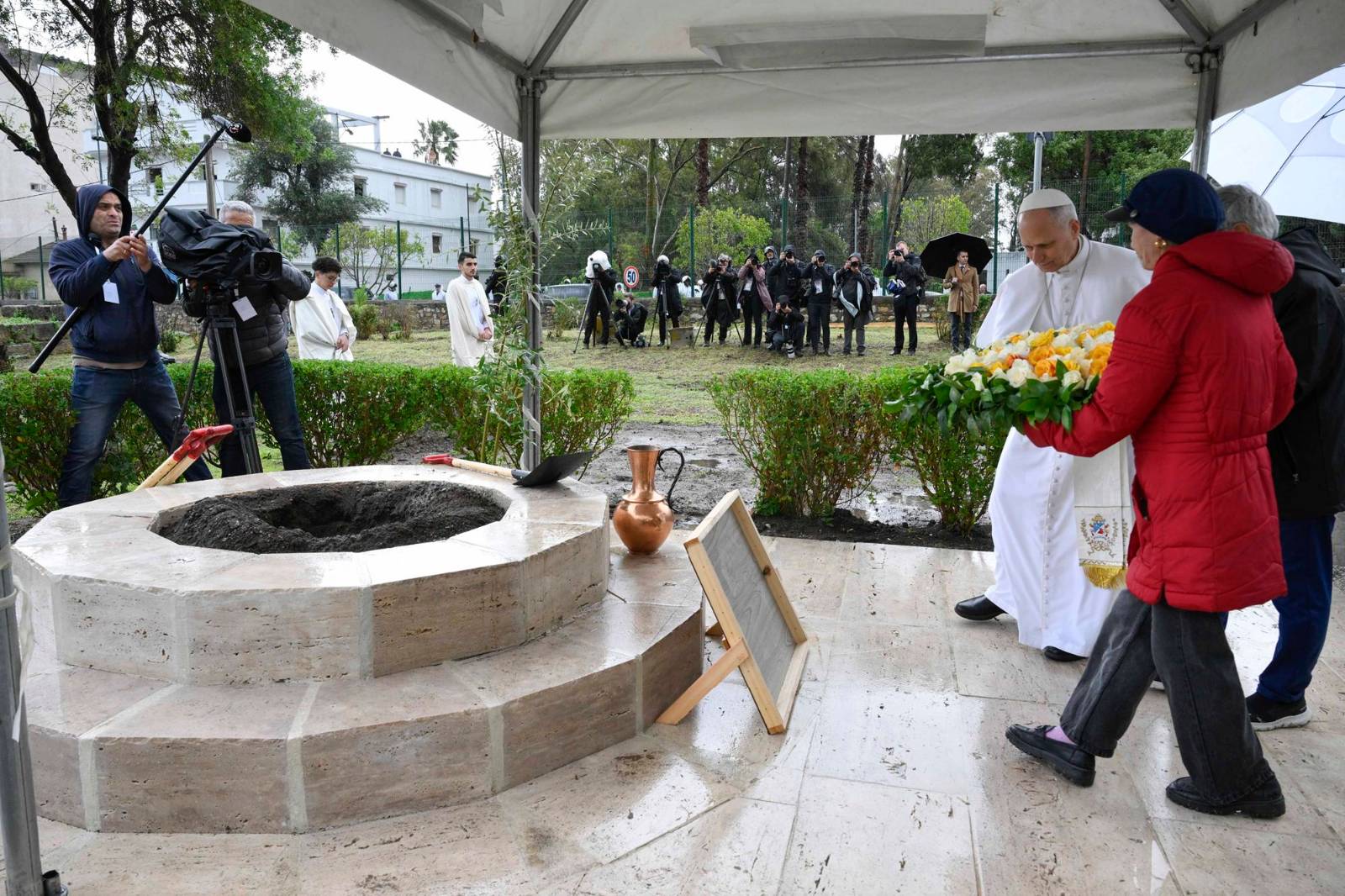
Arriving in the rain beneath a white umbrella, the pope laid a wreath of flowers, planted a small olive tree and paused in silent prayer before the ancient columns.
White doves, released in his honor, settled on the ruins around him while an Algerian choir and musicians playing traditional mizmar and oud instruments performed for the pope.
At the age of 70, Pope Leo has spent most of his life as an Augustinian, including as prior general of the Augustinian Order, during which he twice visited the Augustinian missionaries in Algeria.
Since his election last May, Pope Leo's homilies and public addresses have returned repeatedly to St. Augustine's writings, frequently quoting the doctor of the Church.
On the papal plane en route to Algiers on April 13, the pope told OSV News that he recommends St. Augustine's "Letter to Proba," written in A.D. 412, as a beautiful reflection on prayer in which "Augustine gives some wonderful guidelines and hints, if you will, about how our prayer can really be meaningful."
He also pointed to Augustine's "Confessions" as suggested spiritual reading.
"On this trip especially I would say if anyone has not read 'The Confessions of St. Augustine,' it is a great place to start," the pope said.
In his homily in the basilica, Pope Leo drew directly from that text, quoting Augustine's celebrated prayer: "Give, O Lord, what you command, and command what you will."
He also cited the saint's reflection, "I could not therefore exist, could not exist at all, O my God, unless you were in me. Or should I not rather say, that I could not exist unless I were in you."
The basilica where the pope offered Mass was constructed between 1881 and 1907 on a hill overlooking the archaeological site of the ancient church where Augustine preached. The basilica today holds a relic of one of the saint's arm bones.
A small and very diverse Catholic community carries on Augustine's legacy in modern Algeria, a nation that is more than 99% Muslim. Attending the Mass were many young Catholics from different African countries who are studying in Algeria.
"Dearest Christians of Algeria, you remain a humble and faithful sign of Christ's love in this land," Pope Leo said.
"Your presence in this country is like incense: a glowing grain that spreads fragrance because it gives glory to the Lord and joy and comfort to so many brothers and sisters," he added.
The readings at Mass were read in Arabic, English and French, reflecting the multinational character of Algeria's Catholic faithful, whom Algiers Cardinal Jean-Paul Vesco described on April 13 as "a mosaic Church composed of several dozen nationalities."
The Augustinian community has been present at the basilica there since 1933. Currently, three Augustinians of different African nationalities serve the site full time, welcoming pilgrims and celebrating weekly Mass for local Christians.
"The Apostles proclaim that our lives can change because Christ has risen from the dead," Pope Leo said in his homily.
"The primary task of pastors as ministers of the Gospel is therefore to bear witness to God before the world with one heart and one soul, not permitting our concerns to lead us astray through fear, nor trends to undermine us through compromise," he said.
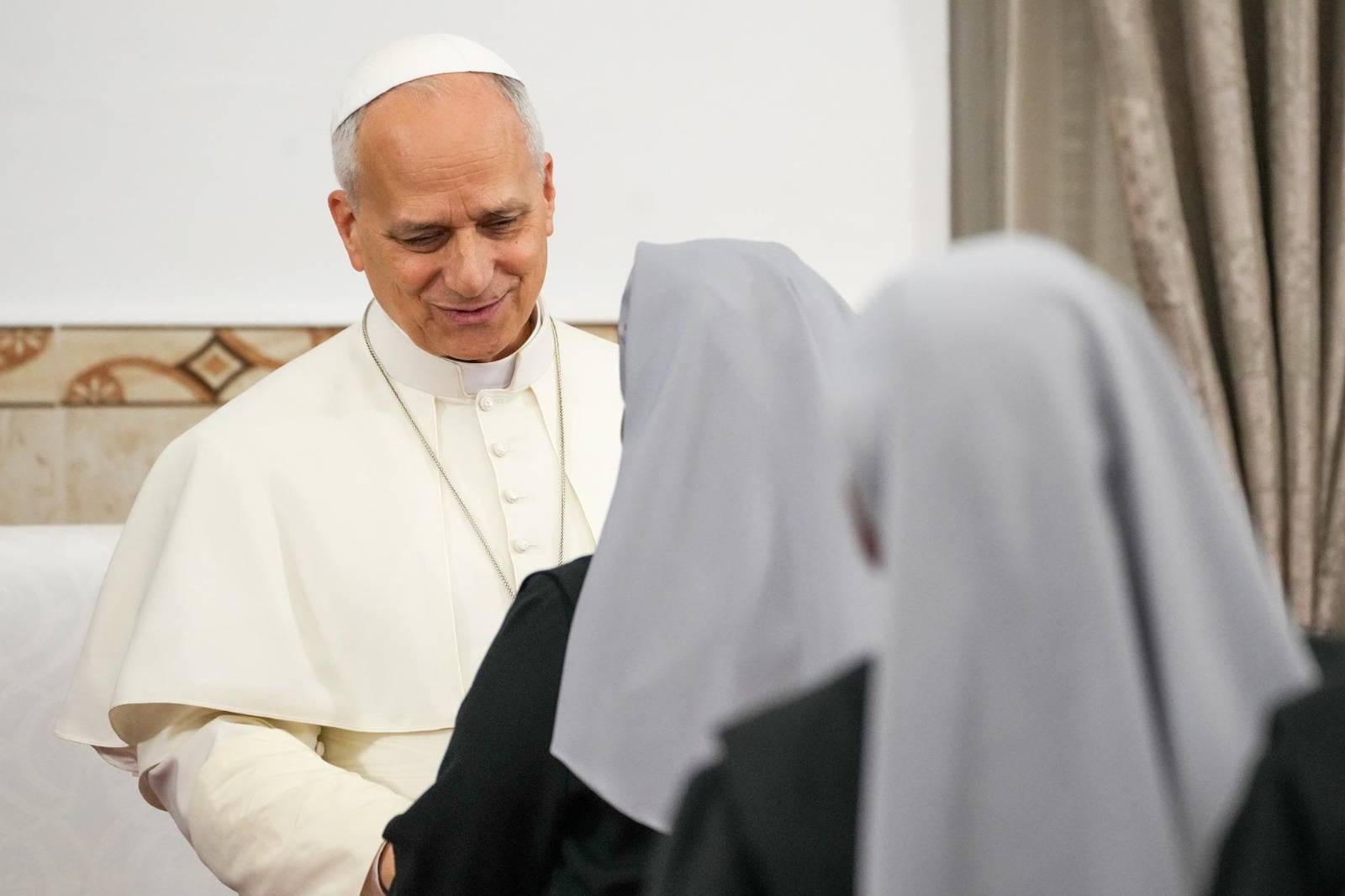
Before the Mass, Pope Leo visited a nursing home adjacent to the basilica run by the Little Sisters of the Poor, where five sisters and a team of volunteers and staff care for approximately 40 elderly residents, the majority of whom are Muslim. The facility contains both a chapel and a small mosque. The pope greeted residents and listened to the testimony of one Muslim resident.
"Wherever there is love and service, God is there," Pope Leo told the residents.
"God's heart is torn apart by wars, violence, injustice and lies," he said. "But our Father's heart is not with the wicked, the arrogant or the proud. God's heart is with the little ones, with the humble, and with them he builds up his Kingdom of love and peace day by day, just as you are striving to do here in your daily service, in your friendship and life together."
Pope Leo flew to Annaba from Algiers aboard a chartered Air Algérie flight, escorted by Algerian military fighter jets for the roughly one-hour journey. The pope flew back to Algiers in the evening before departing the following morning on a flight of more than five hours to Yaoundé, Cameroon.
— Courtney Mares, OSV News
Pope Leo praises witness of Algeria's Christian martyrs at meeting with local Catholics
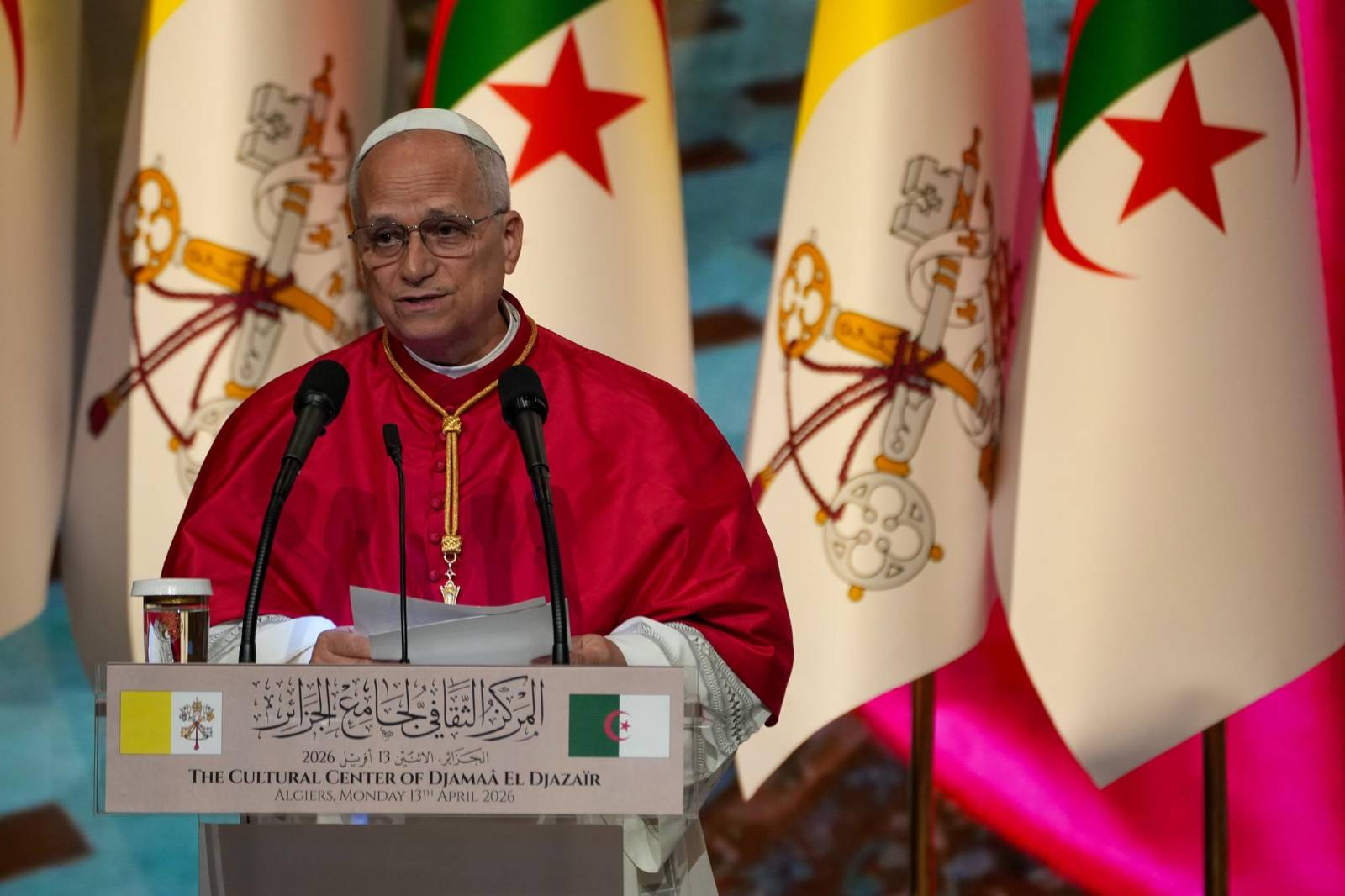
ALGIERS — Pope Leo XIV honored the memory of Algeria's Christian martyrs Monday evening, telling the country's tiny Catholic community that the blood of those who died for their faith remains "a living seed that never ceases to bear fruit."
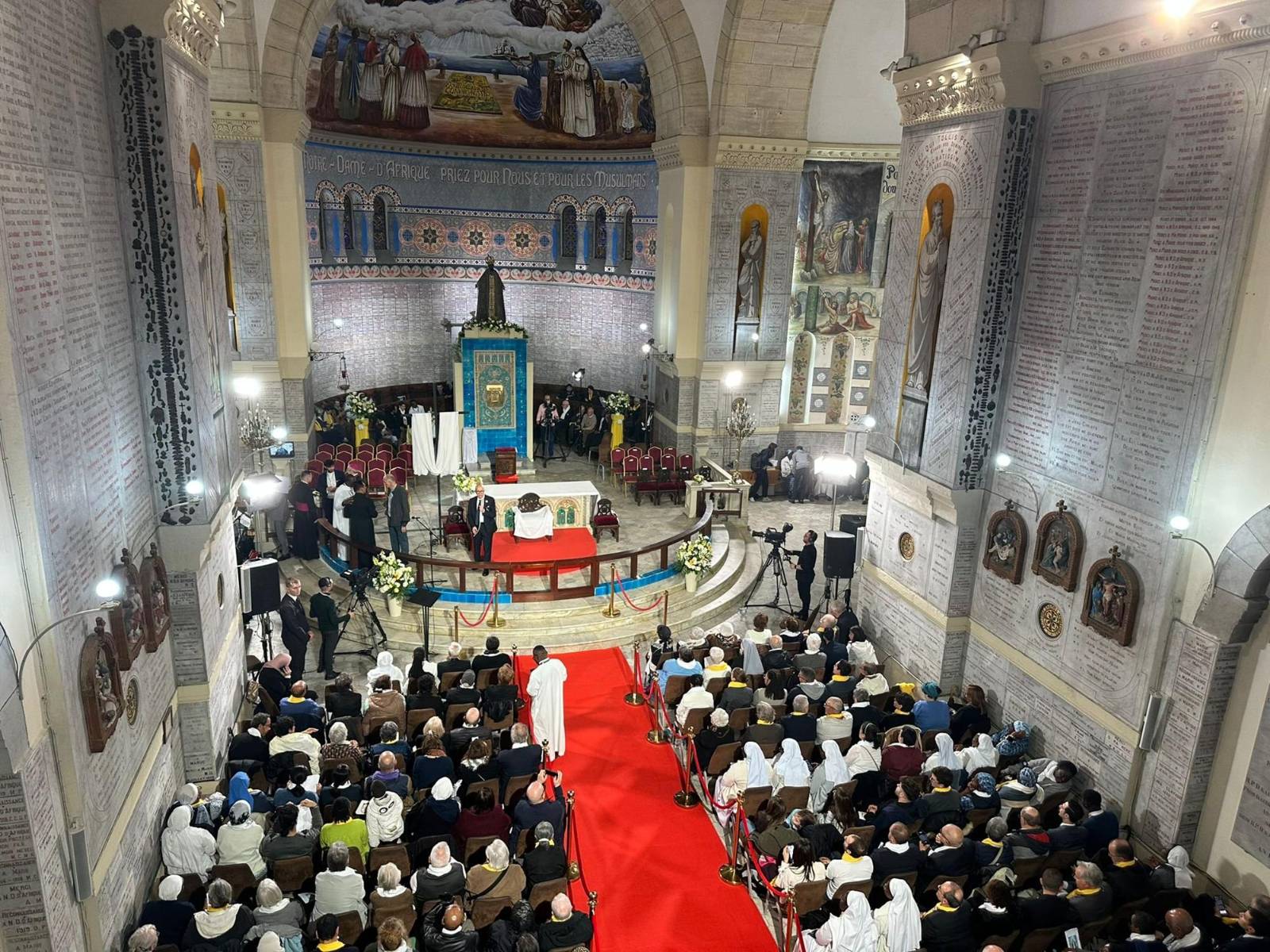
Speaking inside the Basilica of Our Lady of Africa, a 19th-century church perched on a promontory overlooking the Mediterranean Sea and the city of Algiers, the pope praised the 19 men and women religious beatified in 2018 who were killed during the Algerian Civil War of the 1990s.
"It is precisely love for their brothers and sisters that inspired the witness of the martyrs we have commemorated," the pope said. "In the face of hatred and violence, they remained faithful to charity even to the point of sacrificing themselves alongside many other men and women, Christians and Muslims."
The visit marks a remarkable moment for the North African country in which Catholics number fewer than 9,000 in a predominantly Sunni Muslim nation of more than 45 million people. Pope Leo described the Church's role in Algeria as a "discrete and precious presence."
Outside the basilica in heavy rain was a 19-year-old Catholic convert who shared with OSV News how he was raised in a Muslim family, but was baptized in 2024 despite his family's opposition. Speaking under the condition of anonymity, he said that he was inspired by the miracles of the Church, in particular the Marian apparition of Our Lady of Zeitoun in Egypt. As an active member of the local Catholic community, he volunteered to help with the pope's visit.
Prior to his arrival at the basilica, the pope visited the Great Mosque of Algiers. "Through this place of prayer, through the search for truth, including through study and through the ability to recognize the dignity of every human being, we know -- and today's gathering is proof of this -- that we can learn to respect one another, live in harmony and build a world of peace," he remarked spontaneously in Italian.
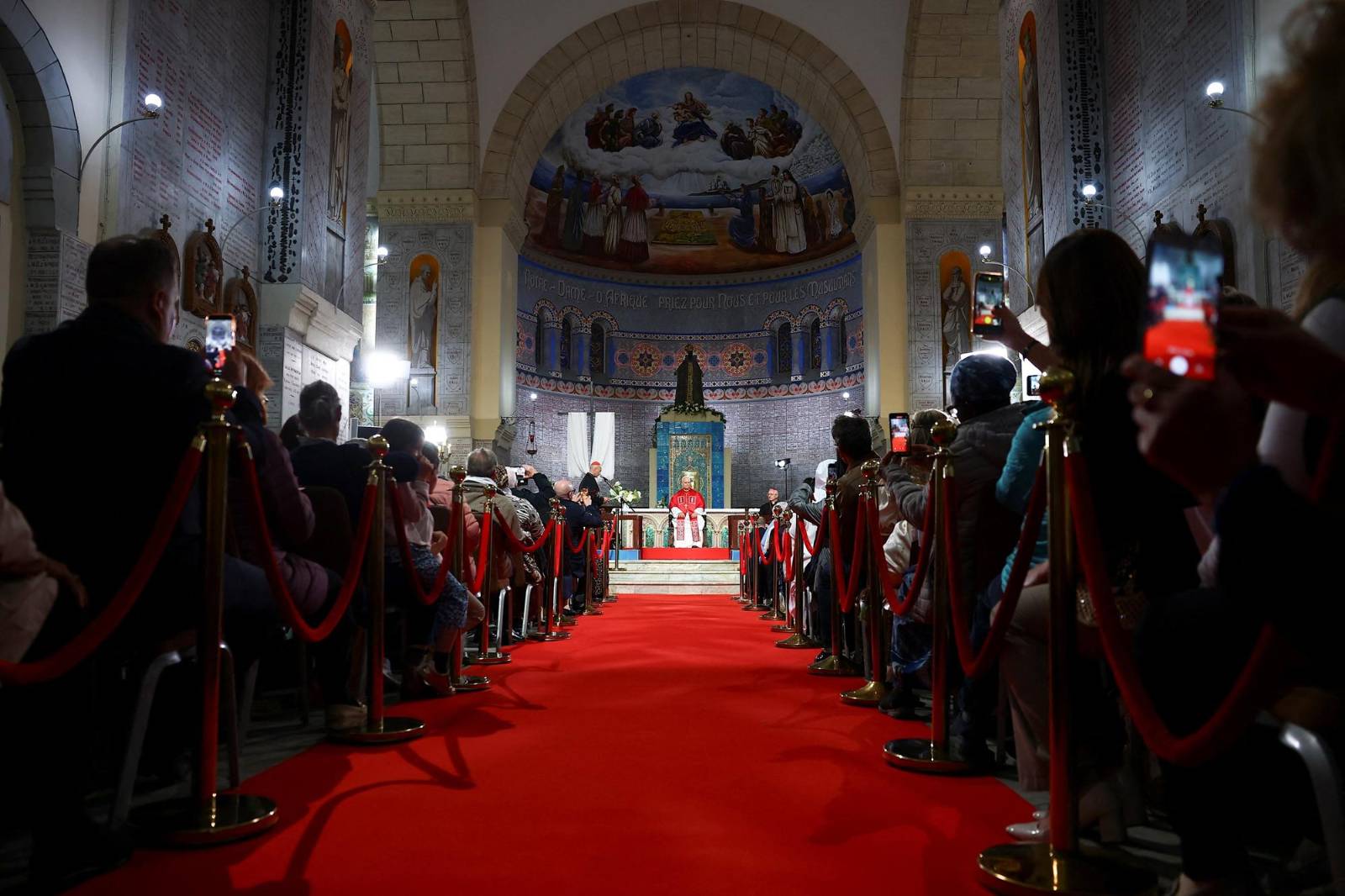
Inside the basilica, Pope Leo sat under the apse mosaic with a French inscription that translates, "Our Lady of Africa, pray for us and for the Muslims."
Cardinal Jean-Paul Vesco, archbishop of Algiers, told the pope that the vast majority of people who cross the basilica's threshold are Muslim.
"'Madame l'Afrique,' as she is often called here, is inscribed in the heritage of Algeria and in the hearts of Algerians," the cardinal said in French. "The inscription that welcomes them, 'pray for us and for the Muslims,' ??expresses Mary's maternal vocation for all humanity, and the vocation of this basilica, which hosts so many cultural and religious events, and gathers so many confidences and moments of intimate prayer."
In his speech inside the basilica, Pope Leo, also speaking in French, said, "This very basilica is a sign of our desire for peace and unity."
"It symbolizes a Church of living stones, where communion between Christians and Muslims takes shape under the mantle of Our Lady of Africa," he said.
During the event, people waited outside in the pouring rain as the basilica was filled to capacity.
Among those present inside the basilica was Father Jean Fernandes Costa, rector of the Cathedral of the Sacred Heart in Algiers, who described the local Catholic Church as very small and "highly diverse in terms of nationalities and cultures." He said the community serves "as a sign of the Church's universality in a non-Christian society."
He told OSV News he has been in Algeria for seven years and serves the Archdiocese of Algiers not only as the cathedral's pastor, but also as chaplain to university students from sub-Saharan Africa.
"It is a very unique situation, as we are embedded in a predominantly Muslim society and must constantly adapt to this reality," said the priest, a Brazilian member of the Shalom Catholic Community. "Dialogue with Algerian society has developed gradually through welcoming visitors to our small churches and through our service to the poorest."
Father Fernandes said that for local Catholics, the papal trip to Algeria is "a great gift from God for this small Church, which never imagined a papal visit so early in his pontificate and at the start of his apostolic journey to Africa. It is also a sign of hope for the future of this small community."
Among those who had gathered for the event was Sister Brigitte Zawadi, a member of the Missionary Sisters of Our Lady of Africa originally from the Democratic Republic of Congo, who has been serving as a missionary in Algeria for two years.
"I'm working with students from many countries coming from Africa and some from Algeria," she told OSV News. For me, it's a special mission."
In his remarks, Pope Leo pointed to the great witnesses to faith both ancient and modern in the North African country, where St. Augustine served as bishop in the fourth century. Pope Leo cited the writings of St. Charles de Foucauld, the French hermit and missionary canonized by Pope Francis in 2022, who lived in Algeria among the Tuareg people of the Sahara before his martyrdom. He also quoted Brother Luc, the elderly physician-monk of the Trappist community of Notre-Dame de l'Atlas at Tibhirine, Algeria, whose story was depicted in the acclaimed 2010 French film "Of Gods and Men."
Before his martyrdom, when offered a chance to flee potential danger at the cost of abandoning his patients, Brother Luc replied simply: "I want to stay with them."
Earlier in the day, the pope made a private visit to the Augustinian Missionary Sisters of Bab El Oued to honor two of their members, Sister Esther Paniagua Alonso and Sister Caridad Álvarez Martín, who were killed in 1994 while on their way to Mass. Both were among the 19 martyrs beatified in 2018. Their congregation continues to serve the local population through education and outreach for children, youth and women.
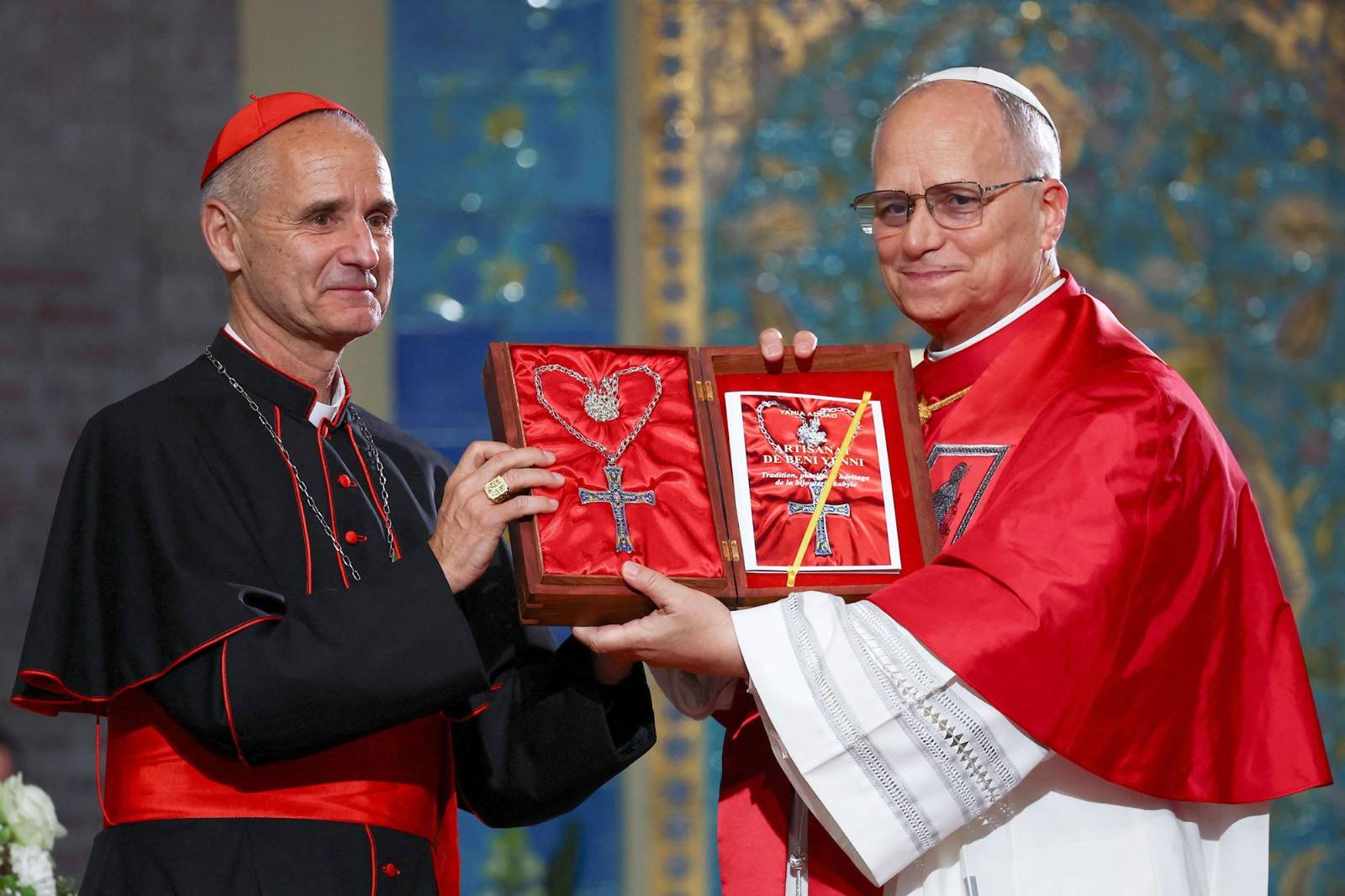
Following his address in the basilica, Pope Leo prayed in a side chapel dedicated to St. Monica, the mother of St. Augustine, which also contained the cross from the Tibhirine monastery and an icon of the martyrs of Algeria, where the pope lit a candle in prayer.
In his message to the local Catholic community, Pope Leo reflected on Algeria's geography as a spiritual metaphor, pointing to the vast Sahara Desert that dominates much of the country's territory.
"In the desert, no one can survive alone," he said. "The hostile environment dispels any presumptions of self-sufficiency, reminding us that we need one another, and that we need God."
The evening gathering included an eclectic mix of hymns and multiple testimonies, including words from a missionary and a Muslim.
Rakel Anzere, 26, a Pentecostal Christian from Kenya studying in Algeria, shared with the pope her experience taking part in ecumenical Taizé prayers with other students in Algeria.
"It's really an honor because I get to meet the pope in person and to also speak on behalf of … how our experience here in Algeria as Christians has been," Anzere told OSV News prior to her testimony.
She added that it is clear to her that Pope Leo "has the people of Africa in his heart."
The meeting in the basilica was the pope's last public event of the day before returning to the apostolic nunciature, where he will meet privately with Algeria's bishops. On April 14, the pope is scheduled to travel to Annaba and the ruins of the ancient Roman city of Hippo, where he will celebrate Mass at the Basilica of St. Augustine.
The Algeria leg of his journey is the first stop on an ambitious 18-flight, 11,000-mile papal trip through four African nations, Algeria, Cameroon, Angola and Equatorial Guinea, that runs through April 23.
— Courtney Mares, OSV News
Pope finds the embodiment of the ‘guiding principle above all’ in Algeria
ANNABA, ALGERIA — In a country marred by hardship, deep faith and hard-won independence, Pope Leo XIV pointed to Algeria as a living witness to what he called the Church's "guiding principle above all," a charity that transcends power, binds community and makes peace.
Throughout the first leg of his 11-day trip across Africa, the pope returned again and again to one idea: peace comes not through power or dominance, but through a sacrificial love, exemplified in Christ.
In the Basilica of St. Augustine, his spiritual father, Pope Leo presented the Christians of Algeria as an example of this aspect of the Church’s mission, asking that they remain a humble and faithful sign of Christ's love.
"Your presence in this country is like incense: a glowing grain that spreads fragrance because it gives glory to the Lord and joy and comfort to so many brothers and sisters," he said during his final Mass in the country April 14.
In his homily, he described a Church of charity, "where there is despair, she kindles hope, where there is misery, she brings dignity, and where there is conflict, she brings reconciliation."
"Therefore, in the face of poverty and oppression, the guiding principle above all for Christians is charity: let us do to those around us, as we would have them do to us," the pope said. "On the contrary, faith in the one God, Lord of heaven and earth, unites people according to perfect justice, which calls everyone to charity -- that is, to love every creature with the love that God gives us in Christ.
In his April 13 address to Algerian President Abdelmadjid Tebboune and the diplomatic corps, he pointed out that Algerians practice "sadaka" (meaning almsgiving and justice) "even for those of limited means," and how their "spirit of solidarity, hospitality and community is woven into the daily lives of millions of humble and upright people."
After being a French colony for more than 130 years, Algeria sought independence in 1954, sparking a war that left an estimated 1.5 million people dead.
The pope highlighted Algeria's solidarity despite its years of hardship and conflict. He positioned Algeria as a teacher to economically wealthier countries, reframing what development means.
"Indeed, a religion without mercy and a society without solidarity are a scandal in God’s eyes," Pope Leo said. "Yet many societies that consider themselves advanced are plunging ever deeper into inequality and exclusion. Africa knows all too well that people and organizations that dominate others destroy the world, which the Most High has created in order that we might all live together."
During his address April 13 at the Basilica of Our Lady of Africa, he spoke again on selfless love, saying the Church's work with disabled children shows how charity transcends "material help" and creates "an authentic community, where many people share moments of joy and sorrow, united by bonds of trust, friendship and fellowship."
He furthered this message when speaking at a nursing home run by the Little Sisters of the Poor, mirroring his repeated message that this sentiment is what builds the kingdom of God.
"Our Father's heart is not with the wicked, the arrogant or the proud," the pope said April 14. "God's heart is with the little ones and the humble, and with them he builds up his kingdom of love and peace, day by day, just as you are striving to do here in your daily service, friendship and life together."
It is precisely through charity that the pope said one performs acts of martyrdom, regardless of one's religion.
"After all, it is precisely love for their brothers and sisters that inspired the witness of the martyrs we have commemorated," he said in the Basilica of Our Lady of Africa. "In the face of hatred and violence, they remained faithful to charity even to the point of sacrificing themselves alongside many other men and women, Christians and Muslims."
Throughout his two-day sojourn in Algeria, he spotlighted the selflessness of martyrs. Pope Leo’s first stop April 13 was the Maqam Echahid Martyrs' Monument, which commemorates those who died during the Algerian War.
"Our presence here at this monument pays tribute to this history of Algeria and to the very spirit of a people who fought for the independence, dignity and sovereignty of this nation," he said.
In the beginning of his speech to the diplomatic corps, he recalled the 19 religious men and women who were martyred during the Algerian War.
By expressing this charitable love, the faithful find the ability to forgive and reconcile, ultimately leading to peace – Pope Leo’s biggest priority at the moment.
For months, Pope Leo has been relentlessly consistent on his call for peace, particularly following the conflict in the Middle East. Pope Leo presented peace not as a vague ideal, but as a moral calling, rooted in human fraternity, justice and humility.
To a country overwhelmingly Muslim -- an estimated 99% identify as Sunni Islam -- he emphasized that Algerians and Christians alike are brothers and sisters because they share “the same Father in heaven.”
"In a world full of conflicts and misunderstandings, let us meet and strive for mutual understanding, recognizing that we are all one family!" he said to the diplomatic corps April 13. "Today, the simplicity of this awareness is the key to opening many doors that are closed.
From the start of his visit, he framed himself as “a pilgrim of peace." The pope said the world cannot continue to "add resentment upon resentment, generation after generation."
"In this place, let us remember that God desires peace for every nation: a peace that is not merely an absence of conflict, but one that is an expression of justice and dignity," he said at the monument. "This peace, which allows us to face the future with a reconciled spirit, is possible only through forgiveness."
— Josephine Peterson, Catholic News Service
Pope Leo arrives in Algeria on first-ever papal visit to the country
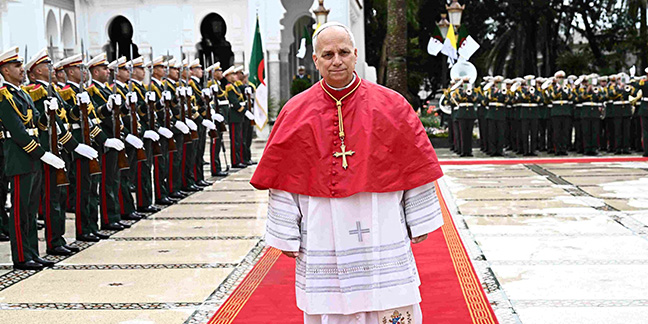 ALGIERS — Pope Leo XIV arrived in Algeria on the morning of April 13, becoming the first pope to make an apostolic journey to the North Africa nation, the first stop of the pope’s 11-day, four-country tour of Africa.
Speaking to journalists on the flight to Algiers, Pope Leo revealed that his trip to Africa was "meant to be the first trip of the pontificate."
"Already last year, in May, I said, 'On my first trip, I would like to travel to Africa,'" Pope Leo said on the papal plane, a chartered ITA Airways flight.
"I am very happy to visit the land of St. Augustine again," he added, saying that Augustine "offers a very important bridge in interreligious dialogue" and "is much loved in his homeland, as we will see."
The pope emphasized, "We must always seek bridges to build peace and reconciliation. And so, this trip truly represents a precious opportunity to continue with the same voice, with the same message."
Calling the trip "very special for several reasons," the pope said it is "a blessing for me personally," expressing hope that the visit will also be a blessing "for the Church and the world."
During the flight, Pope Leo also responded to a personal attack made by President Donald Trump on social media the night before, telling journalists, "I have no fear of the Trump administration or speaking out loudly of the message of the Gospel, which is what I believe I am here to do, what the Church is here to do."
The papal plane touched down at Houari Boumediene Airport in Algiers shortly before 10 a.m. local time following a two-hour flight from Rome. Since heavy rain was in the forecast, the welcoming ceremony in Algeria’s capital city was moved indoors.
The pope was greeted by Algerian President Abdelmadjid Tebboune as an honor guard stood at attention and a young girl presented the pope with flowers.
The pope’s visit to Algeria marks a historic milestone in a country that is 99% Sunni Muslim and home to fewer than 9,000 Catholics among a population of more than 45 million people. Algerian bishops said the pope comes "as an apostle of peace," seeking to strengthen a Church whose mission is one of "fraternal presence" in a predominantly Muslim society.
From April 13 to 23, the 70-year-old pope is scheduled to travel a total of 11,000 miles on 18 flights, visiting 11 cities across Algeria, Cameroon, Angola and Equatorial Guinea. The American pope is expected to deliver addresses in English, French, Portuguese and Spanish. In Algeria he will speak primarily in English.
Algeria, the largest country in Africa, is dominated by the vast Sahara Desert, yet the pope’s itinerary here is centered on the country’s northern Mediterranean coast, with stops in Algiers and Annaba.
-- The ‘Son of Augustine’ returns --
The visit carries particular significance for Pope Leo, who described himself as a "son of Augustine" on the day of his election on May 8, 2025. St. Augustine, served as bishop of Hippo Regius, near the present-day Algerian city of Annaba, and died there in A.D. 430. The pope first visited Algeria in 2003 when he was serving as prior general of the Augustinian order and returned again in 2014.
"The Holy Father has already visited Algeria twice," Bishop Michel Guillaud of Constantine-Hippone told OSV News.
Pope Leo’s apostolic visit to Algeria, he added, is primarily "to meet the Algerian people and to support his Church, drawing on the strong bond between them through the figure of Augustine."
-- Remembering Algeria’s Catholic martyrs --
In addition to St. Augustine and St. Monica, Algeria is also known as the site of more modern witnesses to the faith. In 2018, the Church beatified 19 martyrs killed during the Algerian Civil War, including Trappist monks whose story was depicted in the film Of Gods and Men.
On his first day in Algeria, Pope Leo will make a private visit to the Augustinian Missionary Sisters of Bab El Oued, honoring the memory of two of their members, Sister Esther Paniagua Alonso and Sister Caridad Álvarez Martín, who were killed in 1994 while on their way to Mass. The two sisters were among the 19 martyrs beatified in 2018. Today the Augustinian sisters continue to serve the local population through education and outreach programs for children, youth and women.
Another beloved Catholic figure linked to Algeria is St. Charles de Foucauld, the French hermit and missionary who lived among the Tuareg people in the Sahara and was canonized in 2022 by Pope Francis.
-- Interfaith dialogue in a majority-Muslim nation --
After the airport welcome, the pope’s first public engagement is at the Maqam Echahid Memorial, honoring those who died in the country’s struggle for independence from France.
On his first day in Algiers, Pope Leo is also scheduled to meet civil authorities and visit the Great Mosque of Algiers, one of the largest mosques in the world, in a gesture aimed at reinforcing Christian-Muslim dialogue.
In the evening, the pope is expected to meet with local Christians at the Basilica of Our Lady of Africa, perched above the Mediterranean Sea.
Algeria’s history stretches from its role as a breadbasket of the Roman Empire to centuries under Arab-Amazigh dynasties and Ottoman rule, followed by French colonization beginning in 1830, which ended after a brutal war of independence from 1954 to 1962.
Bishop Guillaud said the visit sends a clear message that Christianity "is an asset and not a danger" to Algerian society. "Algerians know that popes are not only concerned with their flock, but also with peace, justice and reconciliation for all," he said.
On April 14, the pope is scheduled to fly to the northeastern port city of Annaba, near the ruins of ancient Hippo Regius, to pray at the site where St. Augustine spent the final years of his life.
— Courtney Mares, OSV News