


 In recent months, renewed attention has been given to the Voting Rights Act of 1965 – a landmark piece of legislation that helped secure the right to vote for Black Americans, particularly in the South, where discriminatory practices persisted even after the passage of the Civil Rights Act of 1964.
The Supreme Court recently heard a case that will have wide implications for how the Voting Rights Act is enforced. The court has the power to preserve the kinds of protections our faith motivates us to defend and must do so.
The Church consistently teaches that all persons have both a fundamental right and a responsibility to have their voice heard in the public square, to promote human dignity and build the common good of society. Pope Leo XIV reiterated as much in his recent exhortation,”Dilexi Te.”
As the Supreme Court revisits the Voting Rights Act, we remember that the journey to that decision was long and hard. Black Americans labored tirelessly for civil rights, including the right to vote – a right that had been systematically denied.
Remember the struggle
One of the most pivotal moments in this struggle was the march from Selma to Montgomery. After two attempts, the third march drew more than 25,000 demonstrators, including clergy and faithful from diverse religious traditions. This powerful witness of solidarity helped break the dam for the waters of justice. Soon after, President Lyndon B. Johnson signed the Voting Rights Act into law on Aug. 6, 1965.
This history must be remembered, honored and protected. These rights were not freely given – they were won through sacrifice, courage and the unwavering pursuit of justice, which is in line with the Church’s foundational belief in the dignity of each person.
Today, we once again find ourselves at a crossroads. The Supreme Court has taken up Louisiana v. Callais, a case concerning Section 2 of the Voting Rights Act. At issue is whether
Louisiana’s newly enacted congressional map – with two majority-Black districts – adequately balances constitutional rights and preserves the protections of the Voting Rights Act. This case is not merely about lines on a map; it is about representation, dignity and the enduring struggle against exclusion.
In oral arguments, we heard about how the Voting Rights Act has contributed to the development and appropriate representation of communities that reflect the rich diversity of the people of God.
One argument explains the potential consequences of weakening Section 2, saying that in Louisiana, “every congressional member who is Black was elected from a VRA opportunity district.”
Bishops have spoken clearly
Over the decades, the bishops of the United States have consistently affirmed the importance of voting rights. From a 1965 testimony before Congress to statements in 2013 and again in 2021, the U.S. Conference of Catholic Bishops has reiterated that the right to vote for citizens and the right to civic participation are expressions of human dignity and means for fulfilling the duty to participate in decisions that affect them.
In “Forming Consciences for Faithful Citizenship,” the U.S. bishops’ teaching document on the political responsibility, we affirm that “where the effects of past discrimination persist, society has the obligation to take positive steps to overcome the legacy of injustice, including vigorous action to remove barriers to education, protect voting rights, support good policing in our communities, and ensure equal employment for women and minorities.”
As Catholics, our acts of solidarity must seek to uphold the sacred dignity of every person, and we must speak boldly when justice is at stake. Let us then, as people of faith, remain vigilant and prayerful. May we continue to walk alongside those who labor for justice, and may this decision protect existing rights and inspire renewed efforts to protect the rights of all God’s children – especially those whose voices were silenced for too long.
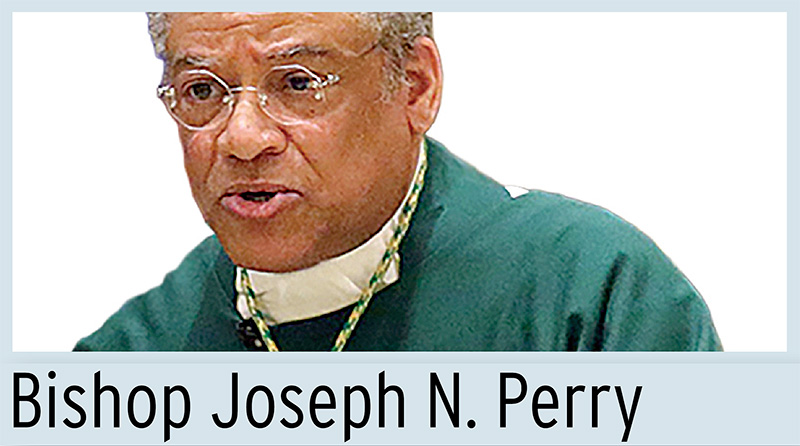
Bishop Joseph N. Perry was chairman of the U.S. Conference of Catholic Bishops’ Ad Hoc Committee Against Racism, which transitioned to a permanent Subcommittee for the Promotion of Racial Justice and Reconciliation in November.