


 What does it mean to be human? That is an unnecessarily vague question with a multitude of answers, but a few things may come to mind: to have a body, to have a soul, to be created by God, to seek truth, to believe. We might also define humanity by its problems: We get sick, we make mistakes, we hurt each other, we hurt ourselves. We are flawed in any number of ways.
In an excellent piece in The Free Press, “Nobody Has a Personality Anymore,” author Freya India argues that modern man has been swept up in a storm of diagnoses: that anything “wrong” or “different” about us isn’t just part of our personality, it’s a disorder and should be fixed.
“Anything too human – every habit, every eccentricity, every feeling that’s too strong – has to be labeled and explained,” she writes.
We don’t simply admit we made a mistake and apologize for being late or forgetting something: We say we have ADHD and, because of that, we can’t be on time or remember things. We aren’t responsible for our actions; our diagnoses and disorders are to blame for everything.
Self-defined by problems
Social media is filled with people self-diagnosing serious ailments and narrating their journeys in ways that feel more narcissistic than informative.
According to a 2024 study India quotes in her article, 72 percent of Generation Z women said, “Mental health challenges are an important part of my identity.” This should shock us. A large percentage of the up-and-coming generation defines itself by its problems, not its capabilities. This is misguided and concerning. Our identity should not be defined by what’s in our medical chart.
Those who do suffer from diagnosable and treatable mental illness should be diagnosed and treated. But those diagnoses alone do not a person make.
“There are no experiences anymore, no phases or seasons of life, no wonders or mysteries, only clues about what could be wrong with us,” India writes. “Everything that happens can be explained away; nothing is exempt.”
But she misses one key thing: We are the way we are because God made us that way.
Perfect, even with flaws
The idea that the way we are made is perfect – flaws and all – is not even on most people’s radar.
God accepts our imperfections and allows us to struggle with them. There isn’t a story about a great saint that doesn’t include a line about something challenging in their lives or a sin they struggled with, and that’s exactly why we should rely on them as examples of what it means to be fully human.
We’re still left with a mystery: Why do some people have to deal with more suffering than others? We don’t have answers to that question, but we do know to whom our questions and wonderings should be directed: our heavenly Father, who created each of us to be unrepeatable and perfect, even with our flaws. The mystery and beauty of humanity, even in its brokenness, is what makes the world a diverse, organic, ever-changing, ever-growing place.
Modern man’s drive to categorize, explain, treat and eliminate all “disorders,” even if they are nothing more than parts of us, continues to draw mankind further from an understanding of life that accepts and appreciates the unknown.
Even more tragically, it argues that our stories are “complete” when they are diagnosed. If science is the ultimate good and diagnosis the ultimate answer, where else is there to go?
Fallible, suffering = human
Faith tells us that there is more. There is trust in our heavenly Father, who seeks our good always. There is trust in the redemption of Jesus Christ, who suffered for us and gives us an example to follow. There is trust in the Holy Spirit, who guides us and breathes life into our suffering. And of course there are the saints, who provide concrete examples of what it means to be fallible, flawed, suffering humans and yet glorify God.
If we spend all our time focusing on our problems and how to solve them, we’ll miss opportunities to grow in holiness and see the magnificent world for all that it is.
“My worry is that … a generation might realize that the only problem they had, all along, was being human,” India concludes.
We cannot let our preoccupation with finding, naming and eliminating sources of suffering lead us to eliminating the human condition itself. Instead, let us look to God and His Church, allowing
His grace and love to help our “flaws” shine.
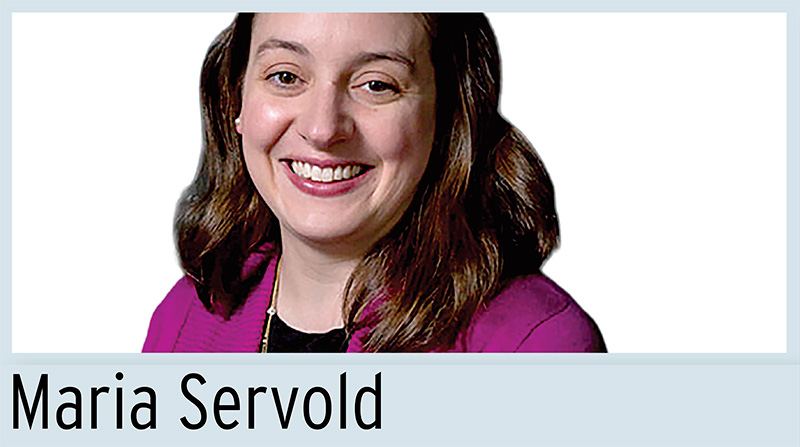
Maria Servold is president of the Early Pregnancy Loss Association, teaches journalism at Hillsdale College and is a freelance writer and editor. This is excerpted from wordonfire.org, where it was originally published.